
Is Your Body the Problem, or Is the World Just Not Built for You?
The Staircase Problem
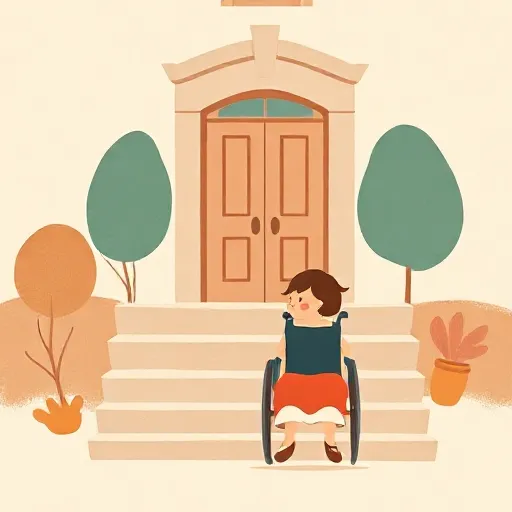
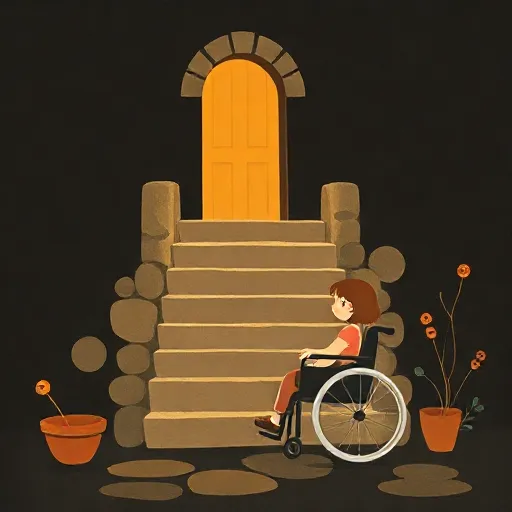
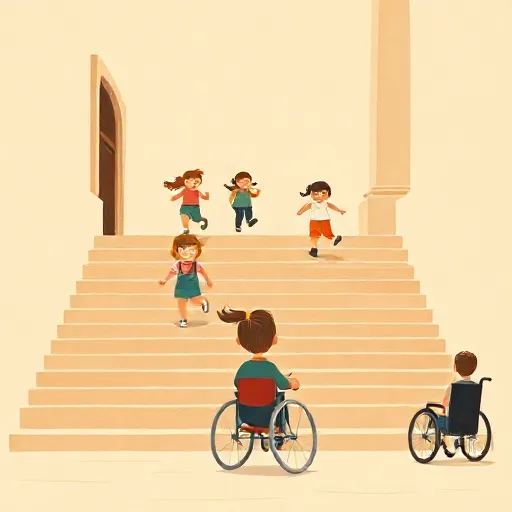
A girl wheels her chair to the front of her school. The doors are wide, but the building has no elevator. Her classroom is on the second floor. She can hear her friends upstairs. She cannot reach them.
Something is stopping her. But what? One answer is simple: her legs do not work the way most people’s legs work. That is the problem. Fix her legs, or accept that she cannot get upstairs.
Another answer is different. Her legs are not the problem at all. The problem is a building designed as if everyone walks. Put in a ramp or an elevator, and the obstacle is gone. She was not disabled by her body — she was disabled by the stairs.
This is not just about one school. It is the central question in a long argument about what disability really means. Is it a medical fact about a person’s body or mind? Or is it something society creates by leaving certain bodies out? How you answer that question determines whether you try to change people or change the world.
The Medical Model: The Problem Lives in You
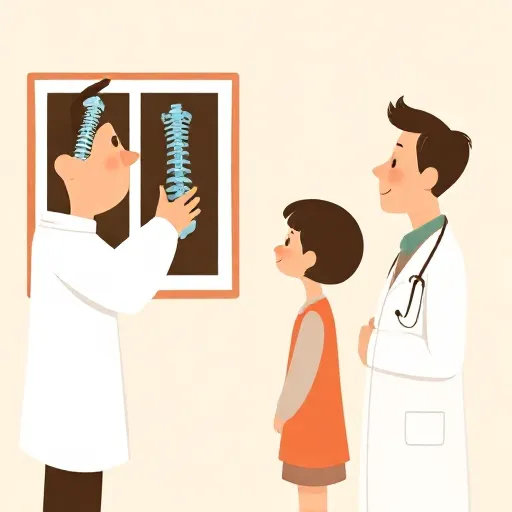
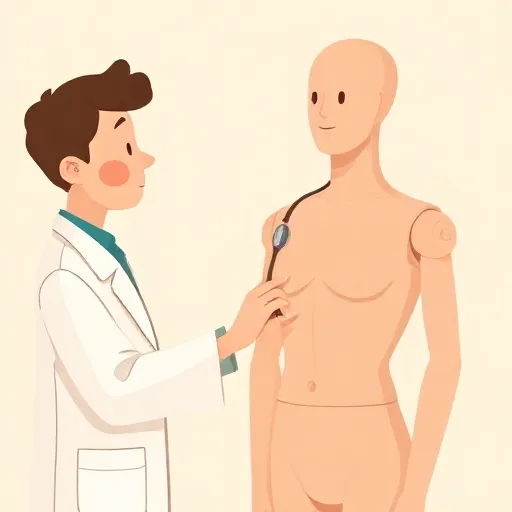
Think about a broken leg. The bone is cracked. It hurts. You cannot walk on it. A doctor diagnoses the injury, sets the bone, and waits for it to heal.
For a long time, people thought about most disabilities this way. This approach is called the medical model of disability. It treats disability as a problem located inside a person’s body or mind — a pathology, a dysfunction, or an impairment that stops things from working normally. The medical model explains the limits disabled people face as coming mainly from their bodily differences. If you cannot hear, the problem is your ears. If you cannot walk, the problem is your spine or legs. The solution is medical: treat it, cure it, or find ways to compensate for it.
Most people do not defend the medical model out loud as a complete theory. But parts of it show up everywhere, often without people noticing. When a doctor assumes a patient’s suffering comes only from their condition and ignores how their environment makes things harder, that is the medical model at work. When someone pities a disabled person simply for having a different body, that is the medical model talking.
Philosopher Christopher Boorse (born 1946) argued that we can define health and pathology in a scientific way, by looking at what is statistically typical for how a species functions. In his view, a leg that does not walk or an eye that does not see departs from normal functioning. You could build a definition of disability on that idea: a disability is a pathology that makes a legal or moral difference in how someone should be treated.
But many philosophers push back. They say there is no purely scientific way to separate “normal” from “abnormal” functioning. What counts as an impairment depends partly on social judgments. Being shorter than average might be an impairment in a world designed for tall people; in a different world, it might not matter at all.
The Social Model: The Problem Lives in the World
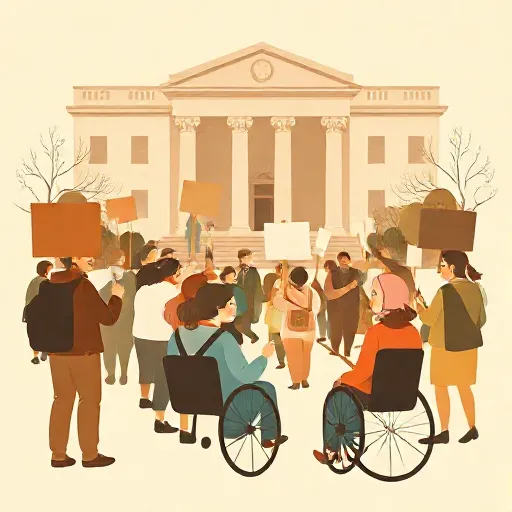
In 1976, a group of activists in Britain called the Union of the Physically Impaired Against Segregation (UPIAS) turned the medical model upside down. They argued something that sounded radical at the time: society disables people.
They drew a sharp line between two words. Impairment, they said, is the bodily difference — a limb that moves differently, eyes that do not see. Disability is something else entirely. Disability is the disadvantage society piles on top of impairment by excluding people. In their own words, “disability is something imposed on top of our impairments by the way we are unnecessarily isolated and excluded from full participation in society.”
This is the social model of disability. It says the reason disabled people face hardship is not their bodies but a world that refuses to accommodate them. A wheelchair user is not disabled by her spine but by stairs. A deaf person is not disabled by their ears but by a world that assumes everyone can hear announcements.
The social model actually contains two kinds of explanations, which fit together but emphasize different things.
One version is the minority group model. It sees disabled people as a minority group, like a racial or ethnic minority, that faces stigma, prejudice, and deliberate exclusion. On this view, the main problem is discrimination. The fix is civil rights laws and anti-discrimination protections. This is the idea behind the Americans with Disabilities Act, which calls disabled people a “discrete and insular minority” — the same legal phrase used for racial minorities.
The other version is the human variation model. It says many limits disabled people face are not from deliberate exclusion but from a mismatch between their bodies and the physical and social environment. Society builds sidewalks, classrooms, and websites for a narrow range of bodies. It does not have to. The problem is not the variation in human bodies — variation is universal. The problem is that society does not routinely respond to the full range of that variation. On this view, disability is an extension of human difference beyond what current institutions are built to handle.
Does Impairment Even Exist Outside Society?

The social model is powerful, but critics have raised hard questions. One big objection is this: the social model depends on a clean split between impairment (the bodily condition) and disability (the social exclusion). But is that split really so clean?
Some philosophers argue that impairment itself is partly a social construction. What counts as an impairment depends on which bodily variations are seen as problems. Homosexuality was once classified as a mental disorder by doctors; today it is not. Shyness can be turned into a medical condition (social anxiety disorder) or left as a personality trait. Dyslexia — difficulty with reading — only counts as an impairment in a society where everyone is expected to read fluently. In a culture that passed on knowledge through speaking and listening, the same brain might not be labeled impaired at all.
Philosopher Ron Amundson (writing in 2000) pushed this line far: he argued there is no clear biological basis for drawing a sharp line between normal and abnormal function. What we call normal is often just what is common in familiar environments. Other philosophers, like Christopher Boorse, rejected this strongly, insisting there is a real biological concept of normal function. The debate is alive and unsettled.
So both sides have a puzzle. The medical model has trouble explaining how much the social environment shapes what counts as a disability. The social model has trouble explaining where impairment ends and social response begins — or whether there is any purely biological impairment at all.
A Different Voice: The Affirmative Model

Lately, some disabled scholars and activists have stepped back from this whole fight and asked a deeper question. Both the medical model and the social model, they note, share an assumption: disability is fundamentally about disadvantage, loss, or injustice. What if that assumption is wrong?
The affirmative model, put forward by John Swain and Sally French in the early 2000s, says that disability is not first and foremost a problem at all. It is a different way of living in and experiencing the world — one that has advantages as well as disadvantages. A blind person might celebrate a sharper sense of hearing and touch, and the deep solidarity of moving through the world with other blind people. A Deaf person might value belonging to a rich linguistic community with its own language and culture.
This does not mean denying that disability involves real challenges. It means insisting that those challenges do not make the life less worthwhile. The affirmative model is not really a causal explanation of disability. It is a claim about what we should pay attention to: not just hardship, but also flourishing, pride, and community.
This view lines up more naturally with the social model, because the social model already argues that the link between disability and unhappiness is created largely by society, not biology. If the world were built inclusively, disability would not carry the same weight of disadvantage. But the affirmative model goes further: even right now, with the world as imperfect as it is, disability is not just a tragedy. It can be a source of identity and joy.
Not everyone agrees, of course. A definition of disability that includes harm to well-being — like the welfarist view proposed by Guy Kahane and Julian Savulescu (writing in the late 2000s) — would say that if a bodily condition does not reduce your well-being in a given environment, it is simply not a disability. On that account, a Deaf person in a fully signing community might not be disabled. But an affirmative model says no: you can be disabled, and proud of it, and not harmed by it, all at the same time.
Definitions Are Decisions

Why does any of this matter? Because how you define disability changes what you do about it.
If you think disability is a medical problem inside a person, the answer is obvious: fix the person. Develop surgeries, therapies, and prosthetics. Try to make the body work more like a typical one.
If you think disability is social exclusion, the answer is different: fix society. Build ramps, provide interpreters, design technology that works with diverse bodies. Change laws and attitudes.
If you think disability can be a valued identity, then “fixing” it might be the wrong goal entirely. It might mean destroying valuable forms of life and reducing the rich diversity of how human beings can be. Philosopher Rosemarie Garland-Thomson (writing in 2012) argued that disability is not a problem to eliminate but a form of human variation that makes the world more interesting and more just.
But the choice is not as simple as picking one model and following it to a conclusion. Real cases are messy. Sometimes medical treatment is the fastest way to escape discrimination — not because the body needs fixing, but because society is slow to change. Sometimes a ramp is cheaper and more just than asking a person to change their body. And sometimes both medical help and social change are needed, woven together so tightly it is hard to say where one stops and the other starts.
Philosophers continue to argue about who gets to define disability at all. Some, like Elizabeth Barnes (writing in 2016), say the disability rights movement itself should set the rules for who counts as disabled, because disability is a social category built around a shared struggle for justice. Others worry this gives too much power to one group and might exclude people who should belong. Still others think we do not need one single definition — different definitions work for different purposes, and that is fine.
The staircase problem has no easy answer. But the next time you see a building with no ramp, or hear someone describe a disabled person as “suffering from” their condition, you will notice the model hiding underneath. And noticing that is the beginning of thinking like a philosopher.
Think about it
- If your school had no ramps or elevators, would the students who cannot enter be disabled by their bodies or by the school? What does your answer mean for who should change?
- Can a condition be both a source of real difficulty and something a person is proud of? Think of an example from your own experience or from someone you know.
- Imagine a world designed so that everyone, with every kind of body and mind, could participate fully. Would the word “disability” still mean anything? Would it need to?