Is Disability in Your Body, or in How the World Treats You?
Maya and the Stairs
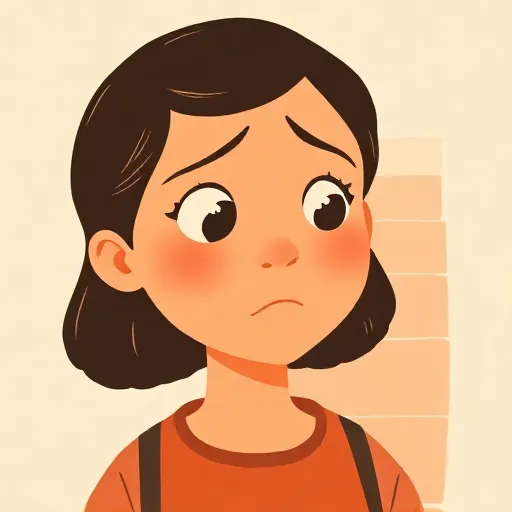
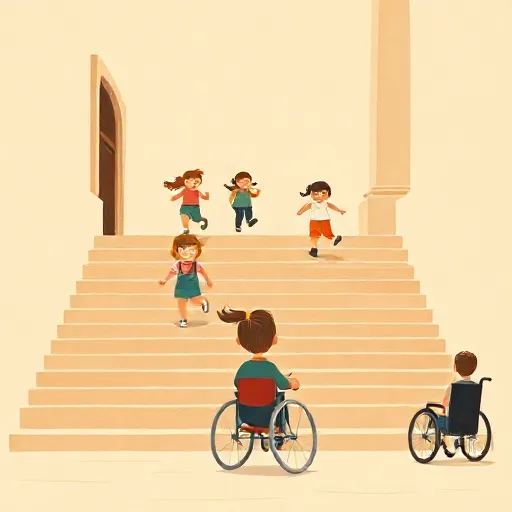
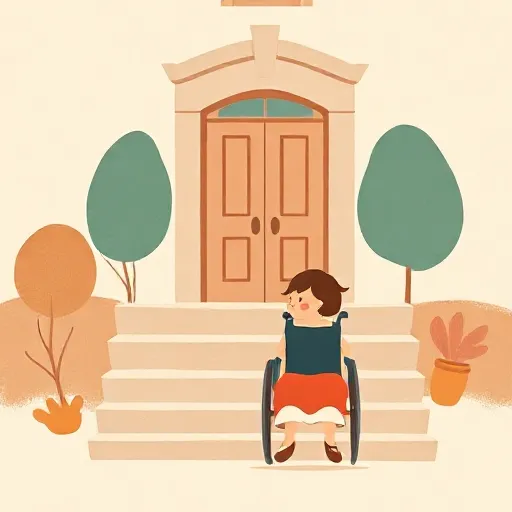
It’s Maya’s first day at a new school. Her legs work differently from most kids’, so she uses a wheelchair. She rolls up to the building, excited — but the front door sits at the top of a short flight of stairs. No ramp. No lift. Maya cannot get in.
The problem is not her legs. The problem is the stairs.
Most people would say Maya has a disability. But where does the disability actually live — in her body, or in a building that was built only for people who walk up steps? Philosophers have argued about this for decades. The most surprising answers come from a movement called critical disability theory. It claims that disability is not a fixed fact about a person’s body or mind. Instead, society produces it — and it does so the same way it produces ideas about race, gender, and power.
The Social Model Is a Giant Leap — but Not the Whole Story
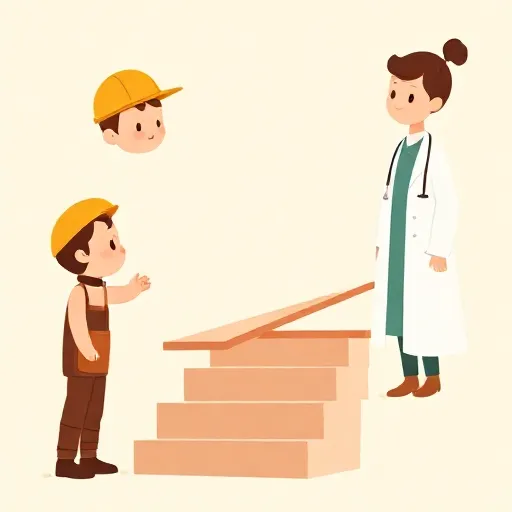
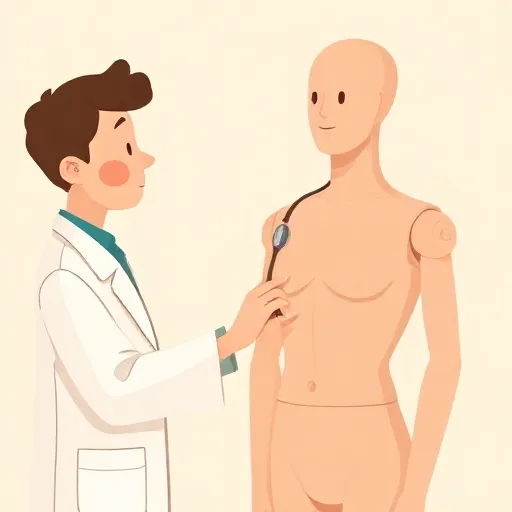
For many years, most people used the medical model to think about disability. That model says disability is a problem inside an individual — a broken leg, a different brain, a missing sense — and doctors should fix it or help the person cope. Then, in the late twentieth century, disability activists and scholars flipped the picture upside down. They built the social model: disability is not in your body; it is in a society that refuses to build ramps, provide sign-language interpreters, or see your way of learning as normal.
The social model was a huge leap. It moved the blame from the person to the environment. But critical disability theorists thought it still did not go far enough. The social model tended to treat impairment — the physical or mental difference itself — as a natural, medical fact. It asked, “How can we include people with impairments?” but it did not ask a deeper question: why do we sort certain bodies and minds into the category ‘impaired’ at all?
Shelley Tremain, a philosopher writing in the early twenty-first century, answers that question with a surprising claim. She argues that impairment itself is not a simple natural fact. It is produced by the same social rules and power relations that create disability. What counts as an impairment changes across history and cultures. The line between “normal” and “abnormal” is drawn by people, not by nature. Critical disability theory works to denaturalize disability — to show that it is something we make, not something we simply discover inside bodies.
Ableism: The Hidden Rules of Normal
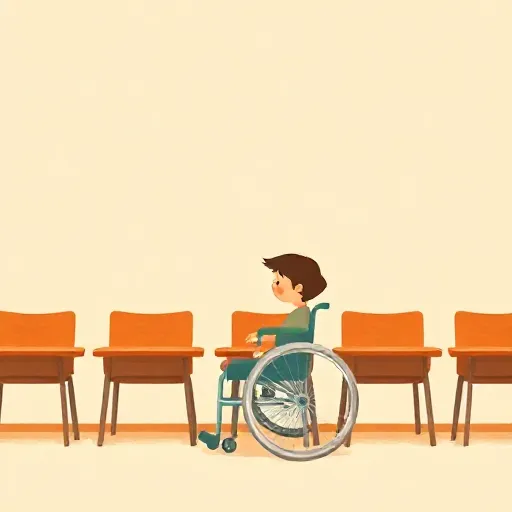
If society makes disability, what is the machinery that does the making? Critical disability theorists point to ableism. The philosopher Fiona Kumari Campbell (born 1963) defines ableism as a network of beliefs, practices, and habits that produces a single ideal of a “perfect” human body and mind. That ideal then gets treated as the natural standard for what counts as fully human. Anyone whose bodymind falls outside that standard is cast as lesser, broken, or incomplete.
Ableism is not just about ignoring wheelchair users. It shapes how schools are built, how intelligence is measured, which stories get told, and who gets to speak and be believed. Like racism and sexism, ableism is baked into the way whole societies are organized. And it almost never works alone.
Critical disability theory insists on intersectionality — the idea that systems of oppression link together and strengthen each other. Race and ability, for example, are tangled up in the history of enslavement. The scholar Sami Schalk points out that Black people were once described as both less intelligent (disabled) and hyper-strong, impervious to pain (super-able) — a double bind that justified brutal labor. You cannot understand that history if you separate racism from ableism. A whole field called Dis/ability Critical Race Studies (DisCrit for short) now studies how racism and ableism merge in schools, prisons, and immigration systems, always working to push some people outside the circle of “normal.”
Crip Theory: Building a Future with Difference
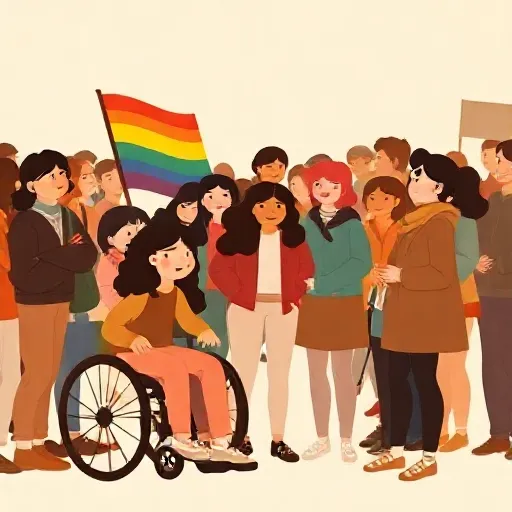
Some of the most energetic ideas in critical disability theory come from crip theory. The name is a reclamation of a slur, taken up in the same spirit that queer activists reclaimed “queer.” Crip theory brings together disability studies and queer theory — the study of how societies enforce rules about gender and desire.
Robert McRuer, a crip theorist writing since the early 2000s, argues that crip theory should challenge disability studies the way queer theory challenged lesbian and gay studies: not just asking for a seat at the table, but questioning why the table is shaped the way it is. Crip theory is not satisfied with polite inclusion. It says that calls for tolerance and assimilation can still leave the idea of “normal” untouched.
A core fight in crip theory is over the future. If people see disability only as a tragedy, then the only future they can imagine is one without disability. The philosopher Alison Kafer calls this the curative imaginary. Against that, crip theorists insist on a crip futurity — a future where disabled lives are not just tolerated but desired, where the world is built to welcome many kinds of bodyminds. McRuer speaks of “the disability to come” as a promise, not a threat. It is, he says, a promise that we will always “comprehend disability otherwise” and find new worlds together.
The Pain Debate: Does the Body Speak?

Not everyone inside critical disability theory agrees, and one of the sharpest disagreements is about pain. Some thinkers, like Susan Wendell (a feminist philosopher of the late twentieth century), warn that if we talk about disability only as a social construction, we might lose sight of the body’s real experiences. For many people, pain, fatigue, and bodily limits are daily realities that are not reducible to bad attitudes or missing ramps. Denying that, Wendell argues, can be its own form of erasure.
On the other side, Shelley Tremain insists that even pain is shaped by history, culture, and language. How we feel, describe, and make sense of suffering is never a raw fact — it is filtered through the words and ideas our society gives us. The very boundary between “normal” pain and “pathological” pain is drawn by medical authority.
This debate has not been settled. It shows that critical disability theory is a live conversation, not a finished set of answers. It asks us to hold two thoughts at once: that bodies really matter, and that the meaning we give them is always social.
Why It Matters — The World You Inherit

Every time you see a ramp, an elevator with braille buttons, or captions on a video, you are seeing a decision — a choice someone made about which bodies count. Every time you hear a kid called “weird” or “slow,” a hidden set of rules about normal and abnormal is doing its work.
Critical disability theory does not offer a simple checklist for fairness. Instead, it hands you a set of questions: Who gets to decide what a “normal” mind looks like? Why are some differences celebrated and others feared? How do racism, sexism, and ableism feed each other in your own school, your own city?
These questions are not just for philosophers. Activists and organizers all over the world use them right now. People like Lydia X. Z. Brown fight against institutions that shock disabled children in the name of treatment. Movements like #CripTheVote push politicians to see disabled people as a community with political power, not as a collection of medical problems. When those activists speak, they are not just asking for ramps — they are demanding that we reimagine what it means to live a good life.
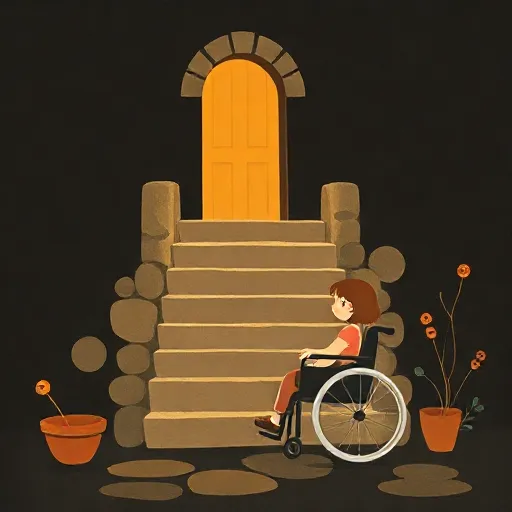
When Maya finally gets her ramp, it is more than a piece of concrete. It is a declaration that her way of moving belongs. The next time you see a staircase and no ramp, you might ask a bigger question than “Where is the elevator?” You might ask: Who decided that steps are the baseline for a building — and what else do they think is “normal” without even saying so?
Think about it
- If a school removes all stairs and always provides interpreters, is it still possible for a disabled student to feel excluded? What else might cause exclusion?
- Suppose someone invents a pill that makes you “normal” — would you take it? Does your answer say something about how you think about disability?
- Why do people say someone is “confined to a wheelchair” rather than “freed by a wheelchair”? What do everyday phrases like that reveal about hidden assumptions?