Is Your Body “Normal”? Feminist Bioethics Asks Who Decides
A pain that nobody believed
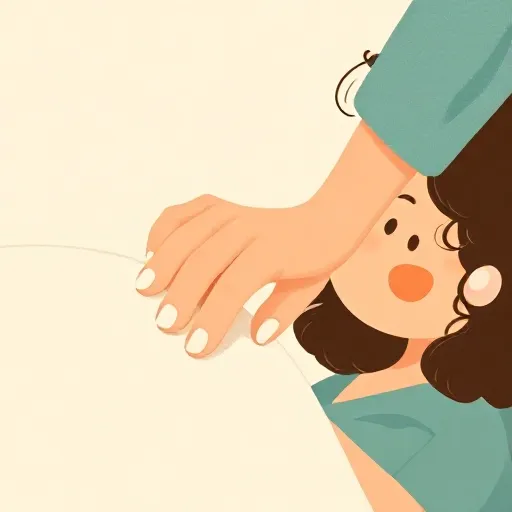
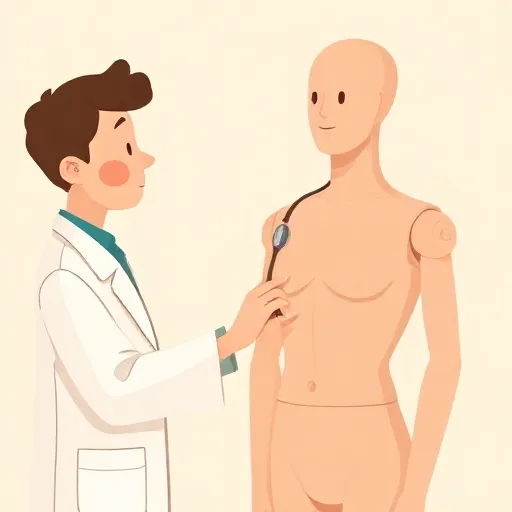
Imagine you’re fourteen and you’ve had months of sharp stomach pain. You finally go to a clinic. You describe exactly where it hurts, what it feels like, when it started. The doctor barely nods. He says it’s probably “just stress” or “your cycle.” You know something is wrong, but he doesn’t hear you.
This happens to women and girls much more than to men. Across the world, women’s complaints of pain, fatigue, or mental distress are taken less seriously by healthcare providers. It’s not just bad luck. Feminist philosophers who study bioethics — the ethics of medicine, research, and biology — say this is a deep pattern of unfairness baked into the way medicine thinks and works. Feminist bioethics asks: whose experiences count? Whose body gets treated as “normal”? And who gets ignored because they don’t fit the picture?
The field that turned ethics upside down
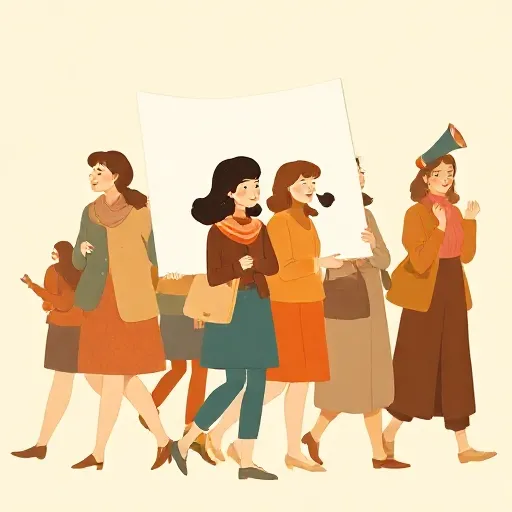
Feminist bioethics grew up in the late twentieth century out of two forces. First, the women’s health movement of the 1960s and 1970s protested loudly that women’s needs were being neglected — from birth control to cancer screening to the way doctors treated pregnancy and menopause. Second, feminist philosophers built theories that showed mainstream ethics was missing something huge.
The mainstream of bioethics, they argued, likes to work with big, abstract principles — like “respect autonomy” or “do no harm” — and imagine moral agents as independent, rational individuals. But real people are embodied. We have bodies that are male, female, intersex, disabled, young, old. Those bodies shape our experiences and how others treat us. And real people are relational — we live inside families, communities, and power structures, not alone in a bubble.
Mainstream bioethics had a habit of taking the experiences of the most privileged — typically healthy, white, well-educated men — and treating them as the universal human. Feminist bioethicists like Susan Sherwin (a Canadian philosopher writing in the 1990s) and Rosemary Tong (an American philosopher, born 1940) argued that this wasn’t just incomplete; it was ethically dangerous. It made medicine blind to the ways power, gender, race, and disability shape who gets well and who gets harmed.
Whose knowledge gets to be “knowledge”?
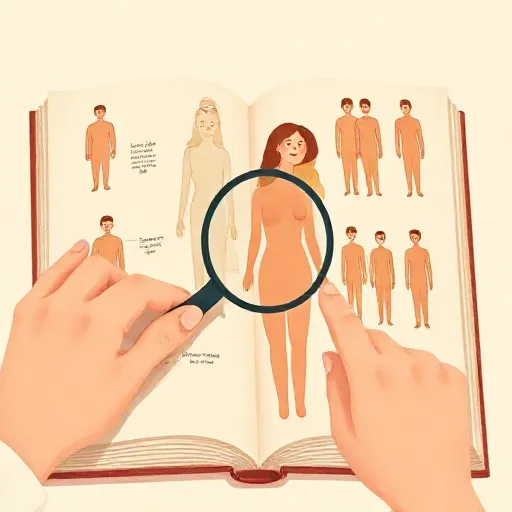
Feminist bioethicists pay close attention to epistemology — the study of knowledge, of who knows what, and whose knowledge society takes seriously. They point out that access to knowledge isn’t equal. Your social position affects what you know and whether others believe you.
When a person’s testimony is dismissed because of their identity, that’s called testimonial injustice. A classic medical example is the “vaginal mesh scandal”: thousands of women reported severe pain and injury from surgical mesh, but for years their complaints were brushed aside by surgeons and regulators. Their word wasn’t weighed the way a man’s might be.
A second kind of wrong is hermeneutical injustice, when a group’s knowledge is excluded from what “everyone just knows.” For decades, pregnant women were kept out of clinical research — supposedly to protect them. But the result was that doctors had no data on how common medicines affect pregnant bodies. The collective knowledge of humanity had a giant gap, and women paid the price.
Feminist epistemology insists that this isn’t just a problem of missing facts. It’s a structural unfairness. The whole system of medical knowledge — what questions get asked, who gets studied, who does the studying — is shaped by power. Feminist bioethics therefore pushes scientists and clinicians to ask: whose experience is being left out, and what are we not seeing because of that?
Why care is an ethical idea, not just a job
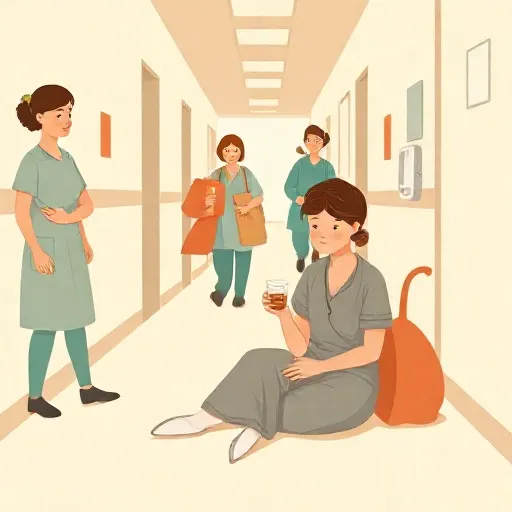
One of the biggest contributions of feminist thought to bioethics is the ethic of care. The psychologist Carol Gilligan (born 1936) noticed that when women talk about moral problems, they often emphasize relationships, responsibilities, and the actual work of looking after vulnerable people. Men, in her study, tended to think more about rules, rights, and abstract justice. Not everyone agrees with Gilligan’s findings, but the idea that care is a serious moral practice stuck.
Feminist philosophers developed this into a full ethical framework. The ethic of care says that human life is built on dependency. We all begin as infants who need constant care, and many of us will be dependent again in old age or illness. Relationships of care — between patient and nurse, parent and child, home aide and elder — are not add-ons to our moral world; they are its fabric. And yet, care work is routinely invisible, underpaid, and done mostly by women.
This insight connects directly to another key concept: relational autonomy. Traditional bioethics treats autonomy as a person’s ability to make decisions all alone, free from outside influence. Feminist philosophers like Annette Baier (1929–2012) argued that this picture is simply false. You don’t develop the ability to think for yourself in isolation. You get it through relationships — from parents who teach you to ask questions, from communities that give you confidence, from societies that make real choices possible. Autonomy isn’t threatened by connections; it’s produced through them. So if we want patients to make genuinely free choices, we have to pay attention to their whole relational context — not just check a consent form.
Bodies, tech, and power: why it’s still an uphill fight
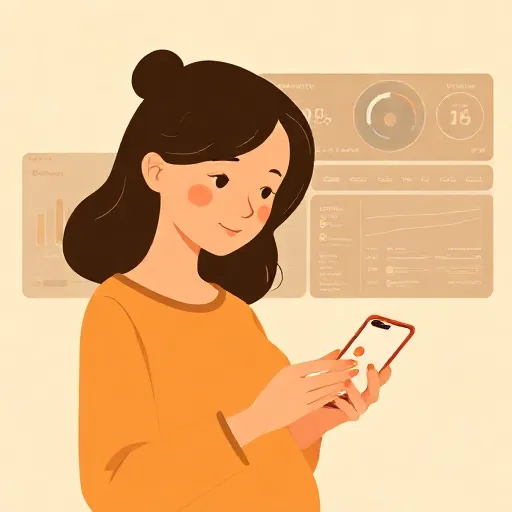
Feminist bioethics didn’t stop at the doctor’s office. It has followed medicine into the digital age. Today, artificial intelligence (AI) is being used to diagnose disease, predict which treatments will work, and even develop new drugs. But AI learns from data, and data is full of old biases. If women’s symptoms have been under-recorded for decades, then an algorithm trained on that history will be less accurate for women. The same goes for racial and economic minorities. Feminist bioethicists warn that shiny new technologies can silently deepen injustice — unless we deliberately design them to include the full range of human bodies and experiences.
The field also continues to push at the boundaries of what “bioethics” even means. It asks big questions about how global economic systems exploit women’s bodies, for example by turning eggs and wombs into products that can be bought and sold. It looks at how climate change harms women’s health first and hardest in many parts of the world. And it brings in the tool of intersectionality — a term coined by law professor Kimberlé Crenshaw (born 1959) — to show that a disabled woman of color faces barriers that aren’t just “disability plus race plus gender” added together, but something new and specific that you miss if you look at categories one by one.
The fight that belongs to everyone
You might think these are problems for scientists or policy-makers. But they touch your life directly. If a doctor dismisses your headache as “just stress,” that’s feminist bioethics. If a health app tracks your period and shares the data with advertisers, that’s feminist bioethics. If your grandmother can’t afford a home aide and your family has to rearrange work and school, that’s feminist bioethics. And if the next blockbuster drug is tested only on men, your sister could be harmed by a wrong dosage.
Feminist bioethics doesn’t say “women are good and men are bad.” It says that any ethical system that ignores power, embodiment, and care is broken. And fixing it isn’t a niche project — it’s the way to build a medical world that actually treats everyone fairly. The goal isn’t just to add women and stir. It’s to rethink the whole recipe.
Think about it
- If a doctor once didn’t believe you when you said you were in pain, how would you figure out whether that was a mistake or a pattern of bias?
- When is it fair for a family member to help make a medical decision for someone else, and when does “help” become control?
- If an AI is trained on health data that mostly comes from men, and it misdiagnoses women as a result, who should be responsible — the developers, the hospitals, or the people who collected the original data?