Can a Trans Woman Be a Woman? A Fight Inside Feminism
A Woman Thrown Out of the Club
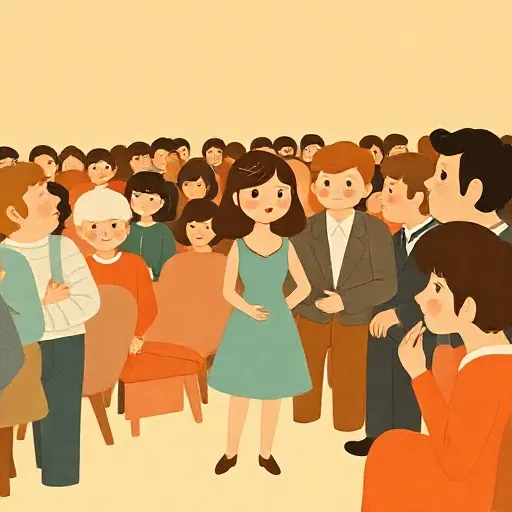
In 1973, at a huge feminist conference in Los Angeles, a woman named Beth Elliott was thrown out. The reason? She was a trans woman—someone who was assigned male at birth but lives as a woman. Some feminists shouted that she was really a man, an infiltrator who had the mind of a rapist. For many non-trans feminists in those years, trans women were not women. They were men who were invading women’s spaces.
This anger got fully spelled out a few years later. In 1979 the philosopher Janice Raymond (born in the mid‑20th century) published The Transsexual Empire. Raymond argued that biological sex is a natural fact—you are male or female by your chromosomes and your body. Gender roles, she said, are a social invention forced on top of that biology to keep women down. In her view, a trans woman is really a man who takes a female-looking body and then acts out a sexist “woman” role. Raymond famously wrote that trans women “rape women’s bodies” by turning the female form into something artificial. She saw no difference between the oppression a trans woman might face and the general sexism all women face. If a trans person felt unhappy with their body, Raymond thought that was just unhappiness with a rigid sex‑role system—a system that ought to be destroyed, not escaped by changing your body.
Raymond’s solution was radical: she wanted to “morally mandate” transsexuality out of existence by educating people against gender roles. Her picture of liberation was a world where nobody would feel the need to cross from one sex to another because sex roles themselves would vanish. And because she believed trans women were really men, her account said almost nothing about trans men at all—they were simply erased from the story.
The Transgender Answer
That same year, 1979, another trans woman was being targeted by Raymond’s book: Sandy Stone, a sound engineer at an all‑women recording company. Stone left her job under pressure, but she didn’t stay quiet. In 1991 she fired back with an essay called “The Empire Strikes Back.” Stone argued that trans people are an oppressed minority, not just confused victims of sexism. Trans people, she said, have their own hidden culture. For decades they had helped each other figure out what to say to doctors in order to get approved for surgery—secretly working the system while officially acting like the “wrong‑body” story was the only truth.
Stone called for a new kind of trans politics. Instead of hiding their past and “passing” as non‑trans men and women, she wanted trans people to come out, tell their own real stories, and mix the official medical scripts with their own lives. She borrowed ideas from thinkers like Donna Haraway and Gloria Anzaldúa, who celebrated mixed, border‑dwelling identities. The image of a cyborg—a creature built of mismatched parts—showed that you don’t need a pure, original self. Anzaldúa’s mestiza consciousness described a person caught between two cultures who can see through both at once. Stone suggested trans people have a similar double vision: they know the mainstream rules, but they also know their own hidden world, and that gives them a special power to resist.
Gender as a Show We All Put On

While Stone was writing, another philosopher was shaking up the whole idea of gender. Judith Butler (b. 1956) argued in Gender Trouble (1990) that gender is a kind of performance. Not like a costume you choose in the morning, but a set of acts you repeat so often that they start to feel like who you are. There is no hidden “real” gender inside you; the acts come first, and the feeling of a stable identity is the effect, not the cause. Drag, Butler claimed, can be subversive because it makes visible the imitation that all gender relies on.
Butler’s ideas seemed friendly to trans people at first, but trouble appeared. In a later book, Bodies That Matter, Butler discussed Venus Xtravaganza, a Latina trans woman who dreamed of a suburban, married life and was murdered. Butler saw her death as partly an erasure of gender subversion, yet they also suggested that Xtravaganza’s desire to be a “real” woman was a misreading of power—an attempt to escape racism and poverty through gender. Trans scholars were upset. Jay Prosser (born in the 1960s) insisted that the feeling of being in the wrong body is not a performance; it is a deep, bodily sensation that cannot be reduced to social mimicry. Viviane Namaste charged that Butler was using trans lives as theoretical material without truly respecting everyday trans experiences. The core fight: can a person insist they are a “real” man or woman and still be resisting the system, or is that just reinforcing the very norms that hurt people?
Building Bridges, Not Walls
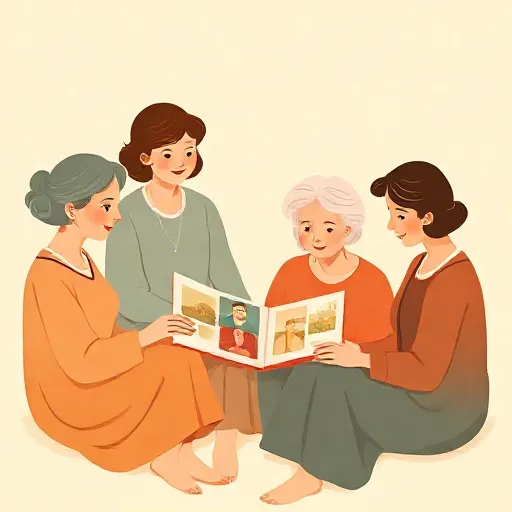
After the big explosions, some non‑trans feminists tried to find common ground. Naomi Scheman (born in the mid‑20th century) compared being a trans woman to converting to Judaism. A person who converts really becomes Jewish; their new identity is not fake. What matters most, Scheman argued, is solidarity—standing with each other when someone is attacked—not whether you were born with a certain label. She suggested that “woman” is a family‑resemblance concept: there is no single feature every woman must have, just overlapping similarities, like members of a big family.
Cressida Heyes (born in the mid‑20th century) explored a different angle. She pointed out that the racial analogies used to attack trans people—like asking, “Is someone who wants to change race suffering from a disease?”—don’t work, because sex and race have very different histories. Sex has been seen as a deep, binary biological truth, which actually made “sex‑change” medically thinkable in a way “race‑change” never was. Christine Overall (b. 1955) later proposed that transitioning genders is like a life‑changing aspiration, like becoming a mother or quitting an addiction: you become what you deeply strive to be. That view takes trans identities seriously, though some trans people feel it doesn’t quite capture the sense of having always been the gender they know themselves to be.
Trans Feminists Fight Back
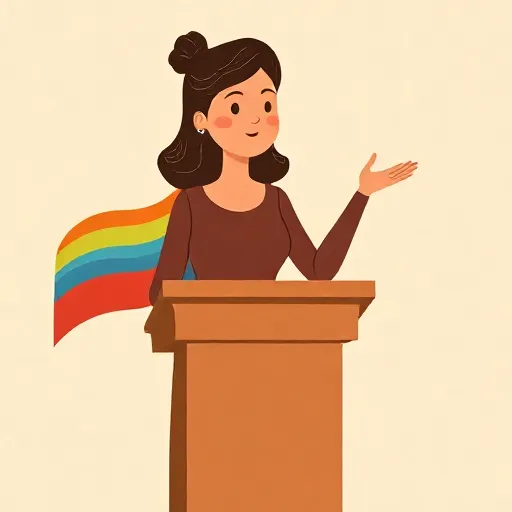
The next wave came from trans women themselves. Emi Koyama (born in the 1970s) defined transfeminism as a movement by and for trans women whose liberation is tied to the liberation of all women. She criticized the policy of the Michigan Womyn’s Music Festival, which banned trans women. Even a “compromise” to admit only post‑operative trans women, she said, was classist and racist—it favored those who could afford expensive surgery. Julia Serano (b. 1967) coined the term transmisogyny to name the specific hatred of trans women’s femininity. She argued that society treats femininity as artificial and shameful, and that this devaluation hits trans women worst of all.
Talia Mae Bettcher (born in the mid‑20th century) took aim at one of the deepest roots of transphobia: reality enforcement. In everyday life, she explained, clothing and appearance are treated as signs that “reveal” what genitals a person has. A trans woman who passes may be accused of being a deceptive liar; one who is openly trans may be dismissed as playing make‑believe. In both cases her self‑identification is invalidated, and she may face demands to prove her body—a form of sexual abuse, Bettcher said, that is tangled up with racism and the history of controlling bodies. For these trans feminists, the battle is not only about being accepted as women, but about ending the whole system that uses hidden-body talk to police who someone really is.
What Counts as a Woman in Your Life?

These arguments might feel far away, but they show up whenever a friend group, a club, or a sports team decides who belongs. Every day, young people navigate unspoken rules about how boys and girls are supposed to act. The philosophical clash inside feminism hasn’t given us one clean answer about what makes a woman a woman. But it has taught us something more important: identities are fragile and deeply felt, and the habit of policing them can cause real pain.
When you hear someone say a trans girl is “just pretending,” or that a trans boy is “really a girl,” you are hearing an echo of a 50‑year‑old argument. The trans activists and feminist allies who pushed back agreed on one thing: people should be allowed to speak for themselves. Listening carefully, asking what someone needs to feel safe, and refusing to treat anyone as a fraud—that is the lesson these thinkers keep pointing toward. It is not about having all the right words. It is about siding with people when they tell you who they are.
Think about it
- If a friend tells you they feel like a girl inside, but everyone around you says they are a boy, what would you do, and why?
- Can it ever be fair for a group that was created for women to say that a trans woman cannot join? Why or why not?
- Is a person’s gender something they discover about themselves, or something they build over time through their actions?