Why Your Living Room Is a Political Battleground
In 1791, a Woman Demanded Equal Rights
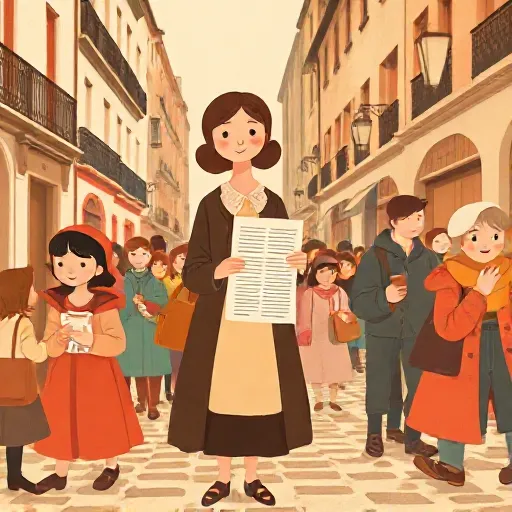
In 1791, a French writer named Olympe de Gouges published a radical document. She called it the Declaration of the Rights of Woman and the Female Citizen. At that time, men in France were shouting about the rights of man. De Gouges asked a simple question. If men have rights, why not women too? Her question was dangerous. A few years later, she was executed.
This was one of the first moments someone used political ideas to challenge the treatment of women. For centuries before, political thinkers had mostly ignored women’s lives. They thought politics was about governments, laws, and public debates. Those were spaces where men made the decisions. The home and the family were seen as a private sphere. This was separate from the public sphere of politics.
In the private sphere, men were supposed to rule. Women were expected to obey their fathers or husbands. This arrangement seemed natural to most people. But feminist thinkers like de Gouges began to notice something. The private sphere was full of power and control. It was political, even if no one called it that.
Much later, in the 1970s and 1980s, political philosophers like Susan Moller Okin and Carole Pateman sharpened this argument. They showed that the split between public and private actually hid men’s control over women. If the law stayed out of the home, then a husband could hurt his wife without being stopped. Power didn’t disappear. It just moved out of sight. This insight changed political philosophy forever. It forced people to ask a new question. Is the family a political place? Feminists answered yes.
Who Was the “We” in Women’s Liberation?
In the 1960s and 1970s, a new wave of feminism spread across the United States and Europe. Women gathered in small groups. They shared their experiences and demanded equal pay, legal rights, and an end to sexism. They called this “consciousness-raising.” They hoped to find a common voice. They wanted a universal “woman” who could unite everyone in struggle.
But soon, other voices challenged that idea. In 1981, a Black American writer named bell hooks published a book called Ain’t I a Woman? She pointed out that the movement was led mostly by white, middle-class women. Their problems were not the same as those of poor women or women of color. Those women faced racism, poverty, and much harder work. Hooks argued that these leaders claimed to speak for all women. But they were only speaking from their own narrow experience.
Around the same time, Latina philosopher María Lugones and white philosopher Elizabeth Spelman wrote a famous essay. They warned that trying to create one single “woman’s voice” was a form of cultural control. It silenced the experiences of non-white, non-Western, and working-class women. They asked powerful questions. Whose voice counts? And who gets left out when we pretend we are all the same?
This debate cracked open the idea of a universal woman. It pushed feminist thinkers to pay attention to differences of race, class, and culture. It also led to a powerful new concept.
Intersectionality: When Identities Overlap
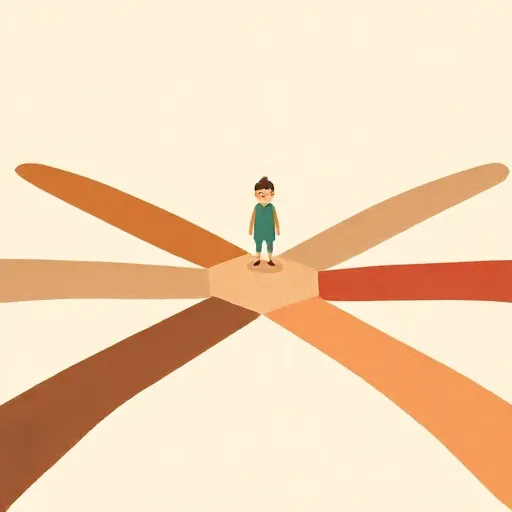
In 1989, legal scholar Kimberlé Crenshaw introduced the term intersectionality. She was studying court cases where Black women faced discrimination. But the courts often treated race and gender as separate issues. If a Black woman was mistreated because she was both Black and a woman, the law had no easy way to address that. It was like being hit at a traffic intersection by cars coming from two directions at once.
Crenshaw argued that systems of unfair treatment do not line up in a neat row. They interlock. A person’s life is shaped by many factors at the same time. Their race, their gender, their class, their physical ability, and more. You cannot understand injustice by looking at just one of these.
For feminist political philosophy, this was a game-changer. It meant there is no single “woman’s point of view.” Instead, politics must pay attention to many different vantage points. This insight also connected with ideas from around the world. Activists from the Global South, like Chandra Talpade Mohanty and Lila Abu-Lughod, pointed out that Western feminists often misunderstood Muslim women. They assumed these women were simply oppressed and needed saving. Intersectionality helped show that reality is much more complex.
Care: What If We Are All Dependent?
Traditional political philosophy often imagines people as independent, rational choosers. The goal was to protect each person’s freedom to make their own decisions. But feminist thinkers like Carol Gilligan and Eva Kittay asked a tough question. Is that picture complete? What about children, elderly people, or those who are sick? Every human being depends on others for at least part of their life. We all need care.
Gilligan’s research in the 1980s showed that moral thinking is not only about fairness and rules. Many people, especially women, also think about relationships, responsibility, and care for others. That does not make their thinking less valuable. It is just a different moral voice. Kittay went even further. She argued that political philosophy must make room for dependency and care. A just society does not just let people choose freely. It also supports those who give care. Often, those caregivers are women, and their work is unpaid.
This idea, called care ethics, challenged the old line between private and public once again. It showed that care work, usually done in the home, is just as important to political life as laws and markets. If we ignore it, we leave many people vulnerable.
Democracy Means Listening to Everyone
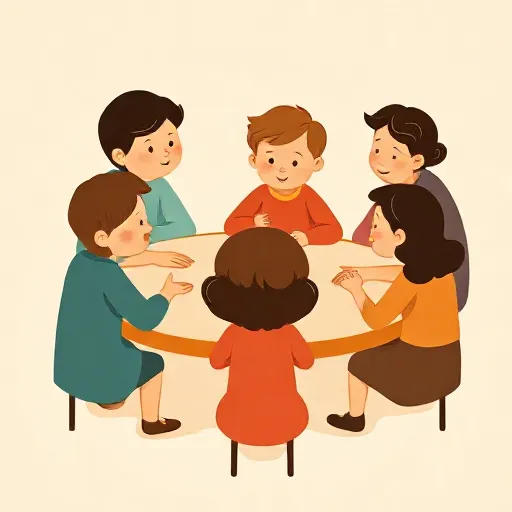
By the 1990s, feminist political philosophy had grown more comfortable with difference. Instead of searching for one true woman’s voice, many thinkers turned to the idea of democratic conversation. If there is no universal foundation, then politics is about creating space for many voices to speak and be heard.
Philosopher Iris Marion Young worried that standard forms of democratic debate could still exclude people. In a debate, those who speak with calm logic are often listened to. Those who tell stories, express emotion, or use different styles can be ignored. Young argued that a fair democracy must allow for greeting, storytelling, and rhetoric. It must go beyond just tidy arguments. She called this “communicative democracy.”
Other thinkers, like Chantal Mouffe, took a different view. She saw democracy as a contest that never ends. Her worry was that aiming for full agreement can silence important disagreements. Power never goes away. It just shifts shape. So the real job of politics is to keep the debate open and non-violent.
These democratic approaches teach an important lesson. Feminist politics is not about finding one final answer. It is about building better ways to live together. And it means knowing that new voices and new problems will always arrive.
Why Your Kitchen Table Is Still Political
Today, the ideas of feminist political philosophy are everywhere. You notice them when someone says, “That’s women’s work.” You might ask, who decided that? Why is some labor paid and other work free? You see the edges of public power in private life when a friend is teased for not fitting a gender rule.
Feminist thinkers gave us tools to recognize these everyday politics. They showed that the personal is political. But they also taught us to be careful. No single person can speak for everyone. The work of listening, and making room for quieter voices, never stops.
Whether it is fights over paid family leave, arguments about who does the chores, or struggles for racial justice, the old questions still hum. And they are now part of the biggest conversation of all. What does it mean to build a world where everyone can live a good life, freely and together?
Think about it
- Think about a rule in your home (like who cooks dinner, who fixes things). Is that rule just a family habit, or does it connect to larger patterns of power? How can you tell?
- If a politician said, “I support women’s rights,” but only ever talked to women from one background, would you trust that they understand all women’s needs? Why or why not?
- In a group project at school, some students speak up easily while others stay quiet. What could you do to make sure all voices are heard, not just the loudest ones? Is that a form of politics?