Is Your Family a Private Club or a Mini-Government?
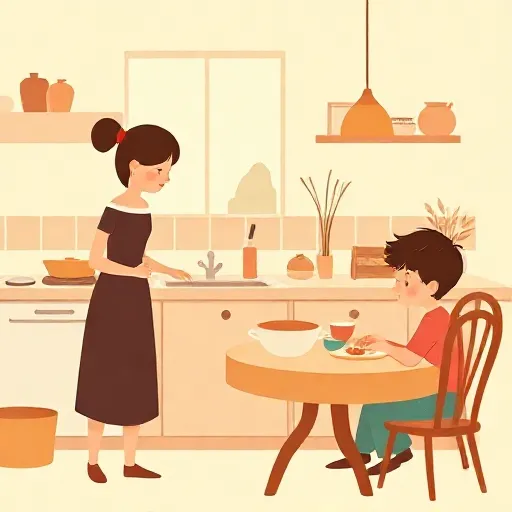
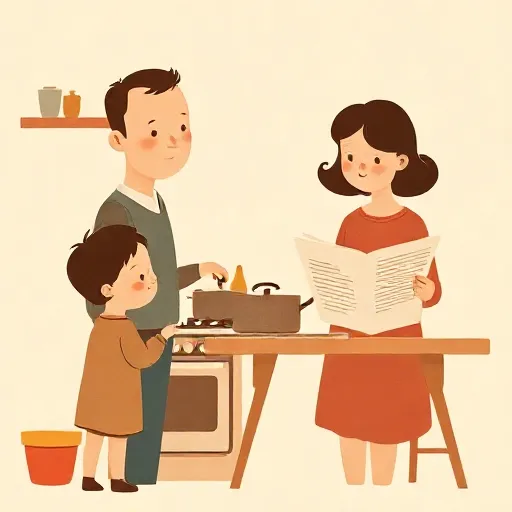
You walk into your friend’s kitchen and see their dad doing all the cooking. At your house, it’s always your mom. Is that just natural, or is something else going on?
Most people think of their family as a private, cozy place. Love and care live here, not rules and arguments about who gets what. But for decades, feminist philosophers have asked a sharp question: is the family really a spot where justice doesn’t apply? They say no — and they give three big reasons.
First, families are not just “natural” groups; they are social institutions. Laws shape marriage, divorce, who can adopt, and who inherits property. So the state is already inside your home. The only question is whether the rules are fair. Second, families are where future citizens grow up. What kids learn about right and wrong, and about who does what work, matters for the whole society. Third, the way work is divided in most families — women doing the bulk of childcare and housework — limits women’s freedom and opportunities outside the home. These three claims turn the cozy idea of a private family upside down. Let’s look closer.
Is biology destiny?
Several hundred years ago, the philosopher Jean-Jacques Rousseau (1712–1778) wrote that nature made women want to raise children and men not to care much about it. In his view, a mother’s place was in the home, and that was that. Many people still say that boys and girls naturally like different things, and that’s why moms end up doing more dishes and more diaper changes.
Feminist thinkers have three very different replies.
One group, called social constructivists, say there is no deep biological secret that forces women to stay home. They point out that things we think of as “natural” — like differences in height and strength — are partly shaped by who gets better food, what sports are encouraged, and even what clothes feel okay to wear. The philosopher Sally Haslanger (born in the 20th century) and others argue that many so-called natural differences are actually the result of inequality, not the cause of it.
A second group, difference feminists, accept that some real differences might exist — maybe women, on average, are more nurturing. But they ask: so what? If nurturing were highly valued, society would arrange work and pay so that both men and women could spend more time caring for kids without becoming poor. Psychologist Carol Gilligan and philosopher Nel Noddings (both writing in the 1980s) stressed that we can celebrate traits like caring instead of using them to push women into second-class roles.
A third group takes an anti-subordination approach, championed by legal scholar Catharine MacKinnon (writing in the late 20th century). They argue that all this talk about difference misses the real point. Even if some natural differences exist, they don’t justify unequal pay, economic dependence, or domestic violence. Nothing in our biology forces laws that once gave a husband total control over his wife’s property, or that still make it hard to combine a job with raising a child. Biology can’t explain — and shouldn’t excuse — women’s lower status in society.
But isn’t family about love, not rules?
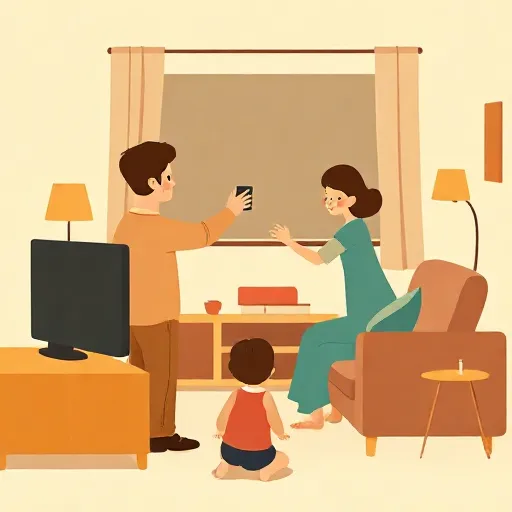
Some thinkers, like the political theorist Michael Sandel (born in the 20th century), say that families work best through affection, not justice. Families that are working well don’t need to argue about who sweeps the floor — people just help because they care. Justice, they say, is for strangers.
That’s a nice ideal. But real families aren’t always havens of love. Some contain serious conflict and even violence. In those cases, having a sense of fair play and rights is a huge improvement. Even in warm families, the division of tasks often leaves women doing far more invisible labor while men have more free time. The philosopher Susan Moller Okin (1946–2004) argued that there’s no reason a justice perspective can’t sit alongside love. We can feel generous with our siblings and still notice when the chore chart is unfair.
Besides, law already permeates the home. The state decides who can marry, when you can divorce, and who gets custody of children. In many countries today, same-sex couples cannot marry or adopt — and in other places, daughters cannot inherit property at all. So the family is not really a law-free zone; it’s been shaped by rules for centuries, often in ways harmful to women. Feminist legal scholar Martha Fineman (born in the 20th century) argued that pretending otherwise just hides the inequality.
The family factory: how kids learn about fairness
Families are where most people first encounter ideas of right and wrong. If a girl grows up seeing that her mom always gives up her own plans while her dad’s schedule rules the house, she learns something about who matters more. Feminist philosophers, following the 19th-century thinker John Stuart Mill, worry that kids who experience inequality and self-sacrifice as “normal” will have a hard time becoming citizens in a democracy that claims to value everyone equally.
The ancient Greek philosopher Plato (around 427–347 BCE) took this worry so seriously that he suggested abolishing the family altogether — children should be raised together by the community so no parent’s biases could hold anyone back. Hardly any feminist today proposes that. But nearly all argue families need reform, not just warm feelings.
States already recognize they have a stake in families: they pay for public schools, require vaccinations, and step in when children are abused. Feminist theorist Eva Kittay (born in the 20th century) emphasizes that caregiving — mostly done by women — is absolutely essential labor. If a just society needs future citizens who can read and cooperate, then the work of raising those citizens should be publicly respected and supported, not treated as each mother’s private chore.
Choosing your rules vs. making things equal
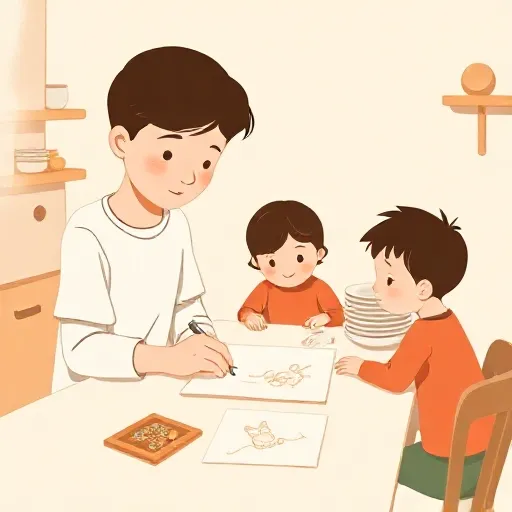
Over the past fifty years, laws around the world have loosened: people can divorce more easily, marry across races, and in some places same-sex couples can now marry. Some feminists push for a choice or contract model. Let any consenting adults create their own family rules and even their own contracts for who does what, who earns money, and how to handle having children. The philosopher Lenore Weitzman (late 20th century) and others argued that making marriage an explicit agreement — rather than an ancient status with fixed roles — would empower women.
But other feminists, the equality camp, push back. A contract signed in a world where women already earn less and face pressure to be the caretaker is not really free. Mill pointed out long ago that when a woman’s only decent economic option is marriage, her “choice” is a Hobson’s choice: that or nothing. Okin argued that just giving people a choice ignores the background system: workplaces that are inflexible, lack of affordable childcare, and pay gaps. She proposed practical fixes — both spouses should share household earnings equally, day care should be public, and work hours should be flexible. Notice she didn’t demand that love be replaced with legal contracts; she wanted the outside structures to stop stacking the deck.
This split raises tough questions. Should a society tolerate a family that freely chooses sharply unequal roles? What if that family teaches girls to be subordinate? Equality-oriented feminists say some choices undercut justice for the next generation and should be restrained, or at least counterbalanced. But they disagree about how direct the state should be — should we legally require shared housework, or just shape the options through policy? The debate is alive and unsettled.
Making babies: who gets to decide?
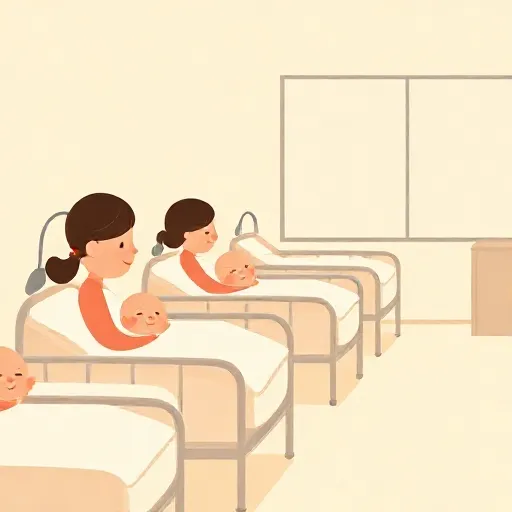
Nowhere do choice and equality clash more visibly than in reproduction. Should a woman be able to agree, for payment, to carry a baby for someone else — what’s called commercial surrogacy? In the famous Baby M case in the United States (1980s), a woman agreed to be inseminated and give the child to a couple for $10,000. After birth, she wanted to keep the baby. Courts had to wrestle with what a contract like that even meant.
Supporters of such contracts say a woman should decide what happens with her body and her labor; if men can sell sperm, why shouldn’t women be paid for the much harder work of pregnancy? Opponents, like philosopher Elizabeth Anderson (born in the 20th century), argue that pregnancy is not like other work — it’s deeply tied to a person’s identity — and that these contracts often exploit poorer women. Others, like philosopher Debra Satz (born in the 20th century), point to the background: in a world of gender inequality, surrogacy can turn into a way of controlling women’s bodies and reinforcing the idea that women are baby-machines.
The abortion debate also illustrates how hard it is to reduce everything to a single value. Some defend abortion access based on bodily rights: even if a fetus were a full person, argued philosopher Judith Jarvis Thomson (1929–2020) in a famous thought experiment, you cannot be forced to let another person use your body against your will. (She imagined waking up connected to a famous violinist who needed your kidneys; keeping him alive would be generous, but not required.) Others stress that abortion should not be considered in isolation from the lack of paid leave, sex-based pay gaps, and the cost of childcare. You can’t just talk about choice, they say, when the real-world options are so unequal.
Why this matters at your own dinner table
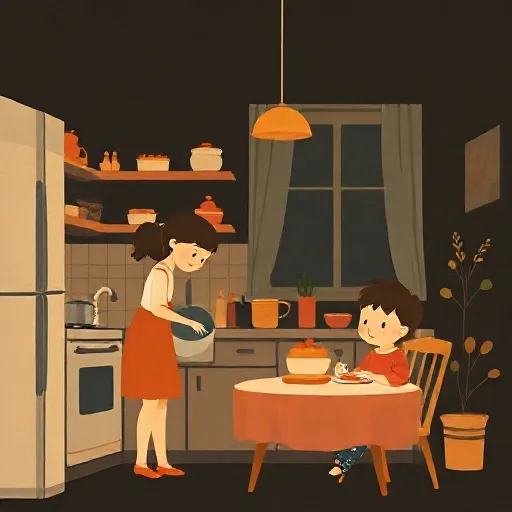
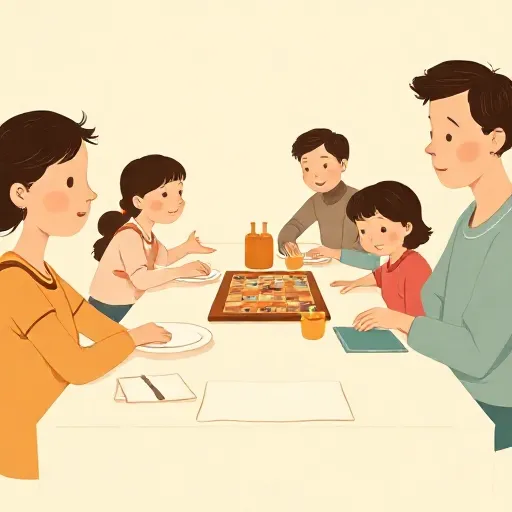
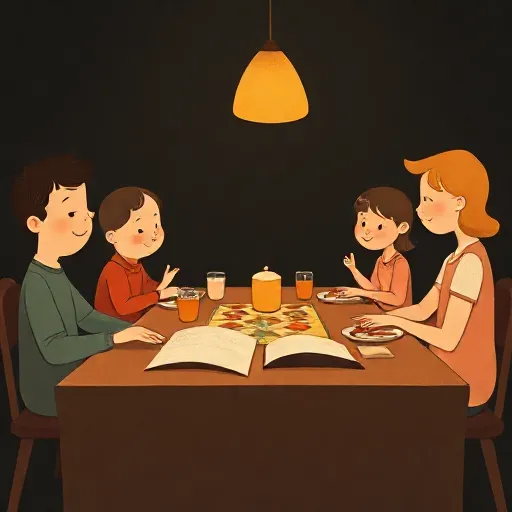
If all this philosophy feels far away, watch your own home tonight. Who answers a crying younger sibling first? Who gets to decide what’s for dinner — and who does the cooking and cleaning after? Who earns the money that buys the food? These small things happen every day, and they stack up into the shape of a whole life.
Feminist philosophers haven’t settled the proper mix of choice and equality, or how far the state should go in nudging families toward fairness. But they have shown that the family is not a magic bubble where power disappears. It’s a place where justice lives, quietly, in the same way it does in parliaments and courts — except here it touches your bedtimes, your chores, and your sense of what you can become.
Think about it
- If your family could make a written contract about chores and free time, would everyone really agree, or would some people have less bargaining power?
- Imagine a family that perfectly voluntarily chooses traditional roles — mom does all the caregiving, dad works outside. If their daughter grows up and finds it harder to become a scientist, is that a problem society should try to fix?
- If you could press a button and make all family roles completely interchangeable between men and women, would anything valuable be lost? What might it be?