Is Taking Care of Your Family Real Work?
The Question in Your Kitchen
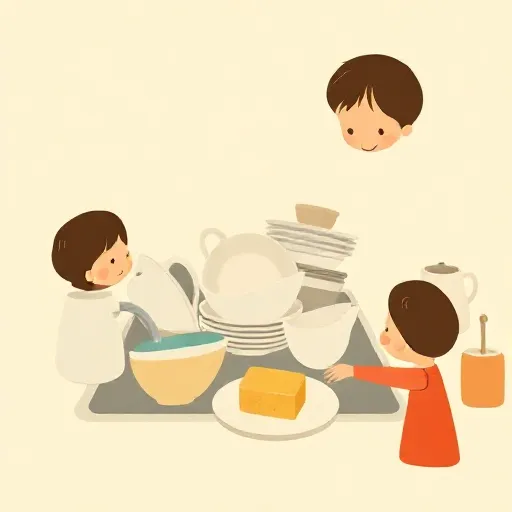
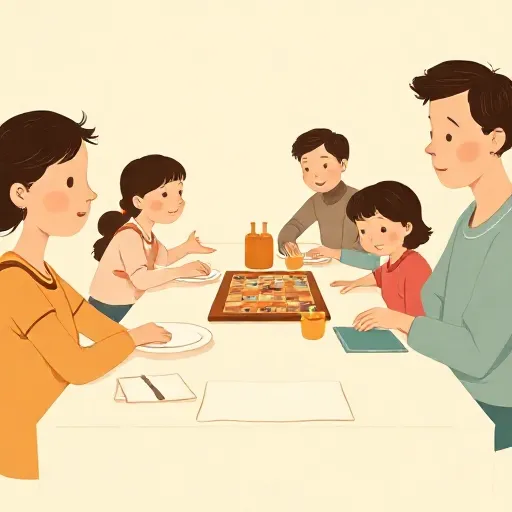
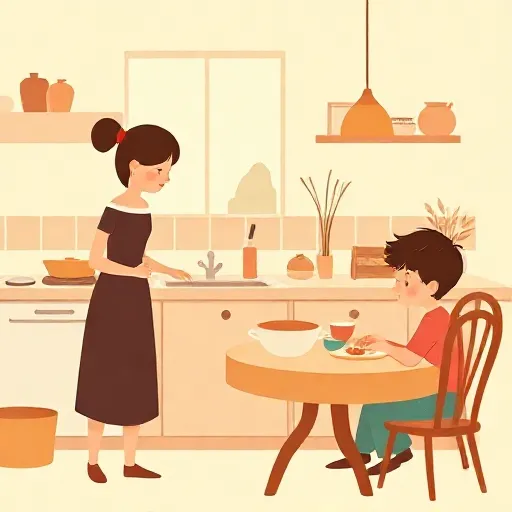
It’s 7:30 on a Tuesday evening. Dinner is over. Your friend’s mom heads to the sink and starts scrubbing a pan. Her dad settles into the couch and scrolls through his phone. Her older sister folds a mountain of laundry on the dining table. Her brother is already deep into a video game.
Who is working right now?
You might say the brother isn’t working — he’s playing. The dad might be answering work emails, so maybe he’s working. But what about the mom and the sister? They’re not getting paid. Yet they are using their time and energy to do things that need to be done: cleaning, organizing, caring for others. Is that work?
Philosophers and activists have been arguing about this question for over 150 years. Their debate isn’t just about dirty dishes. It’s about what counts as “real work,” who gets stuck with it, and whether that’s fair. It’s also about how our ideas about work shape the power between men and women, and how those ideas can change.
How Private Property Created “Women’s Work”
Karl Marx (1818–1883) thought work was the activity that makes us human. He focused on factories, farms, and the way workers were exploited for profit. But his friend Friedrich Engels (1820–1895) took a closer look inside the home. In his book The Origin of the Family, Private Property and the State (1884), Engels argued that women’s second-class status has a history — and it began with the rise of private property.
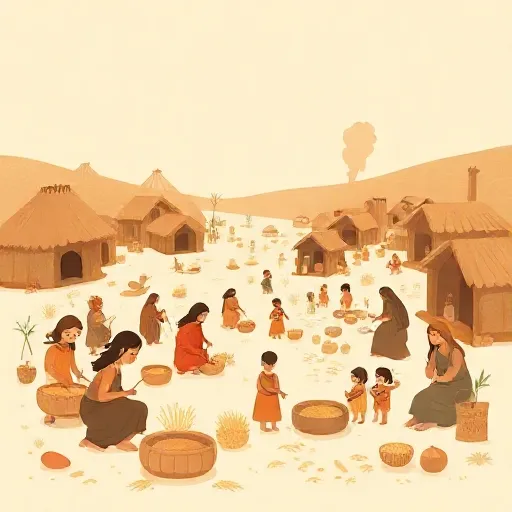
In early human groups, Engels believed, people lived communally. No one owned land or stored up extra food. Women’s gathering, childrearing, and craftwork were just as essential as men’s hunting. Many societies traced family lines through the mother (matrilineal systems). Women had social power.
That changed, Engels said, when some people began to own things — land, tools, animals. Private property created a new problem: men who controlled property wanted to make sure it passed to their own biological children. To do that, they needed to control women’s bodies and labor. Over time, women became, in effect, the property of fathers and husbands. This system of male control is what feminists call patriarchy.
When capitalism emerged, work was split in a new way. Men went out to earn wages in factories and offices. Women were left at home doing unpaid cooking, cleaning, and childcare — work that was no longer counted as “real” because it didn’t bring in money. Engels saw this public/private split as a trap: women became dependent on men’s wages, and their household labor was invisible. But he also saw a crack in the trap. Capitalism needed women workers too, which gave some women a taste of economic independence. The question, he argued, was whether unpaid housework would still hold women back.
First-Wave Fighters: The Dream of a Social Kitchen
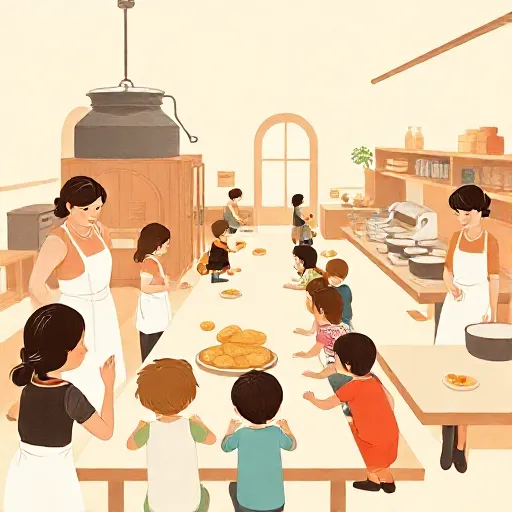
A generation later, American writer Charlotte Perkins Gilman (1860–1935) offered a bold solution: take housework out of the home entirely. In her 1898 book Women and Economics, she argued that cooking, cleaning, and laundry should be done by trained professionals in public buildings — community kitchens, laundries, and daycares. A woman could drop off her children in the morning, pick them up after work, and never have to scrub a floor unless she was paid to do it.
Gilman was pushing against a powerful 19th-century idea called the “cult of true womanhood.” This ideology said that a woman’s natural place was in the home, that she was morally pure and uniquely suited for raising children. Paid work would supposedly corrupt her. Gilman flipped that argument: keeping women locked at home stunted their minds and made them dependent. Socializing housework would free them to be full human beings.
Around the same time, activists like Jane Addams (1860–1935) put similar ideas into practice in a different way. Addams founded settlement houses in Chicago where immigrant families could access childcare, education, and health services. She called this “municipal housekeeping” — the idea that women could bring their caregiving skills into public life and clean up corrupt politics, just as they would clean a dirty house. These first-wave feminists didn’t all agree on tactics, but they shared a conviction: the line between “private” housework and “public” work was crushing women’s chances.
The Second Wave: Wages, Witches, and the Value of Caring
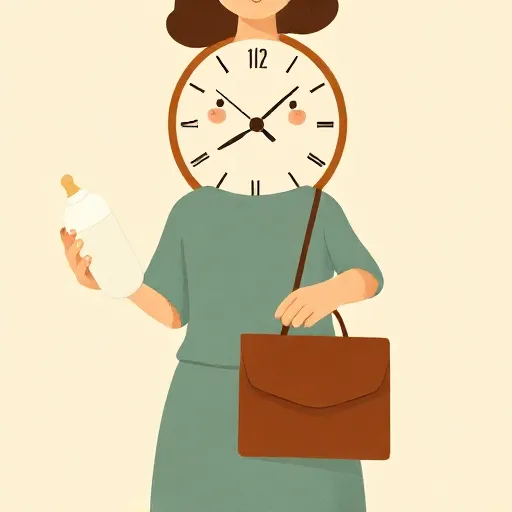
By the 1970s, women were entering the workforce in huge numbers — but the dishes didn’t wash themselves. Sociologist Arlie Hochschild (born 1940) gave this problem a name: the second shift. After eight hours at the office or factory, women came home to a second unpaid job of cooking, cleaning, and childcare, while men typically spent far fewer hours on housework.
Marxist-feminist thinkers of this era argued that capitalism actually depended on this hidden labor. Raising children, feeding families, caring for the sick — this is social reproduction work. It creates the next generation of workers without costing employers a cent. In 1972, a group of feminists including Mariarosa Dalla Costa (born 1943) and Silvia Federici (born 1942) launched the International Wages for Housework campaign. Their demand was deliberately startling: the government should pay women for doing housework.
The goal wasn’t really to turn mothers into employees of the state. It was to force everyone to see domestic labor as real, necessary work. If it’s worth paying for, then it must have value. The demand also highlighted that women’s unpaid caring was a form of hidden exploitation.
Federici went even further. She studied the witch hunts of early modern Europe and argued that they weren’t just about superstition. As capitalism developed, she claimed, women who controlled their own reproduction — healers, midwives, women who refused to marry or who lived outside male authority — were persecuted in order to force all women into unpaid reproductive work. This was a way of saying that the control of women’s work and bodies is not a side effect of capitalism, but part of its foundation.
Meanwhile, other feminists were asking an even deeper ethical question: Is caring work different from other kinds of work? Psychologist Carol Gilligan (born 1936) proposed that women often reason about right and wrong using an ethics of care — focusing on relationships, needs, and responsibilities — rather than abstract rules of justice. That doesn’t make care less valuable; it might make it morally central. Some philosophers began to argue that a just society wouldn’t just split housework fairly. It would value care work so highly that everyone, men and women, would be expected to do it — and it would be supported by public resources like paid parental leave, excellent daycare, and living wages for nurses and teachers.
The Chore Gap That Won’t Close
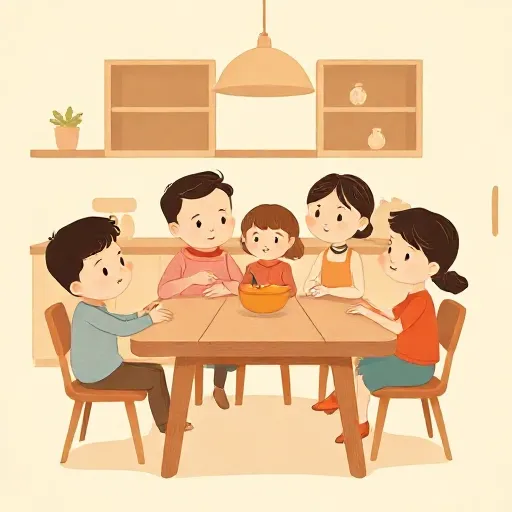
So, has all this thinking and arguing changed anything? The answer is: somewhat, but not nearly enough. Studies in dozens of countries consistently show that women still do significantly more unpaid housework and childcare than men, even when both partners work full-time. This “chore gap” narrowed in the late 20th century, but progress has slowed or even reversed in some places. During the COVID-19 pandemic, the extra burden of home schooling and care fell disproportionately on mothers.
The same old devaluation shows up in the paid workforce too. Jobs that involve care — nursing, childcare, elder care, teaching young children — are often paid less than jobs requiring similar skills in industries dominated by men. Campaigns for comparable worth argue that this isn’t a coincidence. The devaluing of “women’s work” follows women wherever they go.
Philosophers and economists today debate solutions. Some propose a universal basic income, so that caring for a family isn’t a path to poverty. Others push for shorter workweeks for everyone, so that men have no excuse not to cook, clean, and raise children. Still others argue that we need to change the culture first — to teach boys, from a young age, that caring is skillful work, not a second-class activity.
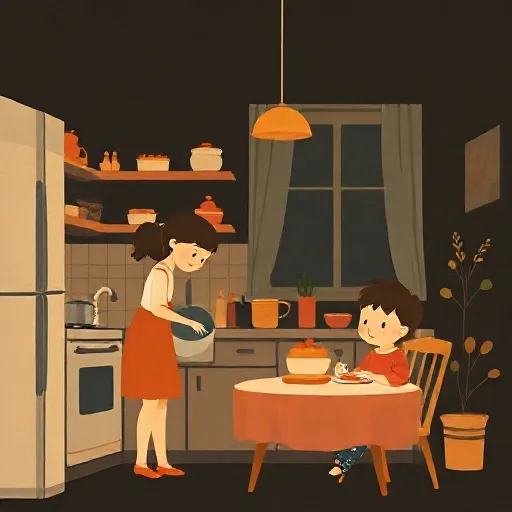
What would Engels or Gilman see if they walked into your kitchen tonight? They might recognize the same old uneven division of labor. But they would also see something they fought for: the idea that who does the dishes is not a trivial question — it’s a question about power, fairness, and what we value most in human life.
Think about it
- If you and a friend start a summer dog-walking business, but they always take the playful puppies while you clean up after the older dogs, is that fair? What would a fair split of the work look like, and why?
- Some people say that taking care of a baby is special because it’s done out of love, not for money. Do you think paying parents for childcare would change the love they feel? Could money and love mix in a just world?
- Imagine a future where robots could do all housework and childcare perfectly. Would that end the debate about “women’s work,” or might new forms of inequality pop up? What could those be?