
Is Your Summer Job Making You Who You Are?
Walking the Dog, Earning a Few Bucks: Is It Work?
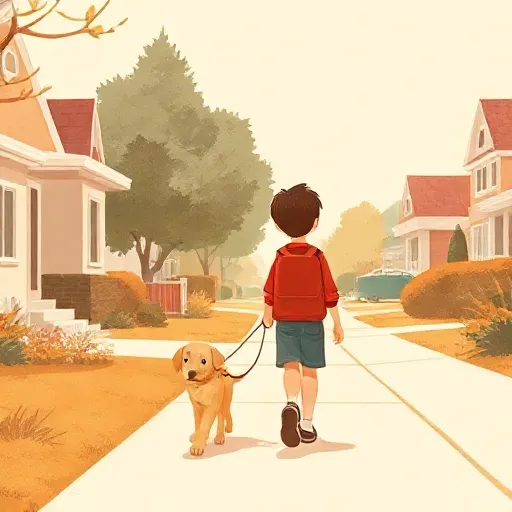
You’re twelve years old, and your neighbor offers you five dollars to walk her golden retriever every afternoon. You leash up, wander the block, and come back with a tired dog and a crisp bill. You’d probably call that a job. But is it work?
Philosophers have a hard time pinning down what work really is. Sure, we can list examples: a taxi driver, a teacher, an assembly-line worker, a surgeon. But does work always mean being paid? Not necessarily. Many people do hard, valuable things without getting a cent: caring for a sick grandparent, running a school bake sale, or even a prisoner doing forced labor. So money isn’t a requirement. And you don’t need an employer. For most of human history, the typical worker was a self‑employed farmer or craftsperson, not someone with a boss.
The philosopher Bertrand Russell (1872–1970) once joked that work is just “work is of two kinds: first, altering the position of matter at or near the earth’s surface relatively to other such matter; second, telling other people to do so.” That’s a fancy way of saying work means changing the physical world in a useful way, or directing others to change it. But is that enough? If you move a rock from one side of the yard to the other just for fun, is that work? Probably not.
Many philosophers now argue that work is about producing objective value — goods or services that other people can enjoy or use, independent of the worker. A baker turns flour into bread that others can eat; a teacher helps students understand a subject; a dog‑walker makes sure a pet gets exercise while its owner is busy. The value is out there in the world, not just in your head. This separates work from leisure. When you’re at leisure, you’re doing something mainly for your own direct enjoyment: sunbathing, listening to music, or playing a video game. You can’t pay someone else to sunbathe for you and get the same fun. Work, on the other hand, creates value that can be handed off.
So yes, walking your neighbor’s dog counts as work. You’re deliberately doing something that has objective value for someone else — a happy, exercised dog — even if you’d do it for free just because you love dogs.
More Than a Paycheck: The Hidden Good Stuff Work Can Give
When you think about work, you probably think first about the money. Economists call this the exchange value of work — the wages or goods you get in return for your effort. If work were only about cash, then being unemployed would just mean being broke. But studies show something surprising: long‑term joblessness damages people’s health, increases stress, and makes them less happy, even when they still have enough money from savings or benefits. So work must give us something more.
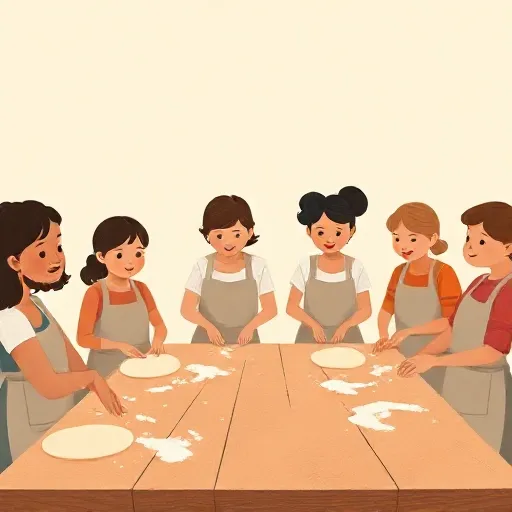
One thing work can provide is a sense of community. The political theorist Cynthia Estlund points out that the workplace is where most adults meet and cooperate with people outside their families. When you work alongside others, you build friendships, share a common goal, and feel like you belong to something bigger. A team of bakers in a kitchen isn’t just making loaves — they’re creating a little society.
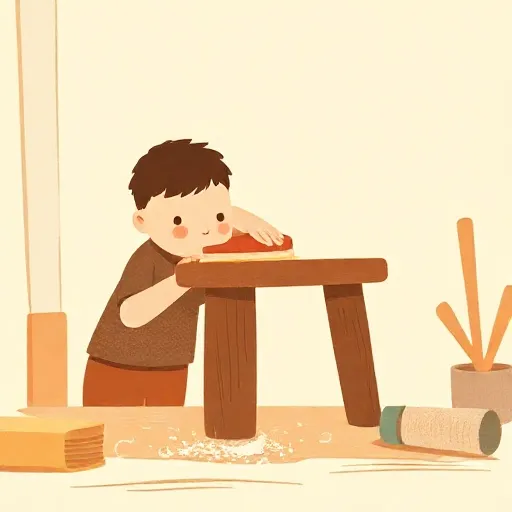
Work can also help you self‑realize, a term philosophers use to mean becoming the best version of yourself by exercising your human powers. Think about carpentry: sawing, measuring, assembling. Those activities use your mind and body in a focused way, and when you finish a chair, you can see your own effort turned into something real. The philosopher Karl Marx (1818–1883) believed that this kind of work is an expression of our active nature — we put our stamp on the world, and the things we make reflect who we are. In that way, work can make you more fully human.
Then there’s the search for meaning. Some philosophers, like Andrea Veltman, argue that meaningful work engages your emotions and gives you a sense of purpose. You might feel that teaching a child to read is meaningful because it serves a bigger good and calls on your patience and empathy. John Rawls (1921–2002) went even further: he claimed that having a chance to do meaningful work is a basis for self‑respect — the confidence that your life plan is worth pursuing. Without that, people can start to feel worthless.
But not everyone agrees that all work delivers these goods, as we’ll see next.
The Assembly Line and the Alienated Worker: Marx’s Warning
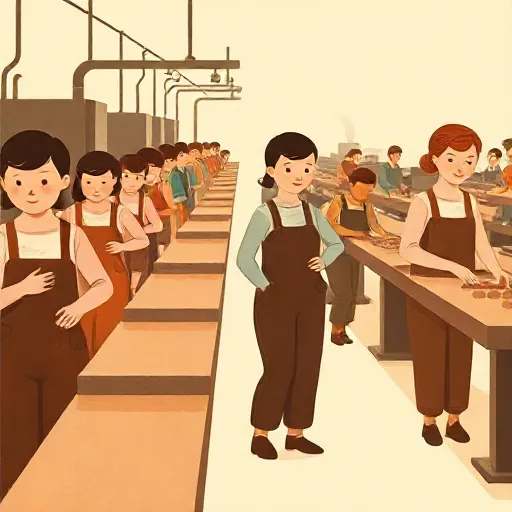
For every carpenter who feels proud of a chair, there are millions of workers who never see the final product they helped make. The industrial revolution introduced the division of labor, breaking production into tiny, repetitive steps. On an assembly line, one person tightens a bolt, another attaches a screen, over and over. The economist Adam Smith (1723–1790) worried that this would make workers “as stupid and ignorant as it is possible for a human creature to become,” because they never have to think or use their full range of skills.
Marx took this worry much further. He described an experience called alienation — a feeling of being cut off from what makes you fully human. In a factory job, he argued, you have no control over what you make. You work only because you must to earn a living, not because you enjoy the work itself. You can’t see your own creative stamp in the final product, and instead of cooperating, workers become rivals competing for the same low wages. Alienation isn’t just boredom; it’s a deep sense of estrangement from your own life and from other people.
Even today, many jobs don’t offer the glossy goods we described earlier. Some people earn so little that they remain poor despite working full‑time. Others do jobs that are invisible or ignored, like scrubbing office floors at night or answering complaint calls in a giant call center. These workers rarely get social recognition or a feeling of purpose. And some jobs demand emotional labor: flight attendants must smile warmly even when passengers are rude, and call‑center agents must sound cheerful while dealing with angry customers. The researcher Arlie Hochschild found that this kind of acting can make workers lose touch with their own real emotions and harm their mental health.
So the picture is messy. Work can be a source of dignity, but it can also be draining, unfair, and even dehumanizing. That’s why many critics say our society pushes work too hard as the only way to have a good life.
Should Everyone Have a Job? The Fight Over Rights and Obligations
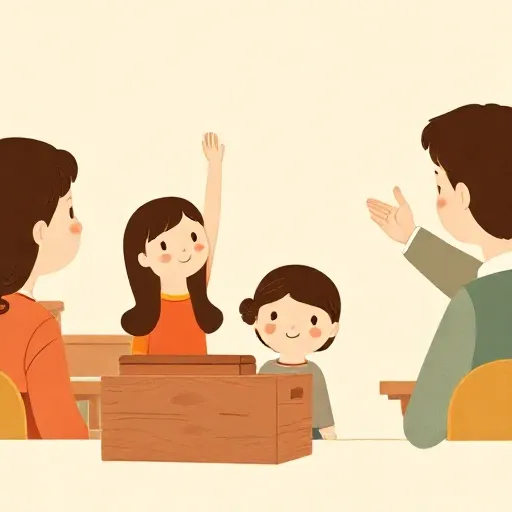
If work can be both good and bad, who should be required to do it? Some thinkers believe there is a right to work. The Universal Declaration of Human Rights says everyone has the right to free employment and protection from unemployment. But if there’s a right to work, who must provide the job — the government? And if the government might create dull, pointless jobs just to meet the quota, would that really honor the right? Philosophers like Paul Gomberg argue that work is the main way we make a socially valued contribution and earn recognition, so a just society should make sure everyone has that chance.
On the flip side, some say there’s a duty to work. The idea comes from fairness: if you benefit from the roads, hospitals, and schools that other people’s work creates, you owe something back. But opponents reply that forcing everyone to work would mean the state pushing one vision of a good life — the worker’s life — on everyone. What about the beachcomber who lives simply and doesn’t harm anyone? Should the law make her get a job? Philosopher Philippe Van Parijs thinks not; he even supports a universal basic income, so that people can choose whether to work or not.
Workplace fairness doesn’t stop there. Some philosophers, like Elizabeth Anderson, argue that most workplaces are like private dictatorships. Managers give orders, and employees have to obey, with little say over rules or schedules. Anderson calls this “private government,” and she and others push for workplace democracy: giving workers a vote on big decisions, much like citizens in a democracy. After all, if we think the state should be run democratically, why shouldn’t the place where we spend most of our waking hours be run that way too?
These debates highlight a deeper question: how much should work define who we are? In many societies, women have often been directed into lower‑paid, care‑based jobs (nursing, teaching), and the work of raising children and keeping a home has been dismissed as “not real work” because it isn’t paid. Feminist philosophers note that this gendered division of labor keeps women poorer and reinforces inequality. Fixing justice in the world of work, then, means changing not just paychecks but the whole structure of who does what and why.
The Robot Uprising (or Rescue): What Work Will Look Like When You Grow Up
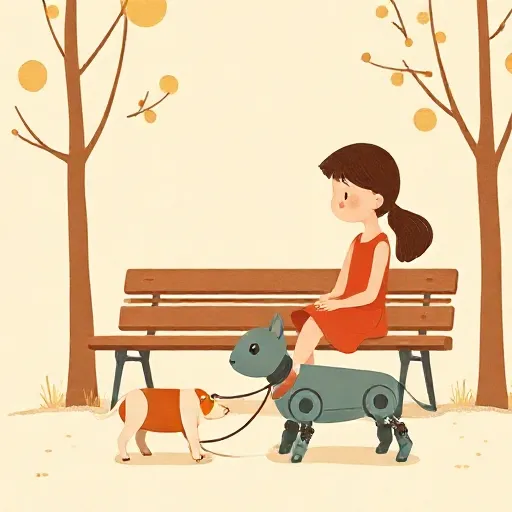
Today, robots and artificial intelligence can flip burgers, drive trucks, and even compose music. Some experts predict that by the time you’re an adult, far fewer people will need to work for pay. This could be a dream: more time for hobbies, family, and play — a world where work is optional. Philosopher David Danaher even says that if work is currently “structurally bad” for many, maybe we should welcome the end of mandatory employment.
But there’s a catch. Work has been the main way we’ve found community, purpose, and a sense of making a difference. If those disappear, people might feel lost, like an athlete forced to retire too soon. Michael Cholbi worries that we’ve built our identities around work so much that a sudden work‑free world could cause a psychological crisis. And if only a small group of people own the robots, the gap between the super‑rich and everyone else could get even wider.
That’s why the philosophical puzzle you started with — is walking a dog “work”? — balloons into a question that will shape your whole life. What makes an activity valuable? Is it the money, the human connection, the chance to grow, or something else? As a twelve‑year‑old, you get to decide how much of your waking life you want to hand over to the kind of thing we call “work.” And you get to join the debate about what a fair and meaningful world of work should look like.
Think about it
- If your favorite hobby became a paid job, would it still feel like leisure? Why or why not?
- Imagine a society where robots do all the necessary work and people get a basic income. Would you still choose to do some form of work? What kind would you pick — and why?
- Some people say all work has dignity, even scrubbing toilets. Others say dignity depends on how you’re treated. What do you think makes a job dignified or undignified?