Why Have There Been No Great Women Artists?
The Question That Started It All
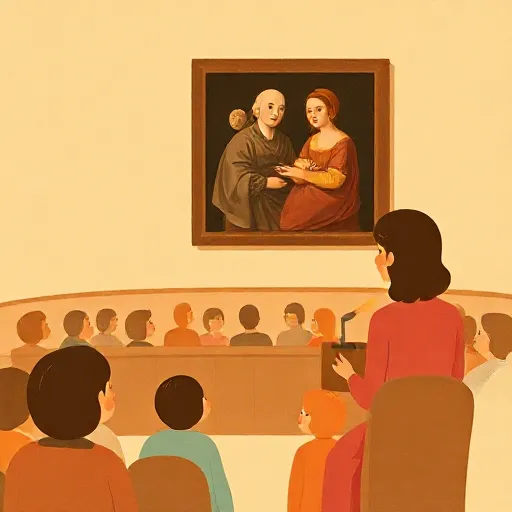
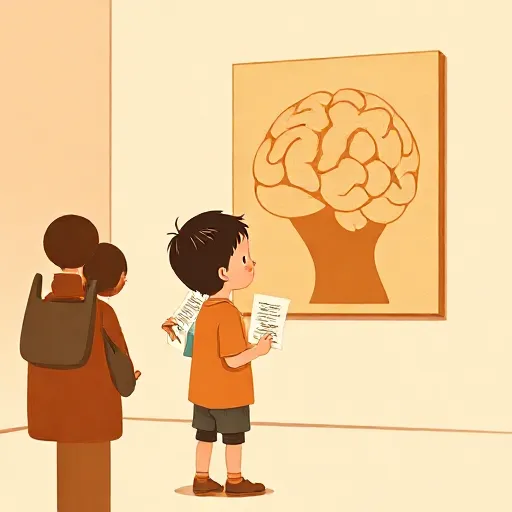
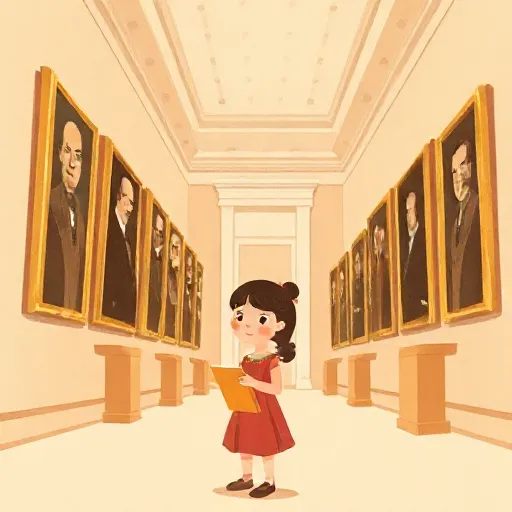
Imagine walking into a big art museum. The walls are covered with paintings by Rembrandt, Michelangelo, and Van Gogh. You look for a woman’s name on the little plaques. You find almost none. Why?
In 1971, the art historian Linda Nochlin (1931–2017) asked exactly that: “Why have there been no great women artists?” She did not believe women were less creative. She argued that the entire system of fine art — the kind prized in museums, like painting and sculpture — was built to push women out. To see how, you have to spot the hidden gender rules baked into the very idea of art.
For centuries, Western thinkers split human skills into two camps. Fine art existed for pure enjoyment, detached from everyday use. This meant painting, classical music, and poetry. Craft meant making useful things: quilts, pottery, furniture. That distinction might seem harmless, but it came with a huge cost. Craft objects were treated as less original and less important. Since women were expected to produce domestic goods — sewing, embroidery, decorating the home — their creative work got shoved into the craft pile and erased from the history of “real” art.
The ancient Greek philosopher Plato (c. 428–348 BCE) set an early pattern without ever talking about women artists. He worried about art that imitates appearances, calling it mimesis. In his view, paintings and dramatic poetry were dangerous because they stirred up emotions and bodily pleasures rather than cool, abstract thought. That created a ranking: mind over body, reason over emotion, universal over particular. Feminists later noticed that these pairs map onto old gender ideas — male tied to mind and reason, female to body and emotion — with the “male” side always treated as better. Long before anyone talked about “fine art,” philosophy was stacking the deck.
By the 1700s, the fine‑art category hardened. Works painted for pure beauty went into public museums and concert halls, while embroideries stayed in the home. Well‑bred young ladies were encouraged to paint a little or play music for family, but showing those talents in public was frowned on as improper. Few women could get the training or professional exposure to become recognized “great” artists. The history of art simply screened them out.
Genius: A Gift Only for Men?

If fine art was the top shelf, then the genius was the ultimate artist: someone with a rare, almost magical creative power. The problem? Most philosophers insisted that only men could have it. Jean‑Jacques Rousseau (1712–1778), Immanuel Kant (1724–1804), and Arthur Schopenhauer (1788–1860) all claimed women’s minds were too weak or emotional to produce genius.
The philosopher Christine Battersby studied this history and found a bizarre twist. While women were blocked from being geniuses, male artists were described with female metaphors. The genius was said to “conceive” an idea, go through a “pregnancy” of creation, and “give birth” to a masterpiece in an agony of labor. Men borrowed the creative power of motherhood, yet actual mothers were told their art was just a natural outflow, not an achievement.
This double standard still echoes. When the painter Artemisia Gentileschi (1593–c. 1656) was rediscovered, many of her dramatic works turned out to be truly great — yet for centuries they had been wrongly assigned to male painters. In literature, women like George Eliot (1819–1880) and Charlotte Brontë (1816–1855) broke into the novel, a newer art form, yet had to fight doubt that their work counted as “genius.”
Feminists disagree about what to do with the idea of genius. Some say the whole concept is a myth that hides the teamwork, education, and luck behind any creative success. Others argue that we should look harder for female traditions of genius — the brilliance in what women did create, even when the art world refused to see it.
The Male Gaze: Who’s Doing the Looking?
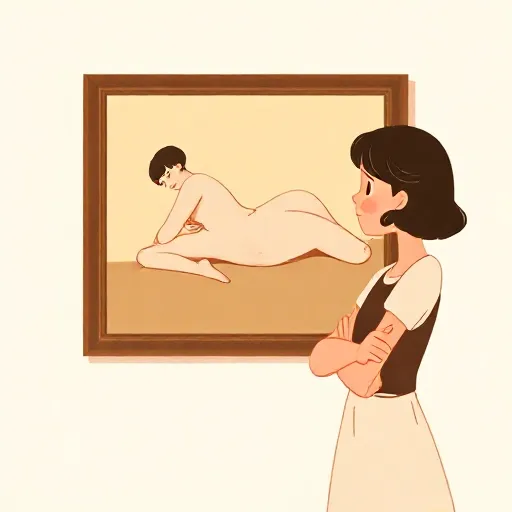
Imagine a movie scene where the camera glides slowly across a woman’s body. Whose eyes are you seeing through? In the 1970s, film theorist Laura Mulvey gave a name to this pattern: the male gaze. Many artworks assume a masculine viewer who looks at women as objects of attraction. The looker is active; the looked‑at is passive. This runs through centuries of painting and film, and it pushes women in the audience to adopt a male viewpoint just to feel like the “right” kind of spectator.
The roots of the male gaze reach back to how philosophers talked about beauty and pleasure. In the 1700s, thinkers such as Kant and Edmund Burke (1729–1797) developed the idea of aesthetic experience: a special pleasure that is supposedly disinterested, meaning free of bodily desire or practical goals. Yet even as they praised disinterested beauty, they often treated the female body as the ideal beautiful object. Burke wrote that beauty’s delicate curves reminded him of a woman’s shape. Kant said a woman “makes herself an object of everybody’s taste.” Women were both the standard of beauty and declared incapable of the highest aesthetic judgment, which involved the sublime — overwhelming, rough, vast experiences like a stormy sea. The sublime was coded masculine; beauty, feminine. The message: women could be looked at but could not do the important looking.
Feminist philosophers argue that disinterestedness is a myth. Looking is never entirely neutral. The gaze carries power — power to define, to control, to make someone an object. Noticing the male gaze does not mean all art is ruined. It means you can start to ask, when a painting, advertisement, or video game assumes a viewer who is male, white, or straight, who is being left out?
Feminist Artists Turn the Tables
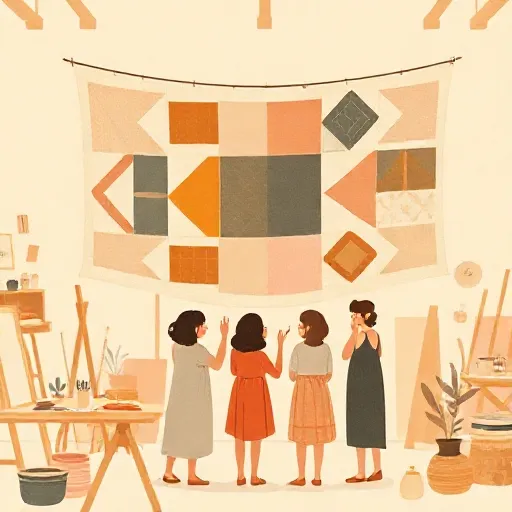
Knowing the problem is one thing. Changing it is another. Starting in the 1970s, women artists joined the feminist movement and went on the offensive. Artists such as Faith Ringgold and Miriam Schapiro used fabric, thread, and quilting — materials long dismissed as “craft” — to demand that these forms be taken seriously. Hanging a quilt in a museum forced the question: what makes something fine art anyway?
Judy Chicago’s large installation “The Dinner Party” (1979) set a triangular table for thirty‑nine famous women from history, each placemat adorned with imagery evoking female bodies. The work sparked furious debate. Some said she was reducing women to their biology; others praised her for putting women’s experiences center stage. Either way, the taboo broke. Artists began making art about menstruation, childbirth, and sexuality — subjects the polite art world had long avoided.
Performers pushed further. Karen Finley smeared her body with food to confront sexual exploitation. Adrian Piper, a philosopher as well as an artist, explored race and identity in jarring public pieces. The activist group the Guerrilla Girls plastered cities with posters exposing how white and male the art world remained. Feminist art isn’t a single style; it’s a way of using creativity to ask hard questions about power, bodies, and whose stories matter.
Later generations — often called postfeminist — kept expanding the territory. Cindy Sherman photographs herself in costumes that mock feminine stereotypes, showing how gender can feel like a performance we learn. This playful but serious work reminds us that art can be funny, weird, and disturbing while still being philosophy in action.
Why This Still Matters in Your Life
You probably don’t spend your days in museums, but feminist aesthetics leaps out of the gallery into daily life. Think about the ads on your phone, the movies you stream, the selfies you take. Who decides what a beautiful body looks like? Why is some cooking called “artisanal” while your grandmother’s recipe is just “home cooking”? These are aesthetic questions with political weight.
Feminist thinkers urge you to look again at the creativity you pass over. A carefully arranged room, a comic you draw in a notebook, the way you dress for a school play — all involve choices about form, feeling, and meaning. They belong to the huge, messy field philosophers now call everyday aesthetics. By paying attention to what was once dismissed as craft, domestic, or feminine, you get a fuller picture of how human beings make their worlds meaningful.
The question “why have there been no great women artists?” turned out to be a trick. It wasn’t that women weren’t creating; the definition of greatness had been rigged. That same lens can help you see who gets called a genius today, who is made to feel like an object of a stare, and what beauty standards cost real people. Art isn’t just paint on canvas. It’s a conversation about who we are and who we want to be — and you’re already part of it.
Think about it
- If your great‑grandmother’s hand‑stitched quilt were hung in a museum, would it be called art? What makes something a work of art — the object itself, or where it is displayed?
- Think of a movie or video game that shows a character’s body in slow motion. Whose eyes are you supposed to be seeing through? How might that change if the director were different?
- What is one everyday activity you do (cooking, decorating your room, arranging a playlist) that could be treated as a kind of art, even if nobody calls it that? What would change if people took it seriously as art?