
Did the Greatest Philosophers Secretly Think Women Were Inferior?
What the Big Names Said About Women
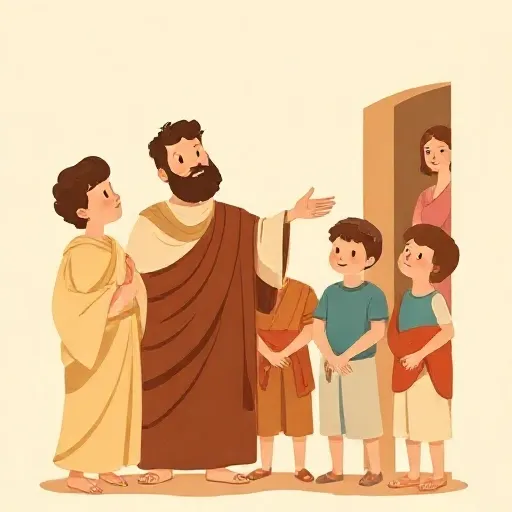
In ancient Athens, a student sat at the feet of Aristotle (384–322 BCE). The great philosopher explained that women were not fully human. “A female,” he wrote, “is, as it were, a deformity.” That was not a stray comment. Aristotle believed women had fewer teeth, that their courage lay in obeying, and that a mother contributed only passive matter to a child, while the father supplied the shaping form. He was not alone. For centuries, the thinkers we call the canon — the official list of philosophy’s greatest minds — said plainly that women were inferior.
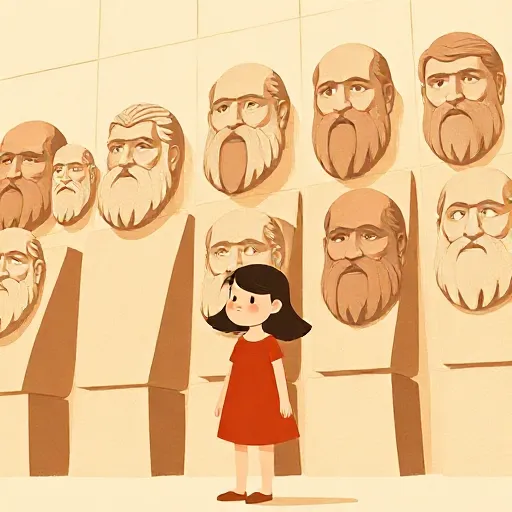
The German philosopher Georg Wilhelm Friedrich Hegel (1770–1831) insisted women could not handle advanced science or philosophy because they acted on “arbitrary inclinations” rather than universal reason. Immanuel Kant (1724–1804), famous for his moral philosophy, also recorded sexist and racist remarks. Feminist critics began by simply collecting these statements. The list was long and dispiriting. Yet many scholars first shrugged. They said Aristotle and his peers held mistaken views about women, just like most Athenians — but those mistakes did not taint their bigger theories. Feminist philosophers saw a deeper problem.
Hidden Gender in the Bones of Reality
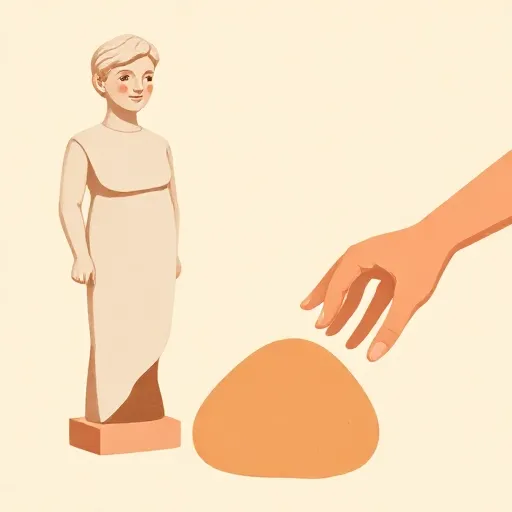
Aristotle’s entire picture of the world rested on hylomorphism — the idea that everything is a combination of form (what makes a thing what it is) and matter (the stuff it is made of). And he linked form with being male, and matter with being female. Form was better, more active, more rational. Matter was passive, incomplete, almost needy. That pairing ran through his metaphysics, his biology, his politics, and his theory of art. It was not a side note. It was part of the architecture of his thought.
Feminist critics argued that this makes hylomorphism a gendered notion — a concept connected to sexual difference, either openly or through metaphor. Some, like philosopher Lynda Lange, claimed the sexism was intrinsic to Aristotle’s system: if you cut out the gender hierarchy, the whole framework would collapse. Others, like biologist and philosopher Sophia Connell, have pushed back, arguing that Aristotle’s biology does not require one parent’s contribution to be “better” than the other’s, and that the theory can be read as non-sexist. The debate continues. But the very fact that we have to ask — “Is this ancient theory secretly built on sexism?” — reshapes how we read the most famous thinkers.
Reason: A Club with a “No Girls” Sign?
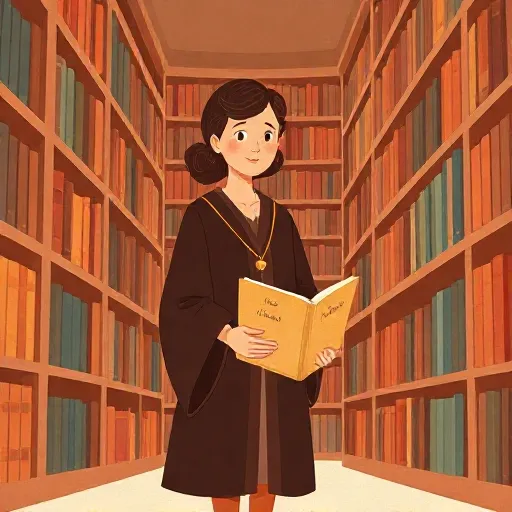
Feminist historian of philosophy Genevieve Lloyd (born 1941) made an even bigger claim. In her book The Man of Reason, she traced how the ideal of reason — the mind’s power to think clearly and objectively — was consistently described as male. From ancient Greece to the twentieth century, philosophers linked rational thinking with maleness and emotion with femaleness. The association was symbolic: it wasn’t about real men or women, but about a cultural habit of putting reason on one side of a gender line.
Susan Bordo (born 1947) told a sharper story. She argued that with the rise of modern science and the philosophy of René Descartes, ideals of objectivity became explicitly hostile to anything coded female. The modern mind was pictured as separate from the body, from feeling, from the messy material world — all of which were cast as feminine and untrustworthy. Luce Irigaray (born 1930) went further, using parody and humor to show how patriarchal thinking tries to make itself look universal by hiding sexual difference, but always cracks under the strain.
If reason itself is gendered male, then philosophy’s claim to be objective and universal looks like a mistake. Yet that conclusion does not force feminists to simply throw out reason. Some philosophers argue the maleness might be extrinsic — a historical accident that can be peeled away without destroying the concept. Others say even if it is intrinsic, the right response is not rejection but reconceptualizing reason to be more inclusive. The history lesson opens a live question, not a final verdict.
The Women Philosophy Forgot
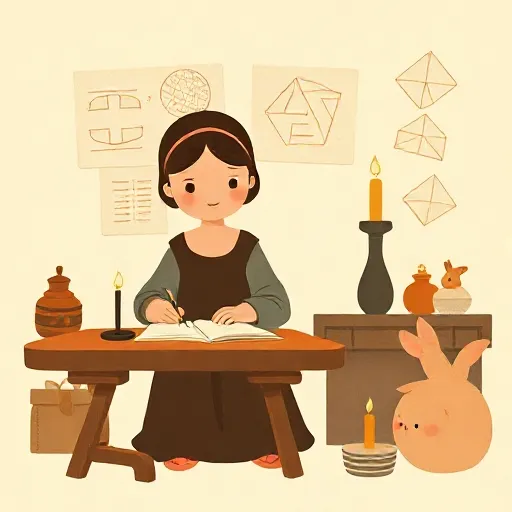
While one team of feminists criticized the canon, another set out to rewrite it — by digging up the women philosophers who had been buried. Philosopher Mary Ellen Waithe documented dozens of women from ancient Greece, the medieval world, Asia, Africa, and the Americas. Her massive project shattered the myth that there had been no women philosophers, or none worth reading. The silence was not natural. It was created.
The most dramatic recovery happened with early modern European women. Princess Elisabeth of Bohemia (1618–1680) challenged René Descartes in a famous exchange of letters, insisting that an adequate theory of causation must explain how mind and body influence each other — a problem Descartes never fully solved. Margaret Cavendish (1623–1673) developed a bold theory of nature in which matter itself moves by its own inner patterning, a kind of vitalism. Emilie du Châtelet (1706–1749) contributed to physics and defended a key principle of explanation, the Principle of Sufficient Reason. These women were not spinning philosophy on the margins; they were in the middle of the period’s hardest debates about causation, science, and the nature of reality.
But putting them back into the story is tricky. The simple “add a woman and stir” approach can make them seem like sidekicks. Scholars now try to show how their work connects to central philosophical problems and to one another. For example, a line of women from Anna Maria van Schurman to Mary Astell argued for women’s education by using the very rationalist principles that male philosophers had developed — turning the tools of the canon against its own misogyny. Their existence proves that philosophy was never really an all-male activity. The story had just been told that way.
Why This Still Matters

You are twelve, and you are already part of this story. The questions feminist philosophers asked about the canon — Who got to speak? What ideas counted as “real” philosophy? Whose voices were left out? — are questions you can ask about any subject, any classroom, any book you read. The recovery of women thinkers shows that traditions that seem solid and eternal are often the result of choices, and those choices can be unmade.
When you learn that Aristotle’s hylomorphism may be shot through with gendered assumptions, you learn to read a theory not as a finished product but as something with a history and blind spots. When you meet Princess Elisabeth questioning Descartes, you see that philosophy is not a monologue of lone geniuses but a conversation. And when you realize that brilliant women were erased, you recognize that fairness matters even in the world of ideas.
The excavation isn’t finished. Scholars are now digging into medieval mystics who wrote about self-knowledge, nineteenth-century African American women who reworked natural law arguments against slavery, and countless thinkers beyond the European tradition. The canon is cracking open. The next time you pick up a book of “the great philosophers,” you might ask: Who picked these thinkers? And who is still missing?
Think about it
- If a philosopher’s big theory about how the universe works was built on ideas that treated women as inferior, can we still trust that theory — or do we need to rebuild it?
- Imagine finding a brilliant thinker from 300 years ago who was left out of the record just because of their gender. What else might change if we included their voice in the story we tell today?
- Have you ever felt that something “serious” — like math, coding, or leading a team — was meant for only one kind of person? How did that feeling shape what you believed you could do?