
What If Your Body Shapes Every Thought You Have?
The Dream of Pure Certainty

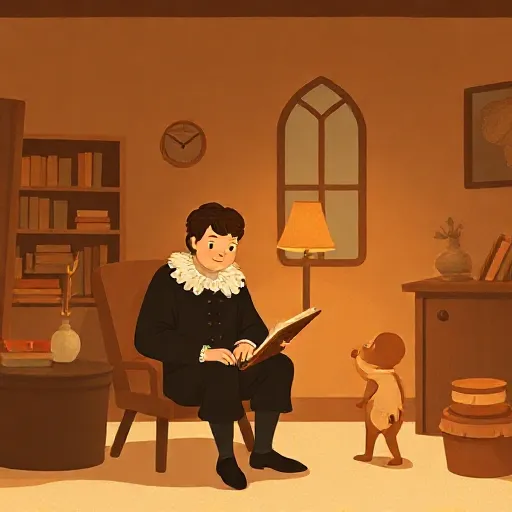
On a winter night in the 1640s, the French philosopher René Descartes (1596–1650) sat beside a fire and tried to doubt everything. Could his senses be lying? Could the whole world be a dream? He wanted a foundation for knowledge so solid that nothing could shake it. To find it, he decided to treat his own body as an enemy. Emotions, instincts, the changing world — all of it had to be shut out so pure reason could take over.
This dream of objectivity — a perfectly clean, detached view of reality — became one of the most powerful ideas in Western philosophy. But the contemporary philosopher Susan Bordo (born 1947) argues that it came with a hidden cost. Drawing on psychology and anthropology, she says Descartes’s quest was a flight from the feminine. In his time, nature and the body were often pictured as female — soft, fertile, and terrifyingly changeable. Reason, by contrast, was male: firm, ordered, and in control. When Descartes threw out everything bodily to reach certainty, he was also pushing away traits his culture had coded as feminine. He turned anxiety about messiness into a method for feeling safe.
Bordo notices that in many cultures, when people feel the world is in too much flux, they tighten rules and elevate what is “pure.” In Descartes’s century — shaken by the Reformation, the rise of science, and the discovery that Earth was not the center of the universe — the longing for fixity became extreme. He became, Bordo says, the great dirt‑rejecter of philosophy, obsessively dividing mind from body, order from chaos, clean from dirty. That separation may feel like strength, but it also cuts us off from everything that makes knowledge alive.
Space Is Moving, Not Still
Watch a house being built, and you might think of space as something empty and still — a gap waiting for walls. But the philosopher Elizabeth Grosz (born 1952) asks: what if space itself is becoming, always in motion, always tangled with time, bodies, and power?
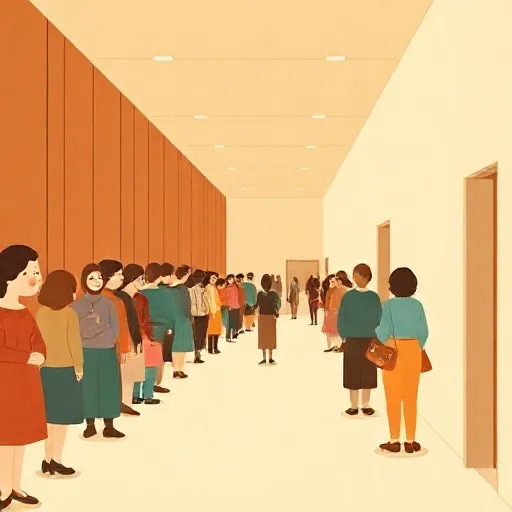
Grosz looks at architecture to make her case. For decades, concert halls and stadiums put in far fewer women’s bathrooms than men’s — as if the designers never considered who would be waiting in line. That simple neglect shows how space can silently sort people by gender. And it gets deeper: when cities push out poor, non‑white residents to build luxury apartments for richer white people, architecture helps shape raced and racist spaces. Grosz says these aren’t accidents; they reveal that space is never neutral.
She draws on a line of thinkers from Charles Darwin to the American pragmatist William James to the French philosopher Gilles Deleuze. All of them, she argues, treat reality as a teeming flux that we organize into objects for our own purposes — but the flux always overflows our tidy boxes. A “thing” isn’t a frozen block; it’s more like a point of crossing, a temporary knot in a river. A body, a chair, a neighborhood can all be understood as gatherings of movement and relation. Giving up the dream of static, pure space doesn’t mean chaos. It means noticing who gets to move and who gets stuck, and asking why.
Your Race Is Real (Even If Science Says It’s Not)

You might have learned that race is not a biological fact — no gene can neatly divide humans into separate groups. So does that mean your racial identity is fake? The philosopher Linda Martín Alcoff (born 1955) says no. She argues that racial and gender identities are lived realities, built from history, community, and experience. Trying to erase them is not only impossible; it can also hurt people who find meaning and strength in who they are.
Some critics of identity politics claim that calling yourself “Latina” or “Black” traps you in a label imposed from the outside. Alcoff flips the worry. She asks: why assume that being shaped by others means being destroyed, like one of Kafka’s torture machines? The fear of identity, she suggests, belongs to a very particular kind of person — someone who dreads losing control because other people’s perspectives might get inside them. Colonizers, for instance, refused to see themselves mirrored in the eyes of the people they ruled.
Alcoff uses the idea of a horizon: you always stand somewhere, and that somewhere lets you see certain things and not others. Your horizon is made of your family stories, your community’s values, and your own experiences. You can’t step outside it, but you can move and let it open onto new views. A racial identity, understood this way, isn’t a cage. It’s a home base from which you encounter the world.
Changing Habits You Can’t See
These days, few people openly admit to being racist. Yet racial inequality hasn’t disappeared. The philosopher Shannon Sullivan (born in the late 20th century) argues that much of white privilege now works through unconscious habits — automatic ways of moving through the world that white people don’t even notice.
A habit, in pragmatist philosophy, is more than brushing your teeth without thinking. It’s a whole style of being: whom you feel comfortable around, which spaces feel like “yours,” which problems seem urgent. Sullivan, drawing on the early 20th‑century thinker John Dewey, says habits are both tough and slow to change. You can’t just decide to drop a habit of privilege overnight. But you can change the environments that feed it. Moving out of a neighborhood where you only see people like yourself, reading books by authors from different backgrounds, joining a group where you’re not the default — all of that can gradually shift your unconscious patterns.
Still, Sullivan offers a warning. White privilege often comes with ontological expansiveness — an unspoken assumption that any space is rightfully yours to occupy. Trying to “fix” racism by controlling your environment can sometimes smuggle that expansiveness back in. Genuine change, she thinks, is more like a long, uncertain rewiring than a quick flip of a switch.
Listening to Friction

If your thinking is always shaped by your body and your community, how can you ever spot your own blind spots? The philosopher José Medina (born 1968) has an answer: you need epistemic friction. When people who are very different from you push back against your assumptions, it can feel uncomfortable — but that discomfort can be the very thing that helps you see.
Medina, mixing ideas from William James and Michel Foucault, argues that oppression isn’t just a matter of unfair laws. It also lives in cognitive‑affective deficits: the inability to hear certain voices, the failure to imagine lives unlike your own. Privilege, he says, makes you epistemically insensitive. You don’t know you’re missing something, because your whole world has been arranged so you never have to notice.
What he calls guerilla pluralism is the practice of actively seeking out friction. This doesn’t mean you become a perfect, neutral judge. It means you treat your own viewpoint as permanently open to correction — through listening to counter‑memories, through attending to the anger or sorrow of people on the margins, through staying accountable to someone other than yourself. The goal is not to escape your body or your history. It’s to become more responsive to the teeming, diverse world that Descartes’s quiet room shut out.
Why This Matters When You Argue With a Friend

Think of a time you were sure you were right — about a game, a promise, a rumor at school — and someone else saw it completely differently. That moment of clash is a gift. It’s the friction that Medina talks about, showing you that your own view rests on habits and experiences you might never have examined.
The feminist philosophers you’ve met in this article don’t think we should stop trying to be truthful. They just think truth is something we build together, in messy, embodied, historically shaped bodies. Descartes thought he could find certainty all by himself, in a room stripped of every influence. But the world doesn’t work that way. You learn by bumping into others, by noticing whose voice you hadn’t heard, by letting your horizon shift. That’s not weakness. It’s how knowledge grows — out from the body, through communities, into a future none of us can see alone.
Think about it
- If all your thoughts are shaped by your body and your community, does that mean you can never be truly objective?
- Can you remember a time when someone from a very different background helped you notice something you had completely missed?
- Is it possible to change a habit you didn’t even know you had? What might help?