Can You Really Trust Your Own Eyes? The 1700s Battle Over Knowing
Descartes sits by his fire and decides to doubt everything
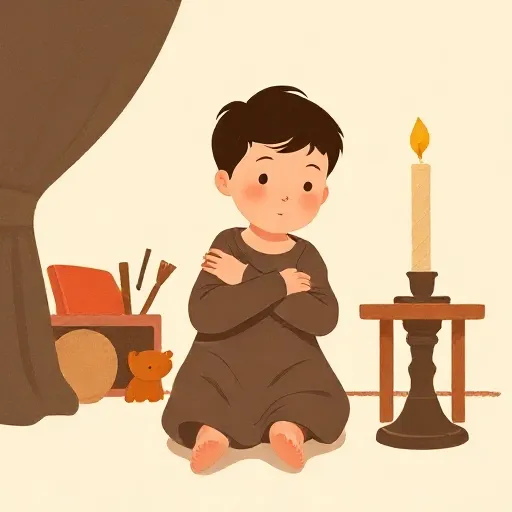
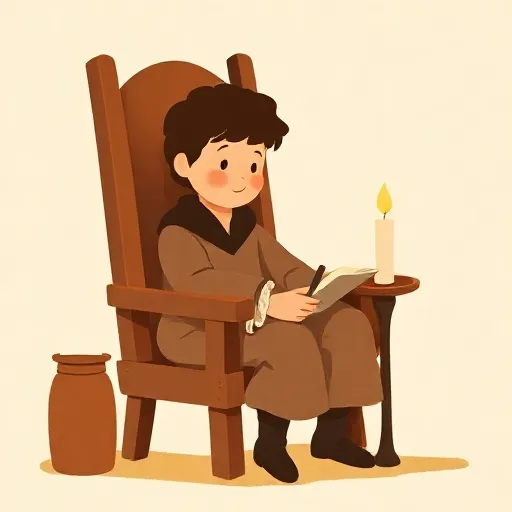
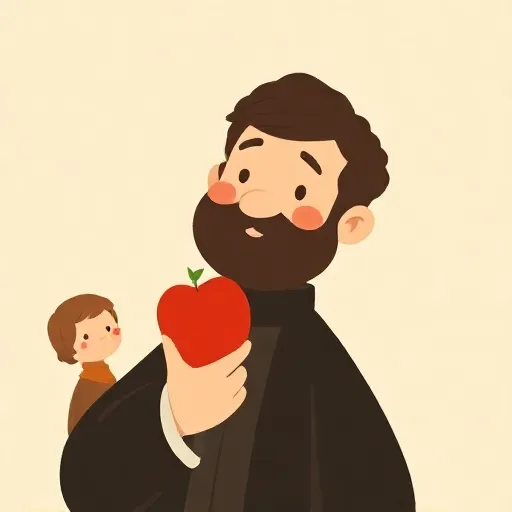
René Descartes (1596–1650) wanted to build a tower of knowledge that nothing could knock down. He sat by his stove, alone, and began to pull out every brick he wasn’t completely sure about. Could his senses be trusted? Sometimes they fooled him — a straight stick looked bent in water, a distant tower looked round when it was square. Could he even be sure he had hands, or that the whole world wasn’t a dream? Descartes decided to treat any idea that could possibly be false as if it were false, just to see what was left.
What refused to fall away was the fact that he was thinking. Even if an evil demon was tricking him about everything else, the very act of being tricked meant he existed. From that one firm point — “I think, therefore I am” — Descartes tried to rebuild all of science. He argued that reason alone, not the senses, could reach the clearest truths. He called such truths innate ideas, ideas stamped on the mind from birth, like the idea of God or the laws of geometry.
But rebuilding the world from pure reason created a huge problem. Descartes ended up describing the mind and the body as two entirely different substances: a thinking thing and a physical thing that stretches out in space. That is his famous dualism. If the mind only directly knows its own ideas, how can it be sure those ideas match the material world outside? Descartes’ answer relied on God: a perfect God wouldn’t let us be systematically mistaken. Still, the worry was now out in the open — the problem of objectivity, the gap between what’s inside the mind and what’s really “out there.” This question would ripple through the entire century.
Locke and Newton pour a new foundation from experience
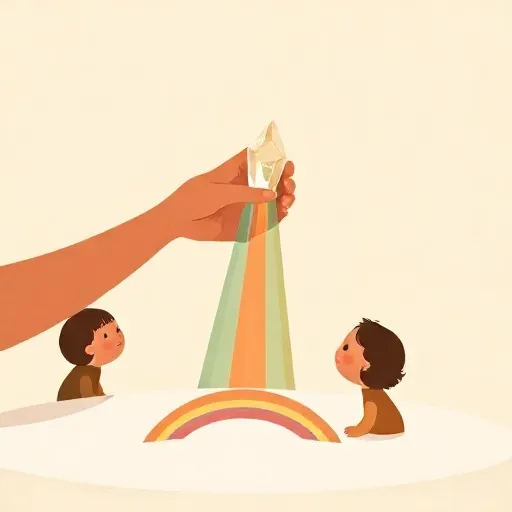
Not everyone agreed that reason alone was enough. In England, a very different approach took hold. Isaac Newton (1642–1727) had shown something spectacular: you didn’t need to start with big rationalist principles to explain the movements of the planets. Instead, you could begin with careful observation, find the mathematical laws hiding inside the data, and climb upward. The method was induction — spotting patterns and building general rules from them — rather than deduction from self‑evident truths.
John Locke (1632–1704) translated this spirit into philosophy. In his Essay Concerning Human Understanding (1690), Locke argued that the mind is blank paper at birth, with no innate ideas. All the materials of knowledge come from sense experience and from reflecting on the mind’s own operations. Colours, sounds, shapes, even the idea of cause — all arrive through the senses or are built from what arrives.
But Locke inherited the same tricky setup Descartes had. He also assumed that we know the world by inspecting the ideas inside our consciousness — the “way of ideas.” That led straight to a new version of the objectivity problem: if your idea of a chair is just a mental picture, how can you prove there’s a real chair causing it, and that it actually resembles the picture? Locke believed that primary qualities like shape and motion really exist in objects, while colours and tastes exist only in our minds. Yet even that distinction leaned on a wobbly assumption: that some of our ideas do resemble the world. George Berkeley (1685–1753), building on Locke, later erased the problem by saying the objects themselves are just ideas — the whole material world is a kind of shared dream in the mind of God. Most Enlightenment thinkers found that a step too far.
Hume lights a fuse under both reason and experience
Just when the new science seemed to be winning, David Hume (1711–1776) dropped a series of bombs that no one could ignore. Hume, a Scottish thinker, was trying to build a science of the human mind — a “Newton of the mind.” But the deeper he dug, the more he undercut the confidence of the whole age.
Hume asked a devastatingly simple question about the way we connect events. Every time you see one billiard ball strike another, you expect the second to move. You call it a cause. But where in all your sense experience do you actually see a cause? You see one event, then another. What you never see is a physical “must” that forces the second to follow. The idea that the future will resemble the past is something you assume, not something you can prove without going in a circle. If someone says, “Nature has always worked this way before,” you’re already using the assumption you’re trying to defend. Therefore, Hume argued, we have no rational justification for our belief in causes — or for any prediction at all. That meant Newtonian science rested on a kind of habit, not on logical certainty.
Hume didn’t stop there. He pointed out that even our trust in our own reasoning must decay. Every time we check a complicated proof, we know we might have made a mistake. So we form a judgment about how likely a mistake was, which itself might be wrong, and we correct that correction… until, in principle, our certainty dissolves into air. “All knowledge degenerates into probability,” he wrote. The Enlightenment had started out full of optimism — reason was supposed to clear away superstition. Now reason seemed to be sawing off the branch it sat on.
Kant spins the whole picture around
Immanuel Kant (1724–1804) read Hume and, as he later said, awoke from his dogmatic slumber. He couldn’t accept that science was just a bundle of habits, but he also saw that neither pure reason nor raw experience alone could justify knowledge of real laws of nature. So he tried something radical.
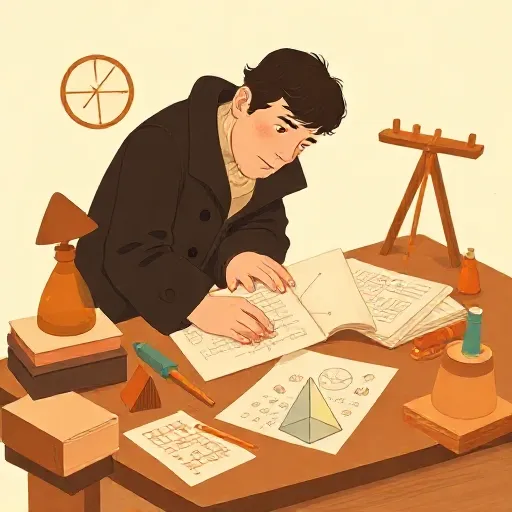
Instead of asking how our minds can conform to the world, Kant asked the reverse: what if the world we can know must conform to the shape of our minds? Just as Copernicus had placed the sun, not the earth, at the centre, Kant performed a Copernican revolution in epistemology. He argued that certain fundamental structures — space, time, and the very idea of cause — are built into the way our minds organise experience. They are not learned from the world; they are what make any experience possible in the first place. When you see one event cause another, you are not reading an external necessity; you are imposing the mind’s own category of causality onto the stream of sensations.
This let Kant have his cake and eat it, too. Science could give us real, necessary knowledge about nature, because we ourselves are partly responsible for nature’s lawful shape. But that knowledge was limited to the world of appearances, the realm where our senses and understanding work together. The world as it is in itself, what Kant called the noumenal realm — things independent of our minds — we can never know. God, free will, and the immortal soul belong to that unknowable side. And that, for Kant, was a saving grace: it meant that while science could describe the deterministic machinery of nature, it could never prove that you are just a machine. Morality and freedom found a home behind the curtain of the knowable.
Why this three‑hundred‑year‑old fight still breathes
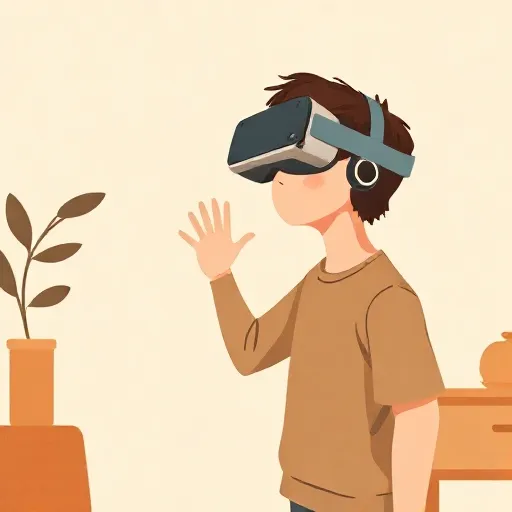
The tools have changed, but the question hasn’t. When you put on a virtual reality headset and see a cliff that makes your stomach drop, you are living inside Descartes’ “dream” hypothesis. When a scientist tells you that all your decisions can be traced back to electrical patterns in your brain, you are hearing a descendant of Hume’s causal chain — and maybe reaching for Kant’s separation of the scientific “you” from the moral “you.”
These thinkers didn’t solve the problem of objectivity; they mapped exactly why it’s so hard. Descartes showed that certainty demands a perfect foundation. Locke showed that our minds are shaped by the world, but couldn’t escape the hall of mirrors of our own ideas. Hume found that even our most basic expectations — that the sun will rise, that bread will nourish — have no logical guarantee. Kant offered a grand compromise, but left much of reality forever hidden. Their struggle is still your struggle: every time you trust a gut feeling against hard evidence, or wonder if your life is more than a brain in a vat, you’re stepping into a conversation they started. That conversation is philosophy’s open inheritance.
Think about it
- If a scientist could scan your brain and predict your every choice an hour before you make it, would that mean you aren’t really free? Why or why not?
- Imagine you’re trapped in a perfect virtual reality that you can never turn off or detect. Would it matter whether the “real” world still exists somewhere? What would still be important?
- Is there anything you believe without any proof at all — not even from your own experience? If so, what makes that belief worth holding?