Minds Have No Sex: A 17th-Century Priest’s Radical Idea
A Book That Shook Up Paris
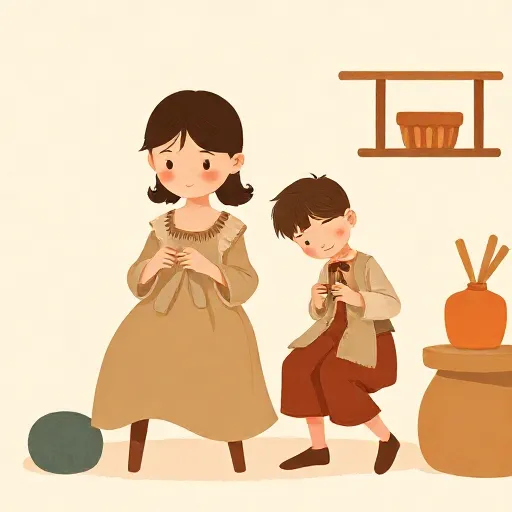
Imagine it’s 1674. You’re a twelve-year-old girl named Marie. Your older brother rushes out to hear a lecturer who follows the new philosopher René Descartes (1596–1650). You ache to go, but your family says philosophy is not for girls. That same year, a little‑known book appeared that said your family was dead wrong — and it backed up its claim with the sharpest reasoning of the age.
The book was On the Equality of the Two Sexes, published in 1673. Its author was François Poulain de la Barre (1648–1723), a French theology student who had become captivated by Descartes’ idea that you should doubt everything you have been taught. Poulain turned that searching doubt onto a belief everyone around him took for granted: women are naturally less able to think, lead, and learn. He wasn’t famous, and his name is still less well‑known than it deserves. Yet his arguments cut through centuries of custom like a scalpel, and they still raise questions we haven’t finished answering.
The Power of Doubt: Descartes’ Toolbox
Poulain did not simply declare that women are equal. He reached that conclusion by applying a philosophical method — a tool for finding truth — that was brand new in the 1600s. Descartes had argued that in order to discover anything certain, you must first throw out every belief that can be doubted even a little. Only ideas that survive this extreme doubt are completely trustworthy. Descartes called them clear and distinct ideas: a clear idea is one you can see sharply in your mind; a distinct idea is one that stands completely apart from every other idea, with nothing fuzzy mixed in.
Poulain made this his own starting line. He wrote that anyone who truly wants knowledge must ask, “doubt if they were taught well” and be ready to sweep away prejudices — unchosen, unexamined opinions planted by upbringing. Prejudice, he said, fills the mind like fog. Until you blow it away, you never see things as they are.
Descartes also believed that good sense — the basic ability to tell true from false — is naturally equal in all human beings. Poulain seized on that too. If good sense is equal, then being a woman cannot make you less able to reason. Some people objected that a woman might manage a household cleverly but could never grasp law or science. Poulain answered with Descartes’ picture of the unity of knowledge: all sciences are connected, like branches of a single tree. Anyone who thinks clearly in one area can think clearly in another. There is no separate “male brain” for big ideas and “female brain” for small ones.
Why Everyone Believed Women Were Inferior
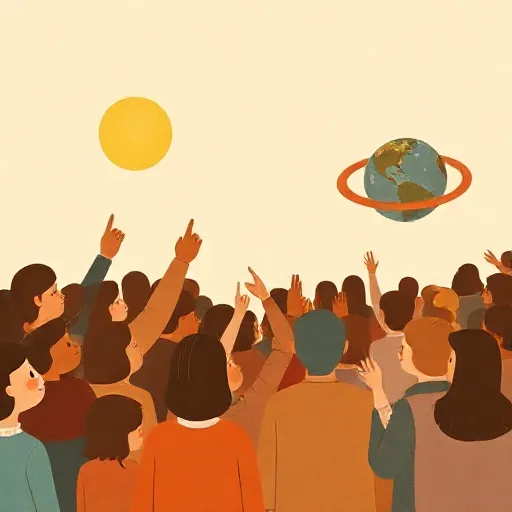
If women and men think equally well, why was almost everyone convinced otherwise? Poulain’s answer was unsettling: the widespread belief in women’s inferiority was a prejudice, just like the old idea that the sun moves around the Earth. He pointed out that many educated people still held on to that astronomical error, even though careful observation now pointed the other way.
He offered other comparisons. People once imagined that animals had tiny souls inside them, the way a primitive person might think a clock has a little spirit if they never saw its springs and gears. And look at everyday social prejudices: almost everyone believes their own country is the best, or that the religion they grew up with is the true one, without ever examining other ways of life. Beliefs we soak up from custom and self‑interest feel unshakable, even when they rest on nothing solid.
Then Poulain hit on something even more uncomfortable. Women themselves, he wrote, often accept their lower position “as if it were natural to them.” They have been born and raised in dependence, so they think about their own minds in the same way men do. Philosophers today call this internalized prejudice: when a group that is treated unfairly starts to see that treatment as normal or deserved. Poulain saw that this makes the belief in inequality extra hard to budge — you aren’t fighting only what other people say, but the story people tell about themselves.
The Story Behind the Inequality

If nature didn’t make women unequal, where did the idea come from? Poulain dug into history. Long ago, he suggested, families were small — just parents and a few children. Men and women depended on each other voluntarily. This was a sort of golden age of liberty.
Then societies grew larger. Work became more complicated. Wars forced women to accept strangers as husbands, and they were treated “merely as the most beautiful part of their booty” Men, stronger on average, began to use that advantage to dominate. It was the law of the strongest — not God’s command, not nature’s plan. The power that men held over women was, in Poulain’s words, only an effect of “chance, violence, or custom.”
He drew a sharp line between marriage and political society. A marriage, he argued, is a union of just two persons founded on love. It doesn’t need a boss. A large political society does need laws, because people can form factions and threaten peace. But even the right to rule in a state comes from voluntary agreement, not from natural superiority. Nobody is born with a crown. So the subjugation of women is a chapter of history humans wrote — and could rewrite.
What Makes a Mind? The Real Argument for Equality
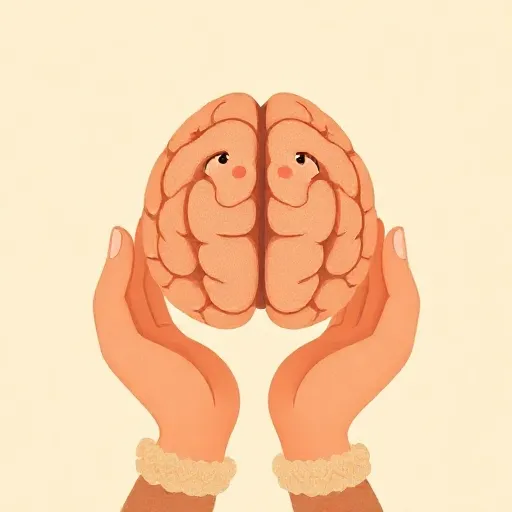
Poulain’s boldest claim was that “the mind has no sex.” The differences between male and female bodies are about reproduction, he said. The mind itself, the part that thinks and chooses, is the same nature in every human being. To drive the point home, he noted that anatomically, the brain — the physical organ most tied to thinking — shows no differences between men and women, even under the best investigations available at the time.
But what about the fact that our bodies constantly influence us? Hunger, fear, excitement — these arise from the body and can cloud our thinking. Poulain gave the will a starring role here. Following Descartes, he explained that a judgment has two parts: a perception from the senses or imagination, and an act of the will that either assents to it or withholds assent. You cannot choose what you see or feel, but you can choose what to do with it. A woman facing a burst of anger or a distraction can still resolve to stay on track, just as a man can. This freedom of will, Poulain believed, is what makes all minds equal in what matters.
From this, he drew a practical demand. If women and men are equally capable of truth and virtue, then they have an equal right to everything needed to achieve them — above all, education. Poulain defined virtue as a firm and steady resolve to do what you think is best. That resolve depends on training the mind, not on bodily strength. He was blunt: if girls ever seem less capable, blame the minimal education they are given In his later book On the Education of Ladies, he laid out an ideal home school where a learned woman named Sophia teaches alongside a male scholar, and young women study just as eagerly as young men.
Why Poulain’s Ideas Still Echo Today

Poulain’s treatises never became bestsellers, but they never disappeared either. More than 250 years later, the philosopher Simone de Beauvoir placed his sharpest observation at the front of her book The Second Sex: men, she warned, are “both judges and litigants” in the courtroom of women’s abilities. The patterns Poulain named — internalized prejudice, the way strength can harden into a permanent “law of the strongest,” the demand for equal education — run right through modern feminism.
And the stubbornness of prejudice he described is still around. Psychologists study stereotype threat: when a girl taking a math test feels anxious about confirming a negative stereotype, her performance can drop — and that drop then gets mistaken for proof of the stereotype. Poulain’s insight, that we have to examine not just what other people think but what we have come to believe about ourselves, could be a description of twenty‑first‑century social science.
Even beyond questions of gender, his method of radical doubt is a shield. In a world where social media feeds us endless unexamined opinions, his question remains urgent: Is this belief backed by clear evidence, or did I just grow up with it? The next time someone says “people like you can’t do that,” Marie’s old ally, the quiet priest who doubted everything, hands you the tools to answer back — by thinking for yourself.
Think about it
- If you had been told from birth that people like you can’t do something, how would you really test whether it’s true?
- Should a society give equal opportunities to everyone, even if scientists someday found tiny average differences between groups? Why or why not?
- Someone tells you that all the evidence for equality is just a modern fad. Without quoting statistics, how could you defend the idea that fairness matters?