
Do Your Feelings Belong to You? Continental Feminism Asks
A mood you didn’t pack for

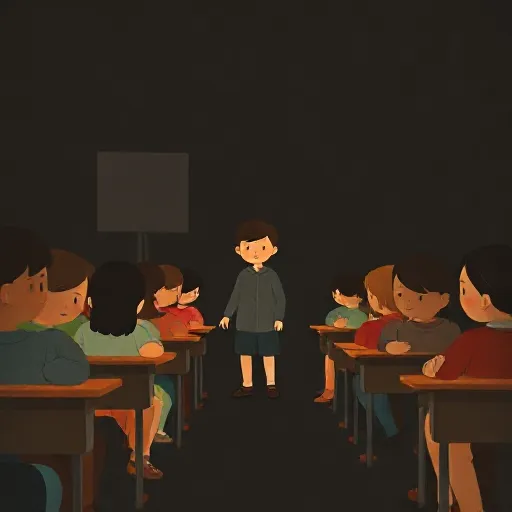
You walk into the kitchen after a test. You feel fine. But your brother is hunched over the table, fists clenched, glaring at his phone. Two minutes later you snap at your mom about a lost sock. You didn’t plan it. You caught his mood.
The psychoanalytic thinker Teresa Brennan called this the transmission of affect. Affect is the physical side of a feeling — the clenched jaw, the tight chest — that travels between people. Brennan said a mood is “social in origin but biological and physical in effect.” One person’s anger or gloom seeps out through posture, breath, tone, and lands in you. The boundary between “my feeling” and “your feeling” starts to blur.
Continental feminists love this blur. They see inner life — moods, emotions, even your body’s habits — as shaped by power, not just by your own mind. This article is about thinkers who read philosophy with a sharp eye, asking how the world gets under your skin, and why that makes changing injustice possible.
Reading old books with an eraser

Big philosophy traditions often treat the thinking mind as separate from the feeling body. Continental feminism is a family of approaches that push back. Instead of assuming a pure, rational “thinker,” these philosophers read old texts irreverently — they dig into the places where a writer ignored or excluded women, bodies, emotion, or any experience that wasn’t white, European, or male.
They don’t just argue with the ideas. They show how everyday experience — the “ordinary” textures of living — can be just as important as grand theories. The scholar Gail Weiss puts it plainly: you can only understand the forces that shape a person’s life, and what it would take to change them, by interrogating ordinary moments. A slow walk down the street. The way someone says your name. The face you make when you’re told to “sit like a lady.”
This isn’t about replacing books with feelings. It’s about using the tools of close reading and deep theory against the tradition’s blind spots, so that the people and experiences shoved to the side become central.
Your body holds a map of power

Your body isn’t just a machine run by your brain. Philosophers in the tradition called phenomenology study how the world appears to us through our living, moving bodies. Critical phenomenology — a key tool for Continental feminists — adds a crucial question: how does power move through those bodies?
The philosopher Iris Marion Young (1949–2006) famously described the way many girls are taught to “throw like a girl.” It’s not that their arms are weaker. A girl often learns to hold her body back, to take up less space, to not commit her full weight. That hesitation is a body schema — an unconscious map of how to move — that has absorbed gender rules. Critical phenomenologists show that we carry racialized schemas, class schemas, and able-bodied norms in the same way. (Young built on the older phenomenologist Maurice Merleau-Ponty (1908–1961) and the feminist Simone de Beauvoir (1908–1986), who argued that one is not born but rather becomes a woman.)
So when you feel awkward or out of place, it may not be a personal flaw. Your body may be navigating invisible power lines, learning scripts you never deliberately chose.
Emotions build walls and open gates
If affect crosses between bodies, emotions build whole landscapes of social life. The feminist philosopher Sara Ahmed (b. 1969) argues that emotions aren’t things you “have” deep inside. They are produced in interactions: “emotions are not ‘in’ either the individual or the social, but produce the very surfaces and boundaries that allow all kinds of objects to be delineated.”
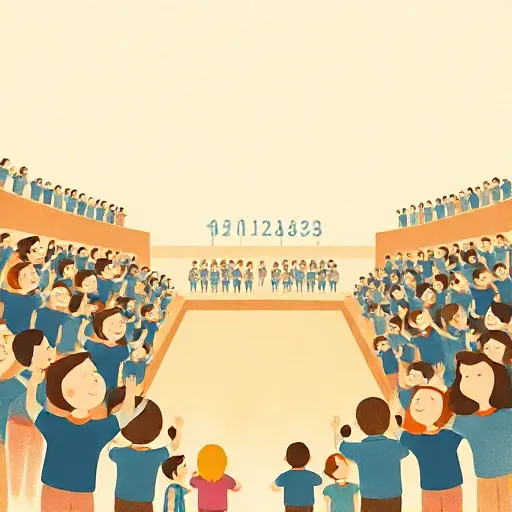
Picture a soccer stadium. When your side scores, joy erupts through thousands of bodies. But that very joy draws a sharp line — it lights up “us” and pushes “them” into shadow. Disgust can work the same way, marking certain bodies or practices as repulsive and thus banished from the circle of care.
Continental feminists point out that some lives are made to seem “ungrievable” — a term from Judith Butler (b. 1956) — before any official decision gets made. A news story that shows a victim as a distant statistic, with no name, no story, makes it harder for viewers to feel that loss as fully human. The emotional framing is politics, done in advance.
None of this means feelings are fake. It means they are socially powerful, and that studying them is serious philosophical work.
“Ain’t I a Woman?” and the knot of oppressions
No one is just a woman, or just Black, or just poor. Black feminist thought created the language to make this obvious. The legal scholar Kimberlé Crenshaw (b. 1959) coined the term intersectionality in 1989 to describe how overlapping identities — race, gender, class, sexuality — create distinct forms of oppression that can’t be understood by adding up “sexism plus racism.”
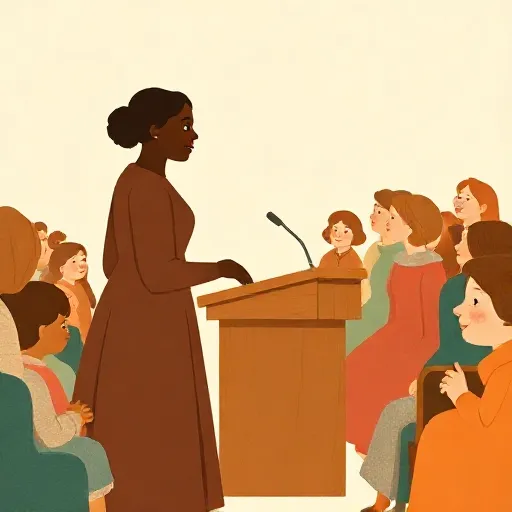
But the idea is much older. In 1851, Sojourner Truth (1797–1883) stood before a crowd and asked “Ain’t I a Woman?” pointing out that Black women were treated as less than white women yet bore the same brutal labor as Black men. Decades later, Anna Julia Cooper (1858–1964) wrote that a Black woman “is confronted by both a woman question and a race problem,” and in 1977 the Combahee River Collective, a group of Black feminists, declared that their movement alone could fight the “simultaneous oppressions” shaping their lives.
For Continental feminists, intersectionality is both a tool for telling the truth about lived experience and a sharp critique of any feminism that silently assumes “woman” means white, middle-class, and straight. It’s about refusing to let anyone’s struggle be erased.
The grid that colonialism drew around gender
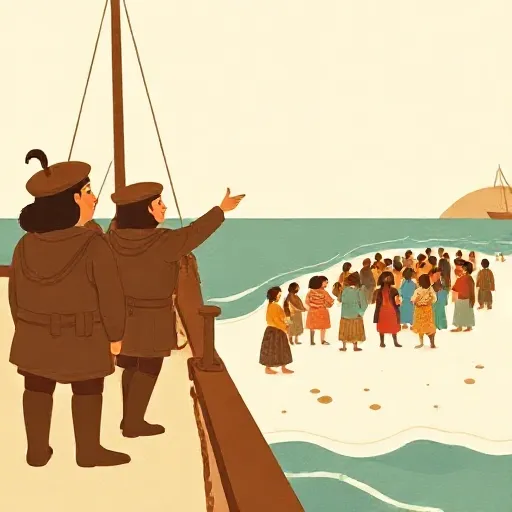
The colonial histories that built our modern world didn’t only divide territory. They redesigned what it means to be a person. The philosopher Aníbal Quijano called this the coloniality of power — the worldwide social classification that began with European colonization of the Americas and organized the globe around the idea of race.
Feminist thinker María Lugones (1944–2020) argued that this same process glued rigid, two-gender systems onto people who had very different ways of organizing bodies and roles. Before colonization, many indigenous communities recognized gender as fluid or multiple. Colonizers treated that diversity as savage and imposed a single model: male/female, tied to biological traits, with male dominance built in.
Decolonial feminists like Lugones and Gloria Anzaldúa (1942–2004) refuse to separate the fight against sexism from the fight against colonial ways of thinking. They insist that “freeing women” can’t mean giving some women the same power as white men while leaving the global racial hierarchy intact. It means undoing the grid itself.
Why noticing is a kind of rebellion
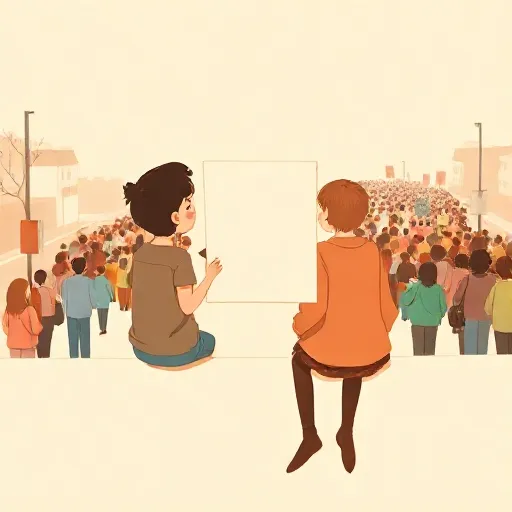
So what does all this mean for you? Continental feminism isn’t a rulebook. It’s a habit of paying attention — to the moods you catch, the way you throw a ball, the emotions that sort crowds into “us” and “them,” the histories that still live in your body’s expectations.
Once you see that your inner life is shaped by forces outside you, you’re no longer just a passenger. You can start to ask: Whose script is this? Who does it serve? Who gets silenced? That questioning is already a form of critical work. And when you connect your small, ordinary moments to larger patterns, you can join with others to change the pattern — not just swap places in it.
Breaking a system, Continental feminists keep saying, takes more than climbing the ladder. It means noticing the ladder itself was built crooked.
Think about it
- Can you remember a time when someone else’s mood completely changed how you felt or acted, without you deciding to catch it?
- If girls and boys are taught to sit, walk, or express anger very differently, does that make those differences any less real in daily life? Why or why not?
- Why might it matter that some people’s experiences of being a woman are shaped by racism or a history of colonization, not just by sexism alone?