
You Are Not an Island: The Feminist Rethinking of the Self
What If the Self Is Just a Logical Judge or a Smart Shopper?
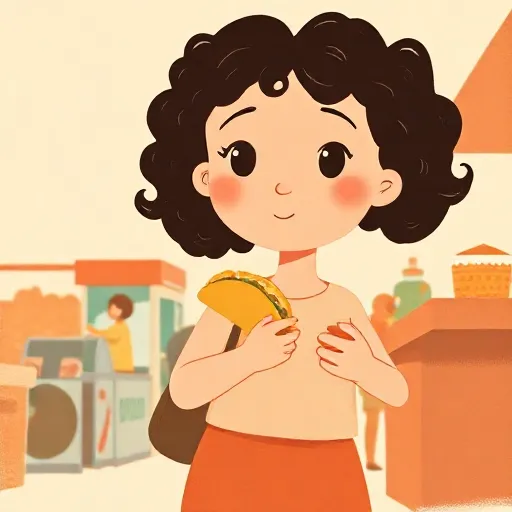
Imagine you’re at the mall, lunch money in hand, trying to decide between a slice of pepperoni pizza and a crunchy taco. It feels like your mind is a private courtroom: you weigh the options, you choose. For centuries, many Western philosophers agreed that your true self is exactly that — a lone, rational decider sealed off from messy feelings, bodily needs, and other people’s influence.
Two pictures of this rational self became especially powerful. One, inspired by the philosopher Immanuel Kant (1724–1804), treats you as a moral judge. Like a fair referee, you use pure reason to discover universal rules, ignoring your emotions or friendships because they might bias you. The other picture comes from thinkers like John Stuart Mill (1806–1873) and imagines you as a canny shopper — what some call homo economicus (Latin for “economic man”). Here, your job is to rank your desires and pick whatever brings you the most satisfaction for the least cost, like comparing lunch deals.
Both views share a key idea: your true self is the rational part of you, untouched by your body, your background, or your relationships. But feminists began to notice something odd. These supposedly universal selves looked suspiciously like a single type of person — an adult, healthy, well-off man who never had to change a diaper, soothe a crying child, or depend on anyone for care. That suspicion launched a massive rethinking of what a self really is.
Bodies, Care, and the Blurred Line Between Us

The feminist philosopher Simone de Beauvoir (1908–1986) argued that Western culture has long split human qualities in two: mind and reason were coded masculine, body and emotion were coded feminine. Men got to be the free, public selves, while women were pushed into the messy, private work of caring for bodies. This wasn’t just a stereotype — it was written into law. For centuries, the legal doctrine of coverture said that when a woman married, her legal self melted into her husband’s. She couldn’t own property, make contracts, or even keep her own name. In the eyes of the law, she had no separate self at all.
Feminists point out that none of us are born independent. Every single person was once a tiny baby, completely dependent on caregivers for food, warmth, and love. If the self is a self-made castle, how do you explain that you needed someone else just to survive your first day? Pregnancy pushes that insight even further. Philosopher Iris Marion Young (1949–2006) showed that when someone is pregnant, their body is literally home to another being. The boundary between “my insides” and “someone else” blurs. The pregnant self is a split subject, not a sealed unit.
Caregiving reveals a different kind of intelligence too. Sara Ruddick (1935–2011) argued that “maternal thinking” — the kind of attention you need when caring for a child — is responsive, flexible, and deeply attuned to another person’s unique needs. It’s not the cold calculation of a shopper or the rigid impartiality of a judge. These experiences suggest that being a self includes vulnerability and connection, not weakness.
From Lone Thinker to a Tangled Web of Care
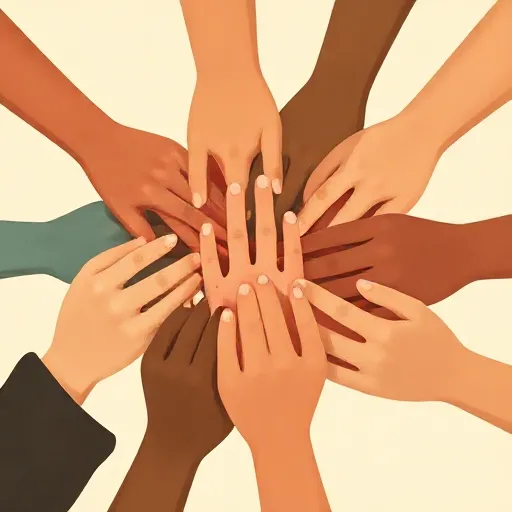
So if the self isn’t a solitary judge or shopper, what is it? Many feminist philosophers answer: a knot of relationships. Instead of dreaming of total independence, they picture the self as always already entangled with others. Think about a mother laughing with her baby: each mirrors the other’s giggles, their feelings bouncing back and forth like a dance. In that playful loop, the self isn’t parked inside one head — it’s being created between them.
Philosopher Hilde Lindemann describes personhood as a practice of “knowing when and how to hold and let go of parts of others identities”. Your sense of who you are is constantly shaped by the people you care for and who care for you. Even the idea of a “self-made” person is a myth. You didn’t choose your first language, your family’s traditions, or the lullabies that calmed you. Your individuality is woven from threads of connection.
Some feminists advocate an ethics of care that values attentiveness, trust, and responsiveness over impartial rules. In this view, the self is not a hero standing alone; it’s a participant in a web of mutual support. Being dependent on others isn’t a flaw — it’s a fact of life. Recognizing that fact can make us more honest about who we really are.
The Intersectional Self: Many Worlds at Once

But the web gets even richer. Each of us is positioned at the crossing of many social categories — gender, race, class, ability, and more. Legal scholar Kimberlé Crenshaw (born 1959) coined the term intersectionality to describe how these identities combine in unique ways. For example, a Black woman doesn’t just face racism plus sexism; she experiences a specific form of discrimination that is neither purely one nor the other.
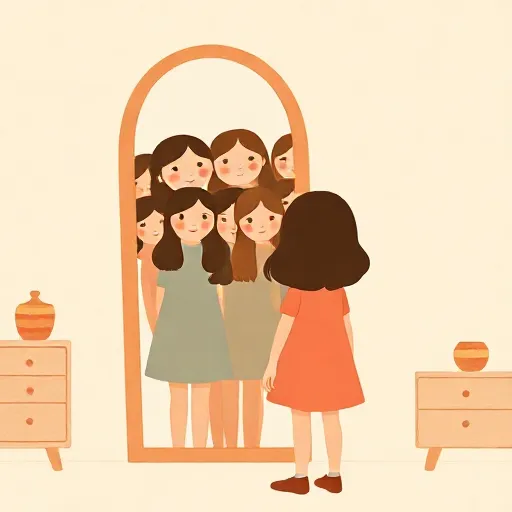
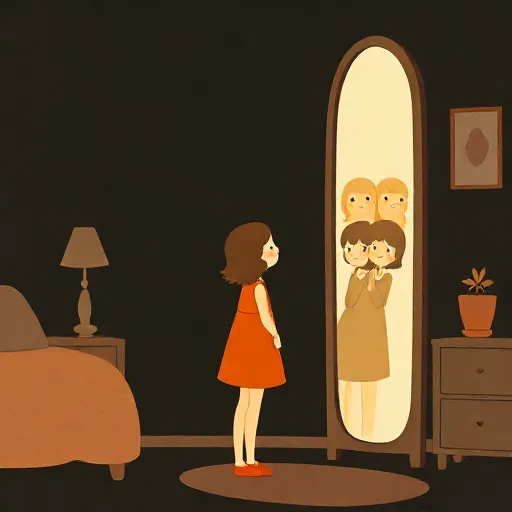
Feminist thinkers like Gloria Anzaldúa (1942–2004) explored what it’s like to live in the “borderlands” between cultures. As a Chicana and a lesbian, Anzaldúa described a mestiza consciousness — a self that is never fully at home in one world, always translating, always shifting. This isn’t a problem to fix; it’s a richer way of being. Some feminists even speak of having multiple selves: you act one way at school, another with your cousins, another online. Rather than a single, transparent “I,” the self is more like a bustling crossroads. Different contexts bring out different facets, and that’s not confusion — it’s complexity.
Who Are You, Really? A Knot of Connections
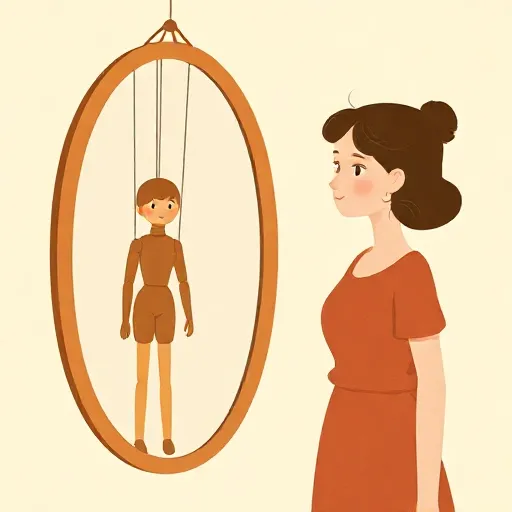
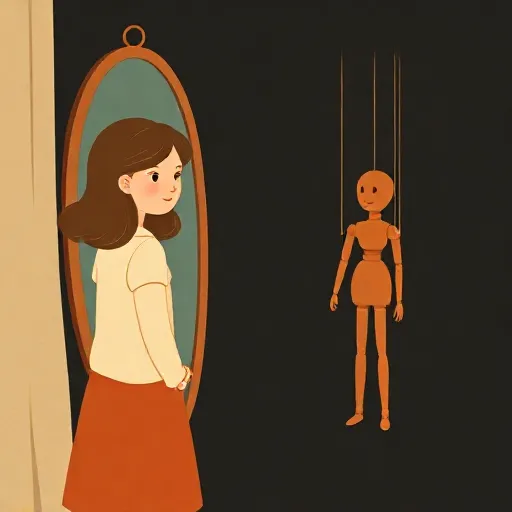
Remember that lunch choice? Now we see it’s not just a brain picking flavors. Your taste might be shaped by a friend’s eye-roll at pepperoni, your grandma’s recipe, an ad on your phone, how hungry your body feels, and the money in your pocket. Does that mean you’re not free? Feminists don’t say you’re a puppet. But they insist that freedom and selfhood are always tangled up with others, with bodies, with society.
This matters for everyday life. If a classmate acts mean, the lone-judge view says, “They made a bad choice — punish them.” But a relational view asks, “What’s happening at home? Are they hungry? Are they being excluded?” Understanding the self as interconnected can make us more compassionate and fair. It also reminds us that the people who care for others — often women, often unpaid — do work that makes all selves possible. So next time you look in the mirror, don’t just see a solo act. See the threads that hold you, and that you hold for others. The self, these feminists show, is not an island — it’s a living, breathing web.
Think about it
- If you act very differently around your parents than around your close friends, does that mean you have more than one self — or just a flexible one?
- Should society celebrate the idea of a “self-made” person, or is that idea a myth because everyone needs help from others to succeed?
- Can you remember a time when being hungry, tired, or in pain changed how you saw yourself or how others treated you? What does that say about the connection between your body and your self?