Who's the Boss of a Pregnant Body? Doctors, Mothers, or Society?
When Birth Moved to the Hospital
In 1900, if you were born in the United States, you probably arrived in a family bedroom, helped by a midwife with no surgical tools. By 1950, almost all babies were born in hospitals, surrounded by doctors, nurses, beeping monitors, and gleaming metal instruments. This shift was part of a larger change called medicalization. It is the process by which life events once seen as personal, natural, or social come to be managed and overseen by medical professionals.
Amy Mullin, a 21st-century philosopher, described a medicalized pregnancy as one that treats pregnancy itself like a health crisis that needs expert medical management — as if the pregnant body were constantly in danger. In many ways, this has saved lives. Before medical advances, conditions like placenta previa (where the placenta blocks the birth canal) often killed a parent or baby. Today they are treatable. But medicalization also brought routine interventions — actions performed on everyone, not just the high-risk. Research later showed that some of these, like continuous electronic fetal monitoring or the common practice of cutting the tissue between the vagina and anus (an episiotomy), had no clear benefit and could cause extra harm.
And not everyone has benefited equally. Data show that Black women in wealthy countries are far more likely to die during pregnancy and childbirth than white women, and their babies are more likely to be stillborn. So medicalization is not a simple story of progress. It is a mix of gains, losses, and deep inequalities.
Who’s in Charge? The Fight Over “Natural” Birth
Many people pushed back. The natural birth movement argues that pregnancy and birth are normal bodily functions, not diseases. Midwife-assisted home births or birthing centres, they say, can be safer and more satisfying because they avoid a cascade of unneeded medical steps. But philosopher Rebecca Kukla (21st century) warned that the natural birth movement has its own rigid rules. It rarely explains what counts as “natural” — why is acupuncture pain relief acceptable but an epidural not? And it can make women feel like failures if they use any medical help or don’t have the “perfect” natural birth.
Anthropologist Emily Martin (born 1944) compared women’s resistance to hospital routines to Luddites smashing machines. She described pregnant people hiding the progress of labour, eating secretly against nurses’ orders, and slipping out of fetal monitors to walk. Some chose home birth as the ultimate act of “becoming your own boss.” Yet medical ethicists Frank Chervenak and Laurence McCullough (writing since the 1990s) point out that banning all technology is not the only alternative. Many societies will still use a lot of technology around birth. The real question is who controls it and whose needs it serves.
The problem, many bioethicists argue, is not technology itself but a power imbalance. Hospitals often treat a standard timeline as the only acceptable path, pushing interventions if labour moves too slowly or quickly. Large studies find that many women feel like passive objects during hospital birth — invasive exams performed without consent, pain relief denied, and wishes ignored. This disrespect isn’t just a medical issue. It’s tied to stereotypes that women are unreliable reporters of their own bodies.
Testing Before Birth: Knowledge or Pressure?
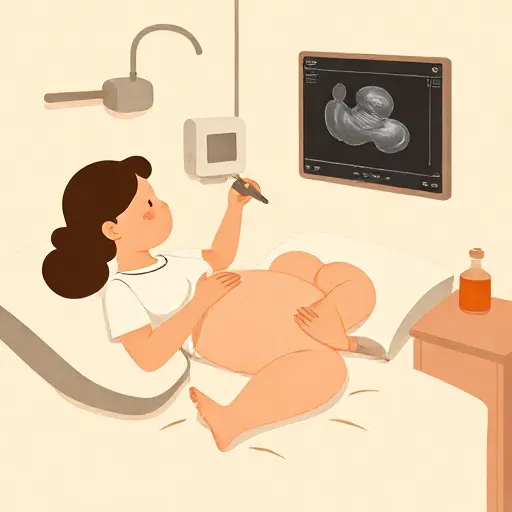
Most pregnant people now undergo routine prenatal tests: ultrasound scans, blood screens for conditions like Down syndrome, and sometimes more invasive tests such as amniocentesis. These can give parents important information and control. But the same tests also raise hard questions.
One problem is that testing easily becomes a social pressure. When a test is offered as part of “responsible” pregnancy care, refusing it may be seen as reckless. And once a condition like Down syndrome is detected, parents often face strong expectations to end the pregnancy. Disability rights advocates, such as Marsha Saxton (a 21st-century activist and scholar), argue that routine testing sends a harmful message: that lives with disabilities are less worth living. They worry that this “bottom-up eugenics” — not a government programme, but thousands of individual choices — will shrink disability communities and reduce support for those who remain.
Philosophers also battle a tricky logical puzzle. Can a child be harmed by being born with a disability if the only other option was never being born? Derek Parfit (1942–2017) called this the nonidentity problem. Imagine you are taking a medication that would cause a baby to be born with a limb difference if you conceived now. You could simply stop the drug and have a baby later without that condition. Most people feel it would be wrong to conceive now. But is the child harmed? That particular child would not exist at all if you waited — they would be a different child. Some philosophers answer that no harm is done to the child. The wrong, they say, is something else: maybe failing to bring about a child with a better life, or expressing a cruel attitude toward disabled bodies. Others insist that bringing a child into a life of needless suffering does harm them, even if they never had a chance at a different body. This debate chips away at what we mean by harm and directly affects real-world decisions about IVF and genetic screening.
Can Doctors Force a Pregnant Woman to Have Surgery?

In 2009, a pregnant woman named Samantha Burton was forced by a judge to stay in the hospital for bedrest after her membranes ruptured early, even though she was fully capable of making her own decisions. Her fetus later died. In Ireland, a young asylum seeker known as Ms Y, pregnant from rape, was denied an abortion. When she protested with a hunger strike, a court ordered a caesarean section against her will at 25 weeks. These are rare but shocking examples of forced interventions — overriding a competent pregnant person’s refusal of medical care for the sake of the fetus.
Medical ethics usually holds that any adult has the absolute right to refuse treatment, even life-saving treatment. Pregnancy has sometimes been treated as an exception. Some argue that the fetus should be seen as a separate patient with its own interests, which doctors must protect. Others, like bioethicist Julian Savulescu (21st century), propose a “duty of easy rescue”: if you carry a pregnancy to term, you have a moral duty to accept small risks to yourself to save your future child from great harm. But most ethicists insist that even if a moral duty exists, it does not justify legal force. A parent cannot be compelled to donate a kidney to their born child. Many argue the same principle applies to pregnancy.
Vulnerable women — those in poverty, immigrants, people of colour — are more likely to be seen as incompetent and subjected to forced procedures. The very phrase “maternal-fetal conflict” frames the pregnant person as an adversary, when in fact most disagreements are simply between a patient and a doctor about the best course of action.
Why It All Matters for You
You might be twelve, and pregnancy feels far away. But the questions this article explored will directly affect you or someone you love someday — as a future parent, a partner, a friend, or a doctor. The way society answers them writes the rules for who gets to decide about bodies, risk, and family.
Consider alcohol. Most health authorities tell all women who could possibly become pregnant to avoid any alcohol, even though studies have repeatedly found no proof of harm from light drinking. The push for total abstinence is driven more by ideals of perfect, self-sacrificing motherhood than by solid science. At the same time, pregnant women are excluded from almost all clinical drug trials — researchers are afraid of harming fetuses. So when a pregnant person gets sick, nobody knows which medicines are safe. That forces an impossible choice: take a drug with unknown risks or leave an illness untreated.
The prenatal testing debates connect to how we value people with disabilities in your school, neighbourhood, and future workplace. And the fight about forced interventions touches something basic: does a person’s body still belong to them when they’re pregnant? As you grow up, you will bump up against similar questions about bodily autonomy — in debates about vaccination rules, medical consent, and more. The skills of weighing evidence, questioning social pressure, and respecting people’s own choices are exactly what philosophy can teach.
Think about it
- If a prenatal test showed your future baby would be deaf, would you want to continue the pregnancy? Why might someone choose differently?
- Should a hospital be allowed to force a pregnant person to stay for bedrest if the fetus might be in danger, even if that person disagrees? Where would you draw the line?
- If there is no proof that one glass of wine harms a fetus, is it fair to tell all pregnant women to avoid all alcohol? What other everyday activities carry small risks that we accept?