
Why Shouldn't Everyone Get Exactly the Same?
The Cookie Problem
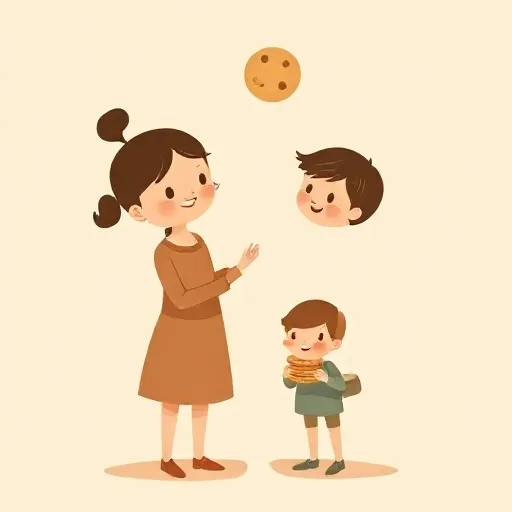
It’s a grey Friday afternoon and your teacher brings in a surprise: a plate of cookies for the class. She starts handing them out. One student ends up with a mountain of cookies, another gets exactly zero. You would probably think something has gone wrong here. But what, exactly? Is it wrong because the pile‑sizes are not the same? What if the zero‑cookie student had already eaten lunch and was not hungry, while the mountain‑cookie student had skipped both breakfast and lunch? Now the same‑sized piles might not seem so obviously fair after all.
The puzzle hiding inside this little scene is the puzzle of equality. At first, equality looks simple — give everyone the same thing. But as soon as you ask “the same in what way?”, things get tricky. Philosophers say that “equal” is an incomplete predicate — it’s like an empty cup. You have to fill it with an answer to “equal with respect to what?”. Height? Weight? Hunger? Opportunity? The rest of the debate follows from that question.
Aristotle’s Two Kinds of Equality
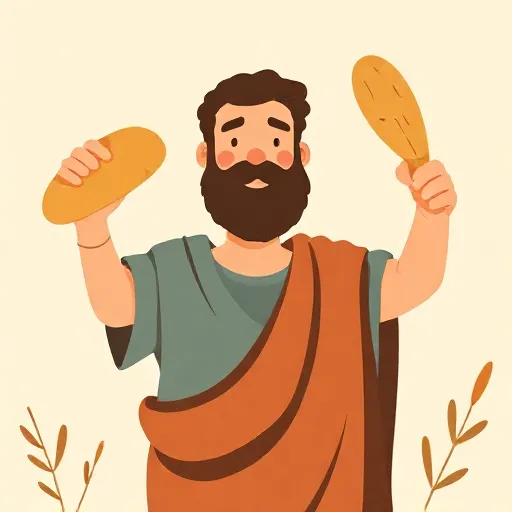
The first philosopher to untangle this mess was Aristotle (384–322 BCE). He noticed that when we call a distribution “equal,” we might mean one of two very different things.
One meaning is numerical equality — treating everyone exactly the same and handing out identical quantities. The class gets 30 cookies? Every student gets exactly one. But Aristotle pointed out that numerical equality is often unfair. Suppose you have a single flute and a room full of people. Giving everyone ten seconds of flute time would be equal in number, but it would also be silly. The flute should go to the person who can play it best. That is proportional equality: treating people according to what they are due, not according to a rigid one‑for‑one count.
Proportional equality works like a pair of balancing scales. If two people differ in some relevant way — say, one worked twice as many hours — then what they receive should match that difference. Equal shares are only just when the people are themselves equal in the ways that matter for that situation. Aristotle’s insight is still the starting point for every argument about fairness: you have to decide which differences between people count, and which don’t.
All Humans Are Equals in One Big Way
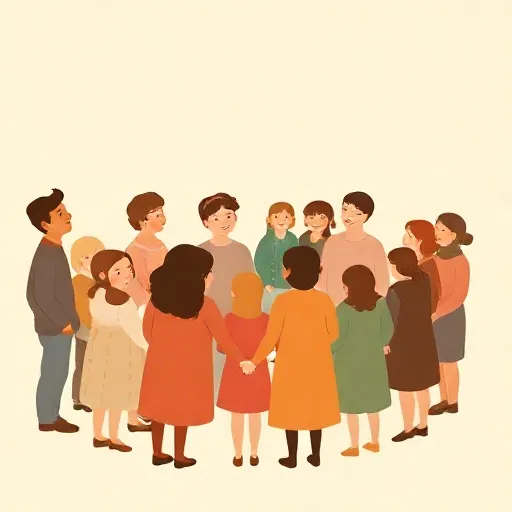
There is, however, a form of equality that almost everyone today accepts. It says that all human beings, no matter how different they are, share the same fundamental worth. This idea — often called moral equality or equal dignity — emerged slowly from ancient Stoic philosophy, early Christianity, and especially the Enlightenment.
Immanuel Kant (1724–1804) gave it one of its strongest expressions: every rational being has an equal claim to respect, simply by being human. By now, moral equality has become what one philosopher calls the egalitarian plateau — a common ground that nearly all modern political theories share. Even people who disagree fiercely about what justice requires still agree that any just society must treat every person as an equal.
But this does not mean we must treat everyone identically. A sick person and a healthy person do not need the same medicine; a wheelchair user and a non‑disabled person may need different entrances to a building. Treating people as equals means showing them equal concern and respect, a phrase made famous by Ronald Dworkin (1931–2013). The challenge is figuring out what that concern demands when people’s situations are not the same.
What Should We Make Equal?
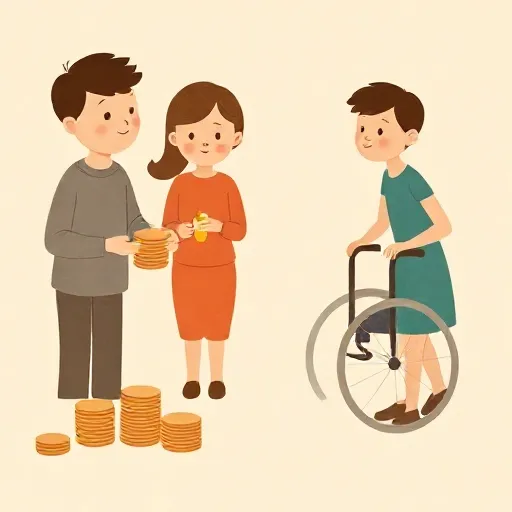
If a society wants to be fair, what exactly should it make equal? Philosophers call this the “currency” problem. Three answers have dominated the debate.
Some say the currency should be resources — the things you can own, sell, or use. John Rawls (1921–2002) argued that every person should start with the same basic set of all‑purpose goods, like income and rights. From there, inequalities are okay only if two conditions hold: everyone has a fair chance to get ahead, and any extra wealth that the talented earn must also improve the lives of the least advantaged. This last rule is his famous difference principle. Dworkin imagined a different test: an auction where everyone starts with an equal pile of tokens. A distribution is fair if, afterward, nobody envies anybody else’s bundle — the envy test. Any inequality that later appears is fine so long as it results from people’s own choices, not from brute luck or natural gifts.
Others think the currency should be welfare — how happy or satisfied you actually feel. But this runs into trouble fast. If you have expensive tastes (you only enjoy caviar), a welfare‑based view might give you extra resources just to keep your happiness level even — and that strikes most people as unfair.
A third approach, led by Amartya Sen (b. 1933) and Martha Nussbaum (b. 1947), says the real thing to equalize is capabilities — what you are genuinely able to do and to be. Two people might get exactly the same amount of money, yet a person in a wheelchair might still not be able to move around the city like others. Equalizing capabilities means asking: do you have real access to things like health, education, and political participation? Resources matter only because of the doors they open.
Is Equality Even the Point?

Some philosophers have started to wonder whether equality itself is really what we should care about most. Harry Frankfurt (1929–2023) argued that what matters morally is not that everyone has the same amount, but that everyone has enough. He called this the sufficiency view. If every person had a decent life, the fact that some have a bit more might be irrelevant.
Others, like Derek Parfit (1942–2017), developed prioritarianism: benefiting someone is more urgent the worse off they are, which often reduces inequality, but the goal is not equality — it’s improving the situation of the least advantaged.
Then there is a family of ideas called relational equality. Thinkers like Elizabeth Anderson (b. 1959) argue that justice isn’t about getting a certain distribution of stuff at all. It’s about the relationships between people. A just society is one in which nobody dominates, humiliates, or marginalizes anyone else. What stings about being poor, in this view, isn’t that you have less money — it’s that you can’t look your neighbours in the eye as an equal.
These critics also point out a famous problem called the leveling‑down objection. Suppose the only way to make everyone equal is to make the better‑off worse, without helping anyone. Would that be a good thing? If a sighted person were made blind so that a group contained no inequality of vision, that would be absurd. So something more than just equality must be at work. Many egalitarians agree: they value equality alongside other ideals, like the quality of people’s lives, and they think equality is what results when we respect everyone’s equal moral status.
Why It Still Matters
Every time you hear “that’s not fair,” a piece of this ancient debate wakes up. Should chores be split by age, by free time, or equally? Should a school spend the same on every student, or more on those who struggle? When someone says the law should treat everyone equally, do they mean identical punishment, or taking individual circumstances into account?
Understanding equality doesn’t give you a magic answer, but it helps you see what to ask: equal in what respect? Who is being compared? And what differences should actually matter? Behind those questions sits the conviction that, despite every visible difference, every person counts the same. That’s not a settled blueprint — it’s a way of thinking that still shapes families, classrooms, courthouses, and whole societies.
Think about it
- If you and your friend both want the last slice of cake, but your friend hasn’t eaten all day, does giving it to them treat you both equally? Why or why not?
- If a school gives extra resources to students who struggle, is that fair to the students who succeed easily? What’s the difference between equal opportunity and equal outcome?
- Imagine a world where everyone gets exactly the same amount of money, no matter what. Would that world be just, or would it ignore something important about freedom and effort?