Why Don't All Kids Get the Same Chance at School?
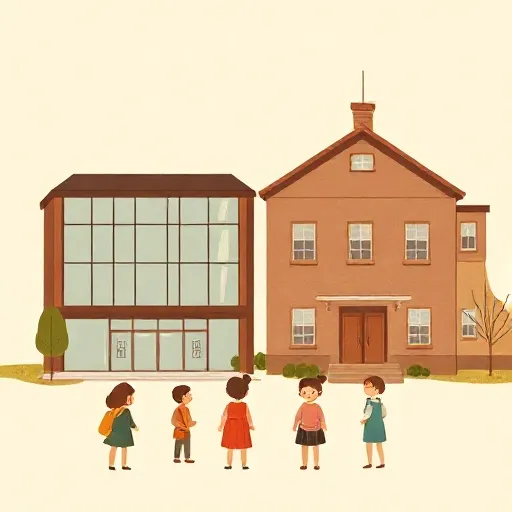
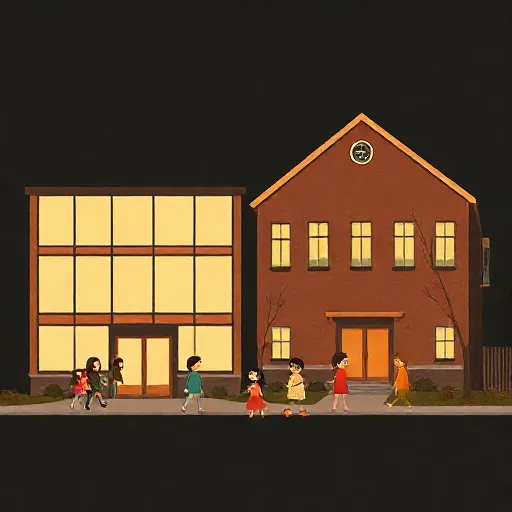
The Two Schools Across Town
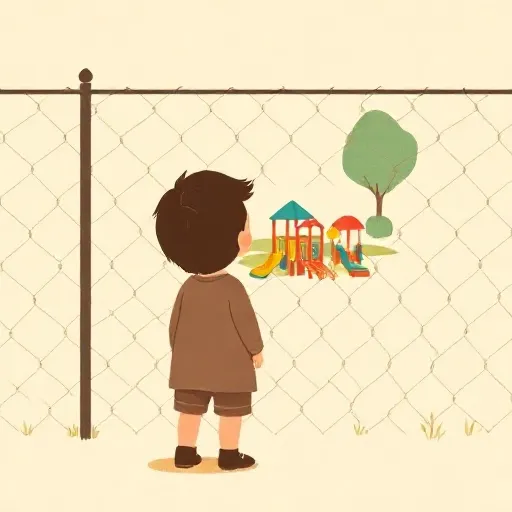
Imagine you just moved to a new town. Your new school has a swimming pool, a robotics lab, and every student gets a laptop. Your old school, barely a few miles away, had a leaky roof, peeling paint, and textbooks held together with duct tape. Is that fair? And why does it happen?
Education is powerful. It can help you get a good job, understand the world, and live a life you choose. But not every kid gets the same shot at a quality education. Philosophers call this the problem of equality of educational opportunity — making sure that everyone has a real chance to learn and grow, without facing unfair obstacles. An educational opportunity is a genuine path to learning something valuable, where the only things standing in your way are relevant obstacles (like studying hard) and not irrelevant ones (like your skin color or how much money your parents earn).
The first thing to know is that top-notch schools are scarce. No society has endless money to give every child the very best, because that money also pays for hospitals, roads, and parks. So we have to decide how to divide up educational resources. In many places, including the United States, where you live largely determines which school you attend. And because neighborhoods are often separated by wealth and race, children from poor families often end up in run-down schools while richer kids attend gleaming ones, even if they live just a short distance apart. This isn’t just a problem of money — it’s a question about what justice demands.
Beyond “No Sign on the Door”: What Equal Opportunity Really Means
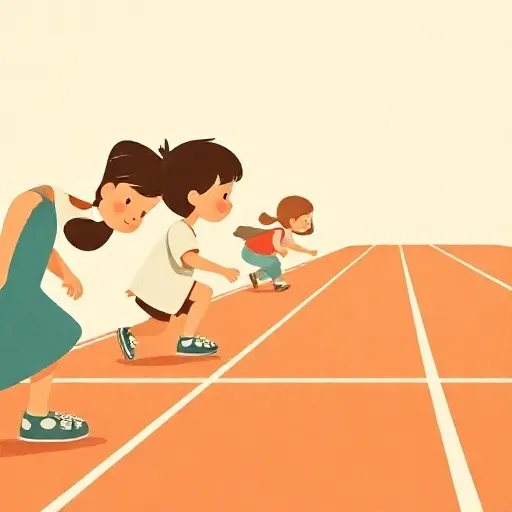
The simplest idea is formal equality of opportunity: no law or official rule can block you from school because of your race, gender, or religion. In the United States, the Supreme Court’s Brown v. Board of Education decision in 1954 declared that segregated schools were unconstitutional. That was a huge victory for formal equality — but many schools stayed segregated anyway. Why? Because even though the laws changed, housing patterns were still divided, and local school attendance zones followed those divisions. Formal equality didn’t fix the problem.
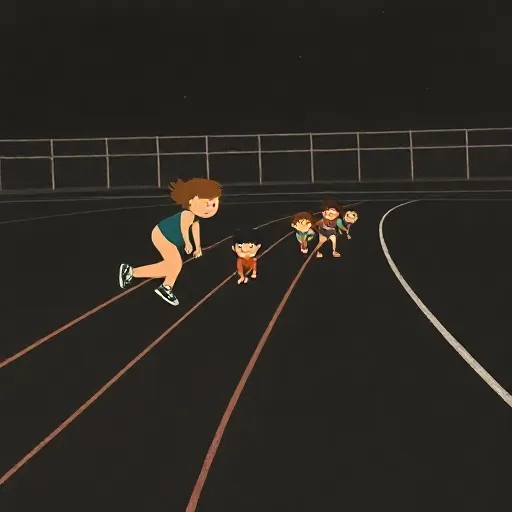
So some people push for meritocratic equality of opportunity. They say only a person’s own hard work and ability — their merit — should decide who gets ahead. If two kids both study hard and score well on a test, they should have the same chance at a top college, no matter their family background. But there’s a twist: merit isn’t just something you’re born with; it’s shaped by the opportunities you’ve already had. A child who grew up with tutors, music lessons, and a house full of books will probably look more “meritorious” than an equally talented child who never had those things. So a strictly merit-based system can end up locking in the advantages of the well-off.
That’s why the philosopher John Rawls (1921–2002) proposed a stronger idea: Fair Equality of Opportunity (FEO). He said that if two people have the same natural talent and the same drive, they should have roughly the same chance of success — no matter whether they were born into a wealthy family or a poor one. FEO tries to level the playing field so that your social class doesn’t hold you back. It doesn’t try to erase differences in natural ability, though; someone born with less talent for math might still struggle.
Equality or “Good Enough”? The Battle Over Adequacy

Many people argue that we shouldn’t obsess over making everything perfectly equal. Instead, what matters is adequacy — ensuring every child reaches a decent educational threshold: being able to read, understand basic math, and participate in civic life. If all schools meet that goal, they say, then inequalities above that line are not a big deal.
But education often works as a positional good: its value depends on how you compare to others. For a competitive job, it’s not enough to be merely qualified if someone else is more qualified. So even if all kids meet a basic standard, those from wealthier families who enjoy extra advantages will still snap up the top spots at selective universities and the best-paying careers. That’s why many philosophers think we can’t ignore relative position. What counts as “adequate” might even shift upward as society gets more educated; serving on a jury or understanding a political debate requires more skills today than it did fifty years ago.
Some thinkers suggest that the right approach depends on the goal. Education for human flourishing — the joy of learning for its own sake — might only need adequacy, because one person’s love of poetry doesn’t take away from another’s. But education for the labor market is a high-stakes competition, making strong equality more important. Some countries, like Finland, fund schools nationally and give extra money to schools with more immigrant students — a very different approach from tying school money to local property taxes.
Rawls’s Critics and the Problem of Natural Luck

Rawls’s Fair Equality of Opportunity has faced tough objections. One comes from philosopher Richard Arneson (born 1950). He argues that Rawls cares too much about making job competitions fair for the talented, and not enough about improving the actual well-being of those who are worst off. If you’re born with few natural gifts, what good is a fair race? Arneson thinks we should instead adopt prioritarianism — giving priority to making the least advantaged as well-off as possible, even if that means talented kids get fewer resources than they would under FEO.
Another objection points out that FEO corrects for inequalities caused by your family’s wealth, but not for inequalities caused by your natural talents. Yet both are pure luck — you didn’t choose either one. Why, then, should schools help close the gap between a talented rich kid and a talented poor kid, but do nothing to close the gap between a talented kid and a less-talented one? Defenders of Rawls reply that the ability to compete for jobs on fair terms is special because it’s tied to our self-respect and freedom, which matter more than differences in income. And trying to compensate for natural talent is extremely hard: how would you even know a five-year-old’s “natural potential” apart from her environment?
The Real World: Family, Disability, and Affirmative Action

Even if philosophers could agree on the perfect theory, messy reality intrudes. Consider families. Parents naturally want to help their own children — reading bedtime stories, helping with homework, saving for college. Some philosophers say we should protect the intimate parts of family life, but prevent advantages that aren’t about closeness, like paying for expensive private schools that hoard opportunities. Yet drawing that line is incredibly difficult. Is a parent who quits their job to coach their child’s math team crossing it?
Disability raises another hard challenge. Kids with physical or cognitive disabilities may need extra resources and different kinds of support to have a genuine educational opportunity. But what if a severe disability makes it impossible to reach the same academic goals as other kids? Theories like FEO or adequacy can struggle here; they might seem to offer very little to the most disabled children. Some philosophers respond that we need an additional principle of basic humanity — a moral duty to provide some education to everyone, regardless of ability.
Finally, the question of group inequality leads to controversial policies like affirmative action in college admissions. By giving some preference to historically disadvantaged racial or ethnic groups, these policies aim to correct for past discrimination and ensure that elite institutions don’t become clubs for the already privileged. Critics say this violates meritocratic fairness; supporters point out that merit is itself shaped by unfair starting points, and that having diverse leaders benefits everyone.
Why This Fight Still Matters to You

You might not be a philosopher or a policymaker, but the questions about educational opportunity are all around you. When your school gets a new science lab while another district cuts art and music, something is at stake. When some students can afford after-school tutoring and summer camps while others can’t, the gap widens. Even within your own classroom, who gets extra time on tests or special pull-out classes, and why?
Thinking clearly about these issues is the first step toward making them better. You don’t have to settle for “that’s just the way it is.” Understanding the different meanings of fairness — formal, meritocratic, FEO, adequacy — gives you tools to argue for what you believe. And you’ll start to see that a zip code isn’t destiny — or at least, it shouldn’t be. Philosophers disagree on the best solution, but they agree on this: every child’s mind deserves a real chance to grow.
Think about it
- If a school district spends more money on schools in wealthy neighborhoods than in poor ones, is that unfair even if the poorer schools still meet basic standards? Why or why not?
- Parents want to give their own kids advantages, like paying for music lessons or extra tutoring. Is there a point where that goes too far and becomes unfair to other kids?
- Imagine a new policy gives extra help to students with disabilities. Could this create unfairness for other students, or is it required for equal opportunity? How would you decide?