

Is Everyone’s Starting Line Really the Same?
The Tryout That Wasn’t Really Fair
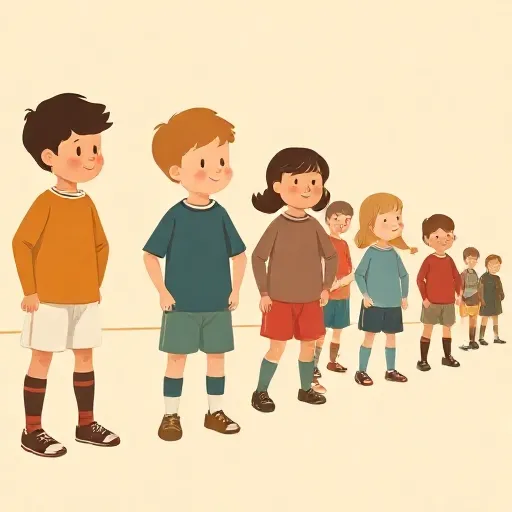
It’s tryout day for the middle school soccer team. The coach gathers everyone and announces, “This is completely open. Anyone here can make the team.” You glance around. Priya’s parents hired a pro trainer for the past two summers. Max’s family can’t afford cleats that fit. Every kid heard the same words, but did they all get the same chance? That question is at the heart of equality of opportunity, an idea that sounds simple but cracks open as soon as you look closely. Unlike equality of outcome, where everyone would get a spot on the team no matter what, equality of opportunity says differences in results can be fair — as long as the opportunity was truly equal. But what makes an opportunity equal? Over the centuries, philosophers have built deeper and deeper answers.
No Locked Doors

The thinnest answer is formal equality of opportunity. In this view, opportunities are equal as long as there are no explicit rules or laws shutting some people out. If the soccer tryout doesn’t say “no girls” or “only for kids from this neighborhood,” then the chance is officially equal. Historically, this idea overturned real injustices. For much of the twentieth century, women were legally barred from serving in combat roles in many militaries; formal equality demanded those bans be lifted. In the United States after the Civil War, states invented literacy tests and “grandfather clauses” that effectively stopped Black Americans from voting — tricks that formal equality condemned. But even when those legal walls are torn down, a huge gap remains. As philosopher Bernard Williams (1929–2003) pointed out, imagine a society that picks its warriors by strength alone and officially opens the competition to all. If poor children are so undernourished that they can’t build muscle, the door is unlocked but they still can’t walk through it. Formal equality matters, but it’s just a first step.
Picking the Best: Meritocratic Equality

A thicker idea adds that the selection should go to the best qualified person. This is called meritocratic equality of opportunity. In the soccer tryout, the coach should choose the players who can dribble, pass, and score — not the ones whose parents are friends with the booster club. That sounds clear: merit decides. But soon snags appear. What counts as a qualification? In Williams’s warrior example, physical strength is a merit, but if it’s only attainable by well-fed rich kids, a merit-based competition can reproduce old inequalities wearing a new mask. Real world hiring shows similar traps. Suppose a restaurant owner wants to hire a waiter who can attract repeat customers. If the local community is full of racist prejudice, then a candidate from a racial minority might be seen as less able to draw customers, making them “less qualified” — not because they lack skill, but because of other people’s biases. So meritocratic rules alone can’t guarantee a truly level playing field.
A Fair Start: Substantive Equality
For opportunity to be meaningful, philosophers argue, society must address the uneven ground under people’s feet. This family of views is substantive equality of opportunity. The most famous version comes from John Rawls (1921–2002), who called it Fair Equality of Opportunity. Rawls said that people with the same natural talent and the same willingness to work hard should have the same chance of success, regardless of whether they were born into a wealthy or poor family. So it’s not enough that the warrior tryout is open to all; a society must also ensure that poor children get enough nutrition to develop strength, and that they go to schools that teach the same combat skills as rich children. If rich parents then hire private sword tutors, that might still tip the scales, and Rawls’s principle would push us to limit those advantages. But here a deep fault line appears: families. Parents naturally want to give their child every edge — extra coaching, bedtime stories, music lessons. These loving acts create a gap between children that no law can fully erase. Rawls himself admitted that as long as families exist, fair equality of opportunity can only be imperfectly realized. The philosopher Plato (428–348 BCE) took the radical step of suggesting that children should be raised collectively so no child benefits from a particular family. Very few modern thinkers go that far; most accept that we must balance fairness with the good of family life, knowing the two will always pull against each other.
Luck, Choice, and the Lottery of Birth

A still more demanding view takes aim at something Rawls left standing: natural talent. Luck egalitarianism (sometimes called radical equality of opportunity) says that no one deserves their genetic gifts, so inequalities that flow from them are just as unfair as those from poverty or discrimination. The key thinkers here include Ronald Dworkin (1931–2013) and G. A. Cohen (1941–2009). They distinguish between brute luck — things you never chose, like your genes, your birth family, or a sudden lightning strike — and option luck — the foreseeable results of choices you make, like practicing an instrument every day or deciding to skip training. In a fair world, they argued, your life should go differently from others only because of your own responsible choices, not because of brute luck. If Alisha is born with an extraordinary talent for math and Ben struggles with numbers through no fault of his own, the luck egalitarian says that inequality is a problem society should correct. But this ideal is fiercely hard to apply. Are your choices truly your own, or are they shaped by your upbringing and biology? Philosopher John Roemer (b. 1945) tried to separate a person’s “circumstances” (things they can’t control) from their “effort” (what they can control), suggesting that we should only reward differences across similar circumstances. Even advocates admit luck egalitarianism is more a compass than a map — a direction to face, not a finish line to reach.
Why Your Chance Depends on This Debate

You might think these are dusty old arguments, but they shape the world you live in every day. When your school decides who gets into the advanced math program — purely by test scores, or with a boost for students from under‑resourced backgrounds — it is choosing between meritocratic and substantive views of opportunity. When people in the UK protest a “postcode lottery” for cancer drugs, they’re saying geographic luck shouldn’t determine who gets medicine. When a college sets aside a few spots for first‑generation students, it leans toward a thicker equality. When your town decides how to fund sports leagues so that cost isn’t a barrier, it’s wrestling with the family problem. The debate over affirmative action (giving preference to members of historically disadvantaged groups) is exactly a live, unsettled fight over which factors should and shouldn’t count. Every time you hear “she got in only because of…” or “he had advantages I never had,” you are stepping into a conversation that goes back centuries — and still has no final answer.
Think about it
- If a kid has a private coach and makes the team over a kid who never had one, is that unfair? What if the private coach is her older brother who volunteers his time?
- Imagine two athletes: one trains six hours a day, the other rarely practices but is naturally gifted and still wins. Should the trophy go to the harder worker or the better performer? Why?
- Can a society ever make opportunities completely equal without getting rid of families? Would that be worth it?