Is It Fair That Luck Decides Your Life?
Imagine a Lottery before You Were Born
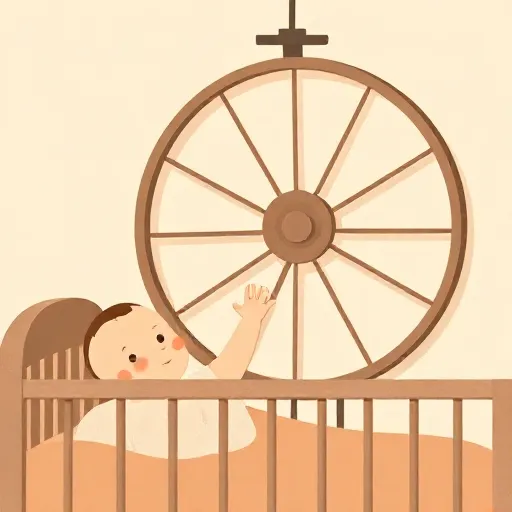
Right now, the life you are living depends on a huge number of things you never chose. You did not choose where you were born, the language you speak, or the genes that gave you your height, health, and curiosity. If you had been born halfway across the world, you would probably have very different opportunities — and you still would be exactly the same you. The fact that some people get better starts than others through no effort of their own feels deeply unfair. But if so many advantages are just a matter of luck, what does that mean for the idea of a just society? Can we ever truly deserve what we have?
Philosophers call this the problem of luck and distributive justice — the question of how goods like money, education, and opportunity should be shared among people. For the last fifty years, this problem has been at the center of debates about fairness. One bold answer says that justice is precisely about separating bad luck from real choice.
Catching a Break vs. Rolling the Dice
In the 1970s, the philosopher John Rawls (1921–2002) famously described life as being shaped by a social lottery and a natural lottery. The social lottery is the political and economic circumstances you are born into — being the child of a billionaire or the child of a war refugee. The natural lottery is your biological inheritance — your immune system, your memory, your athletic genes. Rawls argued that because none of us did anything to deserve our lottery numbers, a just society should not let those raw starting points decide people’s entire lives.
Later thinkers, often called luck egalitarians, sharpened this insight into a powerful rule: an inequality is unfair if it results from luck rather than from a person’s own free choices. But what counts as “luck”? The philosopher Ronald Dworkin (1931–2013) made a crucial distinction that you can use to sort almost any situation.
Brute luck is when a risk falls on you that you did not choose and could not have avoided — like going blind because of a rare genetic condition, or a tornado sweeping away your home. Under luck egalitarianism, justice requires that we compensate people for bad brute luck, because they did nothing to bring it on themselves.
Option luck, on the other hand, is the outcome of a deliberate gamble you decided to take — buying a lottery ticket, or deciding not to buy fire insurance before building a house in a wildfire zone. Here, most luck egalitarians say that you should bear the consequences. If you lose, that’s not an injustice; you chose the risk.
Insurance connects the two ideas. Suppose a disease can strike anyone randomly (bad brute luck), but a vaccine is available. Refusing the vaccine turns the risk into a kind of calculated gamble, and the misfortune that follows starts to look more like option luck. So for Dworkin, a fair society makes sure everyone can insure themselves against brute luck — but forces nobody to cover bets they freely made.
How Far Does the Luck Problem Go?
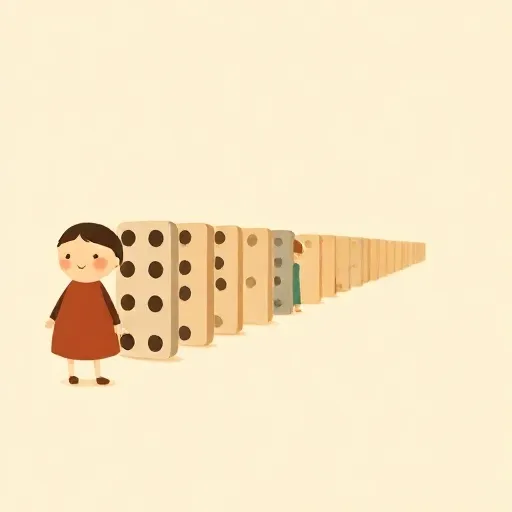
There is a deep trouble waiting inside any attempt to neutralize luck. To see it, try tracing the causes of anything you have ever done. You decided to practice the piano, maybe. But you could practice only because your parents had the money for an instrument and a quiet house — none of that was your choice. Before that, you were the sort of child who enjoyed practicing. Did you choose your personality? Probably not. It was shaped by your brain chemistry (natural lottery) and the environment you grew up in (social lottery). If you keep walking backward along this chain, eventually you hit things that happened before you were even born. At that point, choice disappears entirely.
The philosopher Thomas Nagel (born 1937) made this worry famous by pointing out that the area of life truly free from luck seems to shrink to an extensionless point. If luck reaches all the way backwards, then maybe everything about us is a matter of luck, and nobody is ever genuinely responsible for anything. This is called the regression problem.
One response says that we do not need to choose every cause of our actions to be responsible for them. Maybe what matters is that our decision-making machinery — our ability to think, weigh reasons, and act accordingly — works properly, even if we did not choose to have that machinery. Think of a chess player: she did not choose to be born with a chess-friendly brain, but once she deliberates and commits to a move, we still hold her responsible for that move. The regression argument pushes us to ask: does responsibility require freedom all the way down, or is a good-enough process sufficient?
When Effort Isn’t Strictly Yours
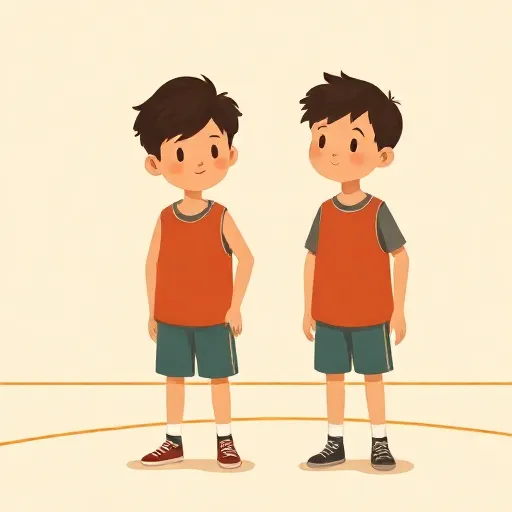
Many people reach for effort as the thing that is truly under our control. Talent is luck, they say, but how hard you try is yours. However, this line also cracks under pressure. Imagine two students, Lena and Sami. Lena finds math natural; the puzzles light up her brain, and she works extra hours because it feels good. Sami struggles with every problem and, despite trying, eventually puts in fewer hours because constant failure is exhausting. Their levels of effort are clearly different, but it would be strange to say that Lena chose her effortless enjoyment of math while Sami chose his discouragement.
Philosophers describe this as the non-separability of effort and talent. In the real world, people’s levels of effort are not independent of their natural gifts and circumstances. If Adam had been born with Beatrice’s talents, he might have tried much harder too — but he wasn’t, and that difference is just a twist of luck. Once we see this, it becomes extremely tricky to build a distribution of rewards that perfectly tracks “what we really deserve” while leaving luck out of it.
Some luck egalitarians bite the bullet: because effort itself is shaped by luck, the only way to truly neutralize luck would be to make everyone equal in outcome. Most resist this conclusion, because it erases the very distinction between choice and luck they wanted to preserve. They instead try to define a narrower sphere of responsible choice — perhaps the choices we make once we are mature enough to reflect on our own preferences, even if we did not choose those preferences.
Does Neutralizing Luck Even Lead to Equality?

An even more basic challenge comes from the philosopher Susan Hurley (1954–2007). Suppose two people are stranded on separate islands. Through sheer luck, one island is rich with fruit trees; the other is barren rock. So far, everyone agrees the inequality is a matter of luck. Now a passing ship comes and drops a huge load of fertilizer and seeds on the barren island, making it just as fertile as the first. The outcome is now equal. But is it any less a matter of luck? The castaway on the barren island did not earn the ship’s arrival; the equality was created by an event nobody controlled. If the whole point was to remove luck’s influence, then equalizing outcomes doesn’t do it — you’ve simply traded one kind of luck for another.
This insight shows that luck-neutralization can’t serve as a direct argument for strict equality. Instead, luck egalitarians clarify that their aim is not to eliminate all luck from the universe (an impossible goal), but to eliminate the differential effects of luck on people’s interests. They are not trying to make your fate totally independent of luck; they are trying to make sure that whether you end up worse off than me does not come down to luck. The ideal is not a world without luck, but a world where nobody is disadvantaged by factors they had no chance to control while others profit from similar accidents.
Even so, some critics of luck egalitarianism, like Elizabeth Anderson, have argued that an obsession with distributing goods according to luck and choice misses something even more important: people should relate to one another as equals. If compensating someone for brute luck requires making them humiliatingly confess their lack of talent, that act can damage the very equality the theory seeks. But the lively back-and-forth shows that the problem of luck is not a closed case. It opens into deeper questions about what we owe each other, and whether justice is about shares or about standing.
Why It Matters When You Say “Not Fair”

From the playground to the world stage, the sentence “That’s not fair” almost always hides a judgment about luck. When your classmate gets a better grade because their parents could afford a tutor, the unfairness stings because you know you didn’t choose your family any more than they chose theirs. The same logic runs through huge moral arguments: about how we treat refugees, about whether it is right for billionaires to inherit fortunes they did nothing to build, about whether a society should cover the medical bills of someone who got sick through no fault of their own.
These questions have no simple answers. Luck egalitarians give us a crisp framework — separate choice from luck, and compensate only for the luck part — but life resists neatly slicing the two. Your determination, your kindness, even your ability to make wise gambles are all shaped by unchosen forces. Still, just seeing the secret architecture of luck in every situation is itself a philosophical power. It helps you notice who gains from invisible accidents and who pays for them. The debate doesn’t end with a single rule, but it forces you to ask, whenever you face an inequality: Did they choose this gap, or was it dealt to them?
Think about it
- Imagine you and your friend spend the same one hundred hours learning to juggle. You improve much faster because your coordination is naturally better. Is it unfair if you get the lead part in the school circus? Why or why not?
- If a gigantic computer could predict every single one of your future choices based on your genes and childhood, would it still be right to praise you for good deeds and punish you for bad ones?
- Think of the biggest advantage you have in your own life — your health, your home, your calm temperament. Did you do anything to earn it, or did luck give it to you? Does that change how you should think about what you share with others?