Can Luck Make You More Guilty?
The Two Drivers
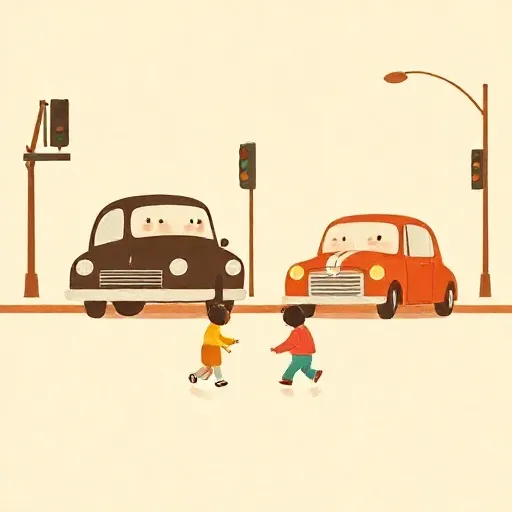
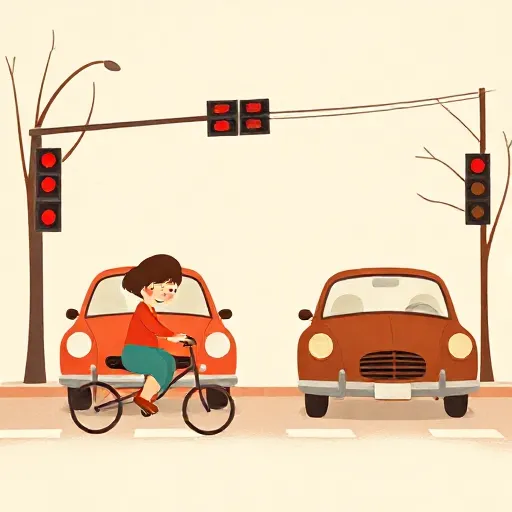
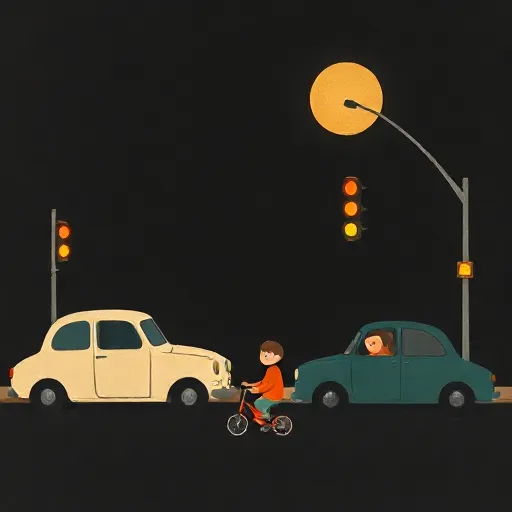
Picture two delivery drivers, both rushing, both running a red light. The first swerves onto an empty sidewalk, heart pounding but nobody hurt. The second hits a child on a bike. They made the same reckless choice, but only one caused a disaster. Do you blame the second driver more? Most of us do. But neither driver controlled whether a child was in the intersection. If luck determines the outcome, can it really change how guilty someone is? That puzzling question is the beginning of the problem of moral luck.
The Control Principle: What’s Really Up to You?

Many philosophers, starting with Immanuel Kant in the 1700s, believed that morality should be immune to luck. The heart of this view is the Control Principle: you can only be morally judged for things that are under your control. If someone steps on your toes because they were pushed, you don’t blame them — the push wasn’t in their control. That seems fair.
Kant took this further. He argued that a good will — the inner intention to do right — is good “like a jewel” even if it never succeeds. Your true moral worth doesn’t depend on results or success, only on your will. So if two people both plan to help but one fails because of bad luck, they’re equally admirable. And if two people both plan to harm but only one succeeds because of good luck, they’re equally blameworthy. The Control Principle feels right. But does it fit how we actually judge people?
Four Ways Luck Creeps In

In 1979, philosophers Thomas Nagel and Bernard Williams each wrote papers titled “Moral Luck” challenging the Control Principle. Nagel showed that luck sneaks into every part of our lives — even our choices and personalities. He described four kinds of luck that affect moral responsibility.
Resultant luck is luck in how things turn out. The two drivers are a perfect example. Two attempted murderers who both pull the trigger, but one’s bullet hits and the other’s is blocked by a bird, also illustrate it. The outcomes are different, but the intentions were the same.
Circumstantial luck is luck in the situations you face. Nagel imagined a person who becomes a Nazi collaborator in 1930s Germany. If that same person had been sent to Argentina in 1929, they might have lived a peaceful life. We blame them for doing awful things, but they didn’t choose which country they ended up in.
Constitutive luck is luck in who you naturally are. Your genes, caregivers, and environment made you brave or timid, patient or hot-headed. If you run away from danger instead of helping because you’re naturally timid, is that fully your fault? You didn’t pick your personality.
Causal luck is luck in the chain of causes that made you. This is basically the old problem of free will: if every event is determined by prior events, then your choices were always going to happen. How can you be responsible for anything if the whole causal story started before you were born?
If all of these factors are beyond your control, and yet we keep blaming and praising people for them, then maybe the Control Principle isn’t working. Nagel worried that if we take the Control Principle seriously, the area of genuine responsibility “shrinks to an extensionless point” — leaving nothing we can justly praise or blame.
Can We Explain Away Moral Luck?

Some philosophers think moral luck is an illusion. They offer ways to explain why we seem to judge people differently even when we shouldn’t.
One idea is the epistemic argument. We never know people’s intentions perfectly, so we use outcomes as clues. A person who succeeds at a horrible plan looks more committed than someone who fails. If we could read minds and saw that both had the exact same resolve, we would blame them equally. The difference is in our knowledge, not their guilt.
Another approach appeals to agent-regret. Even if the driver who hits a child isn’t morally worse, we expect them to feel awful and take responsibility in a special way. They should apologize, make amends, maybe carry guilt forever. That strong feeling can be confused with being more blameworthy. But it isn’t the same thing. The Control Principle survives — we just need to keep feelings separate from moral judgments.
There’s also the thought that we confuse moral luck with legal luck. Laws sometimes punish successful crimes more harshly for practical reasons (like deterrence), not because the person is morally worse. Mistaking the law’s reasoning for moral truth makes moral luck seem more real than it is.
Or Should We Accept Moral Luck?
Other philosophers argue that moral luck is real, and the Control Principle is too strict. One version says that when you knowingly take a risk, you open yourself up to being more blameworthy if the risk turns out badly. Imagine two reckless drivers. Both chose to gamble with safety. One gets lucky, the other doesn’t. According to this view, the unlucky one really is more blameworthy — because you are responsible not just for your choices but for the gambles you take. The bad outcome isn’t pure chance; it’s the downside of a risk you accepted.
This connects to a bigger challenge. If you accept some kinds of luck, can you reject others? For example, if you think the Nazi collaborator is more blameworthy than their Argentine twin (because of circumstantial luck), then it’s hard to draw a line that rules out resultant luck. Some philosophers argue by analogy: if a person who sneezes and can’t pull a trigger is less blameworthy than someone whose bullet hits a bird, then that second person seems less blameworthy than someone who hits the target. The reasons flow from one case to the next. Accepting one kind of luck may force you to accept them all.
Why It Still Matters: From Courtrooms to Your Classroom

The problem of moral luck doesn’t just live in philosophy books. It shapes real laws. In many places, attempted murder gets a lighter sentence than murder, even if the only difference was a gust of wind or a victim’s stumble. Some legal theorists argue this is unjust — if punishment tracks moral blame, outcomes shouldn’t matter. Others point to practical reasons for treating results differently, but the debate about what is fair remains.
The same puzzle appears in questions about social justice. Your talents, your family’s wealth, even your personality are partly due to luck. If those things aren’t your doing, should a just society redistribute resources to make up for luck’s inequalities? Many political philosophers, called luck egalitarians, say yes — unfair advantages ought to be corrected. Their arguments rely on something very close to the Control Principle. So your answer to the moral luck puzzle might affect how you think about taxes, healthcare, and opportunity.
In your own life, you bump into this every day. You might be praised for being kind — but what if you were just born into a family that taught kindness easily? You might be blamed for failing a group project when a teammate slacked off — but what if you had no control over their effort? Reflecting on moral luck doesn’t give easy answers, but it helps you ask whether the praise and blame you give and receive are really deserved.
Think about it
- Imagine two students both cheat on a test, but only one gets caught. Should the one who gets caught be punished more severely? Why or why not?
- If you found out that a friend’s courage came entirely from a supportive childhood, would you admire them the same amount? What if someone’s cowardice came from a difficult childhood?
- Suppose a judge could see inside your brain and know exactly what you intended. Would it be fair to punish a failed attempt less than a successful one, even if both people had the exact same plan?