Do You Really Deserve Blame for Anything?
What Happens When a Vase Breaks?
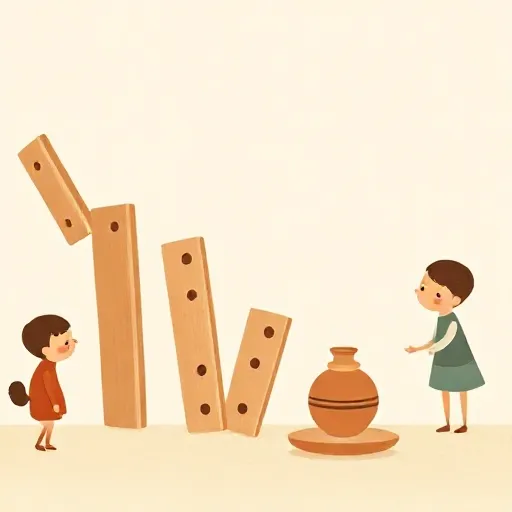
Imagine you’re at a friend’s house and you accidentally knock over a vase. It shatters. Your friend’s parent looks at you sternly and says, “You should have been more careful!” You feel guilty. Most of us think you deserve blame because you could have been careful. But philosophers ask: were you really free to be careful? What if everything you did at that moment was already set in motion by events you had no control over?
This kind of deserving blame – just because of the act itself, not because blaming you might teach you a lesson – is called basic desert moral responsibility. The contemporary philosopher Derk Pereboom defines it like this: you would deserve blame if you understood the act was wrong, simply because you did it. It’s not about future consequences; it’s about what you merit just for that action.
Moral responsibility skeptics doubt that anyone ever deserves blame or praise in this basic way. They think that what we do is always the result of things we cannot control, like our genes, our upbringing, or sheer luck. So, they argue, holding people truly deserving would be unfair.
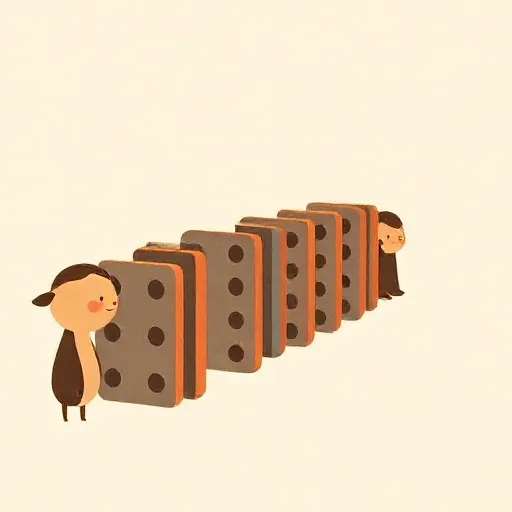
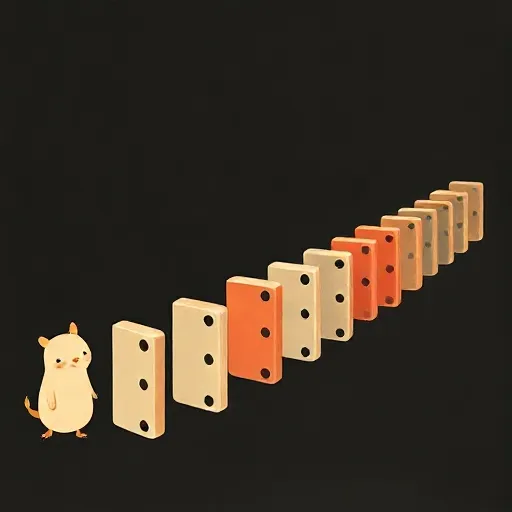
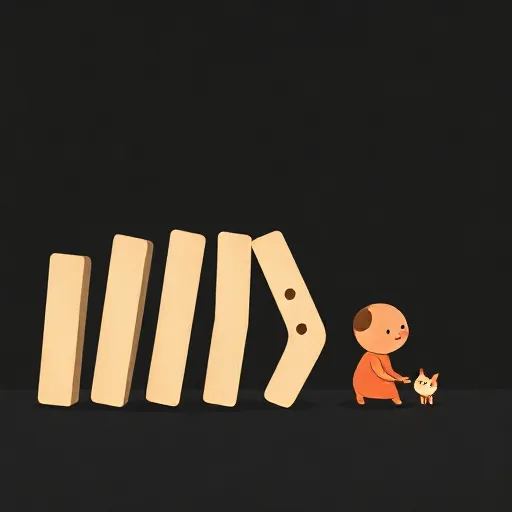
In the 1700s, Baron d’Holbach (1723–1789) argued that everything, including human actions, is determined by earlier events and the laws of nature. This is causal determinism. If the universe runs like a giant domino chain, every choice is just the inevitable next domino. There’s no room for free will, so no one can be truly blameworthy. Today, few philosophers call themselves hard determinists, because quantum physics suggests some events are genuinely random. But the idea that determinism – or even just factors beyond our control – might threaten basic desert responsibility is still alive in more subtle forms.
The Neuroscientist, the Killer, and Plum
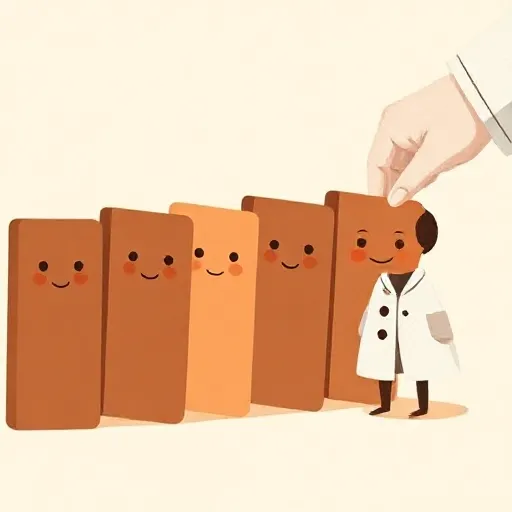
Derk Pereboom asks you to imagine a man named Plum. Plum was programmed by a team of neuroscientists from birth to be selfish and, as a result, he murders someone. He understands morality and can reason, but his strong egoistic desires come from the programming. Is Plum blameworthy in the basic desert sense? Most people want to say no – his actions came from outside manipulation.
Pereboom then describes a case exactly like Plum, but the causes aren’t intentional scientists; they’re just natural factors like genes and environment. He claims there’s no important difference. In both cases, the agent’s actions are ultimately produced by factors beyond his control. So if Plum isn’t blameworthy, then no one in a deterministic world is. This is the manipulation argument.
Some philosophers, called compatibilists, try to find a relevant difference between manipulated and naturally determined agents. But the skeptics reply that any difference we point to can be added to the manipulation case, making the two even more alike. For this reason, many contemporary skeptics embrace hard incompatibilism: whether the world is deterministic or includes randomness, we still lack the sort of free will required for basic desert moral responsibility.
Creating Yourself from Scratch
Even if the universe isn’t deterministic, the philosopher Galen Strawson (born 1952) argues that moral responsibility is impossible. To be truly responsible for an action, you’d have to be truly responsible for the mental state that caused it – your desires, values, and character. But where did that character come from? It came from your genetic inheritance and early experiences, which you didn’t choose.
Strawson says the only way to take control is to consciously choose to change yourself. But that choice itself depends on your existing character, which you didn’t choose. So to be responsible for that choice, you’d have to have chosen that character, and so on forever. This leads to an infinite regress. The only way out would be to be the cause of yourself, or causa sui – a phrase used by Friedrich Nietzsche (1844–1900), who mocked the idea as nonsense like trying to pull yourself up out of a swamp by your own hair.
Many philosophers object that you don’t need to be responsible for your whole self in order to be responsible for a single action. But Strawson insists that if no factor contributing to your action was ever up to you, it seems deeply unfair to blame you. The debate over this simple but stubborn argument is still very much alive.
The Luck That Decides Everything

Neil Levy, another contemporary philosopher, argues that luck swallows all our choices. Every morally significant action is shaped either by constitutive luck – the lucky or unlucky fact that you have the character you do – or by present luck – little chance factors right before you act, like the mood you’re in, which reasons pop into your head, or a sudden distraction. Often it’s both.
For example, your decision to share your lunch might depend on whether you happened to be in a good mood because the sun came out. Constitutive luck gave you a generous nature, which you didn’t control. Present luck influences whether you actually share in that moment. Levy calls this the Luck Pincer: if libertarian free will relies on undetermined events, those are chancy and undermine control; if compatibilism relies on your character, that character is a product of luck. Even trying to improve yourself is guided by the very character luck already gave you.
Levy adds that many cases of wrongdoing involve non-culpable ignorance – like a 16th‑century surgeon who never learned about germs. That ignorance is itself a matter of luck. So, once again, factors beyond our control seem to determine what we do.
What About Science? Your Brain Decides Before You Do
In the 1980s, Benjamin Libet conducted experiments showing that the brain’s readiness potential to move a finger starts before subjects report consciously deciding to move. Some scientists claimed conscious will is an illusion. However, many philosophers – including many skeptics – find these results inconclusive. Al Mele argued that the brain activity might just be the beginning of forming an intention, not the cause of the action. Plus, those experiments involved trivial movements, not complex moral decisions.
Yet other scientific findings are more troubling. Psychologists have shown that our behavior is influenced by unconscious cues – the temperature of a drink you’re holding can affect your judgments, and implicit biases you don’t know you have can sway your actions. Our conscious reasoning often explains only a small part of why we do things. Some compatibilists now admit that free will might be “at best an occasional phenomenon.”
These findings don’t prove global skepticism all by themselves, but they suggest that the conscious, rational self often has less control than we assume. That adds weight to the skeptic’s case: if we are nudged by forces we aren’t even aware of, the kind of control needed for basic desert seems even harder to find.
So Can We Still Punish People?
You might worry: if nobody truly deserves blame, does morality fall apart? Can we still punish criminals? Many skeptics answer with a careful “no.” They argue that we can keep morality intact in a forward‑looking way. Judgments of right and wrong don’t require desert; we can still say an action is morally wrong without saying the person is blameworthy in the basic desert sense. And we can use “ought” to guide future behavior rather than condemn an unchangeable past.
When it comes to punishment, the retributivist idea – punishment because the criminal deserves to suffer – is ruled out. But skeptics propose alternatives. One is the quarantine model: just as we quarantine someone with a dangerous infectious disease even though they aren’t responsible for catching it, we can incapacitate dangerous criminals to protect society. We can also try to rehabilitate them and address the social causes of crime.
What about anger and gratitude? Pereboom suggests we can replace resentment with moral disappointment and concern. Instead of saying “I blame you,” we might say “I’m deeply sad this happened, and I hope you change.” Gratitude can still exist as thankfulness without thinking the person is praiseworthy in a desert sense. Personal relationships, skeptics contend, can survive and might even become less cruel.
Think back to the broken vase. When your friend’s parent got angry, that anger may have felt like it was about the past – you deserved it. A skeptic would say we could instead focus on the future: helping you learn to be more careful, without blame. The wrongness of breaking things doesn’t disappear, but how we respond to it can change.
Think about it
- If a scientist could predict every choice you’ll ever make, would it still be fair to punish people for bad choices?
- Suppose a close friend hurts you deeply, and you later learn that they were secretly programmed from birth to act that way. Would you still feel angry? What if you learned that all their character traits came from luck instead?
- If blame is mainly about making people better in the future, how would you change the way parents discipline children?