Why Is It Okay to Turn the Trolley but Not Push the Man?
The lever and the bridge
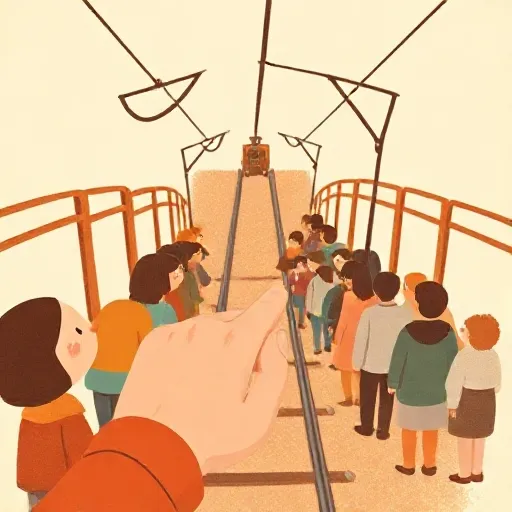
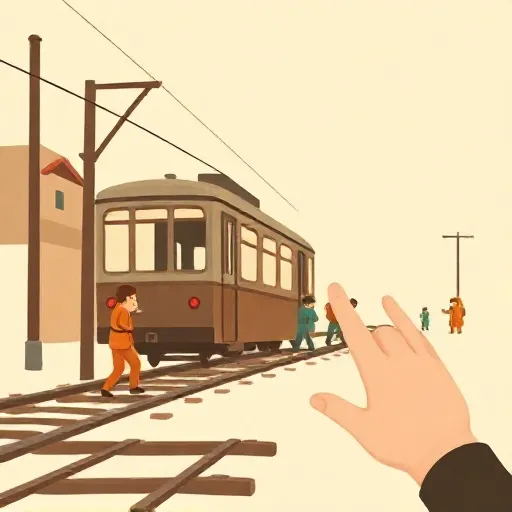
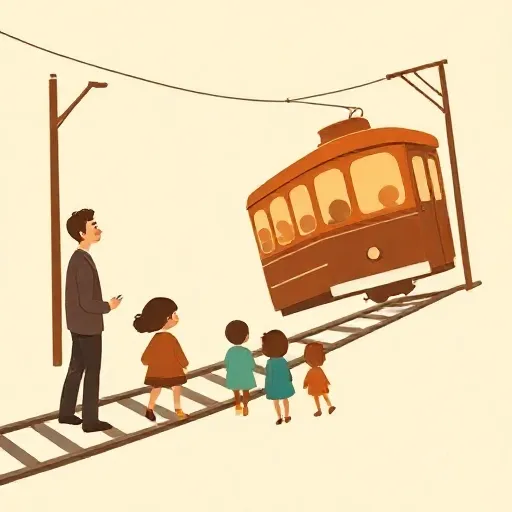
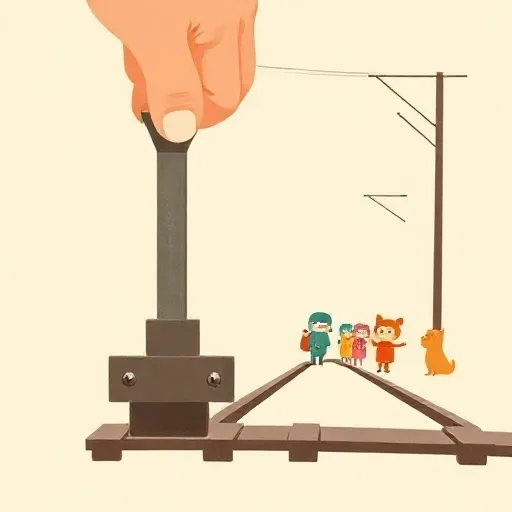
You are standing beside a railway switch. A runaway trolley hurtles toward five people who cannot move. You can pull a lever to send the trolley onto a side track — but one person is stuck there. Most people say: pulling the lever is okay. The death of the one is a tragic side effect of saving five.
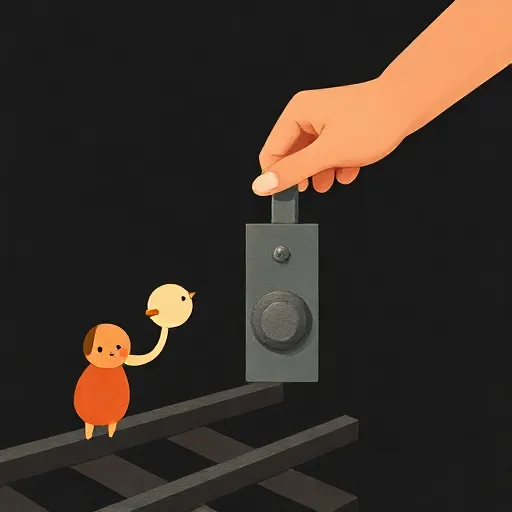
Now imagine a different scene. The only way to stop the trolley is to push a very large person off a footbridge and into its path. That feels wrong. Why? In both cases one person dies and five survive. Yet our moral gut tells us one action is permissible and the other is not.
This puzzle points to a deep idea in philosophy: the principle of double effect. It claims that the difference between harming as something you aim for and harming as something you merely foresee matters enormously.
A knight, a sword, and a monk’s careful rule

The story begins in the 1200s. Thomas Aquinas (1225–1274), a Dominican friar and philosopher, thought about a knight attacked by a robber. Could the knight fight back, even if the robber died? Earlier, Augustine of Hippo (354–430) had said no: defending yourself came from too much self-love. Aquinas disagreed.
He argued that a single act can have two effects. In self-defense, one effect is saving your life (good), another is killing the attacker (bad). If you intend only to save yourself and the death is outside your intention, the act may be lawful — but only if you use no more violence than necessary. As Aquinas saw it, you must not aim at death as your goal; the death must be a foreseeable side effect, not the means you choose.
Aquinas did not write a full set of rules, but his reasoning gave birth to the principle of double effect. Later thinkers turned it into a formal checklist.
The four rules of double effect
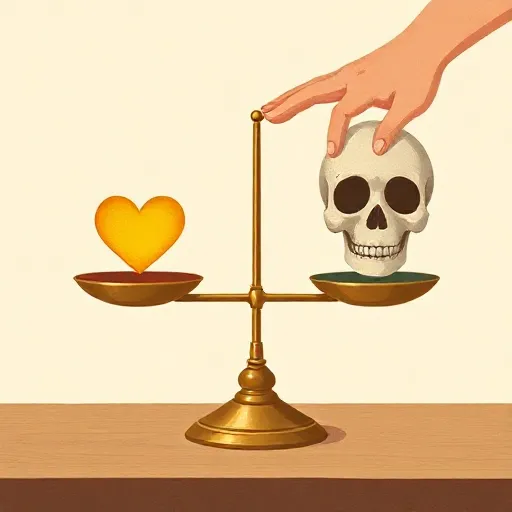
Catholic moral theologians developed the principle into conditions. The most famous list comes from the New Catholic Encyclopedia:
- The act itself must be good or at least neutral (not something wrong in itself).
- The bad effect may not be intended — you must merely permit it. If you could get the good without the bad, you should.
- The bad effect must not produce the good effect. The good must flow directly from your action, not through the harm. This means you cannot use a bad means to reach a good end.
- There must be a proportionately grave reason — the good you achieve must be important enough to outweigh the harm you allow. This is called the proportionality condition.
Modern discussions add another demand: you must try to minimize the harm you foresee and consider less harmful alternatives. Political philosopher Michael Walzer (born 1935) argued that if you accept harm as a side effect, you must be willing to take on extra risk or give up some benefit to reduce that harm.
Bombs, hysterectomies, and morphine: three hard tests
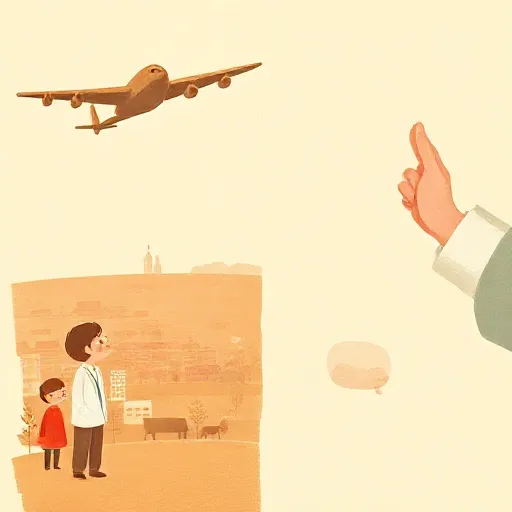
The principle has been applied to some of life’s toughest choices.
Think of two bomber pilots in wartime. The terror bomber aims to kill civilians in order to break the enemy’s spirit; those deaths are his chosen means. The tactical bomber targets a military facility, knowing civilians nearby will die as a side effect. Even if both attacks kill the same number of civilians, the principle says: terror bombing is never permissible because it intends the deaths; tactical bombing may be permissible if it satisfies proportionality and avoids unnecessary harm.
Now imagine a doctor caring for a patient dying in great pain. If the doctor gives morphine intending to relieve pain, but foresees that it might shorten life, many consider that permissible under double effect. If instead the doctor intends to end the patient’s life to stop the suffering, that would be wrong — a direct use of death as a means.
A third example: a pregnant woman has a cancerous uterus. A surgeon may remove the uterus (a hysterectomy) to save her life; the death of the fetus is foreseen as a side effect. But directly aborting the fetus to save the mother would, in traditional Catholic teaching, be impermissible — it would intend the fetus’s death as a means. Critics immediately ask: are the two actions really different in terms of what is intended? This is the heart of the first major challenge.
When a “side effect” starts to look like a plan
Philosophers have spotted serious cracks in the principle.
First, the problem of closeness. In the hysterectomy case, is removing the uterus really so different from removing the fetus? Both seem designed to end the threat to the mother; the death feels just as close to the plan in each case. If we cannot clearly separate intention from foreseen side effect, the principle loses its grip.
Second, experimental philosopher Joshua Knobe (born 1974) discovered the side effect effect. People are more likely to say a harmful result was intended when they think the action was wrong. So our moral judgments may be shaping how we describe intentions, not the other way around. If that is true, the principle is not an impartial guide — it simply reflects what we already approve of.
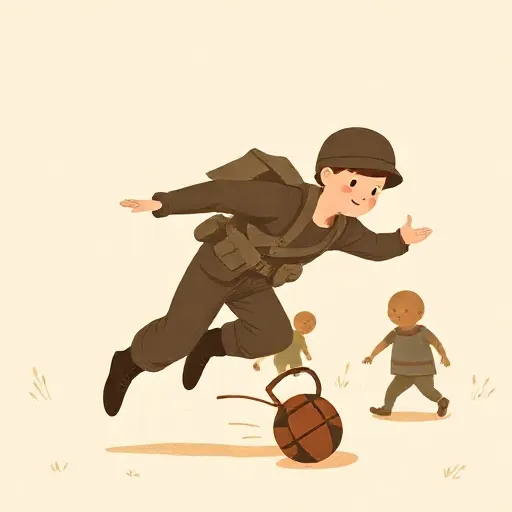
Third, the late philosopher Warren Quinn (1938–2003) rethought double effect as a distinction between direct agency and indirect agency. In direct agency, you involve a person in your plan on purpose — their involvement helps you achieve your goal. In indirect agency, the person is affected without being part of your strategy. A soldier who throws himself on a grenade to save comrades directly involves his own body as a shield; he intends to risk his death as a means. If that heroic act is morally good, double effect cannot explain why — it is direct agency, not a mere side effect. Similarly, a surgeon who performs risky life-saving surgery intends to impose a (lower) risk of death as the means of rescue. The risk is not an unwanted side effect; it is exactly the tool.
These criticisms suggest the principle may not be a single clear rule, but a family of ideas about when causing harm is justified.
From hospital beds to self-driving cars
The principle still walks the halls of hospitals and the code of computer programs. In palliative care, doctors sometimes sedate a dying patient deeply to relieve uncontrollable pain, and then withdraw feeding tubes — a choice that hastens death. Some courts and ethicists invoke double effect to say this is permissible because the doctor intends only to relieve suffering. Critics reply: if the patient welcomes death, then death is not a harm to be avoided, so double effect does not apply. And the claim that ordinary pain relief routinely shortens life is a myth — careful studies show that opioids, given correctly, rarely cause death. The real moral work is done by listening to patients’ wishes, not by a single ancient rule.
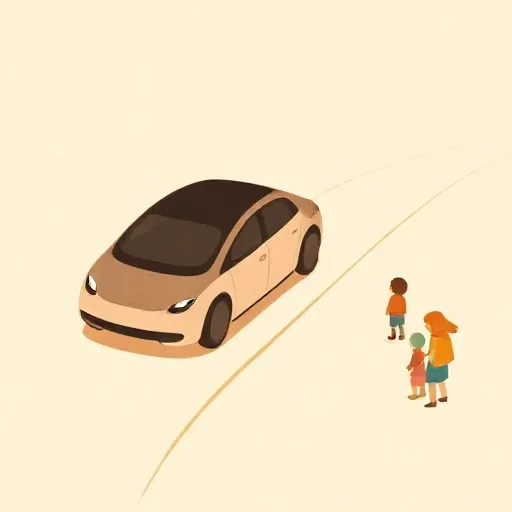
Now the trolley problem, once a philosopher’s puzzle, lives inside every autonomous vehicle. Should a self-driving car swerve onto a sidewalk to avoid a school bus, even if it risks a pedestrian? Programmers must decide whether to treat some deaths as merely foreseen side effects and others as chosen means. The principle of double effect provides no easy answer, but it sharpens the question: what did the car’s strategy intend?
And in your own life, you use the shape of this principle every day. When a friend accidentally breaks your phone while trying to catch it, your reaction is different from if they threw it in anger. Intention shapes blame and forgiveness. The principle of double effect is a reminder that why you acted matters just as much as what resulted — a puzzle that began with a knight and a robber and now hums inside a car’s silent processor.
Think about it
- If a friend accidentally breaks your phone while grabbing it to keep it from falling, is it different from them throwing it in anger? Does intention change how responsible they are?
- Can you imagine a situation where it is right to cause harm on purpose as the only way to achieve something genuinely good? Where would you draw the line?
- If you were designing a self-driving car, would you program it to always protect as many lives as possible, even if that meant deliberately steering into one person to save five? Why or why not?