Why Does Fairness Cost Money? The Puzzle of Disability and Justice
The Restaurant with No Ramp

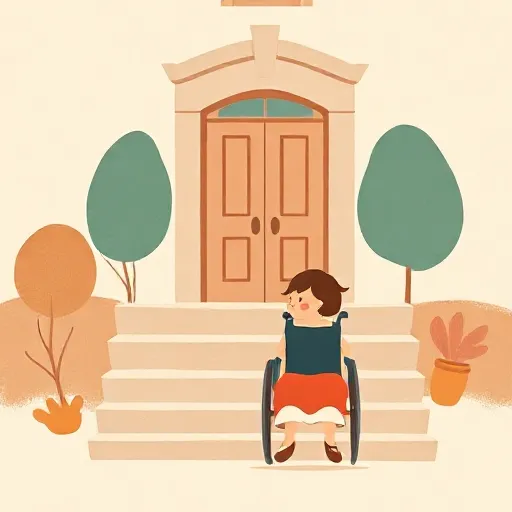
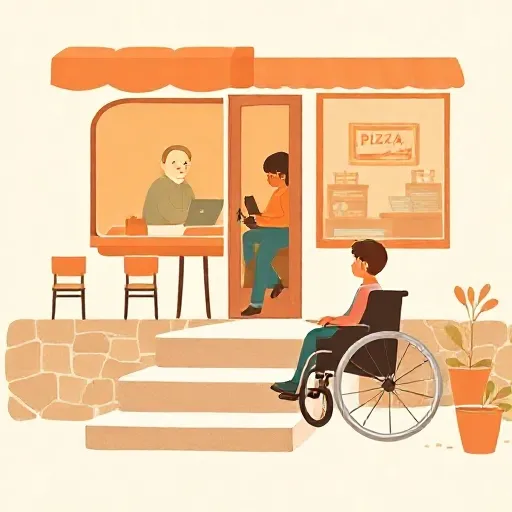
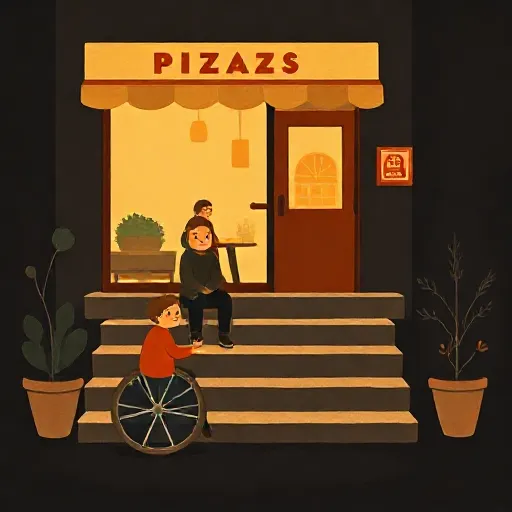
Imagine you are meeting your friends at a pizza place after school. Everyone is excited. But when Maya arrives in her wheelchair, the entrance has three steps and no ramp. The owner says building a ramp would cost too much. Maya cannot get in.
Is that unfair? Almost everyone would say yes. But here is the harder question: how much should the owner have to spend? If a ramp costs two thousand dollars, that seems reasonable. What if it costs fifty thousand to rebuild the whole entrance in a historic building? What if the owner would go out of business? At some point, fairness has a price tag — and that makes disability different from almost every other fight for justice.
When we talk about unfairness based on race or gender, the problem comes from attitudes and rules, not from expensive physical changes. You do not need to rebuild a building to stop treating women as inferior. But for disabled people, respect and inclusion often mean ramps, elevators, sign-language interpreters, Braille materials, flexible schedules, and redesigned spaces. Real resources have to move from somewhere else.
This creates a puzzle at the heart of justice — what we owe each other as fellow members of society. Philosophers call this the tension between recognition (treating people with equal respect) and redistribution (sharing resources fairly). Nancy Fraser (born 1947) described these as two separate obstacles to full equality. For most minority groups, you can fix recognition problems without spending much money. For disabled people, you cannot separate the two. And that raises hard questions nobody has fully answered.
Two Ways to See Disability

To understand what fairness requires, you first have to answer a deeper question: what is disability, anyway?
One view, called the medical model, sees disability as a problem inside a person’s body or mind. A spinal injury limits your ability to walk. That is a fact about you. The medical model says the disadvantage comes directly from the impairment, and the fix is to cure it, treat it, or compensate the person for having it.
The social model flips this around. It says disability is not just about your body — it is about how society is built. If every building had ramps and elevators, using a wheelchair would not limit where you can go nearly as much. If information was always available in multiple formats, blindness would not cut you off from the same things. The problem is not your legs or your eyes; it is that the world was designed for a narrow range of bodies and minds and never adjusted.
Most thinkers today do not pick one extreme. Almost everyone agrees that impairments can cause real discomfort even in a perfectly welcoming world. But social-model thinkers argue that hostile environments and social exclusion greatly magnify those difficulties. Being unable to walk is one challenge. Being unable to enter most buildings turns it into a much bigger one.
This matters for justice because the two models point in different directions. The medical model leads toward compensation: give people money or treatment for their deficits. The social model points toward reconstruction: change the physical and social world so fewer people are left out. And reconstruction costs money — which brings us right back to the price tag.
Why Not Just Treat Everyone the Same?
Here is a tricky idea: if a disadvantage is caused by society, is it automatically unjust? Not always, philosophers argue.
Imagine a town deciding how to spend its arts budget. Building a concert hall benefits people who can hear. Building an art museum benefits people who can see. Either choice disadvantages someone — deaf people in the first case, blind people in the second. But that does not mean either choice is unfair. The question is whether the cost of accommodating everyone is reasonable compared to the benefit.
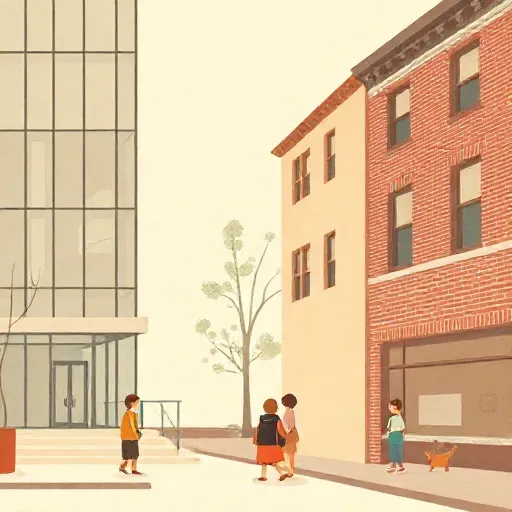
Now apply this to disability. Putting ramps and elevators in new high-rise buildings is relatively cheap and benefits lots of people — parents with strollers, delivery workers, older people. But requiring every 19th-century walk-up to install an elevator could be ruinously expensive. What if a restaurant offers wheelchair users the kitchen entrance instead of the front door? The owner might say it is reasonable because the kitchen already has a ramp. Disability advocates say it treats wheelchair users as second-class customers — a problem of recognition, not just cost.
The law in the United States tries to handle this with the idea of reasonable accommodation. Under the Americans with Disabilities Act of 1990, employers and public spaces must make changes that do not impose an “undue burden.” A ramp? Usually reasonable. Rebuilding an entire historic building? Maybe not. But where exactly do you draw the line? The law does not give a precise number — it depends on circumstances, costs, and judgment.
This is the puzzle that race or gender discrimination simply does not create. Nobody debates how many dollars an employer should spend to stop using racial slurs. Nobody asks whether treating women as equals is too expensive. But with disability, the demands of respect and the demands of sharing resources are tangled together in a way that is genuinely hard to separate.
Behind the Veil: What Would Fair Rules Look Like?
Philosophers love thought experiments. Here is a famous one from John Rawls (1921–2002), one of the most important justice theorists of the last century.
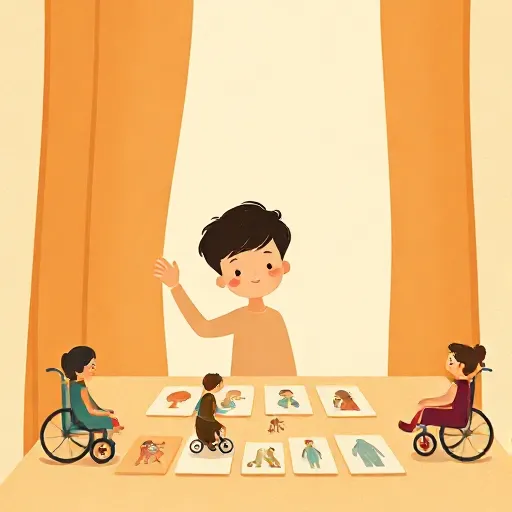
Imagine you are about to be born into a society, but you are behind a veil of ignorance. You do not know whether you will be rich or poor, clever or struggling — or whether you will have a disability. Rawls argued that if you designed society’s rules from behind this veil, you would make them fair for everyone, because you would not know which person you were going to be.
Sounds fair, right? But Rawls himself added a catch. He assumed that everyone in his thought experiment would be “fully cooperating” members of society over their adult lives. He explicitly set aside people with severe permanent disabilities. That means the decision-makers behind the veil have no reason to spend resources on ramps, interpreters, or other accommodations — because they know they will not turn out to be disabled when the veil lifts.
Disability scholars pushed back hard. Henry Richardson and Cynthia Stark, among others, argued that the Original Position should include the possibility of being disabled. If you might be born unable to walk, you would want ramps everywhere. If you might be born blind, you would want information in every format. But Martha Nussbaum (born 1947) argues that fixing Rawls this way changes his theory so much that it stops working as a contract theory at all.
Nussbaum offers her own approach instead: the capabilities approach, developed with the economist Amartya Sen (born 1933). Instead of asking how many resources people get, she asks what people are actually able to do. Can you move around your community? Form friendships? Participate in politics? A person in a wheelchair might have the same income as someone who walks — but if every public building has stairs, their real capability to participate is much lower.
Jonathan Wolff (born 1959) adds another layer. He argues that redesigning the physical and social world — what he calls status enhancement — is the most respectful fix. Giving someone cash says, “You have a problem; here is money to deal with it.” Redesigning the world so their body is not a barrier says, “You belong here.” But status enhancement is also the most expensive option. And in a world of limited resources, nobody can get everything they need.
Who Gets to Decide What a Disabled Life Is Worth?
There is another kind of unfairness that goes beyond money. The philosopher Miranda Fricker (born 1966) calls it epistemic injustice — being wronged in your ability to know things or to have others believe you.
Here is an example. When governments decide which medical treatments to fund, they sometimes use a measurement called a QALY (“quality-adjusted life year”). A year of life without a disability gets a score of 1. A year with blindness might get a score of 0.5 — meaning saving a sighted life-year counts as twice as valuable. Who decides that number? Often, it is based on surveys of able-bodied people guessing what it would be like to be blind. People with disabilities — the ones who actually know — are rarely asked.
This is testimonial injustice: someone’s testimony is dismissed because of prejudice. Able-bodied people may assume life with a disability is tragic, so they discount what disabled people say about their own lives. It is also hermeneutical injustice: disabled people’s experiences get left out of how society understands the world, because they have been excluded from the conversations that shape that understanding.
This connects back to identity. Disability can be part of who you are. Some deaf people identify as members of Deaf culture, with a shared visual language and community. But being labeled “disabled” can also be something imposed from outside and used to stereotype. The dilemma of difference captures this: calling a child “disabled” can stigmatize them, yet it is also how they get needed support in school.
The social model of disability became the foundation for the disability rights movement because it gave people with very different impairments — blindness, paralysis, autism, chronic illness — a shared understanding of facing common barriers. As thinkers like Elizabeth Anderson (born 1959) argue, treating people as full equals may require us to redesign more than just buildings. It may require us to rethink what we assume about whose experiences count.
Back to the Pizza Place

We return to Maya at the restaurant with no ramp. The question is not whether excluding her is unfair — it is. The harder question is what society owes her, and how much it should cost.
Philosophers do not agree on the answer. Some, like Nussbaum and the capabilities thinkers, believe we should guarantee every person a real chance to participate in the central activities of human life, even if that is expensive. Others worry that without limits, the demands could be endless — you can always make the world more inclusive, but you can never make it perfectly inclusive for every possible body and mind.
What makes this still matter is that it is not just a philosophy puzzle. Every school district deciding how much to spend on special education, every city planning its sidewalks, every company designing its website — these are all choices about how much fairness is worth. And those choices reflect deeper beliefs about what disability is and whether disabled lives count equally.
You probably have classmates who need some kind of accommodation — extra time on tests, a quieter room, materials in a different format. The next time you notice that, ask yourself the quiet philosophical question underneath: is this “extra help” for a deficit, or is it simply making the game fair? Your answer might shift depending on which model of disability you carry in your head.
The debate is far from settled. But one thing most philosophers now agree on is that people with disabilities themselves need to be in the room — at the table, on the planning committee, in the conversation. Because the first step toward justice might be the simplest and hardest one: actually listening to people whose lives are different from yours.
Think about it
- If making every old building accessible cost so much that a city had to close some libraries or parks, would that still be just? Where would you draw the line?
- Imagine two classmates — one uses a wheelchair and one is extremely tall, so neither fits in standard desks. Should the school treat both situations the same way? Why or why not?
- If you could design a brand-new city from scratch, what would you include to make sure as many different kinds of people as possible could participate fully? Is there anything you would have to leave out, and why?