What Is Discrimination? More Than Just Different Treatment
A Sign on a Bar Door
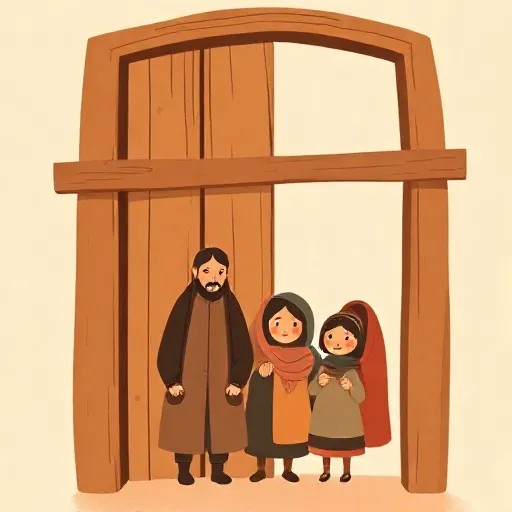
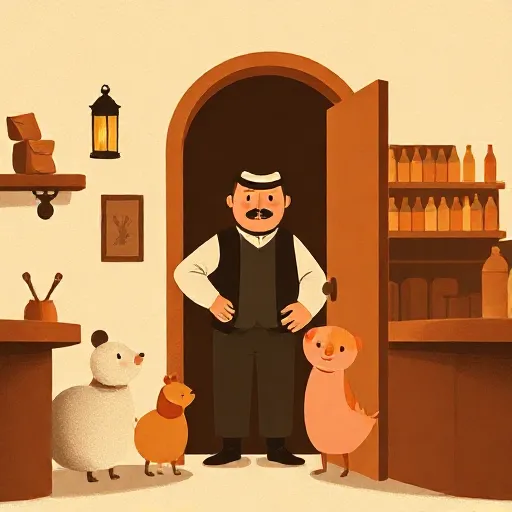
In 2002, several Roma men walked into a bar in a Romanian town. The bartender pointed to a sign: “We do not serve Roma.” He refused to let them in. A court later ruled that the bar had illegally discriminated against them.
That story feels clearly unfair. But what exactly made it discrimination? At first, you might say it’s simply treating people differently because of the group they belong to. That’s a good start, but philosophers have dug much deeper. They’ve found that discrimination isn’t just about difference — it’s about disadvantage, comparison, and wrongfulness. And sometimes it happens in ways that are hard to spot.
To understand the full idea, we need to pick apart what counts as a group, why comparisons matter, and when treating someone worse because of their group is truly wrong.
The Comparison Game: Why You Need a Yardstick

Imagine a birthday party where every kid gets a slice of cake except one. That kid isn’t just missing cake — she’s been put at a relative disadvantage. She’s worse off compared to the others.
Discrimination works the same way. In the famous 1954 U.S. case Brown v. Board of Education, the Supreme Court ruled that racially segregated public schools were unconstitutional. Black children were not simply denied an education; they were given a worse education relative to white children in the same country. The court said segregation “has a tendency to retard the educational and mental development of negro children” compared to what they would receive in an integrated system.
This shows that discrimination always involves a comparison group — the people you’re being measured against. If someone says you’ve been discriminated against, it’s not enough to point out that you were treated badly in some absolute sense. You have to show that others in a similar situation got better treatment. So when the Kansas parents sued, it didn’t matter that Black children in South Africa had it even worse. The relevant yardstick was white children in American schools.
A relative disadvantage necessarily creates an inequality. Antidiscrimination laws forbid certain inequalities — like giving white citizens the right to make contracts while denying that same right to Black citizens. Discrimination, then, is essentially comparative: it’s about how you’re treated compared to someone else. Even if you gain something valuable (like a chance to apply to Harvard), you can still suffer discrimination if the rules put your group at a disadvantage next to another group.
When Is Discrimination Morally Wrong?
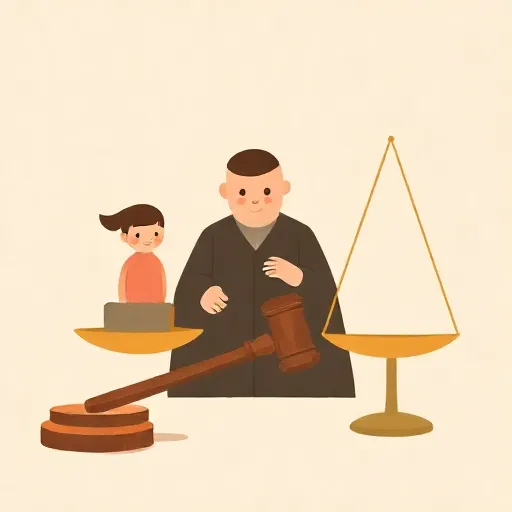
Not every relative disadvantage is wrong. Suppose a fire department hires only people who can lift a certain weight. That might put smaller people at a disadvantage, but if lifting is essential to the job, the rule isn’t automatically unfair. So philosophers distinguish between a plain, descriptive idea of discrimination and a moralized concept.
The moralized concept says an act is discrimination only when it wrongfully imposes a relative disadvantage on someone because of their membership in a socially salient group. Socially salient groups are the categories that people regularly notice and that shape how society treats you — things like race, sex, religion, or disability. Groups based on the length of your toenails are not socially salient in any real society, so treating people differently because of toenail length isn’t usually considered discrimination.
The wrongfulness of discrimination is tied directly to the victim’s group membership. If a boss breaks a promise to you, that’s wrong, but it’s not discrimination unless the broken promise happened because of your race, gender, or some other salient feature. This is why we need a special word: discrimination names a specific kind of moral failure, one that uses group identity as a reason to put people down.
Direct Discrimination: When You’re Targeted on Purpose
The Roma bar case is a textbook example of direct discrimination. The owner wanted to exclude Roma because they were Roma. His rule mentioned the group explicitly. But direct discrimination isn’t always that obvious.
During the Jim Crow era, many southern U.S. states used literacy tests to keep Black citizens from voting. The tests never said “no Black people,” but they were designed to be applied unfairly, and Black people had been denied decent schools for generations. The real aim was racial exclusion. Even though the policy’s wording was neutral, the planners still had a discriminatory intention. That’s direct discrimination too.
Philosophers also point out that direct discrimination can happen without any conscious intention. An employer might hire only men for certain jobs, not because he wants to hurt women, but because he simply doesn’t care that the hiring rule puts women at a disadvantage. Or he might honestly believe women aren’t capable, even if his belief is a prejudice. Such unconscious bias can drive discriminatory choices. The key is that the agent’s thinking — whether angry, indifferent, or biased — is what links the group membership to the disadvantage. That’s why many theorists say direct discrimination is about the reasons or motives inside a person’s head.
The Sneaky Kind: Indirect and Structural Discrimination
Sometimes a policy hurts a group much more than others, even though nobody planned it that way. In Griggs v. Duke Power (1971), a company in North Carolina required a written test for promotion. Almost all Black employees failed, because the state had historically given Black children an inferior education. The company wasn’t accused of racist intentions. Still, the court ruled that the policy was indirect discrimination — a neutral rule that put Black workers at an unfair disadvantage without a good job‑related reason.
Indirect discrimination becomes even larger when it’s built into a whole society. Structural discrimination means the major rules of a society — about property, jobs, family life, politics — consistently produce worse outcomes for members of certain groups. For example, for centuries women were legally barred from owning property or voting. Even after those laws changed, the rules of the economy and family life still tended to put women at a disadvantage compared to men. Structural discrimination is not about a single person’s intentions; it’s about how the system itself works.
Not everyone agrees that indirect discrimination should count as real discrimination. Some philosophers, like Iris Marion Young (1949–2006), argue that discrimination should only mean intentional exclusion. They worry that calling every unequal outcome “discrimination” confuses the issue and makes it harder to blame the real wrongdoers. Defenders of the term reply that indirect discrimination helps us see how past injustices keep hurting people, even when nobody is currently being mean on purpose. The debate is very much alive.
Why This Matters in Your Hallway

Maybe you’ve seen a lunch table where only certain kids are welcome, or a school rule that seems to punish one group more than others. The concept of discrimination gives you a powerful tool: it helps you ask not just “Is this unfair?” but “Is it unfair compared to how others are treated, and is the unfairness tied to a group I’m part of?”
Understanding discrimination also explains why society sometimes clashes over religious liberty. Suppose a baker refuses to make a cake for a same‑sex wedding, saying it violates their religion. Some argue that’s discrimination because it denies a service to a couple because of their sexual orientation. Others say the baker should be free to follow their faith. Philosophers disagree on where to draw the line, but the debate turns on the same question we’ve been exploring: when does a group‑based disadvantage become a wrongful disadvantage?
No law or definition can settle every case. But by learning to see discrimination clearly — in its direct, indirect, and structural forms — you can think more carefully about fairness in your own school, neighborhood, and world. The Roma men who faced that bar sign in 2002 understood right away that they were being put down because of who they were. Today, we have sharper words to describe that experience, and maybe a better chance to change it.
Think about it
- If a restaurant owner says, “I won’t serve people with visible tattoos because my other customers prefer a clean‑cut look,” is that discrimination? What group would you compare tattooed customers to, and does that comparison make the rule seem unfair?
- Your school has a rule that no one can wear any head covering indoors. Some students wear headscarves or turbans for religious reasons. Is the rule discriminatory even if the school didn’t mean to target any religion?
- Imagine a video game where each character’s starting strength depends on the race you choose at the beginning. The designers say it just makes the game more interesting. Would you call that discrimination, or just a game mechanic? Why?