Is It Fair to Give Minority Groups Special Rights?
The Headscarf and the Classroom

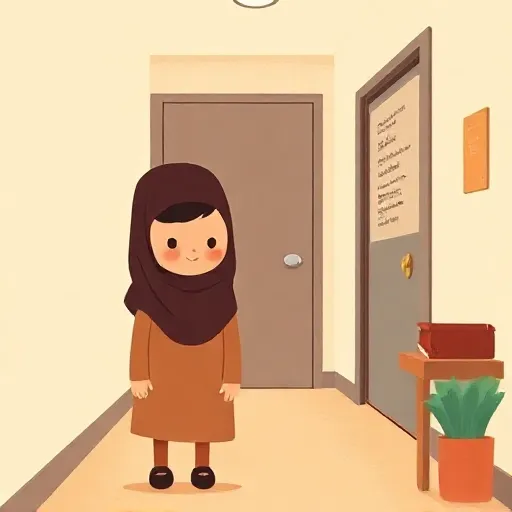
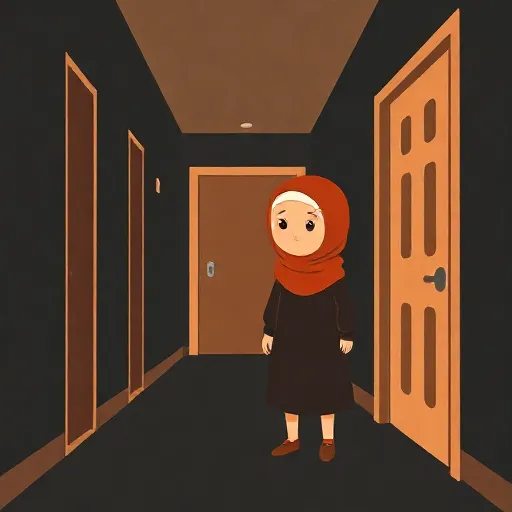
It is the first day of school. Samira puts on her hijab, just like every morning. But today a teacher tells her she cannot wear it in class. The school’s dress code bans all head coverings. Samira feels like she has to choose between her faith and her education. A rule meant for everyone hits her much harder than it hits her classmates.
Stories like this are at the center of multiculturalism, the idea that a society should give special accommodations and rights to cultural, religious, or ethnic minority groups. These are often called group-differentiated rights — rights that protect a minority group’s members to act (or not act) in ways tied to their identity. They might mean exemptions from a general law, funding for minority-language schools, or even a whole region’s right to govern itself, like Québec’s language laws in Canada.
But why should the state ever treat groups differently? Two of the strongest answers come from very different angles: recognition and equality.
Recognition: Our Identity Is Made with Others
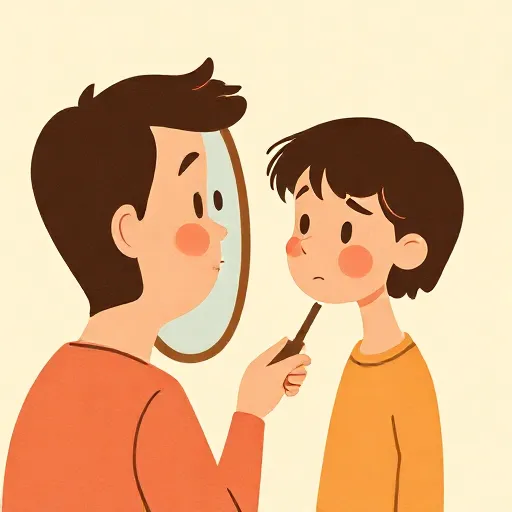
The Canadian philosopher Charles Taylor (b. 1931) argues that no one builds an identity alone. You figure out who you are by talking with, sometimes even struggling against, the important people around you. You depend on others to recognize you — to see you accurately and with respect. When the society around you mirrors back a “confining or demeaning picture” of your group, that misrecognition can cause real harm. It can distort how you see yourself and limit what you think you can become.
For Taylor, a culture is more than a tool individuals use. It is an “irreducibly social” good, something valuable in itself. He uses the example of the French language in Québec. The survival of French culture there is not just about letting individuals speak French if they wish. Taylor says the language is a collective treasure that shapes people into who they are. Laws that require French on signs and in schools do not just protect a resource; they “actively seek to create members of the community” for future generations. Because cultures play such a deep role in human growth, Taylor thinks we should start from a presumption of the equal worth of all cultures.
But is that enough? Another thinker says we do not need to treat cultures as sacred. We just need to notice how unfair a supposedly “neutral” state can be.
Equality: Culture as a Key to Choices

Will Kymlicka (b. 1962) builds his case from a liberal idea: individuals should be free to choose their own path in life. But to do that, you need meaningful options. Kymlicka says your own culture works as a context of choice. It gives you the shared stories, practices, and language that let you understand what is worth pursuing. Losing access to that culture is like losing the menu in a restaurant — you might still be hungry, but you have no idea what you can order. For most people, self-respect is also tied to being part of a culture that others respect.
Here is the twist. Kymlicka thinks the cards are already stacked. States cannot be truly neutral about culture. They must pick one language for public schools and official forms. They organize the work week and holidays around a majority religion’s calendar. When U.S. Air Force officer Simcha Goldman, an ordained rabbi, wanted to wear a yarmulke as his faith required, a military dress code made that impossible. The state did not force him out of his religion, but the rule met his religious obligation with an extra burden that others did not carry.
Kymlicka says that kind of inequality is what philosophers call luck egalitarianism. You should be held responsible for the choices you freely make, but not for disadvantages you were born into. Being born into a cultural minority is an unchosen circumstance. Since the state already helps the majority culture for free, justice demands that it give similar help — language services, legal exemptions, self-government rights — to minorities. He separates external protections (shielding a group from the majority’s power) from internal restrictions (a group controlling its own members), and endorses only the first.
Still, a tough question remains: can we really give a group external protections without sometimes trapping people inside it?
The Dark Side of Group Rights
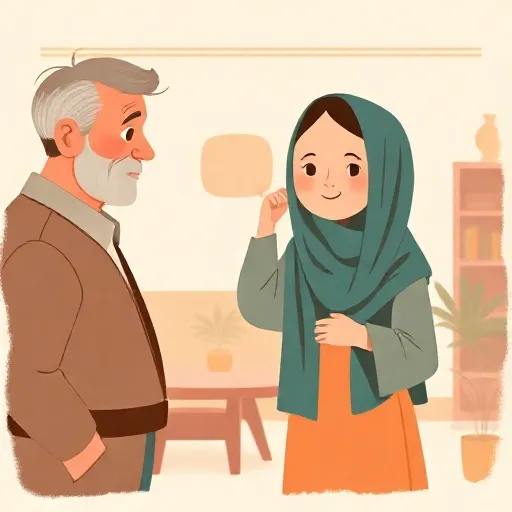
Some critics point out that cultures are not pure, unchanging bubbles. Jeremy Waldron, a legal philosopher, notes that through migration, trade, and history, our cultural materials have always been mixed. Nobody needs one single cultural structure to have meaningful choices. A teenager can draw options from hip-hop, Korean dramas, and her grandmother’s folk tales all at once. If the state tries to freeze a culture, it might accidentally preserve a version that serves the powerful inside the group.
A sharper warning comes from feminist thinkers like Susan Moller Okin (1946–2004). Multiculturalists often focus on inequality between groups. But Okin highlights internal minorities — the women, children, or religious dissenters inside a minority group who may be hurt when the group gets special rights. Granting a religious community control over family law might let leaders pressure girls into arranged marriages. Protecting indigenous self-government might allow membership rules that discriminate against women. Kymlicka’s external protections can slide into internal restrictions on women’s freedom.
Others, like political thinker Glen Coulthard, argue that state recognition can even be a trap. When a government says, “We recognize your indigenous culture,” it might just be reinforcing the very colonial relationship that crushed that culture in the first place. Real freedom may require the group to stand up for itself, not wait for the state’s permission.
These objections do not kill multiculturalism. They have pushed its supporters to listen more carefully to the voices of women inside minority groups and to build democratic spaces where groups themselves can debate their own practices. But the doubts are strong enough that many people today simply turn their backs on the whole enterprise.
Why This Debate Is Alive Today

Walk through any major city and you will hear many languages, see different religious dress, and notice holidays from around the world. Yet some politicians claim that multiculturalism has failed. Former British Prime Minister David Cameron said in 2011 that state multiculturalism had encouraged different cultures to “live separate lives.” The fear is that making too many exceptions weakens the shared identity a country needs to care for one another — that diversity might shrink the willingness to fund public services for everyone.
Research paints a more complicated picture. Where institutions are strong, multicultural policies can actually increase immigrants’ integration and political participation. The real problem may not be multiculturalism itself, but economic hardship and the rise of anti-Muslim sentiment that treats an entire group as a threat.
So the next time your school debates a dress code, a holiday calendar, or which language a welcome poster should use, you are overhearing the same argument. Should we make special room for cultural differences, or should we insist that everyone follow the same path? No answer is safe from challenge. And that is why, three decades after the biggest theories were written, the fairness of group rights is a question you still get to decide.
Think about it
- If a law bans headscarves in school, is that unfair to religious students, or does it protect everyone from pressure to wear them?
- Can a group have the right to keep its traditions if those traditions treat women unequally? Who should decide?