
Why Do We Ever Think of Someone as Less Than Human?
A Label on the Playground

Everyone gathers around. Someone points at the new kid and whispers, “He’s such a rat.” The new kid freezes. In that moment, a group of people made one person feel like he belonged somewhere between human and pest. Philosophers call this dehumanization: treating a person, or thinking about them, as if they are not fully human.
It’s easy to spot in history—the Holocaust, slavery, and colonial violence all relied on imagining whole groups as less human. But dehumanization also shows up in everyday life. Calling a classmate an animal, treating a partner like a tool, or even scrolling past a homeless person as if they were part of the sidewalk can all have a dehumanizing flavor.
So what is dehumanization, exactly? Is it about harmful actions, or is it about the thoughts in someone’s head? Two big families of ideas give very different answers.
Two Ways to Think About Dehumanization
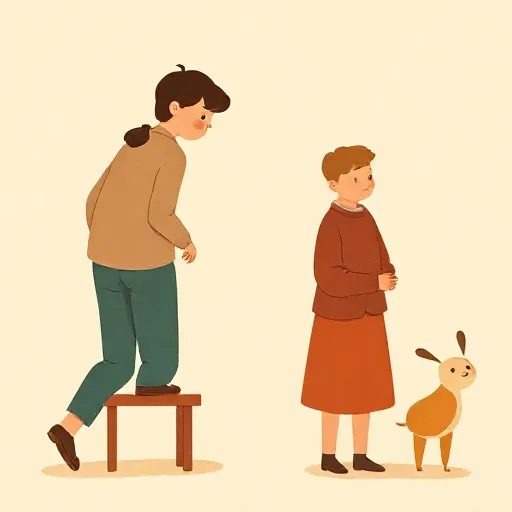
The harms‑based approach says that to dehumanize someone is to treat them in a way that damages their humanity. Feminist philosophers Catharine MacKinnon and Andrea Dworkin argued that when a person’s autonomy—their ability to choose for themselves—is crushed, they are reduced to a thing. Treating someone as if they have no feelings, no plans of their own, and no deeper self turns them into a mere object. Martha Nussbaum (1947–) adds that sometimes it’s okay to treat a person as an object temporarily, like in a playful wrestling match, as long as you still respect their full humanity. But when you treat them as an object without even that quiet respect, you cross into dehumanization.
The psychological approach flips the focus. It says dehumanization lives in your mind—in the way you think about someone. Psychologist Nick Haslam and his team found that people can view others in two dehumanizing ways. You might think of someone as less human because you see them as animal‑like, lacking traits like morality and self‑control (this is called animalistic dehumanization). Or you might see them as robotic and cold, like a machine without emotions (this is mechanistic dehumanization). From this angle, a passerby who never hurts anyone can still be dehumanizing if they silently picture a group as beasts.
So which is it? Is dehumanization a kind of harm you do, or a way of seeing the world? To dig deeper, we need to look at how people actually think when they soften someone’s humanity.
The Sliding Scale of Humanity

According to the psychological approach, dehumanization isn’t always a switch that flips a person entirely into the “not human” category. Often it’s more like a dimmer switch. Graded dehumanization happens when you think of someone as less human than others, not as completely nonhuman. Researchers have shown this in subtle ways. For example, in one famous study, people were asked to rate how much certain groups experience “secondary emotions”—feelings like guilt, nostalgia, or admiration, which we tend to think are uniquely human. Time and again, people assigned fewer of those feelings to outgroups than to their own group, even when nobody asked them directly about dehumanization. That quiet subtraction of rich inner life is a kind of graded dehumanization.
The dual model of animalistic and mechanistic dehumanization also runs on a sliding scale. When you think a rival group lacks warmth and emotional depth, you mechanistically dehumanize them; when you think they’re crude and irrational, you animalistically dehumanize them. Psychologist Nour Kteily and colleagues even created a “blatant” measure: they show people the famous “Ascent of Man” image—a lineup from stooped ape to modern human—and ask them to place different groups on that ladder. People are surprisingly ready to rate some groups as less evolved, even though they would deny thinking of them as subhuman.
But here a puzzle creeps in. If dehumanization is about genuinely believing someone is less human, why do so many cruel acts seem to treat victims as very human indeed?
The Paradox: Seeing People as Human and Still Hurting Them

If you wanted to humiliate someone, blame them for a crime, or make them suffer psychologically, you’d act as if they could feel shame, understand punishment, and have free will—human capacities. Genocidal regimes routinely tortured, mocked, and punished their victims in deeply personal ways. Philosopher Kate Manne points out that a misogynist often sees a woman as threatening or manipulative precisely in the way only a human being can be. That suggests the perpetrators never really stopped seeing their victims as human. So why call it dehumanization? This is known as the paradox of dehumanization.
Some thinkers, like philosopher Paul Bloom, take this as evidence that dehumanization is rare and that most cruelty is just human‑on‑human hatred. But others try to resolve the paradox without throwing out the psychological approach. One solution says that people can hold conflicting beliefs. Philosopher David Livingstone Smith argues that a dehumanizer often believes the victim is subhuman because of powerful propaganda, yet can’t help also seeing them as human because their face looks undeniably human. The clash between those two ideas creates an uncanny, creepy feeling—imagine a creature that seems both person and monster. That feeling, Smith says, can even flip into seeing the victim as a terrifying, demonic threat.
Another solution says that people carry multiple concepts of “human” at the same time. A Nazi ideologue could say, “Jewish people are biologically Homo sapiens, sure, but they are not true humans because they lack a moral soul.” In that view, dehumanization can coexist with recognizing a heartbeat and a thinking mind. So the paradox doesn’t disprove the psychological approach; it just shows that “human” is a word we use in more than one way.
Where Dehumanizing Ideas Come From
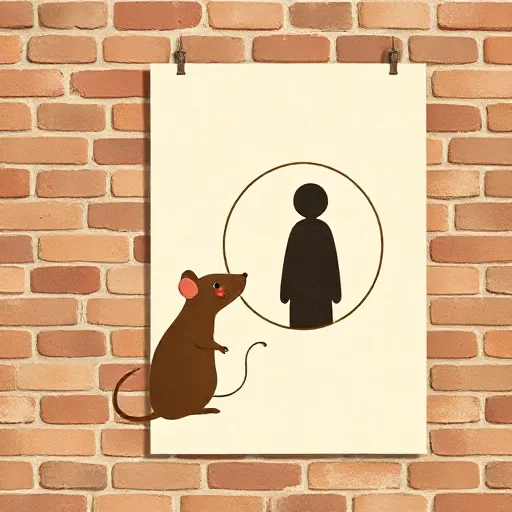
Dehumanizing thoughts don’t just pop up on their own. Philosophers point to essentialism—the belief that certain groups have a deep, unchangeable inner nature—as a key fuel. When people start thinking that all members of a race share a hidden “essence” that controls their character, it becomes easier to imagine that essence is subhuman. Smith argues that racial slavery and the Holocaust both relied on this kind of thinking, often spread by ideology and propaganda. Derogatory words like “rat” or “parasite” aren’t just insults; they can train the mind to picture another group as a lower form of life.
There’s also a chilling psychological function. Decades of studies suggest that thinking of a victim as less human helps a killer override the normal inhibition against harming another person. Heinrich Himmler, the Nazi SS leader, reportedly designed gas chambers partly to reduce face‑to‑face contact, because seeing a human face can reactivate that inhibition. After violence is done, dehumanizing thoughts can also work like a balm—reduce guilt, numb distress, help the perpetrator keep going.
On the harms‑based side, feminists argue that social hierarchies and pornography can teach people to take pleasure in treating a person as a mere thing. When a culture constantly shows women as tools for someone else’s desire, it can reshape what people see as normal.
So dehumanization is not just a quirky glitch in the mind. It is woven into the stories we tell about who counts as fully human and who doesn’t.
Why It Matters When You Decide Who Counts

Think about the last time you labeled a group without thinking. “The nerds,” “the popular kids,” “the troublemakers,” “the weirdos.” When a label sticks, it can start to blur the real, complicated person underneath. It becomes a little easier to ignore their feelings, to laugh at their pain, to treat them as if they were just a character in a story instead of a living, breathing human.
Studying dehumanization reminds you that the line between “us” and “them” is drawn by hand, not by nature. That doesn’t mean you can never tease a friend or enjoy a rivalry—context matters. But noticing when your mind starts to nudge someone off the bottom of the humanity scale is a powerful skill. In medicine, for example, doctors sometimes need to focus on a body part rather than the whole person to stay calm under pressure. That kind of temporary, respectful objectification can be useful. But when it slips into forgetting the patient has fears and a family, it can do real harm.
Philosophers still debate whether dehumanization is always a matter of what you think or of what you do. Maybe it’s both. Maybe it’s a kind of seeing that leads to a kind of treating, or the other way around. What’s clear is that the idea of “less than human” carries a heavy weight. It greases the wheels for bullying, injustice, and even violence. And it starts with the small, almost invisible ways we sort people into “fully like us” and “just a little less.”
Think about it
- If you call a bully an “animal” in anger, are you dehumanizing them? Does it matter whether you really believe they are less human, or is the act itself enough to be harmful?
- When a doctor focuses only on fixing a broken bone and seems to ignore your fear, is that a kind of dehumanization? Should they do anything differently?
- Can you think of a situation where it would be okay to treat another person partly as a tool—like a goalie in soccer being a wall, or a friend who picks you up even though they’d rather sleep? Where would Martha Nussbaum draw the line?