
What Does It Mean to Treat Someone Like an Object?
How a Person Can Become a Sucked Lemon

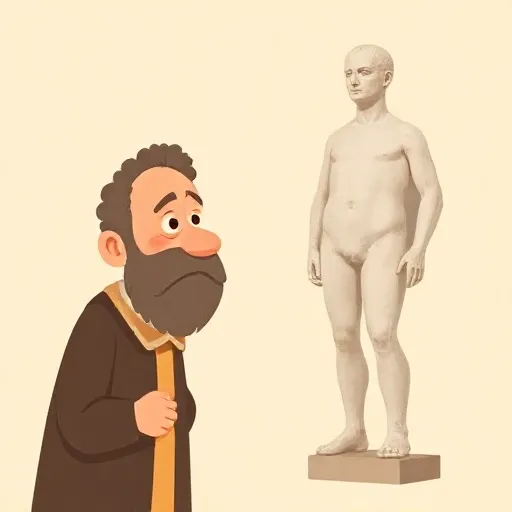
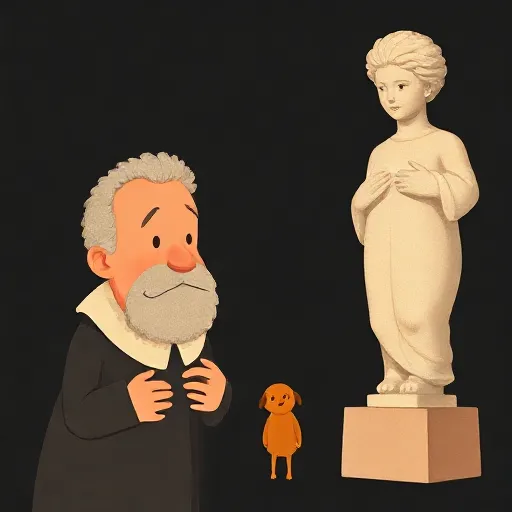
It is the 1760s, and a precise, never-married professor in Königsberg named Immanuel Kant (1724–1804) is lecturing his students on a subject that makes him deeply uncomfortable: sexuality. He tells them a troubling thought. Outside the safety of marriage, Kant warns, sexual desire turns another person into an Object of appetite. Once that appetite has been satisfied, the person is cast aside — he says — “as one casts away a lemon which has been sucked dry.”
Kant’s worry is about more than rudeness. He thinks that in such moments a unique kind of harm is done: the person is turned into a thing. Philosophers today call this objectification.
For Kant, what makes you special is your humanity — your power to reason and to set your own goals. A rock or a dog cannot decide what matters and plan a life around it. You can. That is why, according to Kant, every person has a dignity, an “inner worth” that no price can match. Because of that dignity, you must never treat anyone — yourself included — merely as a tool. Using someone merely as a means to your own ends, and ignoring their own goals and choices, is the very opposite of respecting them.
Sexual desire, Kant fears, is dangerously good at making us forget this. When two people are not bound together in a permanent, equal relationship, the person they desire starts to look like nothing more than an instrument for pleasure. Their hopes, their plans, their whole inner life stop mattering. In Kant’s words, they become “a thing on which another satisfies his appetite.”
This is a powerful idea, but it is also extreme. The philosopher Raja Halwani points out that, outside of outright violence, it is actually rare for someone to forget completely that their partner is a thinking, feeling person. Still, Halwani agrees that sexual desire can sometimes “subvert our rational capacity to set ends.” Desire can feel so strong that it clouds your judgement and makes you act as if the other person’s humanity hardly counts. Even if you do not literally turn them into a lemon, you can come dangerously close.
The Safe Space: Why Kant Saw Marriage as the Only Cure

Kant was not against love. He simply believed there was only one kind of relationship in which sex could happen without destroying anyone’s dignity: monogamous marriage, backed up by law.
His reasoning works like this. In a sexual act, Kant thought, you give something deeply personal — your whole body, which for him was inseparable from your self — to another person. If that giving goes only one way, the person who gives everything and gets nothing in return loses themselves. They become a thing the other person owns. To avoid that, the giving must be perfectly mutual. In marriage, each spouse surrenders their whole person exclusively to the other, and each receives the other’s whole person in return. Kant described this almost like a trade: “if I yield myself completely to another and obtain the person of the other in return, I win myself back.”
But Kant did not trust people to keep such a serious bargain on their own. He insisted that the exchange must be legally enforced, “sexual union in accordance with law.” Without the law’s long arm, he thought, even a monogamous relationship between unmarried partners could slide into inequality and objectification.
To many philosophers today, Kant’s solution feels like a strange, chilly repair job. It treats marriage as a contract that protects against objectification, almost like an alarm system that prevents you from treating your spouse as a lemon. And it assumes that inside marriage, equality and respect are automatic — a claim that feminists would later challenge fiercely.
From Lemons to Pornography: Feminists Broaden the Fight
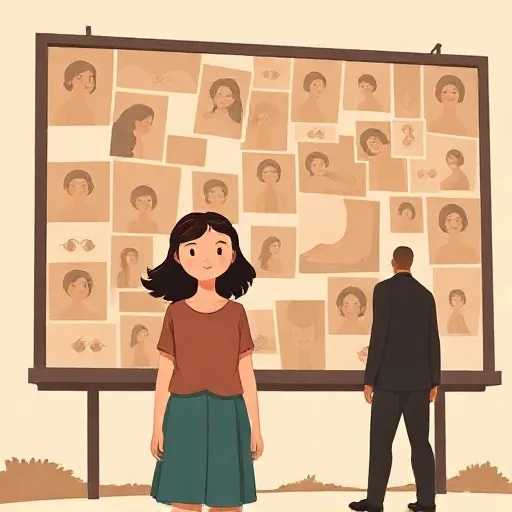
Two centuries after Kant, the feminist thinkers Catharine MacKinnon (1946–2023) and Andrea Dworkin (1946–2005) picked up his objectification charge but aimed it at a much larger target. Kant had worried that sex outside marriage could turn an individual into an object. MacKinnon and Dworkin argued that, in the real world, gender inequality makes women into objects everywhere — and that the engine powering this is pornography.
For them, gender (being a man or a woman in society) is not just biology. It is a system of power. In that system, MacKinnon wrote, men are the objectifiers who do the looking and using, and women are the objects who get looked at and used. Pornography, on their view, is not just sexy images. It is “the graphic sexually explicit subordination of women” — pictures and words that show women as dehumanised things, enjoying their own humiliation, violence, or reduction to body parts. The message it plants in viewers, they say, is that women exist for male pleasure and that they actually want to be used.
This connects straight back to Kant’s lemon. A woman in pornography is treated as an instrument, a thing you consume and discard. Even when a woman seems to consent, MacKinnon and Dworkin doubt that her “yes” is real under conditions where she has few other options. “Money is the medium of force and provides the cover of consent,” MacKinnon wrote. In a sexist society, she thought, no woman’s consent to be used as a mere tool is truly free.
Critics push back hard. If pornography simply reflected desires that already exist, rather than creating them, would banning it change much? And are men really such blank slates that they mindlessly imitate whatever they see? The philosopher Leslie Green argues that the idea of women as objects is reinforced all over — by commercials, music videos, family habits — so pornography is just one piece of a much larger puzzle. Yet MacKinnon and Dworkin’s core challenge remains: when one group of people consistently has more power, words and images can help lock others into the role of “thing.”
Maybe It’s Not Always So Terrible: The Case for “Good” Objectification

So far, objectification sounds like a word for something always wrong. But the philosopher Martha Nussbaum (b. 1947) threw a wrench into that idea. She argued that treating a person like an object — or even as a collection of body parts — is not automatically harmful. What matters is the context.
Nussbaum offered a careful list of seven ways a person can be objectified, including using them as a tool, denying they have a mind of their own, treating them as replaceable, and ignoring their feelings. (Kant had really focused on only the “using as a tool” part.) But then she insisted that some of these features can actually be wonderful in the right setting. Imagine you are lying with your partner and you rest your head on their stomach, using it as a pillow. If they consent, you are not hurting them, and you normally treat them as a full human being with their own thoughts and plans—then that temporary, playful use of their body as a soft object is completely fine.
Nussbaum pointed to love scenes in the novels of D.H. Lawrence, where lovers lose themselves so completely that they forget their separate identities and seem to see each other only as bodies. That could be scary, but in a relationship built on deep equality and respect, such moments of losing your autonomy can be a shared gift, not a loss of dignity. The trick is that the couple ensures their “objectification” stays within a larger frame of mutual care.
Other thinkers go even further. Alan Soble has provocatively suggested that, since humans really are just physical objects in the natural world, treating someone as an object isn’t a crime against some higher specialness. And Leslie Green notes that being useful to others — being an instrument in some small way — is often part of a meaningful life. What people in lonely situations miss most is not being useful to anyone. The real problem, Green says, is treating a person merely as an object, as if their own purposes do not matter at all. Objectification is not an on/off switch; it is a question of whether respect stays in the room.
This debate shows that “objectification” is a slippery, shape-shifting concept. It can describe deep injustice, but it can also describe ordinary moments of trust. Disentangling the two is a live philosophical project.
Why This Still Matters in Your Life

You do not need to be an 18th-century professor or a radical feminist to run into objectification. It shows up in ordinary life all the time. When you have a crush on someone and spend hours imagining how they look but never wonder what they think about, you are getting dangerously close to lemon territory. When you scroll through perfectly curated selfies and start thinking that your own worth depends on how many hearts your photo gets, you are, in a sense, treating yourself as an object to be decorated and judged by others.
Some philosophers, like Sandra Bartky, have argued that modern society trains girls especially to see their own bodies from the outside — as things meant to please a watcher. That training can feel so natural that you forget it is happening. But as Nussbaum showed, not every moment of being looked at or appreciated has to be a catastrophe. A bit of playful self-decoration or wanting to be admired is human. The challenge is to tell the difference between a relationship — with another person or with yourself — where respect and choice stay alive, and one where someone gets turned into a lemon.
The arguments that began with Kant in his lecture hall have no final resolution. They keep evolving because the question is so close to the bone: how do we enjoy being physical, sometimes even being useful or looked-at, without ever forgetting that every person has a life of their own that is just as real as ours? Learning to ask that question is part of growing up.
Think about it
- Can you imagine a relationship where treating someone’s body as a tool for comfort is genuinely okay? What would make that different from an unhealthy situation?
- If a person says “yes” to being used as an object because they feel they have no other real choice, is that the same as true consent? Why or why not?
- When you scroll through other people’s social media photos, do you catch yourself seeing them more as images to be rated than as full, thinking people? What would change if you paused to imagine their worries, their jokes, and their least flattering Tuesday mornings?