

Is Sexual Desire Good or Bad? The 300-Year Philosophical Fight
The Hunger That Alarmed Immanuel Kant
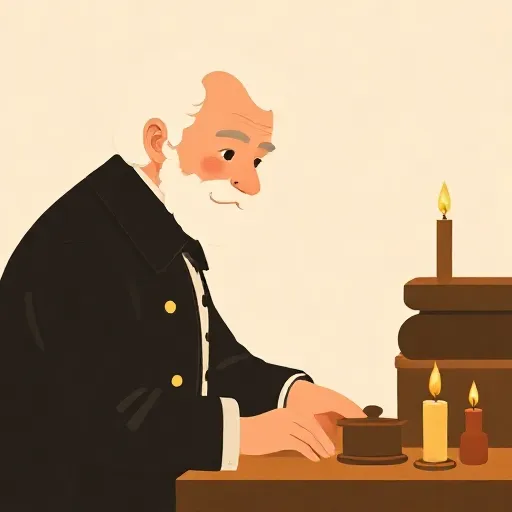
In the late 1700s, the German philosopher Immanuel Kant (1724–1804) wrote something that still disturbs people today. He noticed that when someone feels sexual desire — the strong urge to be physically close to another person — their attention locks onto body parts: hands, lips, curves, skin. They stop seeing the other person as a full human being with dreams, worries, and a personality. Instead, they see only flesh.
Kant called this objectification: treating a person as a mere thing, like a tool for your own pleasure. He thought sexual desire was the only human appetite that makes us ignore someone’s “work and services” — their talents, their words, their character. When you’re hungry, you want food, not a conversation. But when you desire someone, you might want their body so much that you forget they have a mind at all. For Kant, that was morally dangerous. He took this worry so seriously that he argued the only way to make sexual activity acceptable was inside marriage, where you commit to the whole person, not just their body.
This dark view of desire is called sexual pessimism. And for centuries, it has kept philosophers up at night.
Or Is Desire Just Another Appetite?

Not everyone agrees with Kant’s grim portrait. A large camp of thinkers says he completely misunderstood what desire actually feels like. The American philosopher Alan Goldman (born 1945) argued that sexual desire is simply a desire to touch another person’s body and enjoy the pleasure that comes from that. In this way, it’s not much different from being hungry for a slice of cake. You want a specific physical sensation, and there’s nothing automatically evil about that.
If desire is just a biological appetite, then maybe it’s morally innocent — a natural part of being alive. This pleasure view frees us from the idea that every crush or longing is secretly turning someone else into an object.
But other philosophers push back. According to the intentional view, human desire is never just a blind instinct. When you feel drawn to someone, you always desire them under some description — their laugh, the way they tilt their head, the jokes they tell. A fantasy about holding someone’s hand isn’t the same as craving a candy bar, because it involves the meaning you’ve wrapped around that person. Even if you’re alone daydreaming, your mind is telling a story about who that person is.
Most experts now agree that sexual desire is both physical and mental: a biological pull that comes woven with thoughts, memories, and emotions. So neither the pure pleasure view nor the pure intentional view tells the whole story. But this mix still leaves a huge question open: can desire be safe, or is it always a little bit dangerous by its nature?
The Optimists: Desire as a Bridge Between People

Sexual optimists think Kant’s fear is overblown. The British philosopher Bertrand Russell (1872–1970) and the American Irving Singer (1925–2015) both argued that sexual desire, far from being a monster, is one of the main ways human beings learn to connect deeply with each other. Yes, the pull starts with the body, but it often blossoms into love, affection, and mutual respect. Two people who are physically drawn to each other can come to delight in each other’s minds and characters through their bodies.
Martha Nussbaum (born 1947), a prominent contemporary thinker, lists several ways we might objectify someone — treating them as a tool, denying they have their own choices, seeing them as replaceable — but she insists that in a respectful relationship these dangers don’t have to win. You can notice someone’s beautiful face or hands and still care about their consent, their comfort, and their future. The key is whether you treat them only as a body, or whether you treat the whole person.
The optimist doesn’t ignore that desire can be mean or selfish. But they say the desire itself isn’t the villain; it’s the way you act on it. Like water, it can flood a village or water a garden. The outcome depends on you.
The Fight That Never Ended: Does Desire Force Objectification?

Kant’s side fires back: the optimists are dreaming. Even the most lovey-dovey couple, they say, cannot escape the way desire grabs the mind. During the most passionate moments, attention slams into body parts — “those lips,” “those eyes” — and not into the person’s hopes for their career. According to the philosopher Alan Soble (born 1947), desire systematically makes us reverse our usual priorities: normally we interact with people as clever, funny, or kind; during sexual attraction, their body becomes the star, and the rest of them fades to background. Even if afterward we remember they’re a person, in the heat of desire we treat them as flesh.
This creates a knotty problem for the idea of consent. Nearly everyone believes that permission — freely given, informed, and unforced — is necessary for any sexual activity to be morally okay. But if desire itself tends to reduce another person to a thing, can saying “yes” ever fully fix that? If you agree to be objectified, is it still wrong? Kant thought consent to sex was consent to be treated as a mere object, which made the act morally impossible to justify outside marriage.
Even if you don’t go that far, the worry lingers: getting consent doesn’t guarantee you’re seeing the other person’s full humanity. And that’s why sex often feels significant — we sense that our most private, bodily space is involved, so any violation cuts deep.
Why This Matters in Your Own Life

You might wonder what 18th-century wig-wearers have to do with you. But the question at the heart of this debate is one you probably face already: when you like someone, do you see the real them, or just a cute face? And if you’re ever on the receiving end of someone else’s crush, do you feel like they’re noticing you, or just your appearance?
The philosophy of sexual desire doesn’t give a tidy answer. It leaves us with two truths we have to balance. First, desire is a powerful, often joyful part of life that can bring people together. Second, it carries a built-in risk of making us forget that the other person has a full inner life. The way forward isn’t to be ashamed of attraction, but to stay aware of that risk. That means paying attention to consent not just as a “yes” or “no” rule, but as an ongoing habit of checking in: Does this person feel seen and respected? Am I treating them as an end, not just a means?
Kant’s worry pushes us to be better friends, partners, and human beings. And that’s a puzzle worth caring about, whether you’re 14 or 94.
Think about it
- If you’re attracted to someone, how could you check whether you’re really interested in them as a person, not just as a face or body?
- Can two people ever fully see each other as persons during the most physically intense moments, or is some amount of objectification unavoidable? Why do you think so?
- Imagine a society where nobody ever treated anyone as a mere object during attraction. Would that world feel more respectful, or might it lose something important? Why?