

Your Desire: A Tug to Act, a Glow of Pleasure, or a Sight of the Good?
The Trying-to-Get-It Theory

Picture your friend Nora, staring at a perfect yellow mango on the kitchen counter. She ate dinner already, so she doesn’t move to grab it. Does she still desire the mango? You’d probably say yes. But if she isn’t trying to get it, what is her wanting made of?
The philosopher Elizabeth Anscombe (1919–2001) said the clearest sign of wanting is trying to get. That leads to an action-based theory of desire: to desire something is just to be disposed to act so as to bring it about. A disposition is a readiness that might not show itself — like sugar’s disposition to dissolve, even when it sits dry in a bowl. So Nora desires the mango because she would get it if it were convenient, not because she is moving right now.
But this simple version has a problem. A person who stutters is disposed to stutter, yet she doesn’t desire to stutter. So philosophers sharpen the theory: to desire a state of affairs is to be disposed to take whatever actions you believe are likely to bring it about. Michael Smith (b. 1954) defends this. Nora believes going to the fridge will get the mango, so her disposition to go to the fridge (if nothing stops her) makes her a desirer.
Even this fancier version runs into trouble. Dennis Stampe pointed out that a tennis player who believes she will double-fault might become so nervous that she is disposed to serve in a way that causes a double-fault — yet she definitely doesn’t desire the double-fault. Her belief creates the disposition, not a desire. Other critics note that judgments of goodness can also move us to act: if you judge it good to help a stranger, that judgment can push you to lend a hand even without a separate desire. So an action-based theory might be too broad — it lumps desires together with other mental states that can also start actions.
A further puzzle: you might desire that pi be a rational number (a mathematical impossibility) or that you had never been born. You can’t act to bring those about, and you might not even believe any action could. Are those not real desires? Action-based theorists often reply that these are wishes, not true desires. Or they might say you still have a faint disposition to act, even if rationally you know it’s hopeless.
Yet the action-based view remains the most widely held theory, because it ties wanting tightly to doing.
Pleasure and the Feeling of Wanting
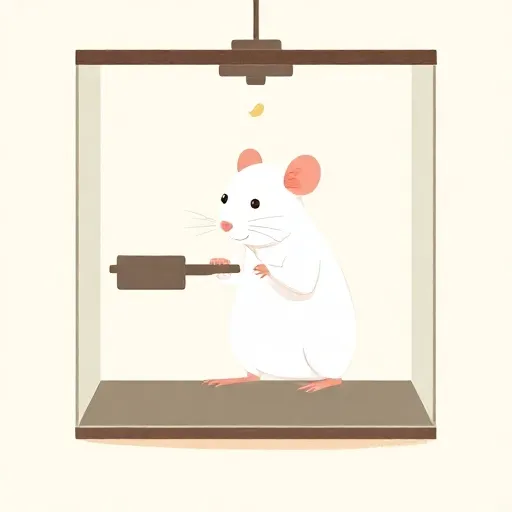
What if wanting isn’t about acting but about feeling? Galen Strawson (b. 1952) imagines a creature that cannot act at all but can still feel pleasure. If that creature felt pleasure whenever it seemed that a sunny day was coming and felt bad when it seemed cloudy, wouldn’t we say it desires sunny days? On a pleasure-based theory, desire is just a disposition to take pleasure if the desired state of affairs seems real, and displeasure if it seems not.
Carolyn Morillo (20th –21st centuries) went further, using brain science. She argued that episodes of pleasure are identical to the release of the chemical dopamine in the brain’s reward system. Those same neural events also cause action, when combined with beliefs. So the core of desire is the neural realization of pleasure — the happy feeling.
This neat picture faces a challenge: maybe pleasure is an effect of getting what you want, not the wanting itself. When you finally get that concert ticket, joy floods you because your desire was satisfied; the pleasure comes later. If pleasure is just a sign that a desire has been met, then desire and pleasure must be different things — like a hunger and the yummy taste of food afterward. Some neuroscientists, such as Kent Berridge, argue that dopamine is more about wanting (a learning signal) than about liking, so the pleasure-based reading of the brain is contested.
Still, the pleasure-based theory captures something real: many desires feel good to think about, and missing out feels bad.
When Desire Sees the Good

What if wanting is really a way of seeing something as good? Socrates thought that to want something is simply to believe it is good. A good-based theory could hold that desire just is a belief that something is good.
But the philosopher David Lewis (1941–2001) showed with decision theory that identifying desire with belief in goodness leads to contradictions in a rational person. So Dennis Stampe and Graham Oddie gave the theory a twist: desire is a perception of goodness, not a belief. It’s like seeing someone’s face and it looking like Mikhail Gorbachev — a high-level perception that doesn’t commit you to thinking it really is him. In the same way, a donut can appear good even while you firmly believe it’s unhealthy. That’s why you can desire the donut without believing it’s good: the appearance and the belief can pull apart.
T.M. Scanlon (b. 1940) adds another evaluative layer: motivating desires are judgments about what we have reason to do, not just what is good. So when you desire to study, you see reasons counting in favour of studying.
A puzzle for all good-based theories: rats seem to desire food and safety, but they probably don’t represent anything as good or reason-giving. If they can desire without that, why think humans must?
Attention, Learning, and the Whole Package

Scanlon also offers an attention-based theory: to desire something is for the thought of it to keep occurring to you in a favorable light, directing your attention insistently toward reasons that seem to count in its favor. If you desire to join the swim team, your mind keeps rehearsing the reasons — you’ll get fit, you love the water — even when you’re trying to do homework.
But desire also grabs attention in other ways: it makes you notice any news about the team, or the smell of chlorine. So some say the attention theory covers only part of the story.
Timothy Schroeder proposes a learning-based theory: desires are reward-based learning mechanisms in the brain. Your brain’s reward system (the one that uses dopamine) is essentially a teacher that learns what leads to good outcomes. That process is desire, whether or not you feel pleasure or act. In this view, a creature could desire sunny days without ever feeling good — it would just be wired to learn from sunshine. That sounds strange, but Schroeder thinks desire is a natural kind discovered by science, not defined by how it feels.
Finally, some philosophers give up on finding a single essence. A holistic theory says you have a desire when you have enough features from a big list: dispositions to act, feel pleasure, attend, believe good, and so on. The internal state plays many causal roles, and that whole package is what desire amounts to. This idea comes in functionalist and interpretationist versions, associated with David Lewis and Donald Davidson (1917–2003).
Why It All Matters: Desires, Happiness, and Morality

Why should you care which theory is right? Because it changes how you understand yourself, your happiness, and what makes an action good.
Imagine you want to become a great musician. Is your desire a readiness to practice (action-based), a thrill at the thought of performing (pleasure-based), or a perception that musical skill is valuable (good-based)? Your answer might affect how you motivate yourself when you feel lazy. If desire is really about action, then sitting on the couch imagining isn’t enough; you have to be disposed to pick up your instrument. If it’s about pleasure, the daydreams count.
In ethics, the stakes get higher. The philosopher Immanuel Kant (1724–1804) argued that an act is truly praiseworthy only if you do it from duty, not from a desire to be kind or generous. A desire, in his view, is just an “inclination.” But Nomy Arpaly (b. 1968) disagrees: she says acting from a desire for what is good — like a genuine desire to help others — is exactly what makes you praiseworthy. On her view, if you dutifully help but secretly wish you didn’t have to, your heart isn’t in the right place. So whether desire belongs in morality depends on what desire really is.
Theories of well-being (how well your life is going) are also on the line. If well-being consists in getting what you desire, then everything hangs on what counts as a desire. Suppose you have an ignorant desire to collect bottle caps because you mistakenly think they’re valuable. Should fulfilling that desire count toward your happiness? Some say yes, some say no, depending on whether desire is just a raw push or a glimpse of the good.
The ancient fight over the nature of desire keeps shaping our everyday thoughts about what to do, whom to praise, and what makes a life good.
Think about it
- If a scientist built a robot that acts like it wants to win a game but feels no pleasure and has no sense of good or bad, would you call its programming a desire? What does your answer reveal about which theory you lean toward?
- You want your favorite sports team to win, but you know you can’t do anything to help — you’re not even watching the match. Does it still make sense to say you desire their victory? Which theory best explains that?
- Imagine you give half your sandwich to a friend because you feel a warm pull of kindness. Is your action more praiseworthy if you acted on that desire, or if you forced yourself to share just because you thought it was your duty? Can there be two kinds of good acts?