Do You Really Choose, or Was It Always Going to Happen?
The Light You Didn’t Want to Turn Off
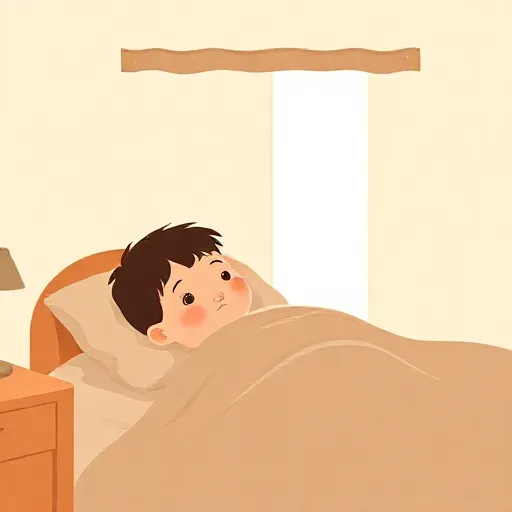
Imagine you’re in bed late at night. A light in the kitchen is on, and you know you should get up to switch it off. But you are warm, tired, and every part of you wants to stay put. After a moment, you drag yourself up, walk across the cold floor, and flip the switch.
Why did you do it? One group of 18th‑century philosophers, including Baruch Spinoza (1632–1677), Gottfried Wilhelm Leibniz (1646–1716), and David Hume (1711–1776), would say it was all down to a battle of forces inside you. Your desire to do the right thing was simply stronger than your desire to stay in bed. That stronger desire won, like one domino knocking down the next. They called this picture the System of Necessity.
The System of Necessity: Three Claims That Seem to Lock You In
The System of Necessity rests on three claims.
1. Every human action has a sufficient cause.
Nothing happens without a reason. Your getting up had a cause, just like a stone falling has a cause.
2. The cause of a free action is a motive, which is a mental state.
The “motive” is a desire or belief inside you. In the bedtime story, the motive was your belief that you should turn off the light, together with a desire to be responsible.
3. There is a natural law: the strongest motive always wins.
If a choice happens, it means that the desire behind it was, at that moment, the most powerful one in your mind.
To these thinkers, human action is just another part of nature. A person is like a theater where desires and impulses struggle for control, and the loudest one always gets the leading role. But a Scottish philosopher named Thomas Reid (1710–1796) thought this picture was deeply wrong.
Reid’s Reply: You Are Not a Theater — You Are the Director
Reid objected that if the System of Necessity were true, you could never properly say you performed an action. Only a particular desire did the work. Animals and very young children might be driven this way, but not a mature human. Normal human beings, Reid claimed, can do something special: they can reflect on their own desires.
Instead of simply surrendering to the strongest impulse, you can ask two questions:
- Would acting on this desire truly contribute to my well‑being over my whole life? (Reid called this the principle of regard to our good on the whole.)
- Is there a moral reason or obligation to act on it, or to ignore it? (This he called the principle of duty.)
Together, Reid named these the rational principles of action. They are what let you govern yourself. You are not a puppet. Animals, Reid wrote, are pushed by their strongest impulse without any ability to step back and give themselves a law; but you can judge what ends are worth pursuing and when a passion should be resisted.
For Reid, this is the core of autonomy: the power to regulate your behavior by asking whether an action lives up to duty or your lasting good. The System of Necessity leaves that power out entirely.
You Cause Your Actions — Not Just Your Motives
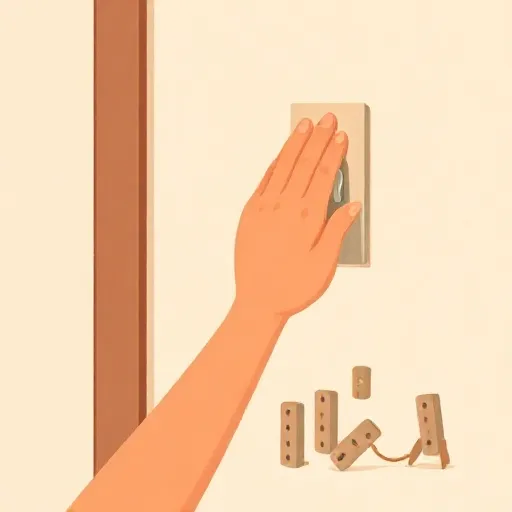
Reid offered a different account of action, built on three ideas of his own.
First, when you act freely, the cause is you, the whole person — not some mental state inside you. Reid called this agent causation. Just as matter cannot push itself (he believed Newtonian science showed that), only an agent can genuinely cause something.
Second, motives are not mental shoves. They are ends you aim at, like “being a responsible person” or “keeping the house tidy.” They pull you, like advice, rather than push you.
Third, human action is not governed by a strict natural law. Reid held that we have libertarian free will: the exercise of your power to choose does not fall under any predictable, law‑like pattern the way a planet’s orbit does. You can examine a motive not just for its psychological strength but for its rational authority — whether it deserves to guide you. The claim that the “strongest motive always prevails,” Reid argued, is either false (we often resist strong desires) or just a trivial restatement (“the strongest motive is whichever one happened to win”).
Because the rational principles of action are not physical laws, moral facts are not the kind of thing science can study. Reid called this moral non‑naturalism. Morality is a separate domain, not part of the machinery of atoms and gravity.
Duty or Happiness: Which Comes First?
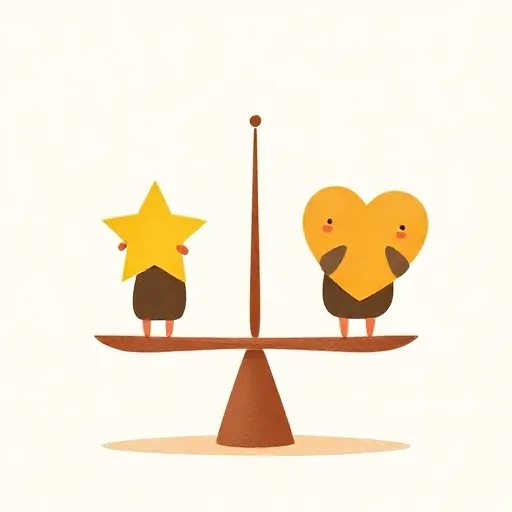
Many philosophers in Reid’s time — followers of Aristotle — thought that your own long‑term happiness should always be your main guide. Every choice you make should, in the end, serve your well‑being. Reid disagreed. He defended what we can call the Hierarchy Thesis: when what you morally must do conflicts with what would make you happy, duty takes the lead.
He gave four reasons.
- It’s too hard to figure out what really makes you happy over a whole life. Many people never have the time or knowledge to get that right. A principle of action should be something you can actually use.
- A sense of duty often grabs you more strongly than a distant promise of happiness. Guilt, for example, can spur you to act when thoughts of “future good” leave you cold.
- Making happiness your boss cannot produce the very best kind of character. Our deepest admiration, Reid said, belongs to those who love virtue for its own sake, not because it pays them back.
- Chasing happiness directly often makes it vanish. Worrying too much about your own well‑being fills you with anxiety; real joy comes from caring about other people and projects.
Reid did not think you should ignore your own well‑being. Both principles matter. But he believed that, in a world watched over by a wise God, doing your duty never really costs you your true good in the long run.
How Do You Know What’s Right? The Moral Sense
So far, Reid sounds like a rationalist — someone who thinks reason discovers moral truth. But he also borrowed from a rival camp, the sentimentalists. One of them, Francis Hutcheson (1694–1746), had argued that we come equipped with a moral sense, a mental faculty that makes us feel approval or disapproval of actions, much as our eyes let us see colors.
Reid accepted that we have a moral sense, but he redesigned it. On his view, the moral sense does not just produce feelings. It produces full‑blooded moral judgments with real content: “That was unfair,” “She is kind,” “This promise should be kept.” These judgments often carry feelings of pleasure or pain, but the feeling follows the judgment, not the other way around.
In fact, Reid thought moral perception works a lot like ordinary perception. When you see a friend console someone who is crying, you do not reason your way from the behavior to the conclusion “that is compassionate.” The behavior itself — the look, the tone of voice, the gentle movement — acts as a sign that immediately triggers the belief, just as pressure on your skin immediately triggers the belief that the table is hard.
And because the moral sense is a natural, inescapable faculty we all share (like memory or eyesight), Reid argued we should trust it unless we have a specific reason not to. Just as we do not demand a complete theory of vision before we believe our own eyes, we need not solve every puzzle about morality before we believe that cruelty is wrong. The practice of forming moral judgments is deeply woven into human life, and competent people mostly agree on the most basic principles.
Morality, for Reid, is not hidden behind a veil. We are built to perceive it.
Why It Still Matters: Are You in Charge of You?
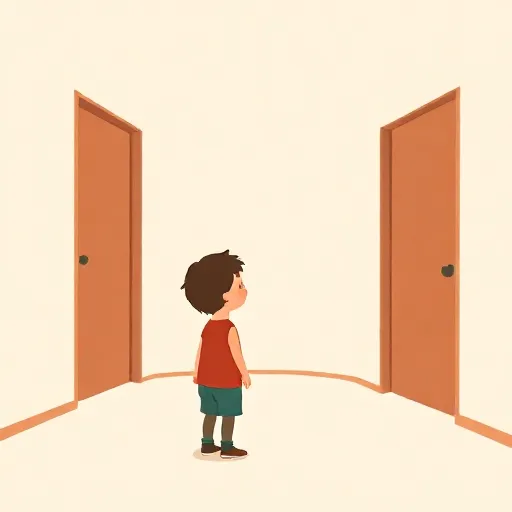
Reid’s ideas are far from the common view today. Not many scientists think only agents can be true causes, or that moral facts lie outside nature entirely. But the question he forced into the open is still very much alive: when you manage to get out of bed, turn off the light, stand up for a friend, or refuse a cruel dare, are you merely the result of invisible forces pushing inside you, or is there a genuine you making a free choice?
If Reid is right, you can hold people — and yourself — responsible. You can praise courage and blame cruelty, because a person could have stepped back and asked what duty required. If the System of Necessity were the whole truth, it would become much harder to say that anyone ever deserves anything.
So next time you feel a strong urge and pause to ask, “But should I really act on this?” — even for a second — you are doing exactly what Reid thought makes a human being a human being. And whether that pause is real freedom, or just one more domino falling, is a question you get to wrestle with yourself.
Think about it
- If a friend tricks you into doing something mean, are you still to blame? What if a very strong desire inside you — one you didn’t choose — pushes you to do the same thing? Is there a difference?
- Think about a time you resisted a big temptation (like skipping homework). Did you feel like you created a new path, or just that a different desire won? How would you try to prove which one is true?
- If we built a perfect computer that could predict every choice you will ever make, would that mean you never really choose? Why or why not?