

Who’s Really in Charge When You Act?
The Day Your Arm Raised Itself

You’re sitting in class and the teacher asks a question you know the answer to. Your arm shoots up. Did you decide to raise it, or did your eagerness just shove your arm upward like a puppet string? You probably feel like you were the one who did it — that you, the agent, were in charge. Philosophers call the capacity to do things on purpose agency, and they’ve spent decades arguing about what it really is. At the center of the debate is a simple, spooky idea: maybe your own reasons and desires cause your actions the way dominoes knock each other over, without you ever stepping in as a separate chooser. And if that’s true, then who is really in charge — you, or the chain of causes inside your head?
The Standard Story: Reasons That Push Like Dominoes

Imagine you see a cookie and you want it. You believe that reaching out will get you the cookie. You then form an intention to reach, and your hand moves. According to what most philosophers call the standard theory of action, this is exactly what makes an action intentional: you act for a reason, and the reason — your desire and your belief — cause your movement.
The philosopher Elizabeth Anscombe (1919–2001) argued that an intentional action is one done for a reason, and that when you act for a reason, your reasoning can be laid out like a tiny argument. The goal is the “major premise” (I want a cookie). The means is the “minor premise” (Reaching will get me one). The action is the conclusion. Her colleague Donald Davidson (1917–2003) then worked these ideas into a causal theory of intentional action: to do something on purpose just is to be moved by a desire and a belief that together rationalize what you do.
On this view, your reasons are mental states — real things inside you — and they function like the first domino in a line. The desire to cookie, plus the belief, causes the intention, which causes the arm to move. You don’t need a ghostly inner “you” pushing the first domino. The mental dominoes do the pushing, and that push is enough to call it your action. The entire picture is event-causal: one mental event causes another, which causes a bodily event. Many scientists and philosophers still think this is the right way to understand agency.
When the Chain Goes Wrong

But there’s a snag. Suppose a climber wants to make his load lighter and thinks, “If I let go of the rope, this will be easier.” The thought makes him so nervous that his fingers accidentally loosen — and he drops the rope. His desire and belief really did cause the movement, but it doesn’t feel like he acted. It feels like something happened to him.
This is the problem of deviant causal chains. For an event to count as an intentional action, the chain of mental causes must travel to the movement in the right way, not a twisted or accidental way. Philosophers call the right way non-deviant causation. The trouble is, nobody has yet managed to explain exactly what makes a causal pathway “right” without sneaking in the very idea of agency they’re trying to explain. If the standard theory can’t rule out such freak chains, then having the right mental dominoes isn’t enough to make you the author of what happens. Something essential is still missing.
Where Did the Agent Go?

Some philosophers push the worry even further. J. David Velleman (b. 1952) argued that the standard theory risks making the agent disappear entirely. If your actions are just mental dominoes falling, then you — the person — seem to be watching the show from inside, not running it. You might even feel that a desire that pushes you is not you, like a craving you don’t agree with. Velleman said the theory only captures actions where the agent’s involvement is weak or “halfhearted.”
To solve this disappearing agent problem, one camp says we need a non‑reductive picture: the agent as a substance that directly causes actions, a view called agent‑causation. Another camp says that deep down, all agency begins with uncaused mental acts of will — called volitions — that are actions simply by their nature. These views try to put the agent back at the controls, not as a collection of mental events but as something that itself starts new causal chains.
Defenders of the standard theory, such as Alfred Mele, reply that even when you act halfheartedly, you are still the one acting — you just aren’t exercising your best control. They say the standard theory never claimed to explain the highest, most excellent forms of agency, only the basic machinery of doing something on purpose. The question remains: can basic intentional action be explained purely by mental dominoes, or do we need an agent who isn’t just another domino?
Your Brain Decides Before You Do?
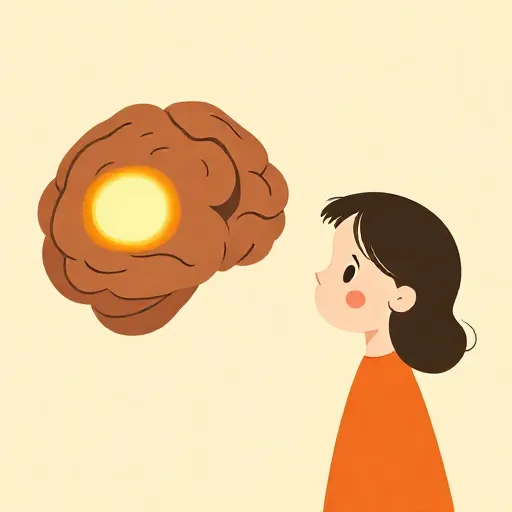
The debate took a surprising turn when scientists got involved. In the famous Libet experiment of the 1980s, volunteers were told to flex their wrist whenever they felt the urge. Measurements showed that a brain signal called the readiness potential began about 350 milliseconds before the person reported consciously deciding to move. Some took this to mean that the conscious feeling of deciding is an illusion — your brain has already set things in motion, and you just narrate a story about making a choice afterward.
But many philosophers and later neuroscientists have pushed back. The experiment placed people in an odd, artificial situation where they had to produce movements for no reason at all, just whenever a whim struck. In real life, most of our actions are guided by reasons and plans, not by random urges. A 2012 study even showed that the early brain activity in the Libet task might stem from spontaneous neural fluctuations that build up until they cross a threshold, rather than from a hidden decision. And crucially, even if a readiness potential kicks off before awareness, you might still have the power to consciously veto the movement at the last instant. So the experiment hasn’t settled the question. Your brain may rumble before you feel a decision, but that doesn’t prove you’re just a puppet of brain cells.
Why It Still Matters: Are You in the Driver’s Seat?

Suppose for a moment that all your actions are the end of a long chain of causes — your genes, your upbringing, your hunger, your habits. Would it still make sense to praise or blame you for what you do? That question sits right at the heart of why the puzzle of agency matters in your daily life. If you do something thoughtful, did you really earn the compliment? If you mess up, are you really responsible, or were you just pushed by forces you never chose?
But even if the causal chain is real, you are still in it in a special way. You can reflect on your reasons, change your mind, and shape your own future desires and plans. Some philosophers argue that you become the author when you identify with some of your reasons and make them truly your own — not by escaping causation, but by steering it. In ugly moments and cheerful ones, the feeling of being in charge may be incomplete, but it’s not entirely fake. You can learn to pay attention, to notice which strings are pulling you, and to pull back.
Philosophers haven’t yet discovered a single, agreed-upon answer. The mystery of agency — whether you are a first domino, a controller of dominoes, or something else entirely — is still wide open. And that means you get to think about it afresh, every time you raise your hand, choose a cookie, or decide what kind of person you want to be.
Think about it
- If a supercomputer could predict every single thing you’ll ever do, based on your past and your reasons, would you still feel like you are making free choices? Why or why not?
- Can you remember a time when you did something — maybe a small, impulsive act — that seemed to have no reason at all? If such acts exist, what would that mean for the idea that all actions are caused by reasons?
- If you found proof that at least some of your actions are started by you, not by any chain of causes, would that change how you think about being blamed or praised? Why?