Can Anyone Really Define What Morality Is?
The New School Puzzle

Imagine you walk into a brand‑new school. Everyone wears a uniform, and you see a kid sent to the principal for wearing a green bracelet. The teacher says, “It’s a moral rule here.” You blink. A bracelet? At your old school nobody would call that a moral issue—maybe a dress code, but not something deeply right or wrong. What makes a rule count as a moral rule? Is there a single thing all moral rules share, or does the word just mean whatever a group treats as serious?
Philosophers have wrestled with this for centuries. They want to know whether we can pin down a definition of morality—the set of standards for right and wrong conduct. The problem turns out to be much trickier than it looks.
What Counts as Moral? Why Harm Isn’t the Whole Story
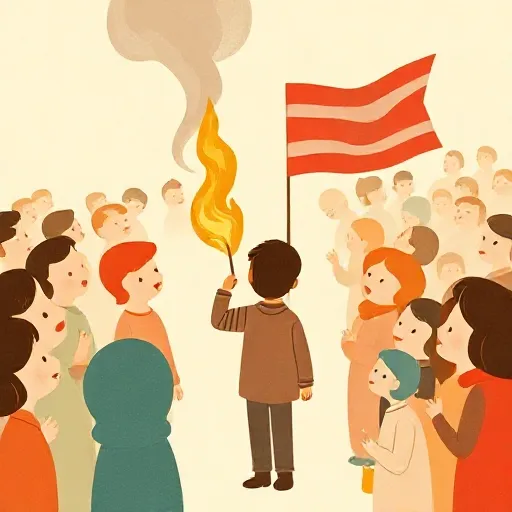
Many people think that avoiding harm is the heart of morality. Don’t kill, don’t steal, don’t hurt others. That seems obvious. But the philosopher Walter Sinnott‑Armstrong (writing in 2016) points out that not everyone agrees. Some behaviors are widely condemned as immoral even when no one is physically hurt. Think of burning a national flag, or a practice like eating dead loved ones (cannibalism). Neither of these necessarily harms a living person, yet many people feel deeply that they are wrong. So harm cannot be the only thing that makes a judgment moral.
Sinnott‑Armstrong also argues that moral judgments can’t be identified just by looking at brain activity. There is no single neurological pattern that lights up for every moral thought and nothing else. A third idea—that morality is simply whatever helps a society cooperate—runs into trouble too. The psychologist Joshua Greene (21st century) suggests morality often serves cooperation, but there are moral systems that seem to harm their own people. Even a human heart has a function, but some actual hearts fail to pump blood properly. So pointing to a function doesn’t always tell you which codes are moral.
We can’t define morality by content alone, by brain science, or by a simple social function. Then how do we even pick out the topic?
Descriptive Morality: What People Actually Believe
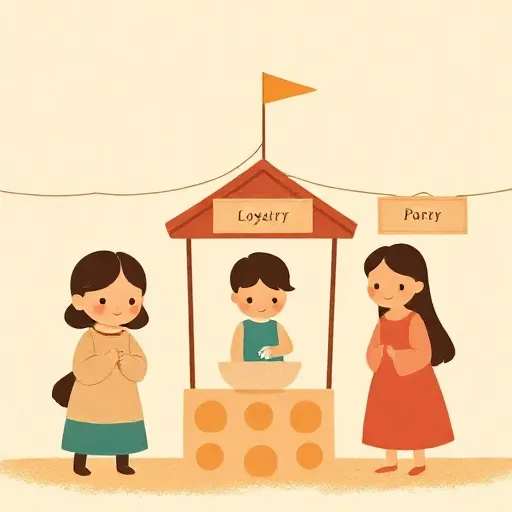
When you use “morality” to refer to the code of conduct that a group or society actually endorses, you are using the descriptive sense of the term. In this sense, the morality of the ancient Spartans is just as real as the morality of your own community—even if they endorse very different rules. Anthropologists and psychologists often study morality this way, as a set of attitudes people happen to hold.
The psychologist Jonathan Haidt (born 1963) suggests that moral systems often involve a mix of concerns beyond harm: purity, loyalty, and respect for authority. In some societies, it is more important to be loyal to your family and obey elders than to avoid hurting an outsider. That might mean harming innocent people who belong to a disfavored group is seen as right, as long as you show loyalty to your own. To an outsider that looks terribly wrong, but within that descriptive morality, it counts as moral.
This is why descriptive moralities can differ wildly. Some are based on religious commands, others on tradition, and others on ideas of rational human nature. The only thing all descriptive moralities seem to share is that they are put forward by some person or group as a guide to behavior—and that they almost always include some prohibition on harming at least some people. Beyond that, the content can be almost anything, from food rules to clothing rules. And different members of the same society might disagree about which moral rules matter most.
So if we can’t find a single unifying code among the many actual moralities, perhaps the real definition of morality isn’t about what people do believe, but about what they should believe—if they were perfectly rational.
Normative Morality: What Would Rational People Choose?

Switch to the normative sense of “morality.” Here, morality is not whatever people happen to think; it is the code that all rational persons, under certain conditions, would endorse. In other words, if you were fully reasonable and well‑informed, what rules would you want everyone to follow? That imagined code is normative morality.
The philosopher Thomas Hobbes (1588–1679) thought such a code would be about living in peace and avoiding harm. John Stuart Mill (1806–1873) defined morality as the rules that allow people to live the happiest lives possible. Both focused on actions that affect others. According to this view, wearing a green bracelet or eating alone wouldn’t be moral questions because they don’t hurt anyone else. Morality, in the normative sense, governs how we treat one another, not purely personal tastes.
One important idea is that morality is an informal public system. A public system is a set of rules that everyone it applies to can know, and following it is not irrational. Pickup basketball is an informal public system—you know the rough rules, but there’s no referee to settle every dispute. Normative morality works the same way: it doesn’t have a single judge or a manual that answers every dilemma, but most everyday moral situations (don’t lie, don’t injure) are widely agreed upon. And crucially, you cannot simply quit morality the way you can quit a basketball game. If you’re a person who can understand the rules, morality applies to you whether you like it or not.
But what exactly would all rational people endorse? That debate is still wide open. Some theorists believe rationality requires us to avoid causing harm, while also allowing us to develop our own talents. Others, like Bernard Gert (1934–2011), held that morality mainly requires we reduce harm, but it doesn’t demand we be heroic or perfectly charitable—morality only says it’s good to help, not that you’re immoral if you don’t. So even normative morality has many versions.
Why This Debate Still Matters: AI, Culture Clashes, and You
You might think defining morality is just a dusty classroom puzzle. But it shapes real decisions today. Engineers building artificial intelligence need to give machines ethical guidelines—yet there’s no single agreed‑upon moral code to program. A 2023 survey of AI ethics papers showed that researchers can’t agree on whether they’re using morality descriptively (following what people actually want) or normatively (aiming at what is truly right). Without a clear definition, they struggle to create fair systems.
On a personal level, you navigate different moralities every time you move between friends, family, and social media. One group treats loyalty as the highest virtue; another insists that honesty trumps all. Understanding that there are descriptive senses and normative senses can help you make sense of these clashes. It doesn’t tell you which side is correct—philosophers still argue about that—but it gives you a sharper map of the landscape.
Lastly, the question “What is morality?” forces you to reflect on your own values. If you were completely rational and impartial, would you still endorse the rules you follow? Or are some of them just local customs that you’ve inherited? The debate continues, and you’re now equipped to join it—not with easy answers, but with the right questions.
Think about it
-
If a culture’s descriptive morality says children must always obey their parents, but your own reasoning tells you that sometimes disobeying a harmful command is moral, which should you follow? Can a whole society be wrong about what it calls moral?
-
Imagine you are programming a self‑driving car. Should it follow the moral rules most people in your country happen to believe, or the rules all rational people would accept if they could debate freely? What if those two sets of rules conflict?
-
Think of a rule you consider deeply moral, like “Don’t lie.” Can you imagine a rational person, given full information, who would reject that rule? What does that say about whether morality is a public system everyone would endorse?