Is There One Right Way to Live? Zhuangzi Said No
Morning Nuts and Evening Nuts
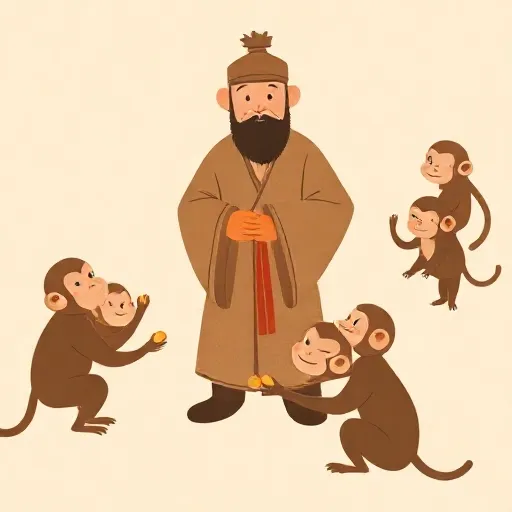
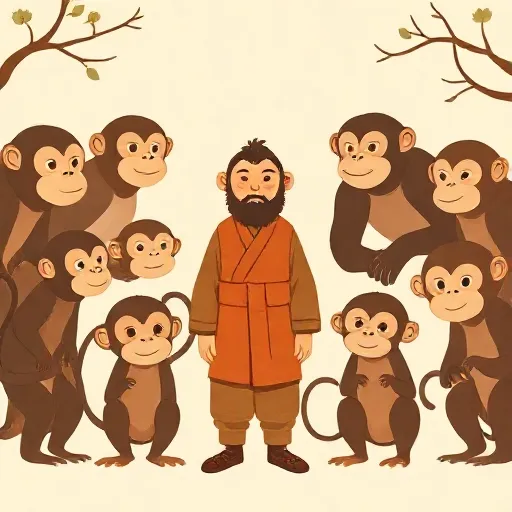
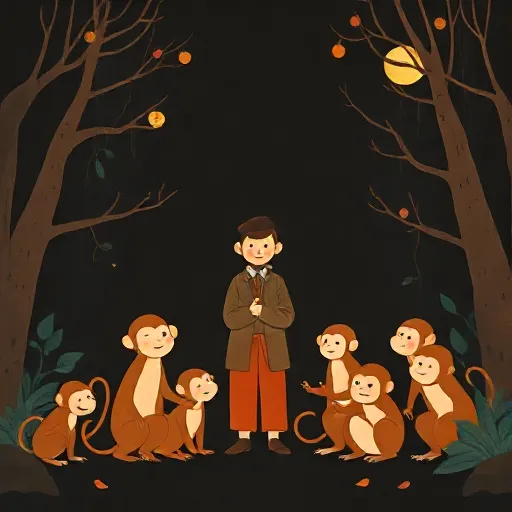
Imagine a monkey keeper announces, “You’ll get three nuts in the morning and four in the evening.” The monkeys growl and bare their teeth. The keeper quickly changes his tune: “Fine — four in the morning, three in the evening.” Suddenly the monkeys are delighted. The total number of nuts never changed, yet the monkeys’ judgment flipped from angry to happy.
This story comes from a book called the Zhuangzi, named after Zhuangzi (who flourished in the late 4th century BCE), one of ancient China’s most playful and radical philosophers. The fable isn’t just about clever monkeys; it’s about how all our judgments — about right and wrong, good and bad — depend on where we’re standing. Zhuangzi’s big question: Is there one single right way to live, one true path that everyone should follow? His answer is a cheerful, unsettling “No.” Nature gives us many ways of living, and none of them wears a crown.
The Battle Over the Right Path
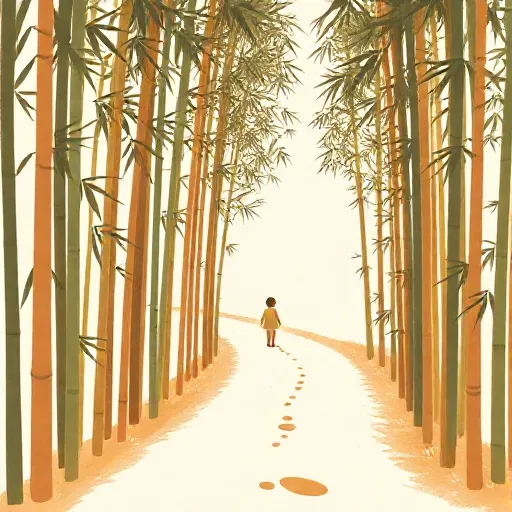
In Zhuangzi’s time, philosophers fought fiercely over the dào (道) — a word that means “path” or “way.” A dào is a guide for living: what to do, how to behave, which choices to make. Confucians believed the correct dào came from traditions, rituals, and the wisdom of ancient sage‑kings. Mohists, followers of Mozi (5th century BCE), insisted that the right path is the one that brings the greatest benefit to everyone, measured by a natural standard like a tool. Another group, the primitivists (often linked to the legendary Laozi), pushed back even harder: all social conventions are fake, language leads us astray, and we should abandon rules and merge with a wordless, natural way.
Zhuangzi saw a problem. All three camps claimed that tiān (天, “nature” or “sky”) backed their dào. But if nature really favored a single answer, why did the debate never end? Zhuangzi proposed a different picture. He compared tiān to a great wind blowing through the hollows of the earth — pipes of nature. Each hollow makes a different sound; the wind does not declare one sound correct. Similarly, human ways of life — our practices, our languages, our arguments — all come from nature, but nature itself stays silent on which one to pick. Social paths are just as natural as rivers, bird calls, or the way a spider spins a web.
Your Heart Isn’t the Boss
One rival idea was intuition. The Confucian thinker Mencius (4th century BCE) argued that humans are born with a heart‑mind (xīn 心) that naturally inclines toward the right path, like a seed growing into a tree. Mozi, on the other hand, thought a tool‑like measurement of benefit and harm could settle any dispute.
Zhuangzi replied: look at your own life. By the time you’re old enough to reason about right and wrong, your heart‑mind is already packed with habits, memories, and commitments — what he called chéng (成), a constructed shape. The things you call “this” (right) and “not‑that” (wrong) flow from the path you’ve already walked. To have a totally pure, pre‑committed intuition would be like arriving in a place yesterday before you set out today. So asking, “Which path does nature want?” always comes from a viewpoint that nature itself already set in motion — and nature set millions of those viewpoints in motion, none with a crown.
Zhuangzi called the deep awareness of this dependence míng (明), often translated as “illumination” or “clarity.” It’s the flash of seeing that every judgment rests on a prior way of judging, which rests on yet another, stretching back beyond what any single lifetime can trace. Míng doesn’t mean you stop deciding; it means you stop pretending your decision comes from a view from nowhere.
Knives, Butterflies, and the Limits of Knowing
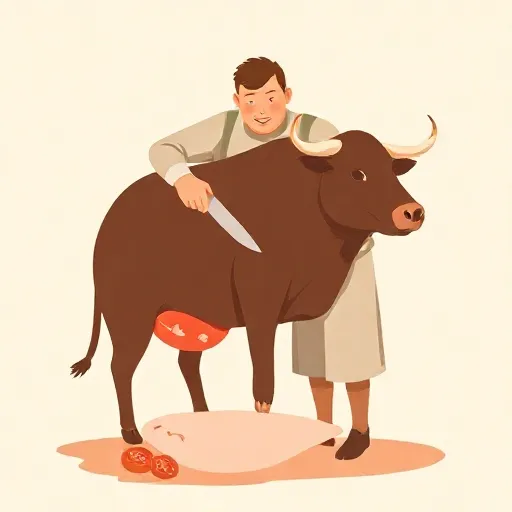
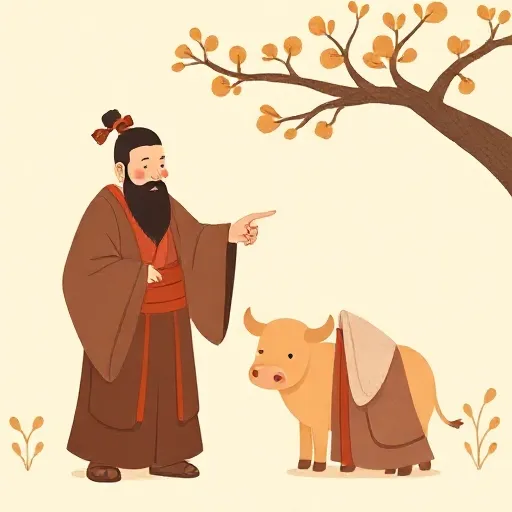
Zhuangzi loved stories about ordinary masters. The most famous is Cook Ding, a butcher who carved oxen with a blade that stayed sharp for nineteen years. Ding explained that he no longer saw an ox as a solid lump; instead, he sensed the natural gaps and let his knife slide through them without force. His know‑how (zhīdào 知道) had become a dance, not a struggle. Other tales feature cicada catchers, wheelmakers, and musicians — each a virtuoso in one narrow way, moving with seamless, wordless ease.
These stories celebrate skilled living, but with a twist. Every mastery is specialized. Cook Ding’s genius doesn’t help him catch cicadas or compose music. And even the most dazzling performance offers only a limited perspective on the whole web of possibilities. Zhuangzi underlined this by dreaming he was a butterfly, happily fluttering with no memory of being human. Then he woke up — or did he? Might a butterfly now be dreaming it is Zhuangzi? The dream suggests that even the feeling of finally “waking up” to a better view could, later, look like another dream. Positive skepticism like this doesn’t paralyze you; it just keeps one question gently poking your ribs: Could you be wrong?
Walking Two Roads at Once
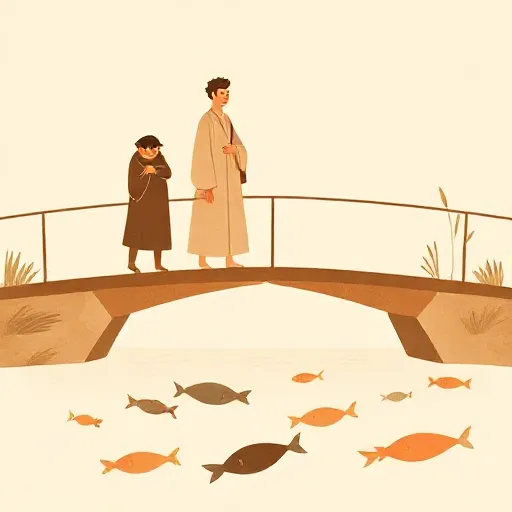
If no single dào is stamped by the cosmos, does Zhuangzi think we must stay silent, never making judgments? No — that would be self‑defeating, like commanding “Never follow a command!” Zhuangzi saw that we can’t help but make shì‑fēi (是非) judgments — “this, not‑that” — because we’re living, choosing creatures embedded in a network of paths. The trick is to hold those judgments lightly, with míng. We can use them to get along, like the monkey keeper, who changed nothing substantive but turned anger to happiness by reframing the schedule.
Zhuangzi called this “walking two paths at once.” We walk our own chosen way, while also accommodating others, learning from their perspectives, and sometimes simply staying out of their way. He refused a powerful king’s offer to run a state, preferring to “drag his tail in the mud” like a turtle alive in a swamp rather than be a dead shell honored in a temple. That choice wasn’t about laziness — it was about the wisdom of knowing which paths you genuinely flourish on, without demanding that everyone else walk them too.
Why It Still Matters: Staying Curious Without a Final Answer

Zhuangzi lived in a time of warring states, but his puzzles tug at us today. In your classroom, your family, and your feeds, you meet people who seem absolutely certain they have the one true way — about politics, about how to spend your life, about what success means. Zhuangzi’s mild skepticism doesn’t tell you those certainties are false; it whispers that they are limited. Your own deepest convictions were shaped by accidents of birth, by the paths your parents walked, by the stories you have practiced telling yourself.
That doesn’t make them worthless. You can still act, still argue, still perfect a skill like Cook Ding. But the memory that there are countless other natural paths — each as real to its walker as yours is to you — can replace smugness with curiosity. And curiosity might be the most useful tool for a life that’s too short to master all the ways of the world.
Think about it
- If two people have completely different ideas of a good life, can they both be right? What would have to be true for that to be possible?
- Imagine you suddenly see an old memory from someone else’s point of view and realize your own story wasn’t as fair as you’d always believed. Does that new view automatically become the final truth, or could you later change it again?
- You practice a skill until it feels effortless — a sport, an instrument, a game. Does that flow mean you’ve found the right way to do it, or are there always other ways that could feel just as natural to someone else?