What If Morality Isn’t About Rules, But About Walking a Path?
A Path, Not a Rulebook

Imagine you’re trying to learn to ride a bicycle. Someone hands you a thick rulebook: “Lean to the left when turning; balance force equals …” But you know you’ll never learn that way. You get on, wobble, fall, get up. Gradually, your body knows how to stay upright. You’re following a path of skill—not a list of dos and don’ts.
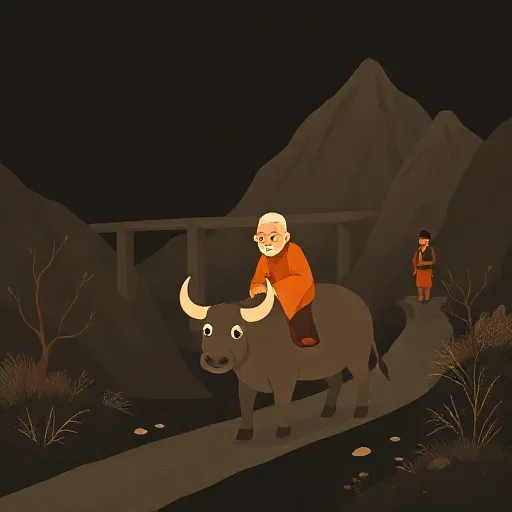
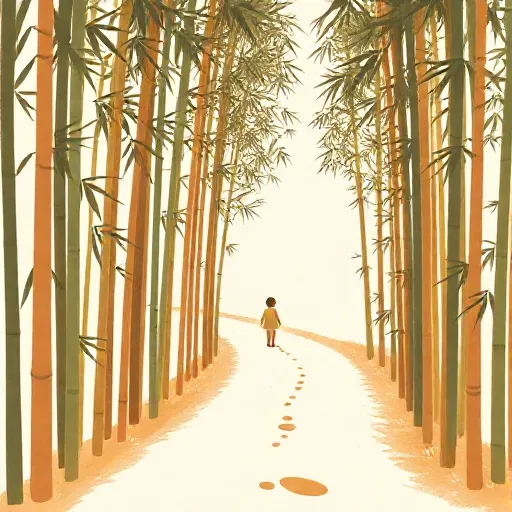
For more than two thousand years, Chinese thinkers used this image—a dào (pronounced “dow,” literally a road or way)—to think about how to live. A dào is not a law handed down by a king or a god. It’s a natural pattern you can find, choose, and practice. Much Western philosophy asks, “What ought I to do?” Daoism asks, “Which possible path fits this situation, and how do I learn to walk it well?”
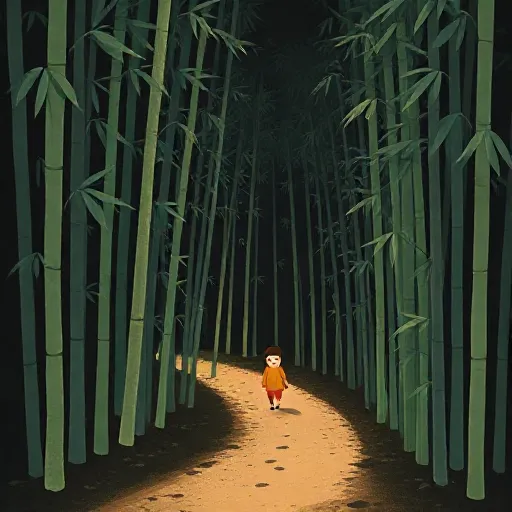
The key difference is between commands and openings. A rule says, “Don’t lie!” A dào says, “Here are some ways you might go; this one will get you there more smoothly—if you’ve practiced.” The Daoist answer to right and wrong is more like navigating a forest than obeying a traffic light.
The Two Voices of Daoism: Laozi and Zhuangzi
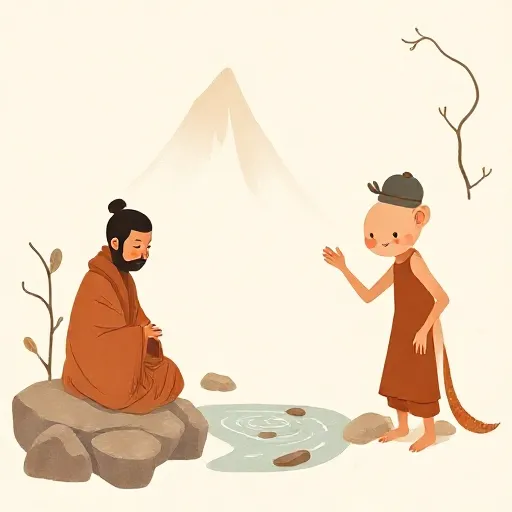
Daoism has more than one voice. Early texts, linked to Laozi (traditionally 6th century BC), sometimes sound like they want to toss out all human-made rules, even words. The Lǎozǐ (the book of the Old Master) says in its famous first line: “Dàos can be dào-ed; they are not constant dàos. Names can be named; they are not constant names.” The idea: any path you can describe is already a fixed version of something that flows. Water doesn’t read a map; it finds the lowest ground. So, Laozi’s version urges wúwéi—“non-action,” not doing nothing, but acting without forcing, like water.
But early Daoism ran into a problem. If language distorts nature, how can you even say that? Later thinkers pointed out the trap: rejecting all words with words is self-defeating. The mature solution belonged to Zhuāngzǐ (c. 369–286 BC). He argued that human sounds—talk, chanting, even argument—are just as much a part of nature as birdsong or wind. Language isn’t an enemy. It’s one of the many paths we naturally use.
Zhuangzi shifted the conversation. Instead of hiding in the mountains and refusing to speak, he saw that families, villages, arts—all these social paths—emerge like ant trails in a forest. They are natural. The question is not “Should we have social rules?” but “Which ones, out of the many possible ones, help us live well here and now?”
Nature’s Silent Guide: Practice, Skill, and Virtuosity
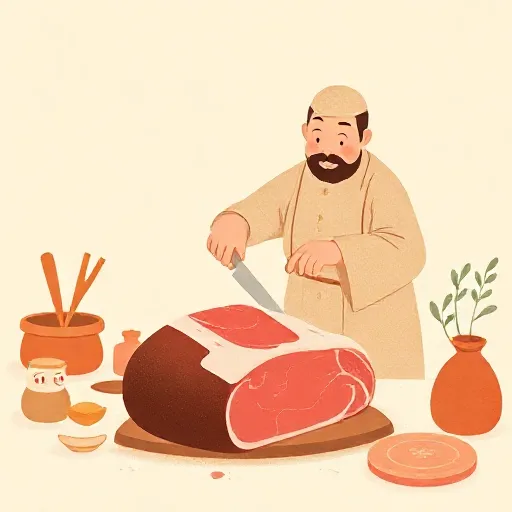
Daoism talks about paths, but it also talks about the walker’s inner skill. Dé (often translated “virtue”) is your capacity to read a path and follow it smoothly. It’s not a magical gift but the result of practice stored in your body. The ancient character for dé combines images of a crossroads, an eye, and a heart—the sense that practiced knowing guides movement.
The best illustration is one of Zhuangzi’s most famous stories. A cook is carving an ox. His knife glides through the carcass without effort—never hitting a bone. He says that what he follows is the natural joints, and he lets the knife find the way. He hasn’t just memorized cuts; he’s trained his perception. This is zìrán—“self-so,” happening naturally, the opposite of trying to force things.
Notice: no rulebook. The cook doesn’t consult a diagram every time. His dé has shaped his body, his eyes, his heart. For Daoists, all knowing is a kind of knowing-how, not just knowing-that. You know how to catch a ball, how to speak your language, how to comfort a friend—each a practiced dào. Over time, paths wear deep in both the world and in you.
Why Can’t We All Agree on What’s Right?

Around the same period, Chinese thinkers were locked in a loud fight. Confucians (followers of Confucius, 551–479 BC) taught that morality came from ancient sages and rituals—like a musical score that each generation must perform faithfully. Mohists (followers of Mozi, c. 470–391 BC) replied: rituals alone aren’t enough. We need to measure outcomes. If a custom hurts people more than it helps, throw it out. They proposed a single standard: maximize everyone’s lì (benefit, utility).
Zhuangzi saw both as trapped in a loop. To decide which set of rules is best, you need a meta-path—a way of choosing between paths. The Confucians pointed to sages; the Mohists pointed to a calculus of benefit. But who gets to interpret? And what if the calculator is biased? Zhuangzi concluded no single person or group has the authority to fix one correct dào for all time.
Instead, he said, we’re like travelers already on a path with momentum. Change happens slowly, by many small choices. Different communities walk differently—and that’s natural. The key is to stay curious and open-minded. “Knowing from more perspectives,” he thought, “improves our chances of choosing wisely.” You don’t have to reject your customs; you just stop pretending they are the only real ones.
From Butchering Oxen to Science: Daoism Today

In the 19th and 20th centuries, Chinese thinkers rediscovered Western science—and many Daoists leaned in eagerly. They saw evolution as a perfect example: species find niches, walk paths of survival, and the whole tangle of life is a vast, changing dào. Yán Fù (1854–1921) translated Darwin and Mill, arguing that logic and scientific method were simply refined human dàos for learning nature’s patterns. There was no conflict.
Later, logicians like Jīn Yuèlín (1895–1964) even suggested that Daoism fits naturally with modern logic. But not because Daoism is irrational. Rather, Daoism is about navigating reality. Science doesn’t hand us “truth” etched in stone; it offers methods that self-correct when new evidence appears. That’s a very Daoist attitude: you keep walking, keep refining your dé.
The path metaphor also helps us think about the environment. Daoist ethics never drew a hard line between humans and other living things. Animals, rivers, and forests all follow dàos. A bee colony decides by quorum; water carves a canyon. The Daoist sees herself as one part among many, entangled in the same unfolding universe. That doesn’t mean you don’t cut wood—Zhuangzi admired the cook, after all—but you pay attention to the joints.
Why It Matters: Walking Your Own Path in a Noisy World
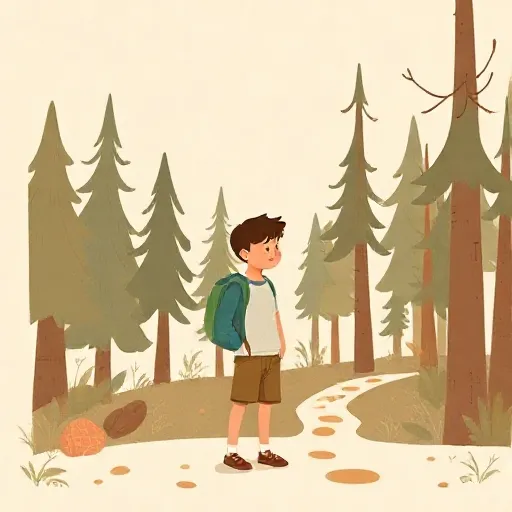
Zhuangzi once said that humans live in dàos like fish live in water. We’re always already on some path—our family traditions, our language, our hobbies. The Daoist advice isn’t to run away to a cave. It’s to see those paths clearly enough to join them, adapt them, and sometimes leave them.
In your own life, you face a clash of paths every day. Should you act like your friends expect? Should you follow a rigid plan for the future? The Daoist answer isn’t to toss out all plans or all loyalty. It’s to remember that the dàos you follow are works in progress. They’re open to revision. You can walk two paths together—being a good teammate and questioning a coach’s toxic drills.
The open-minded, practice-centered, not-quite-rulebook approach has its risks. It doesn’t give you a simple test to condemn terrible historical paths, like slavery or dictatorship. But it does remind us that those paths were walked by real people who could have questioned them more, listened to other voices, and changed. And it urges us to ask: which of today’s well-worn paths might our grandchildren see as mistakes?
Think about it
- If a culture has a practice that most of the world thinks is unfair, does that practice’s long history make it more okay? How could you decide?
- Think of a skill you learned mostly by doing, not by reading instructions. Could learning to be a good person work the same way?
- Zhuangzi said no single person can see the whole path. If you and your best friend disagree strongly about what’s right, what’s a Daoist way to move forward without forcing the other to change?