Do Your Feelings Know What’s Right? Dai Zhen’s Bold Answer
The Boy Who Couldn’t Stop Asking “Why?”

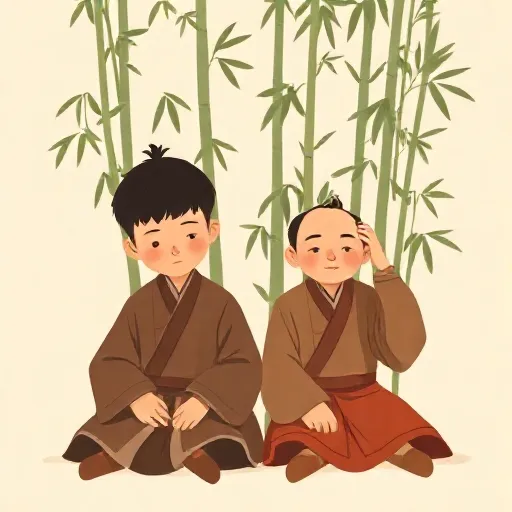
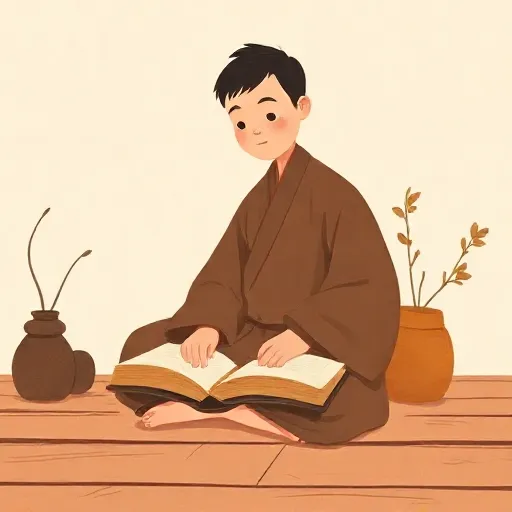
In 1724, in a poor village in Anhui, China, a boy named Dai Zhen (1724–1777) sat in a cramped private school. His teacher could not answer his questions about the old classical texts. Frustrated, Dai borrowed dictionaries and then commentaries. At age 17 he made a lifelong pledge: he would understand the dao — the right way to live — by mastering every word the ancient sages wrote. He later wrote, “What the classics are getting at is the dao; they explain the dao through their phrases; they form phrases through words. If we seek to comprehend the phrases through the words and the dao through the phrases, we will surely make progress.”
Dai devoted decades to studying the exact meanings of characters, ancient institutions, mathematics, and astronomy. He was swimming against the tide. Most scholars in his day belonged to a movement called evidential learning, which focused on facts, maps, and artifacts, and treated philosophy as empty talk. Dai agreed that evidence was crucial — but to him it was only the starting point. The real goal was to uncover the moral principles that had guided the sages in creating a just society. He spent years revising his philosophical masterpiece while his colleagues rolled their eyes.
The River and the Paddle: Why Words Are Not Enough
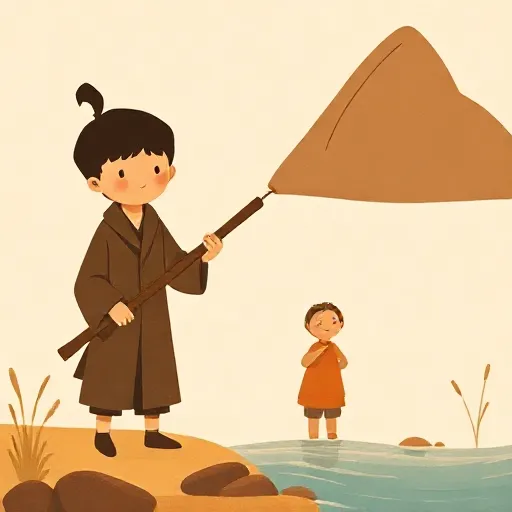
Dai insisted that the Six Classics — along with the Analects of Confucius and the Mencius — really do carry the dao. But getting at that meaning demands the hardest kind of word-by-word study. Many earlier thinkers, especially in the Song dynasty, believed you could grasp the way directly through intuition or meditation. Dai thought that was nonsense. He fired back: “Song scholars ridiculed the study of philology, dismissing the importance of language and written characters. This is like wanting to cross a river without using a boat and paddle or to climbing a height without using a ladder.”
If you don’t understand the ancient terms, you might smuggle in your own opinions and call them the sages’ dao. Even his Qing-era colleagues, who were brilliant at evidential learning, often treated the facts as the whole story. They thought the dao was just the correct rituals and measurements. Dai disagreed. Evidence was necessary — you need to know what a ceremonial vessel looked like — but not enough. The real prize was the philosophy behind the institutions, the pattern of human flourishing the sages had in mind. Without that, you were measuring spoons without ever cooking a meal.
Patterns in the Stuff of Life: What’s Li, and Why It Isn’t a Ghost

To explain what the dao demands of us, Dai developed a fresh account of li (pattern) and qi (the dynamic stuff that makes up everything). Many earlier Confucians had treated li as a separate, immaterial blueprint that combines with qi to form things. Dai rejected that dualism. Li is simply the natural regularity that lets something flourish. Think of a deer: living on land is li for the deer because that’s the behavior that keeps it alive. The deer doesn’t follow some invisible rule floating above the world; the li just is the pattern of life on land. That pattern generates a norm: deer ought to stay on land.
For Dai, the dao of Tian (the way of nature) is the endless flow and transformation of qi, producing all life. Humans are part of that flow, but we can act against what is imperative for us — like southern people who get sick in extreme northern cold. So for humans, the dao of humanity describes both how we actually live and how we must live to avoid harm and to flourish. Right and wrong are not written in the stars; they are etched into the real conditions that fulfill our basic wants and feelings.
Your Hunger Is a Moral Compass: Blood, Breath, and Understanding
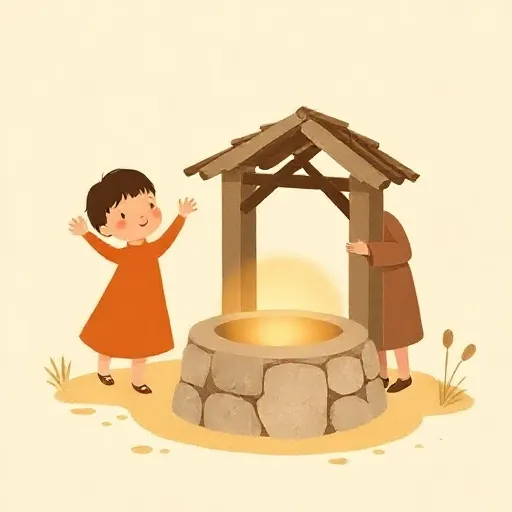
Dai built his moral psychology on two parts of a person. The blood-and-qi (xueqi) produces basic wants (yu) — hunger, thirst, fearing death — and feelings (qing) like joy, anger, and comfort. These are much the same in everyone. The understanding heart-mind (xinzhi) is made of qi too, but it gives us awareness and the ability to judge right and wrong. Moral attitudes such as compassion kick in when the heart-mind recognizes that other people have the same wants and feelings as we do.
Dai uses Mencius’s famous example: “If people were to suddenly see a child about to fall into a well, they would all have a heart-mind of alarm and compassion.” Why? Because, Dai explains, “we ourselves understand [what it is] to cherish life and fear death, and so we are alarmed at the danger to the child and compassionate about the child’s [risk of] death.” Without our own wants, we could never feel genuine concern for anyone else. So moral norms are not imposed from outside; they grow out of our shared embodied life. The heart-mind is naturally pleased by what is right. Yet we can still go wrong — through selfishness (indulging wants) or blinkering (failing to grasp the correct pattern). That’s why learning and reverence are needed to keep the heart-mind clear.
The Most Radical Test: Measure Others’ Feelings with Your Own

How do we actually figure out the right thing to do? Dai’s answer is sympathetic consideration (shu). He gives a concrete procedure: “Any time you undertake something that affects others, reflect and calmly consider: ‘If others did this to me, could I accept it?’” This isn’t just the golden rule. It’s an attempt to use your own feelings as a measuring instrument. Because wants and feelings are similar across all people, your comfort or misery is a reliable gauge of what others would feel. If you find you truly couldn’t bear a certain treatment, then that treatment likely violates the li that helps everyone flourish.
But Dai adds a further condition: a correct norm must be something all minds could affirm, across countless generations. He compares it to a compass. Just as anyone can check whether a figure is a true circle with a compass, anyone should be able to see that a genuine moral pattern actually fulfills human wants and feelings. This test guards against selfish bias. When we follow the right pattern, the heart-mind’s qi becomes strong and peaceful; when we don’t, we feel a heavy regret. In this way, what is self-so for us — our natural inclination — converges with what is imperative. Doing the right thing completes our own nature.
Flourishing Together: Why This Philosophy Still Matters Today

Dai Zhen died in 1777, never having passed the highest civil service exam. Yet his ideas continue to challenge us. He fought the notion that morality is about squashing desires or obeying cold, abstract rules. Instead, he placed the satisfaction of ordinary human wants and feelings at the very center of ethics. For him, benevolence (ren) means extending your own life-fulfillment outward so that everyone can flourish together.
Think of a moment in a lunch line when someone gets less than their fair share. That little twinge you feel is not weakness — it’s your heart-mind pointing to a pattern of fairness. When we argue online or among friends about what’s just, we’re often doing a rough version of Dai’s sympathetic measuring, even if we don’t name it. His vision sets a very high bar: can we find rules that every person, in every age, would say are right? Even aiming at that goal pushes us to listen to the powerless and to check our own blind spots. Dai didn’t promise an easy answer. He promised that if we start from our shared hunger and joy, we can slowly make the world a place where everyone’s river runs clear.
Think about it
- Think of a time you felt it was unfair when someone took more than their share. Did you use your own feelings to judge that? Could someone else’s feelings lead them to a different conclusion?
- Dai believed that understanding words and facts is necessary to know the right way to live. Can you think of a situation where book knowledge isn’t enough, and you need to rely on your feelings?
- If everyone’s basic wants and feelings are similar, does that mean all moral rules are the same for everyone? Or could different societies have different “li” that still help them flourish?