Can a Bamboo Leaf Teach You to Be a Better Person?
The Five-Year-Old Who Stared at the Sky
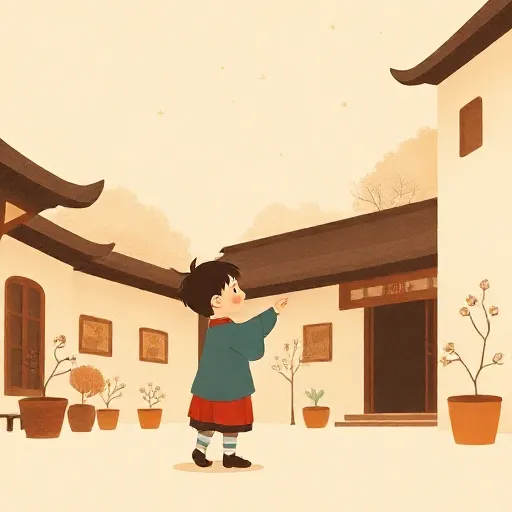
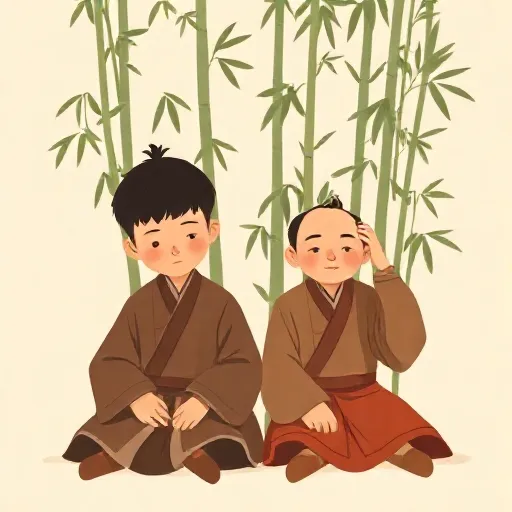
In 1135, bright-eyed Zhu Xi (1130–1200) looked up and asked what lay beyond heaven. His father, a scholar, knew he would not live long and arranged for several teachers to guide his son. Young Zhu studied Confucian classics, Daoism, and even Chan (Zen) Buddhism. He passed the toughest civil‑service exam at just nineteen by cleverly using Chan ideas. Yet something felt hollow. He kept searching.
At thirty, he finally visited the Confucian master Li Tong (1093–1163), his father’s old recommendation. Li convinced him that the Confucian path offered the richest way to cultivate a good heart and mend a fractured society. Zhu Xi never looked back. He taught hundreds of students, wrote commentaries on the ancient books, and constructed a bold philosophical system. But he never stopped investigating—not only texts, but the world itself. That childhood question about heaven stayed with him, quietly pushing him to look deeper.
The Secret Pattern Inside Everything
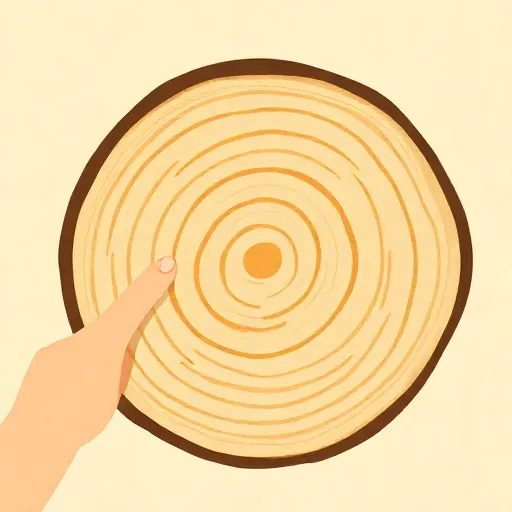
Zhu Xi believed the universe is made of qi (chee), a cosmic vapor that condenses into every rock, leaf, and person. But what gives things their distinct shapes and guides their interactions? That is li (lee)—not an abstract rule, but a living pattern. Think of the grain inside wood, the veins that run through a leaf, or the way a river carves its path around stones. Li are the inner structures that make something what it is and shape how it behaves.
Even the human mind has li. Patterns deep inside us incline us to feel sympathy, respond to others, and sense right and wrong. Zhu said we are born with a good nature (xing) patterned by li, but our unique blend of qi and life’s rough edges can cloud it. So we need a method to clarify that pattern—to see clearly and act fittingly. That is where his practical advice begins.
Sharpening Your Moral Compass by Observing the World
Zhu Xi faced a puzzle. His teacher Li Tong said the best path was quiet sitting—stilling the mind to purify one’s nature. A friend, Zhang Shi (1133–1180), argued for constant active engagement. Both seemed too one‑sided. Zhu found a way out in the writings of Zhou Dunyi (1017–1073), who insisted that in the human spirit stillness and activity interpenetrate—you can be still yet alert, active yet composed.
Inspired, Zhu proposed a two‑part training. First, nurture jing (ging)—a concentrated, reverential mindset. Think of it as calm, respectful attention that steadies you like a balanced spinning top. Second, practice gewu (guh‑woo), investigating things to grasp their li. This is not just reading books. It means watching how people actually interact, how tensions rise and fall, how a cruel word sends ripples through a friendship. Slowly, you learn to read the fine grain of situations.
Zhu argued that this patient observation sharpens your yi (ee)—a refined sense of what is appropriate in each unique moment. He rejected the trend in his day to rely purely on intuition. Li Tong and rival thinker Lu Jiuyuan (1139–1193) taught that once your heart is clear, you immediately know what to do. Zhu shot back: complex human affairs demand more than gut feelings. A skilled cook, like the legendary Butcher Ding, does not hack blindly. After years of practice, his blade finds the spaces between bones without effort. Moral skill works the same way: you learn where the “joints” of a situation are so you can respond perfectly.
When Rules Aren’t Enough: The Art of Weighing Things Up

Zhu Xi knew life is messy. Standard rituals and rules of propriety work well in ordinary families, but sometimes they fail. What if your ruler is cruel? What if you see someone drowning and propriety says you should never grasp a stranger’s hand? The ancient sage Mencius (372–289 BCE) already gave a famous answer: save the person—humaneness overrides the rule. Zhu used the term quan (chwen) to name this careful weighing up, or discretion.
He identified several hard cases where bending a rule is justified: emergencies that demand quick, rule-breaking rescue; extraordinary evil that must be stopped; or compassionate exceptions like allowing a penniless widow to remarry. But he also gave a strong warning. Only a person who has sincerely cultivated jing and practiced gewu for years—someone whose heart is perceptive, pure, and steady—can safely use discretion. Without that deep moral posture, you risk twisting rules just to satisfy selfish desires. Zhu never handed out a calculator. He insisted that you must weigh each messy situation on its own terms, using a heart and mind sharpened by long practice. For him, ethics was never a checklist; it was an art.
The Cosmic Pulse of Caring
Zhu Xi didn’t stop at human relationships. In his essay “A Treatise on Humanity,” he tied the virtue of ren (jen)—humaneness, deep caring—to the very creativity of the cosmos. Just as spring makes the land burst with fresh shoots, the universe has a deep impulse to produce and nourish. In people, that impulse becomes the disposition to care for others, to love, and to act with compassion. Zhu even said that if you truly practice love and sustain it, you tap into the root of all goodness.
He urged people to be loving toward all things, not just a narrow circle. A fully cultivated person, he believed, becomes a partner with heaven and earth, helping life flourish. This grand vision never floated away from daily life, though. Zhu still brought it all back home: be respectful, diligent, and mindful in every small exchange. The cosmic pattern and the pattern on your kitchen table are one and the same.
Why This Still Matters—to You

Today, we often hear that we should “listen to our heart” or “just follow the rules.” Zhu Xi offers a third way: become a careful observer of life’s patterns. Modern brain science backs him up. Neuroscientist Daniel Levitin explains that wisdom grows from building up experiences, detecting patterns, and drawing analogies—exactly the kind of deep looking Zhu Xi championed.
Think about a time you faced a knotty choice. Maybe a friend shared a secret that could hurt someone, and you weren’t sure whether to stay silent or speak up. Your gut might scream one thing, a rule might say another. Zhu Xi would nudge you to pause and look closely: who is affected, what is likely to unfold, what patterns from similar situations can guide you? Instead of grabbing for an easy answer, you search for the most fitting response. That does not mean anything goes—you still need a steady foundation of kindness and respect. It means that being good isn’t about memorizing answers; it’s about learning to see clearly. The patterns are right there in a bamboo leaf, a family quarrel, a moment of hesitation. The more you look, the wiser you become. Zhu Xi spent his life showing how. The question he leaves with you is simple and urgent: can you learn to see the li in your own world?
Think about it
- If you had to decide whether to break a promise in order to help someone in serious danger, would you feel comfortable making that call alone? Why or why not?
- Think of a time you had to choose between what felt right and what the rules said. Did you notice any patterns in the situation that helped you decide?
- Zhu Xi believed that watching nature can teach you how to act well. Can you think of something you’ve learned about getting along with others by paying attention to plants, animals, or the weather?