Why a Renaissance Philosopher Said Medicine Isn't Science
The Scholar Who Fled the Plague and Rewrote Logic
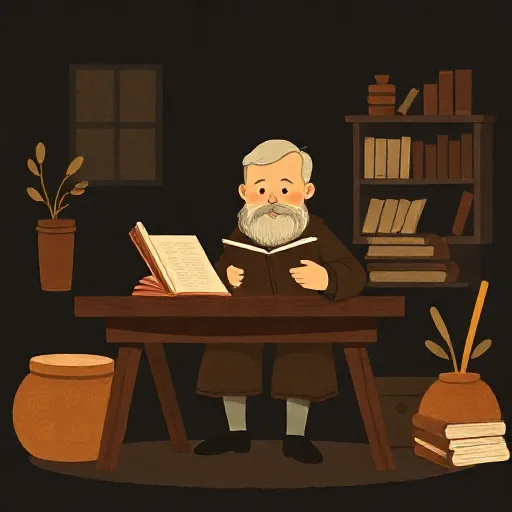
In the autumn of 1576, a deadly sickness swept through the Veneto region of northern Italy. Giacomo Zabarella (1533–1589), a professor at the University of Padua, packed up his family and escaped to the countryside. With the city in chaos, he finally had time to write. That year he began a collection of works on logic that would later spread his name across Europe. Zabarella was not interested in fanciful theories. He wanted to build a complete, airtight system of knowledge based on the ancient Greek philosopher Aristotle. And he wasn’t afraid to draw hard lines between what counted as real science and what didn’t.
Padua in the late 1500s was a place where doctors, astronomers, and philosophers argued fiercely about how to know anything. Zabarella, who held chairs in logic and natural philosophy, entered these fights with a cool, systematic mind. He insisted that before you can understand the world you have to sort your tools: first decide what kind of thinking you’re doing, and only then pick the right method. His big ideas about science, art, and logic turned into a powerful framework that students studied for decades—and they still raise questions about what deserves the label “science” today.
Two Worlds of Thought: Eternal Truths vs. Things We Make
Zabarella started with a simple-sounding division. He said there are really only two kinds of knowledge, and they come from two very different worlds. The first world is the eternal, unchanging realm of nature. The second is the messy, changeable world of human affairs and making things.
When you study the first world, you’re doing science in the proper sense. A true science, for Zabarella, is a contemplative discipline: you just want to understand something that has always been true and cannot be otherwise. The stars, the laws of motion, the structure of living things—these are objects of science. You look at them purely for the sake of knowing. The second world gives us art. An art is a productive discipline: you aim to make something, fix something, or achieve a practical goal. Cooking, building a house, and healing a sick person all belong to the arts. The knowledge they use doesn’t have to be perfect; it only has to work well enough to get the job done.
This division also gave Zabarella a hierarchy. He thought the contemplative life was the highest aim a person could have. The sciences—natural philosophy, mathematics, and metaphysics (the study of being as being)—were worth pursuing for their own sake. The arts, no matter how noble, were servants. They might help make life comfortable or even remove obstacles to deeper thought, but they were never the ultimate goal.
Logic: A Toolbox, Not a Master Science
So if sciences and arts are different kinds of knowledge, where does logic fit? Nowhere, according to Zabarella—and that was his point. He argued that logic is not a science at all, and not an art either. It is an instrument, a tool. The Greek word organon, which means “tool,” had been used for centuries to describe Aristotle’s logical works, and Zabarella embraced that meaning fully.
His reasoning was straightforward. A science has its own subject-matter, like motion or the soul. Logic doesn’t. Instead, it deals with second notions, or concepts about concepts—ways of arranging our thoughts so that we can tell the difference between solid reasoning and nonsense. Grammar helps you speak correctly; logic helps you think correctly. It serves every other discipline without being one of them.
Zabarella divided logic into universal and particular parts. Universal logic—covering basic ideas like categories, statements, and simple arguments—works for any topic. Particular logic deals with specific types of reasoning: demonstrative logic for true sciences, dialectical logic for probable arguments, and even the tricky games of sophistical logic. He even placed rhetoric and poetry under logic’s umbrella, because they, too, involve structured ways of presenting ideas. For Zabarella, the whole point was that logic gives you a mental workshop. But it never does the building itself.
The Detective’s Secret: A Two-Step (Actually Three-Step) Method
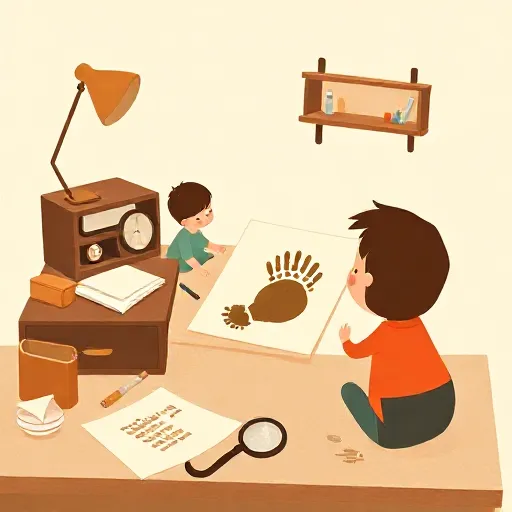
Zabarella didn’t just want to sort knowledge into piles. He wanted to explain how you actually discover new truths, especially in natural philosophy—the study of the physical world. That’s where his famous regressus method comes in. To understand it, think of a detective investigating a theft.
The detective first spots an effect: a muddy bootprint by the window. She uses resolution, reasoning backward from effect to possible cause. She infers that a particular suspect, who owns boots with a matching tread, might have been there. This is demonstration of the fact—you know that the suspect could be the cause, but your knowledge is still confused. You haven’t proved the connection strongly. Now comes Zabarella’s secret step. Before finishing, the detective must perform a mental examination—a quiet, careful act of comparing all the parts of the suspect’s story, checking whether this cause truly explains the effect and nothing else. Only after this step can she use composition, reasoning forward from the cause to the effect with full certainty. She can now say, “Because the suspect’s boot made this exact print, we can be sure he was here.” That final move is demonstration of the reasoned fact—you know why the effect had to happen.
Zabarella believed this three-move dance was the only proper method for natural philosophy. First you work from observation to a possible cause. Then you use a mental act to turn that hazy guess into clear, distinct knowledge of the cause. Finally, you work from that clarified cause back to the effect. This avoided the trap of circular reasoning—just saying “A causes B because B is evidence of A.” For Zabarella, the middle step was a uniquely human power, the mind holding a confused idea up to its own light until the idea became transparent.
Why Zabarella Thought Doctors Don’t Do Science
With his sharp division between sciences and arts firmly in place, Zabarella turned to one of the hottest debates in Padua: the status of medicine. Many of his colleagues taught both natural philosophy and medicine, and plenty of them wanted to call medicine a science. Zabarella refused.
In his mind, the goal of medicine is not to know for knowing’s sake. It is to produce health, or to restore it when it’s lost. That makes medicine a productive art, full stop. No matter how clever or precise a doctor might be, the whole discipline aims at an end product outside itself. If you study the human body purely because you want to understand how it works, that’s natural philosophy, not medicine. And while physicians might borrow knowledge from anatomy and physiology, the actual art of healing uses a different method.
Zabarella pointed out that the sciences use the compositive order, teaching from general principles down to specific facts. The art of medicine as a whole follows a resolutive order: you start with the goal—restoring health—and break it down into steps. He summed up the boundary with a phrase that became famous: where the philosopher ends, there the physician begins. The philosopher explains what health and sickness really are, in universal terms. The doctor descends from those truths to treat a particular patient with a particular fever.
For all his strictness, Zabarella didn’t look down on physicians. He called medicine the noblest of all arts. But he thought it did medicine a disservice to pretend it was a science. Each kind of knowledge has its own dignity, and mixing them up only confuses the mind.
Did He Predict Galileo? Why His Ideas Still Buzz Today
For much of the twentieth century, some historians thought Zabarella had cracked open the door to modern experimental science. They pointed to his regressus method and claimed that the great Galileo Galilei, who later taught at Padua, might have borrowed the idea. The story went that a whole “school of Padua” prepared the ground for the scientific revolution.
More recent scholars are much less sure. Zabarella never said that you should test a theory with an experiment and toss it out if it fails. He was trying to perfect Aristotle’s philosophy of nature, not tear it down. He thought Aristotle’s system was structurally complete—like Euclid’s geometry—and that a philosopher’s job was to fill in missing pieces and correct small mistakes. That is a very different vision from the picture of a scientist making radical new discoveries. And yet, his influence was enormous. His logical works became textbooks in Protestant universities across Germany and the Low Countries. His divisions between subject-matter and method echoed into later philosophy, possibly even reaching Leibniz and Kant.
So why does this Renaissance thinker matter for a reader today? Because every time someone calls economics a science, or argues about whether library work is a science, they are stepping onto ground Zabarella mapped out. He forces us to ask: do we value a field because it aims at knowledge for its own sake, or because it produces something useful? And is one kind of thinking really better than the other? Next time you hear someone say “the science of medicine,” you can smile and remember the stubborn professor from Padua who would have crossed out the word “science” with his quill.
Think about it
- If a doctor uses scientific studies to cure you, does that make medicine a science? Or is it still an art because the goal is health, not knowledge?
- Zabarella thought logic was just a tool. Can you imagine doing philosophy without using any logic? What would that look like?
- Today we call many subjects “sciences”—political science, library science. Do they meet Zabarella’s strict rule about studying eternal truths? Why might we still call them sciences?