Why John Locke Said Science Can Only Go So Far
The Medical Student Who Wanted Real Answers
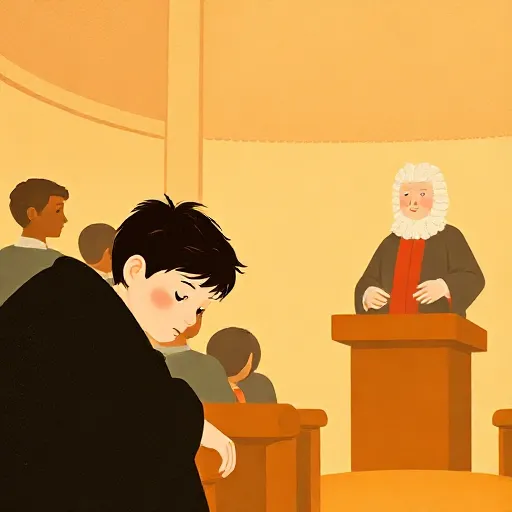
In the 1650s, a young John Locke (1632–1704) arrived at Oxford to study. He soon grew bored. The professors taught medicine from ancient books, and Locke thought their theories were old-fashioned and often wrong. But rather than giving up, he plunged into the medical debates of his time, reading everything he could about how the body works and what makes us sick.
At that time, doctors were split into several camps. The oldest tradition, Galenic medicine, was named after the ancient Roman physician Galen. It taught that health depended on a balance of four bodily fluids, or humours: blood, phlegm, yellow bile, and black bile. If you had a fever, Galenists would try to cool you down with a “contrary” treatment. It all sounded tidy, but Locke was unconvinced.
A rival group, the chymists (from an old spelling of “chemists”), followed the ideas of Paracelsus and Jan Baptista van Helmont. They saw the body as a kind of chemical workshop. Disease happened when invisible ferments or seminal principles — like tiny seeds — took over an organ. Helmont even believed each organ had a little spiritual manager called an Archeus that kept things running. Chymists used medicines made from minerals and acids, not just herbs.
A third approach was gaining ground: the mechanical philosophy. Thinkers like Robert Boyle (1627–1691) argued that the natural world was just matter in motion. There were no mysterious humours or Archei — only tiny particles, or corpuscles, bumping into each other like billiard balls.
Locke read all three traditions eagerly. For a while, he was especially drawn to chymical ideas and even took a laboratory course from a chemist named Peter Stahl, where he annoyed his classmates by talking too much. But his real test would come when he tried to solve a concrete medical puzzle: what happens when we breathe?
What Makes Blood Turn Red?
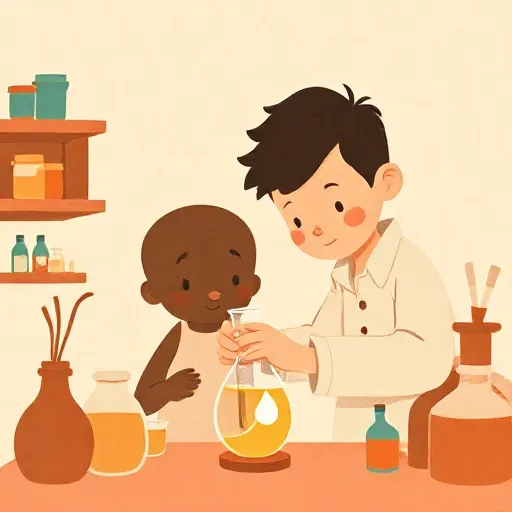
By the mid-1660s, Locke was working with the physician Richard Lower on a problem that had confused doctors for centuries: why is the blood in your arteries bright red, while the blood in your veins is dark purplish-red? Galenists thought the veins and arteries were completely separate systems, but the English doctor William Harvey had recently proved that blood circulates through the whole body. So what changed its color?
Locke and Lower performed experiments on animals, and Locke filled his notebooks with observations. He became convinced that the air we breathe contains a “nitrous salt” that reacts with the blood in the lungs, volatilizing it — changing it into a thin, fiery spirit that gives the body life and heat. This was a chymical idea, borrowed from Helmont. Locke even wrote a Latin essay, Respirationis Usus, where he argued that breathing’s main job was to kindle this vital fire in the heart by feeding it a nitrous salt from the air, not to cool the heart as the Galenists claimed.
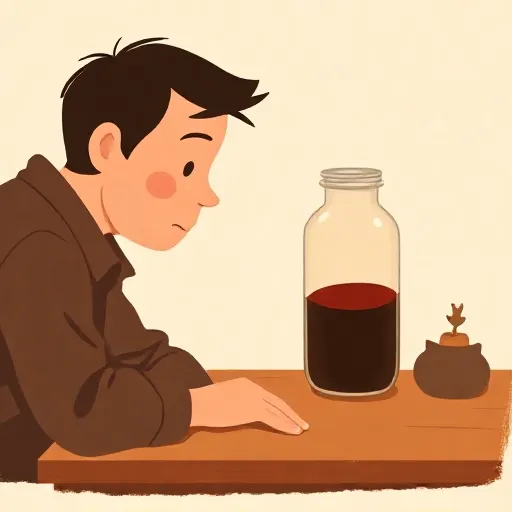
Then, in 1667, a short report in a scientific journal caught Locke’s eye. An Italian experimenter had taken a dish of blood from a vein. The blood at the top, exposed to air, turned bright red — just like arterial blood. When that red layer was removed, the dark blood beneath turned red too. The air itself seemed to be doing the color-changing, without any help from the heart.
Locke immediately understood the significance: the transformation happened directly in the lungs, not in some imagined ferment inside the heart. He had been wrong about the exact location, but his instinct — that air transforms blood — was right. This episode taught him two things: first, that a simple, observable experiment could overturn centuries of theory; and second, that even his own clever chymical explanation could be proven incomplete. It was a humbling lesson.
The Doctor Who Stopped Guessing
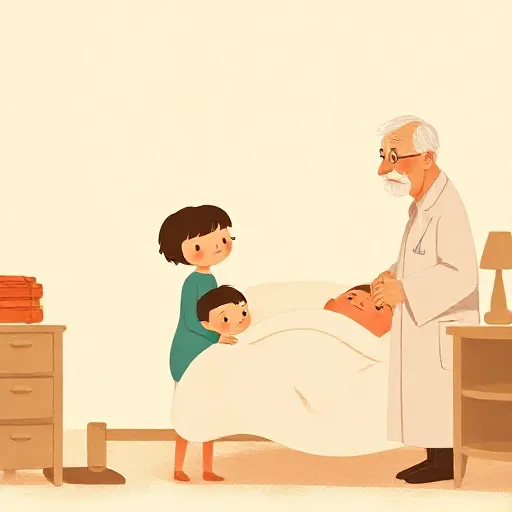
Soon after, Locke left Oxford and moved to London. There he met a physician named Thomas Sydenham (1624–1689) who would change his thinking completely. Sydenham was a no-nonsense doctor. He believed that trying to figure out the hidden, unobservable causes of disease — whether humours, ferments, or corpuscles — was a waste of time. What mattered was finding out what treatment actually worked.
Sydenham called his method a natural history of disease. You didn’t need to know why a fever happened; you just had to observe the symptoms, watch how the illness progressed, and try different cures until you found one that repeatedly succeeded. He once wrote that all the fine theories of the professors were “as useful to the physician in driving away diseases as music is to masons in laying bricks.”
Locke was captivated. He began walking with Sydenham on his rounds, visiting patients, and recording their case histories. Together, they worked on a huge manuscript that documented which treatments worked for smallpox, fevers, and the plague. Locke even wrote a poem for one of Sydenham’s books, praising the practical approach.
Within a few years, Locke’s earlier fascination with chymical theory faded. He wrote two medical essays, “Anatomia” and “De Arte Medica,” where he argued that studying anatomy or speculating about invisible particles was pointless. He wrote that all anatomy had done was to offer new conjectures and fresh matter for endless disputations. He even lumped his own earlier ideas about respiration into the same bin of useless speculation. The real causes, he now believed, belonged to a realm too small and too subtle for our senses ever to reach. Only God could truly understand His own creation. For humans, experience was the only reliable guide.
From the Sickroom to the Big Questions
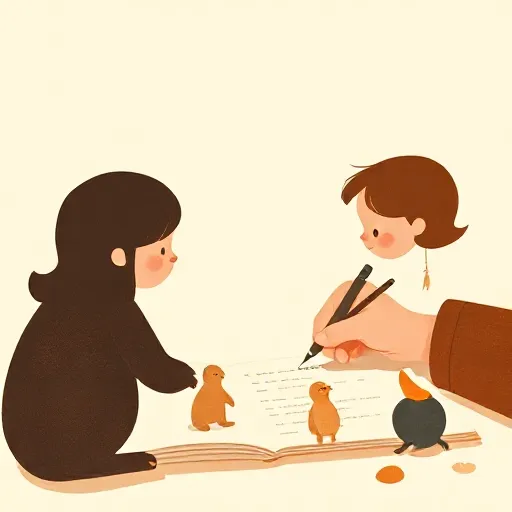
In 1671, just a few months after finishing his collaborative work with Sydenham, Locke began writing a book that would become one of the most famous works of philosophy ever written: the Essay concerning Human Understanding. If you read its early drafts, you can almost hear Sydenham’s voice.
Locke starts with a bold claim: all knowledge comes from the senses. But immediately he adds a limit — our senses can only report on the surface of things. We can see that rubbing two sticks together produces heat, but we cannot see the “modus operandi,” the invisible way the heat is produced. We are, he says, in the dark about the ultimate causes of nature’s powers.
This sounds pessimistic, but Locke was not saying we should give up on science. He was saying we should be honest about what kind of knowledge we can achieve. Just as Sydenham built a natural history of disease, Locke proposed a natural history of the human mind — cataloguing what it can know, and where it must humbly stop.
Over the next two decades, Locke refined his view. In a later draft he added a crucial idea: even though we can’t see the microscopic world, we can still conceive of how it might work using the only idea of causation we have — the motion and impact of bodies. This was the mechanical hypothesis, and Locke came to believe it was the only “intelligible” way to talk about the unobservable. But he never stopped insisting that we could never know whether it was the real way the world worked. We might be right, but we could also be wrong, because the true workings of God’s creation exceed our small capacities.
So Locke ended up recommending a careful, experimental science — one that relies on observation and analogy, not on grand theories. He warned against the human habit of forming hypotheses (clever guesses about hidden causes) and then treating them as facts. While hypotheses can sometimes help us make new discoveries, they should always be held lightly. What we really need, he wrote in the Essay, is “Experience, Observation, and natural History.”
Why Humble Science Still Matters

You might think Locke’s view was just a product of his time, but his core insight is still alive today. Every time a doctor prescribes a medicine and admits, “We’re not entirely sure how it works, but it does,” you’re hearing an echo of Sydenham and Locke. Many of our best treatments were discovered by trial and error, long before anyone understood the underlying biology.
Even in the age of powerful microscopes and DNA sequencing, scientists run up against the same kind of limit. They can map the neural signals when you feel happy, but they can’t explain why those physical events feel like something. They can describe the brain in ever finer detail, but the ultimate “why” of consciousness slips away.
Locke’s journey from medical student to great philosopher teaches us a valuable attitude: it’s okay not to know the deepest secrets of the universe. What matters is that we keep looking, keep testing, and stay honest about what we see and what we don’t. He believed that humility, combined with careful observation, was the surest path to useful knowledge — for doctors, for scientists, and for anyone who wonders.
Think about it
- If a doctor tells you, “We don’t know why this treatment works, but it does,” would you trust it? What would make you feel confident — or uneasy — about accepting it?
- Locke said we can only guess at invisible causes using the idea of motion. Can you think of something in your daily life that seems to work by an invisible cause, but you’re not sure how? (Like how a magnet pulls paperclips.)
- Do you think it’s better to have a scientific theory that might be wrong but makes predictions, or to admit you don’t know and just rely on what you can directly observe? Why?