If You Take Away Everything Accidental, Are We All the Same?
The Student Who Tried to Erase His Teacher
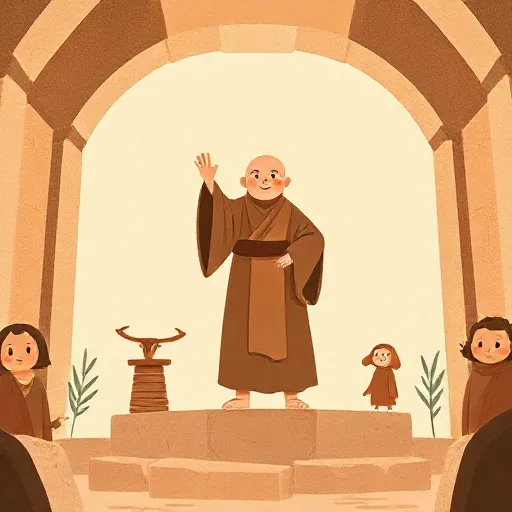
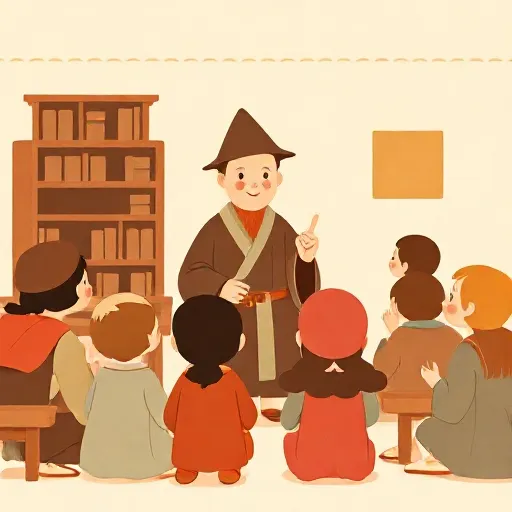
Picture Paris, around the year 1100. Damp stone classrooms ring with arguments in Latin. A young, brilliant philosopher named Peter Abelard (1079–1142) has just enrolled under a famous teacher: William of Champeaux (c.1070–1122). Abelard will later write that he humiliated William in debate, forced him to abandon his whole theory of reality, and drove him from the schools in shame. For centuries, readers believed him. After all, Abelard’s version was the one that got copied and recopied.
But today we have fragments of William’s own works, and a different picture emerges. Yes, Abelard won some battles. Yes, William left Paris to become a bishop, a diplomat, and a confidant to the pope. But William didn’t crawl away. He developed a second, more sophisticated theory, and his ideas pushed Abelard to sharpen his own. In fact, without William, we might never have had the razor-sharp logic Abelard became famous for. The story of William of Champeaux is a reminder that history is often written by the loudest, wittiest voices — not always the ones with the deepest insights. And at the heart of their feud was a question that still bothers philosophers: what makes you the same kind of thing as someone else?
The First Big Idea: One Giant Essence Shaped Into People
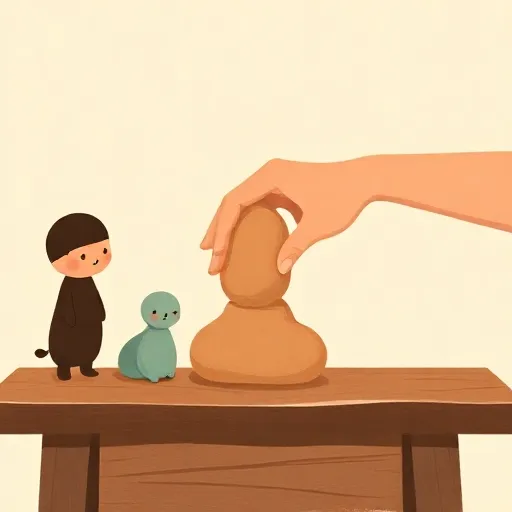
William’s first attempt to answer that question is called material essence realism. To understand it, you need one key term: a universal. A universal is whatever it is that all things of a certain kind have in common. When you call a pine tree, an oak, and a daisy “plants,” what is it they share? Is there some real stuff — some “plant-ness” — present in each one?
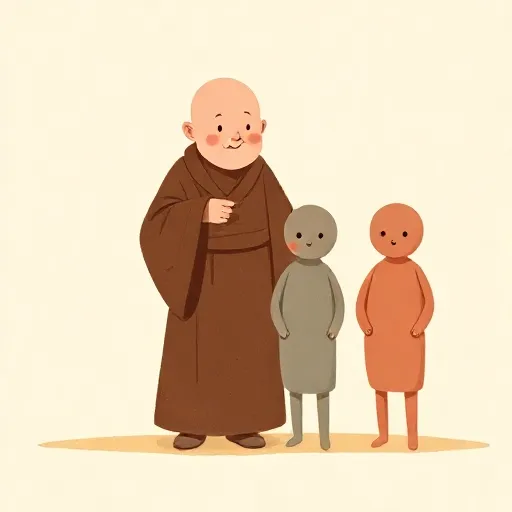
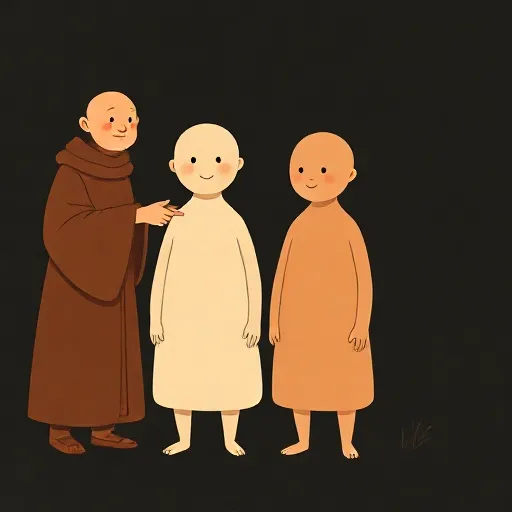
William said yes, and he gave a concrete picture. Imagine a giant, invisible lump of essence — the basic stuff that makes something what it is. For every general category (like “substance,” “quantity,” “quality” — Aristotle’s ten categories), there is one such lump. The essence of all plants is literally one thing. So where do all those different plants come from? The universal essence gets cut up and shaped, like a lump of clay being molded into a cup, a plate, and a figurine. The molders are forms: the differentiae that create species (like “rational” forming the genus “animal” into “human”) and finally accidental forms that make you an individual — your height, your hair color, the fact that you’re sitting right now. So for William, you and your best friend are not two completely separate substances. You are both one universal substance (the essence of humanity), just with different shapes and accidents. In his own words, “a species is nothing other than a formed genus, an individual nothing other than a formed species.”
This sounds wild, but it has an interesting payoff. If you could strip away all those accidental shapes, what would be left? The pure, universal thing itself — the real “human” that you share with everyone else. William insisted this wasn’t just a mental trick. The universal thing really exists, even though we never encounter it without its accidents.
The Unraveling: Why One Shared Essence Doesn’t Work
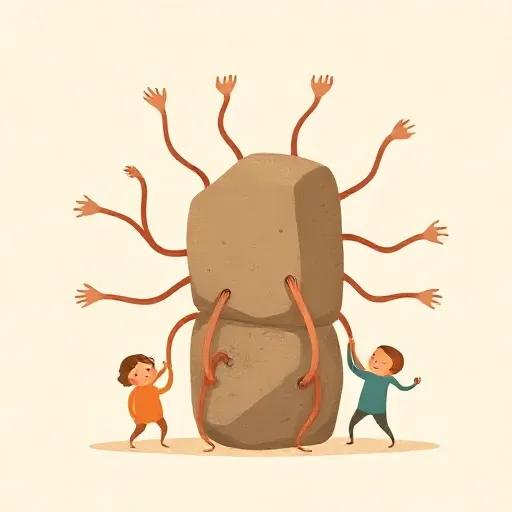
Abelard tore into this theory with a simple kind of argument you can try at home. If all human beings share literally one material essence, then whatever happens to that essence should happen to every person at once. When Socrates stands up, the universal human essence is standing up — so why isn’t Plato standing up too? If William stubs his toe, the essence is in pain — so Abelard should feel the sting. The absurdity is the point: you and I clearly have separate pains, separate thoughts, separate locations. So we cannot literally be the same stuff.
William saw the force of this. He did not switch to Abelard’s view — Abelard thought universals were just words or mental concepts (nominalism). Instead, William abandoned the idea of a shared essence altogether and tried again.
The Second Big Idea: Same but Different (Without Sharing Anything)
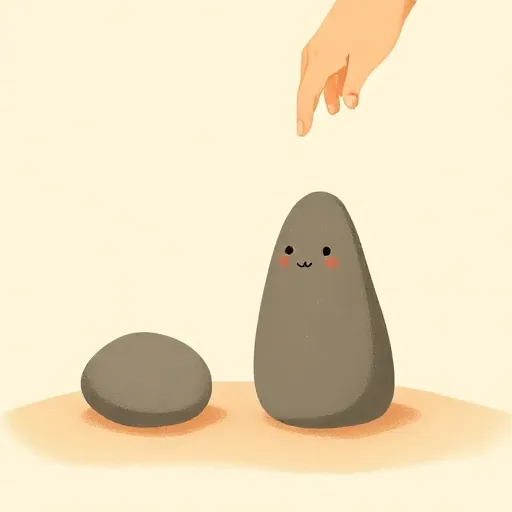
This second theory is called indifference realism. Here is its core: every individual is a completely distinct, discrete substance. Plato and Socrates are not sharing any material at all. So why do we say they are both “men”? Because, William answered, the word “same” can mean two different things.
When we say Peter and Simon are the same person (like Clark Kent and Superman, or Cicero and Tully), we mean strong identity: one and the very same being. But when we say Plato and Socrates are the same, we only mean they do not differ in being human. One is rational, so is the other. One is mortal, so is the other. But nothing literally one runs through both. They are, in William’s phrase, indifferent — they are so alike in what it is to be a man that, if you mentally erase all their accidental features, you cannot tell which one is which. Each one, considered without accidents, is itself a universal. So in a strange twist, every single individual is both universal and particular. With accidents, you’re a particular person; consider yourself stripped of them, and you’re the universal human.
Abelard still wasn’t happy, but William had moved the debate somewhere new. No longer was the question “what one thing is in many things?” It became “in what sense are many separate things the same?”
Words That Grab Reality: The Chimaera Test
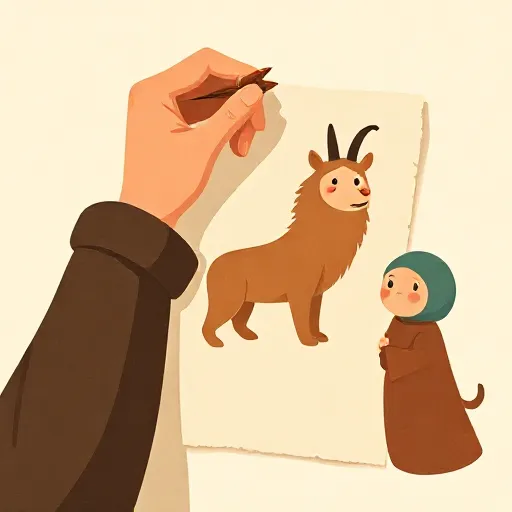
William’s realist instincts showed up everywhere, especially in his theory of signification — how words mean things. He argued that a spoken sound is a real word only if it is imposed to name something that actually exists. So the word “human” is meaningful because there is a real essence (or, in the later view, real individuals) it points to. But a word like “chimaera” — the mythical lion-goat hybrid — is not significant at all. It is like the nonsense syllable “blictrix.” It has no existing thing as its significatum (what it points to).
You can see the problem: we seem to understand sentences about non-existent things. William had a clever fix. When someone says “Chimaeras are imaginary,” the sentence is figurative. It really means, “Some mind has an imagination of a chimaera.” Similarly, “Homer is a poet” (Homer being long dead) means “Homer’s poetry still exists.” William also held that the words in a true definition — “rational mortal animal” — signify exactly the same thing as the word “man.” This made Abelard groan that William was doing such abuse to language, but it followed neatly from William’s commitment: words tag real furniture in the world, not just ideas in your head.
Why This Feud Still Matters When You Name Things
So why read about two medieval men arguing over the word “man”? Because every time you group things under a label — “dogs,” “games,” “friends,” “fruits” — you’re making a choice. Is there a real thing, a dog-ness, that all dogs possess? Or is “dog” just a convenient sound we learn to attach to a bunch of very different animals? If you think dog-ness is real, you’re a realist. If you think it’s just a word or a mental habit, you’re closer to Abelard’s nominalism.
This isn’t only about dogs. Biologists debate whether species are real natural kinds or human categories. Mathematicians ask whether numbers refer to real objects or are just useful fictions. Even in everyday life, you wonder: when you say “That’s not fair!,” is fairness a real thing you’re appealing to, or just a label for a feeling? William’s two stabs at the problem, and Abelard’s razor attacks, are some of the earliest rounds in a fight that still hasn’t ended. You get to join it every time you decide what belongs in which pile.
Think about it
- If you and your friend both count as “students,” does there have to be some real quality you share, or is the label just a convenient habit?
- Suppose you invent a new word for something that doesn’t exist yet — say, a fantastical creature in a story you write. Is that word meaningless until the creature exists, or does it have meaning the moment you think of it?
- Could two objects be exactly alike in every accidental detail (same size, color, weight, position) and yet still be two separate objects? What would make them two, not one?