
Can You Turn Your Own Mind Into a Science?
The Man Who Put Thinking on Trial
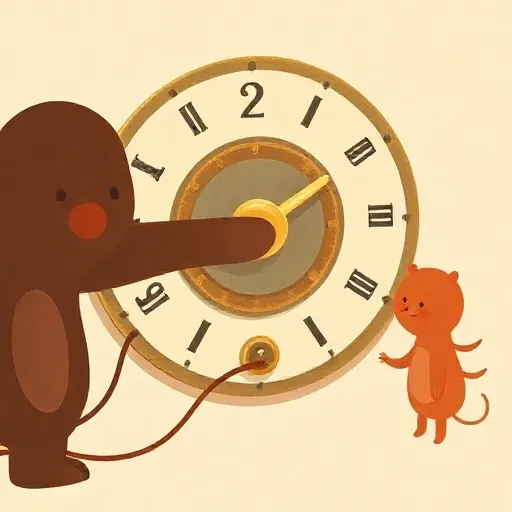
In 1879, in a small room at the University of Leipzig, something strange was happening. A young man sat with wires taped to his hand, staring at a spinning brass timer. An older professor with a bristly white beard watched closely, adjusting dials. The professor was Wilhelm Wundt (1832–1920), and he was about to open the world’s first laboratory dedicated to studying the human mind — not the brain as a lump of tissue, but the mind you experience from the inside. Wundt believed our private thoughts, feelings, and sensations could be turned into a real science, just like chemistry or physics. But many philosophers before him had said that was impossible.
The loudest voice against him came from Immanuel Kant (1724–1804), who had argued decades earlier that psychology could never be a proper science. Kant gave three main reasons. First, you can’t isolate a single thought the way you can isolate a chemical; thoughts always come tangled. Second, the only way to observe a thought is by looking inward, but that very looking changes the thought. If you are sad and then try to study your sadness, it’s no longer the same — now it’s your-studied‑sadness. Third, mental experiences don’t seem measurable with numbers. You can’t weigh a hope or measure the length of a memory with a ruler. So Kant concluded that a science of the mind was a pipe dream. For a long time it seemed he was right.
Wundt was determined to prove him wrong. He thought that if you set up experiments cleverly, you could peek at the mind without messing it up too much, and you could find mathematical patterns inside your head. So he built his little room of instruments, and the real adventure began.
How to Spy on Yourself Without Ruining the Evidence

Wundt developed a method called introspection, or self‑observation — but not the casual kind where you daydream about your feelings. He knew that simply sitting back and watching your own thoughts would twist them into something else. So he used a trick: make the subject experience something sudden and unexpected, so they couldn’t prepare. Then ask them to report what they just felt as quickly as possible. He also used machines to measure reaction times precisely. For example, a light flashes, the subject presses a button, and the timer shows how many milliseconds passed. That’s a number you can compare, graph, and talk about.
This setup produced a famous early success: Weber’s Law. The physiologist Ernst Heinrich Weber (1795–1878) had discovered a curious pattern while studying the sense of touch. If you hold a 1‑kilogram weight, you need to add about 50 grams before you can feel it’s heavier. But if you hold a 10‑kilogram weight, you need to add roughly 500 grams to notice the change. The ratio stays the same: about 1 to 20, or 5 %. The “just‑noticeable difference” is a constant proportion of the starting weight, not a fixed amount. That’s a mathematical law about human experience — something Kant thought impossible!
Wundt gave this an even deeper twist. He argued the law isn’t really about nerves or skin — it’s about how we compare things in consciousness. When you notice a difference, you aren’t just feeling raw sensations; your mind actively holds up two sensations and compares them. So Weber’s Law reveals a rule of mental activity, not just bodily reaction. The inner world could have scientific laws after all.
The Spotlight Inside Your Head

Wundt thought consciousness was like a stage with a spotlight. The broad field is what you perceive; the bright center is what you pay attention to. He called that focused attention apperception — a word for the moment something grabs the center of your awareness and you take it in. Apperception isn’t passive; it’s an act of will. Your mind chooses what to zoom in on, even when it feels as if things just pop up. When you hear your name in a noisy room, your mind actively pounces on that sound while the other chatter fades.
This view — voluntarism — says the core of your mind is willing, not just a stream of ideas bumping into each other. Simple association (linking ideas because they often appear together) happens below the surface, but apperception decides which associations reach the stage. You are not simply a puppet of past experiences; your active attention shapes what you think. That was a big departure from older psychologists who saw the mind as a passive container.
Wundt noticed something else: apperception not only builds new combinations, but also separates a whole into its parts. When you form a complicated sentence, the blurry outline of your whole thought is already in mind before you break it into words. The act of judging — separating and combining ideas — is how apperception clarifies what was already faintly given. Your mind is always sculpting the raw material of sensations into sharper thoughts.
One Brain, Two Stories
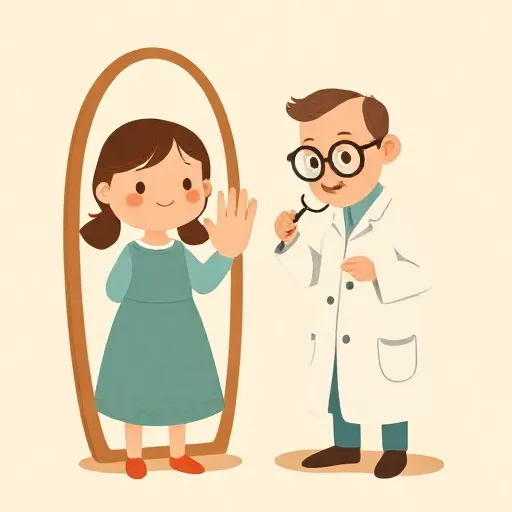
A scientist watching you from the outside sees neurons firing, muscles twitching, electrical signals moving. From the inside, you experience a flash of pain, a burst of joy, a decision to move. Wundt insisted these are not two separate things that cause each other, but two ways of describing the same event. He called this psychophysical parallelism, but he was careful to say it isn’t a spooky magic claim. Just as a chemist and a physicist can describe the same crystal using different concepts without contradiction, the psychologist and the physiologist describe the same living process from two complementary angles. There’s no need to reduce mind to brain or to imagine a ghost pushing neurons; the two explanations are irreducibly different, yet they describe one unified world.
This was his monistic perspectivism: reality is one, but we can view it through many lenses. No perspective is completely dispensable. The physical story and the mental story run parallel, each following its own logical chain, without one causing events in the other. That’s why you can study sensation both in terms of light waves hitting the eye and in terms of the color you see — two full accounts that belong to a single experience.
Why a Lab Can’t Explain a Lullaby

Wundt knew that testing reaction times and weight‑lifting thresholds couldn’t capture everything about a human mind. Your thoughts are shaped by the language you speak, the myths you grow up with, the customs of your community. You can’t place a culture inside a brass and glass apparatus. So he argued psychology needed a second branch: Völkerpsychologie, often translated as “folk psychology” — the study of the mental products of communities. This branch examines language, art, myth, and social customs to find the general patterns of how collective life shapes individual minds. It wasn’t just history; it was a science of the human spirit, working alongside lab psychology to complete the picture.
Wundt spent his final decades writing ten heavy volumes on this topic, exploring how rituals, stories, and language reveal deep structures of thought that no reaction‑time experiment could uncover. So the psychologist must be both a careful experimenter and a wide‑ranging humanist.
Today, you have your own private lab: your consciousness. You can watch your thoughts as they rise, notice how attention works, feel the difference between two weights. But Wundt would remind you that you also need the world outside — stories, language, people — to understand the whole you. The question he started in that little room in 1879 is still open: can you turn your own mind into a science? You get to help answer it, every time you wonder what’s going on inside your head.
Think about it
- If you try to notice your anger while you’re angry, does the anger change? What does that say about studying your own thoughts?
- If a brain scanner could show exactly which neurons fire when you decide to raise your hand, does that explain why you decided? Or is there still something left out?
- Imagine an alien who only sees human biology — could it ever guess that humans dream, tell jokes, or feel awe? What would it be missing?