Can You See Without Thinking? Kant’s Puzzle of the Mind
Two Powers of the Mind: Receiving and Doing

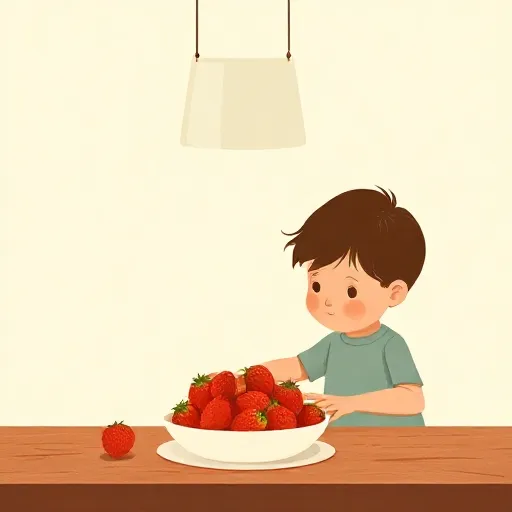
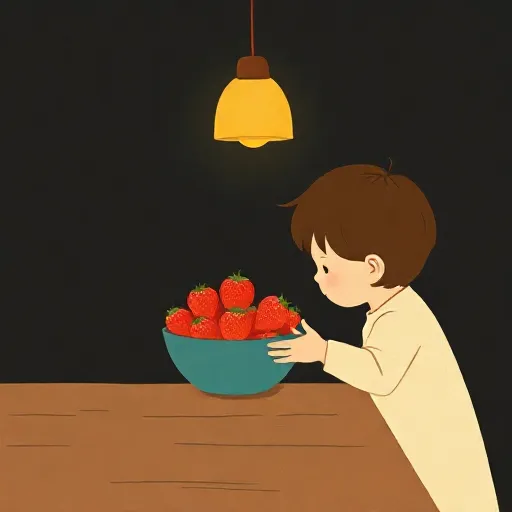
Imagine you have just opened your eyes after a nap. Before you can even say the word, a bowl of glossy red strawberries on the kitchen table grabs your attention. In the blink of an eye, your mind seems to take in the color, the shape, the distance—and a split second later you think, “strawberries!” But what really happens in that tiny gap? Are you seeing first and thinking second, or does a pinch of thinking sneak into every glance you cast?
The philosopher Immanuel Kant (1724–1804) spent much of his life trying to untangle this very riddle. He believed that the mind works through two completely different powers. The first he called receptivity—your mind’s ability to be affected by the world, like a camera sensor catching light. The second he called spontaneity—your mind’s power to start activities all on its own, without waiting for anything outside to push it. Receptivity is about taking in; spontaneity is about doing.
From these two basic powers Kant built his picture of human knowledge. He said we have a faculty of sensibility that handles receiving, and a faculty of understanding that handles the active work of connecting things. When sensibility does its job, it delivers intuitions—direct, immediate presentations of a particular object, like the red-here-now of that strawberry. When the understanding does its work, it produces concepts—general ideas that apply to many things, like “red,” “fruit,” or “round.” According to Kant, you need both. An intuition without a concept would be a raw blur; a concept without an intuition would be an empty thought with nothing to attach to. Real knowledge—what Kant called cognition—only happens when intuition and concept team up.
The Great Kantian Divide: Intuition vs. Concept
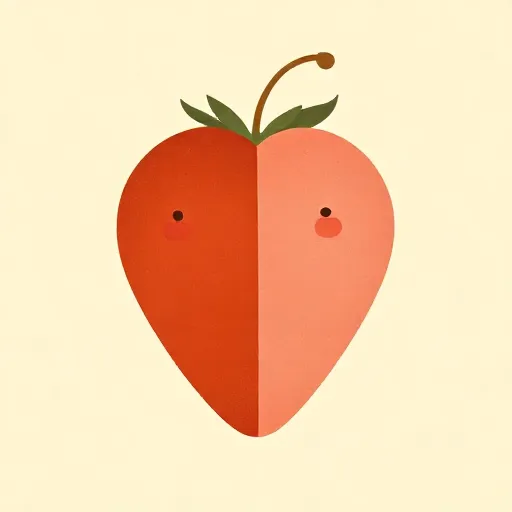
Kant drew a sharp line between the two ingredients of a thought. Intuitions, he said, are immediate and particular. They hook you up to a single here-and-now item—this strawberry, not fruit in general. Concepts, by contrast, are mediate and general. A concept works like a label that picks out what many different things have in common. When you see a red sweater, a red traffic light, and a red strawberry, the concept “red” lets you gather them under one heading.
But how separate are these powers, really? Kant himself gave a famous clue—and a famous puzzle. He wrote, “Thoughts without content are empty, intuitions without concepts are blind.” A pure concept with no sensory filling is like a recipe with no ingredients. A pure intuition with no concept, he seemed to say, is like a camera that snaps a picture but cannot tell what any of the shapes mean. The understanding cannot intuit; the senses cannot think. Only when they unify can real cognition arise. Yet Kant also insisted that intuition and concept are two fundamentally different kinds of representation. If they are so different, how do they ever manage to work together? And where exactly does one stop and the other begin?
That question has split Kant scholars into two camps ever since. One side thinks that even the most basic intuition already depends on a bit of conceptual activity—that you simply cannot have a perceptual experience without some concept-structures shaping it from the start. The other side argues that intuition can do its job just fine on its own, delivering a conscious relation to an object before any concepts join the party. The fight is not about whether we eventually use concepts. Everyone agrees we do. The fight is about whether the very first glimmer of perception could happen without them.
The “Blindness” Challenge: Do You Need Concepts to See?

The side that insists concepts reach all the way down into intuition often starts with that scary word: blindness. If intuitions without concepts are blind, they ask, how could such intuitions be about anything at all? They point to a passage where Kant says that the unity of consciousness—the “I think” that can accompany all your representations—is what first gives a representation “relation to an object.” Without that unifying act, a sensory glimmer would be, at most, a meaningless buzz. On this view, which philosophers call Intellectualism, the act of taking in the world already depends on the mind’s ability to synthesize, to put together, using at least the seeds of conceptual rules.
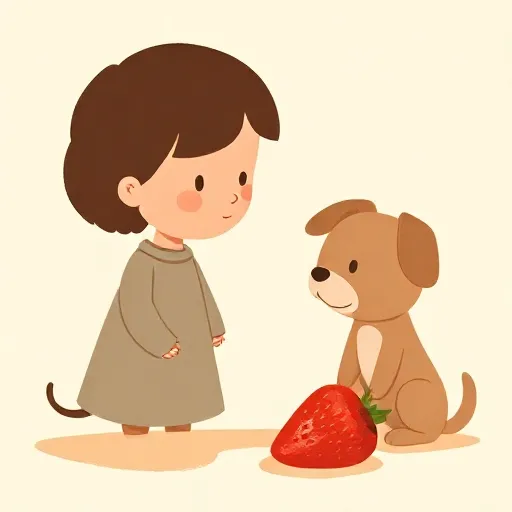
But the other camp, Sensibilism, thinks this stretches the blindness metaphor too far. “Blind” means unable to produce knowledge, not unable to produce any awareness at all. A baby who has not yet learned the word “red” surely still sees colors. A cat that chases a laser dot does not possess the concept “dot” or “light,” yet it very obviously follows something. Sensibilists turn to Kant’s own writings about non-human animals for support. Kant says clearly that animals lack an understanding and all conceptual thought, yet they still have conscious representations—what Kant sometimes calls intuitions—and they can discriminate between objects. If a dog can be visually aware of its owner without having the concept “owner,” then intuition does not need conceptual content to put a mind in touch with the world.
This animal evidence matters because it suggests Kant himself thought there is a kind of seeing that even a concept-free creature can do. Intellectualists can reply that human rational seeing is a different species of seeing altogether, a view some call the transformative approach: once you have reason and language, your very power of sensibility is transformed so that it no longer works the way an animal’s does. But many Sensibilists find that answer unsatisfying. If an animal’s intuition already relates it to objects, why would a human’s need an extra intellectual ingredient just to get off the ground?
Animals, Space, and the Battle over Synthesis
A second puzzle makes Intellectualism even trickier. The Sensibilist side points to the way Kant describes space itself. According to Kant, when you perceive space, you do not build it up by gluing together little pieces, like assembling a jigsaw from individual puzzle bits. Instead, the whole of space comes first, and the parts—this region, that distance—are only separated out later, by drawing boundaries within that already-given whole. Kant calls space an essentially single whole; its parts are limitations, not building blocks.
Now contrast that with how Kant describes synthesis, the mind’s act of combining. Synthesis always works piece-by-piece: you run through many little units and gather them into a unity. It is what Kant calls a discursive process—moving from part to part to build a whole. If the pure intuition of space is a whole-before-its-parts representation, then it cannot be the product of a piece-by-piece synthesis. That means the very structure of spatial awareness seems to resist being explained by conceptual or intellectual combination. It looks more like something sensibility hands us all at once.
That argument puts a serious bump in the road for Intellectualism. Some Intellectualists try to avoid the problem by saying that only the pure forms of space and time might be generated by a special kind of non-discursive intellectual act, but many scholars find that idea unsupported in Kant’s texts. Others restrict their claim: maybe it is only empirical intuitions—the perception of actual strawberries, not the background space itself—that depend on the understanding. But that retreat weakens one of the main reasons for being an Intellectualist in the first place: the hope of explaining Kant’s difficult proof that the categories, his basic concepts of the understanding, apply to every possible object of experience.
Why This Still Matters: Your Mind’s Invisible Glasses
So why should a debate about eighteenth-century German philosophy matter to you, sitting in a kitchen staring at a strawberry? Because the question at its heart is one of the most personal you can ask: Is there a raw, unfiltered world given to your senses before your mind starts interpreting?
Think of what happens when you learn a new word. Before you knew the word “mauve,” you probably passed right by things that color. Afterward, mauve pops up everywhere. That feels like a case where a concept changes what you notice—perhaps even what you can notice. Some psychologists and philosophers take this as evidence that concepts reach down into perception itself. Others reply that you are still seeing exactly the same light wavelengths; only your attention and memory are different.
The Kantian debate is the deep version of that disagreement. If Sensibilism is right, then at the bottom of your mental life there is a shared, concept-free layer of experience that connects you to the world in a way you share with animals and perhaps even with future artificial intelligences. If Intellectualism is right, then your very seeing is already shaped by your understanding—there is no neutral, unfiltered given, and your outlook is always colored by the conceptual glasses you wear, glasses that are ground by your language, your culture, and your own reasoning.
Kant himself never settled the argument in the tidy way a textbook would want. He left behind a magnificent, complicated system full of clues that continue to point sincere readers in opposite directions. For two centuries, the puzzle has not gone away, because it touches everything from how we justify our scientific beliefs to how we treat the minds of animals, babies, and machines. The next time you glance at a strawberry, you can wonder: are you just receiving it, or are you already thinking it into existence as a strawberry? The question is yours to keep.
Think about it
- If you could erase all your concepts—forgetting every word and category you know—would you still be able to see things, or would the world dissolve into meaningless noise?
- Does your dog see a chair as a chair, or only as a climbable shape? What would Kant need to check to decide?
- Is it ever possible for two people to be absolutely sure they are having the exact same raw sensation when they look at the same strawberry?