
Why You Can’t Know Your Own Mind (But Kant Says That’s OK)
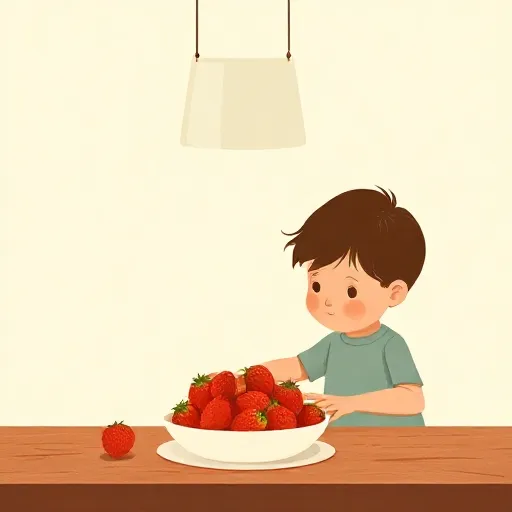
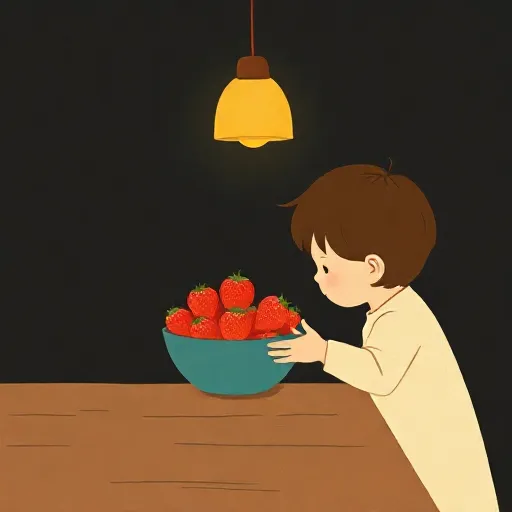
A Girl Tries to Peek Inside Her Own Head

Have you ever tried to watch yourself think? Maybe you stared at your own forehead in the mirror, hoping to catch a glimpse of the thoughts inside. It does not work. All you ever see is the outside of your head.
That problem fascinated Immanuel Kant (1724–1804) , a German philosopher who wanted to understand what the mind must be like, given that we cannot open it up and look. Kant was responding to thinkers like David Hume (1711–1776) , who had argued that we know much less about the mind than we think. Kant agreed that the mind’s inner workings stay hidden. But he also believed we could figure out a great deal about how it must function—not by peeking inside, but by asking what the mind must do to make experience possible.
The Mind as a Secret Workshop: Kant’s Method

To study something you cannot observe directly, you need a special strategy. Kant’s strategy was the transcendental argument. Instead of saying “I saw this,” you say: “If we have an experience of this kind, then there must be a hidden structure that makes it possible.” For example, if you hear music, there must be a sound source, even if you cannot see it. Kant applied this idea to the whole mind.
He asked: What are the necessary conditions of having any experience at all? His answer gave him a blueprint of the cognitive architecture—the mind’s invisible setup. Remarkably, his blueprint described the mind as a set of functions, not a physical object. This was a functionalist view: the mind is defined by what it does, not what it is made of. (Functionalist theories became a big deal in philosophy only in the 1960s—but Kant had the idea almost 200 years earlier.)
Kant argued that experience requires two ingredients working together. He put it in a famous line: “Concepts without intuitions are empty, intuitions without concepts are blind.” An intuition is raw sensory input—colors, sounds, touches. A concept is a rule for organizing that input—like the idea “cup” or “triangle.” Without concepts, the raw input would be a meaningless blur. Without intuitions, concepts would be empty categories with nothing to apply to. The mind’s job is to weave them together using acts of synthesis.
How Your Mind Builds a World: Synthesis in Three Steps

Kant believed the mind does not just receive a finished picture of the world. It builds it. That building work is synthesis. He described three kinds, each handled by a different mental “workshop station.”
First, synthesis of apprehension places raw sensory inputs into time (and space). Imagine hearing a clatter of separate noises. To even notice them as distinct, your mind must mark each one as happening at a different moment. Kant thought the mind stamps time and space onto the world—space and time are not “out there” waiting to be discovered; they are built into how your mind organizes things.
Second, synthesis of reproduction connects items that have been spaced and timed. It lets the mind move from one representation to another by association, even when the earlier one is no longer in sight. This is not yet memory; it is more like an invisible glue that holds a sequence together so that a later item can recall an earlier one.
Third, synthesis of recognition in a concept brings memory and rules together. To recognize a noise sequence as a melody, you must remember the earlier notes and apply a concept—like “melody” or the specific tune. This step uses categories, the most basic concepts (things like “unity,” “cause,” and “existence”). Only when all three syntheses work together do you experience a full-blown object, like a bouncing basketball or a friend’s voice.
The Glue That Makes You a Single ‘Me’: Unity of Consciousness

Now Kant took a sharp turn. After showing how the mind builds individual objects, he noticed something bigger. Your experiences are not a scattered pile; they belong together as one experience. Right now you are seeing words, maybe hearing a hum, feeling the chair beneath you. All those pieces co-exist in a single, connected mental scene.
This unity of consciousness is, for Kant, the mind’s most striking feature. He called the ability to hold everything together transcendental apperception—the mind’s power to say “I think” across all its representations. It is what makes you feel like a single “me” having many experiences at once.
Kant argued that such a unified consciousness is not a bonus; it is necessary. If your mind were a bunch of separate, unconnected streams, you could not compare a past note to a present one, or relate a cause to an effect. To tie multiple objects into a single world-picture—a global representation—your consciousness must itself be one. And he thought this unity forced us to use the concept of cause and effect, linking our experiences into a lawful network. Without it, physics could not even get started.
The “I” That Can’t Be Seen: Self-Consciousness Without Knowledge

If the mind is a hidden workshop, what about the self that runs it? Kant drew a sharp line between two ways of being conscious of yourself.
The first is empirical self-consciousness: noticing your own thoughts, moods, or memories as objects in inner sense, much as you notice a headache. But Kant warned that inner sense shows you only how you appear to yourself, not what you really are. You can never catch the self itself—only its passing states.
The second is far more puzzling. When you think “I am seeing a blue sky,” you are conscious of yourself as the subject doing the seeing. This happens through the very act of representing, not by taking a separate look inward. Kant called this consciousness “the I think.” It is a bare awareness that you are the one having the experience, with no need to list any features of yourself.
Kant made a startling claim: when you refer to yourself this way, you do not identify yourself by any properties. You do not think, “the person who is tall and wearing a red shirt is seeing blue”—you simply designate yourself without any description. Modern philosophers later called this self-reference without identification and the essential indexical—the idea that the word “I” cannot be replaced by any list of qualities. Kant had hit on it two centuries early.
Because this bare “I” ascribes no properties, it gives you no knowledge of what you really are. You know that you are, but not what you are. This allowed Kant to say: we have genuine consciousness of ourselves as subjects, yet we can never know the self’s inner nature. The soul remains a mystery—exactly as he wanted, to protect ideas like freedom and immortality from being explained away by science.
Why Brain Scientists Still Read Kant

Kant’s model of the mind was not just a historical curiosity. It became the foundation of early empirical psychology and, after a long break, returned as the backbone of cognitive science.
Today, when researchers build computer models of perception or study how the brain binds features into whole objects, they are using a broadly Kantian recipe. Anne Treisman’s famous three-stage theory of object recognition—feature detection, location mapping, and integration under concepts—mirrors Kant’s three synthesis steps. The idea that the mind is a set of computational functions, rather than a passive mirror, is pure Kant.
That said, some of Kant’s deepest insights still have not been fully absorbed by science. His second kind of synthesis—the one that ties many objects into one global experience—remains largely unexplored in neuroscience. The same is true of his ideas about bare self-consciousness without property descriptions. So Kant’s model is not just a piece of history; it is a workshop of ideas that brain science is still building.
Think about it
- If you could never look inside your own mind, how would you convince a friend that you are not just a robot without any thoughts?
- The “I” that knows you are reading this—can you describe what that “I” is without using any personal facts (your name, your body, your memories)?
- If scientists someday build a mind that follows Kant’s blueprint, would it have a unified “I think” like yours, or would it just be a collection of excellent tricks?