Can You Ever Be Alone? A Japanese Philosopher’s Challenge
The Cold Is Not Outside You
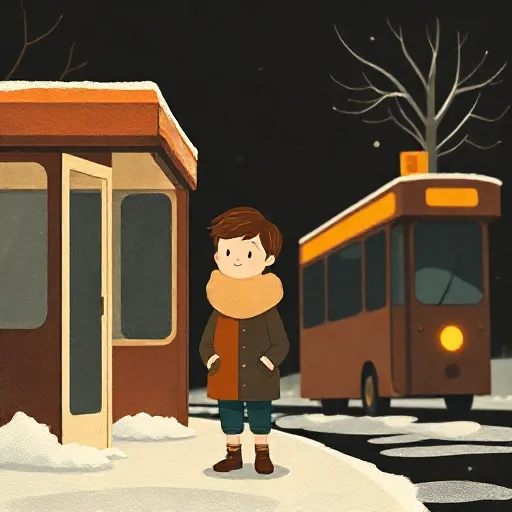
Imagine stepping outside on a freezing January morning. The cold hits you hard. You shiver, pull your coat tighter, and mutter, “It’s so cold out here.” But where is that cold? You might think it’s “outside,” in the air. Yet you don’t know it’s cold until you feel it. The cold is not a separate object you point at; it’s an experience your body has. And you almost certainly notice the person at the bus stop feels it too—you both stamp your feet and trade a glance. The cold binds you together.
This everyday fact fascinated the Japanese philosopher Watsuji Tetsurō (1889–1960). After studying Western thinkers like Nietzsche and Kierkegaard, he returned from a trip to Europe in 1928 with a fresh idea. In his book Climate and Culture he introduced the term fūdo—literally “wind and earth.” Fūdo is the whole natural and human-built environment that shapes how we live: climate, geography, food, architecture, traditions, and the ways we interact. Watsuji argued that we discover ourselves in fūdo, not apart from it. We are always already “out” in the environment, together with others. He thought Western philosophy had made a mistake by imagining the self as a lonely, isolated mind. For Watsuji, that cold wind is already part of what it means to be you, right now, in this place, with these people.
The Myth of the Lone Self
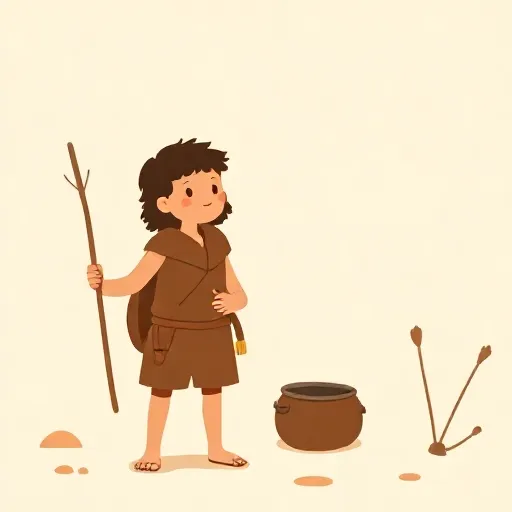
Watsuji believed Western thinkers too often started with a single, independent person. Thomas Hobbes, for example, imagined people in a “state of nature” as separate individuals before society. Watsuji said this is a myth. You are born into a web of relationships: parents, caregivers, language, culture, and traditions. Even the castaway Robinson Crusoe, alone on an island, still speaks English, cooks with tools he learned from others, and hopes for rescue from a ship crewed by strangers. You can’t escape the social world; it’s already inside your head and hands.
To capture this truth, Watsuji used the Japanese word ningen. Its two characters mean “person” and “space/between.” So a human being is not just an individual; a person is also the betweenness (or aidagara) among people. To be a person is to exist in relationship—to be a parent, a child, a friend, a neighbor, a citizen. This betweenness is not an empty gap; it’s a lively, structured space filled with customs, expectations, and shared history. When you greet someone, you step into that betweenness and reactivate a network that was already there. Ethics, Watsuji said, is the study of how we preserve and nourish those relationships in that shared space.
A Self That Is Both One and Many
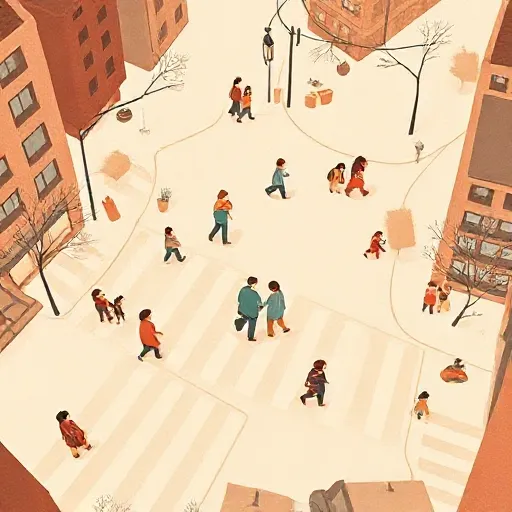
The heart of Watsuji’s ethics is that you are both an individual and a social being, and neither side can be erased. If you were only a piece of the group, you’d have no voice. If you were only a stubborn individual, you’d break every bond and become isolated. He called this a living self-contradiction, and he argued we need a constant, dynamic tension between the two poles.
He described this as a double negation. First, to become a true individual, you must negate—push back against—the group’s expectations. You say, “I’m not just what my family wants me to be.” That’s a positive step. But if you stop there, you become a lonely rebel. So the second negation is to negate your own separate independence—to abandon ego-centeredness and reconnect with the social whole in a selfless way. When both the “group-only” and “me-alone” extremes are emptied out, what remains is a deeper, more authentic togetherness. Watsuji called the ultimate foundation of this emptiness nothingness or emptiness—a place where divisions dissolve and compassion flows naturally. You act for others without calculating “What’s in it for me?” because the boundary between self and other blurs.
This isn’t about erasing your personality; it’s about moving from “I am separate” to “I am with.” In that state, you can cooperate beautifully—like poets composing a shared renga poem, where each verse is unique but must fit the whole. Individual flair and group harmony don’t fight; they dance.
Emptiness as the Heart of Ethics
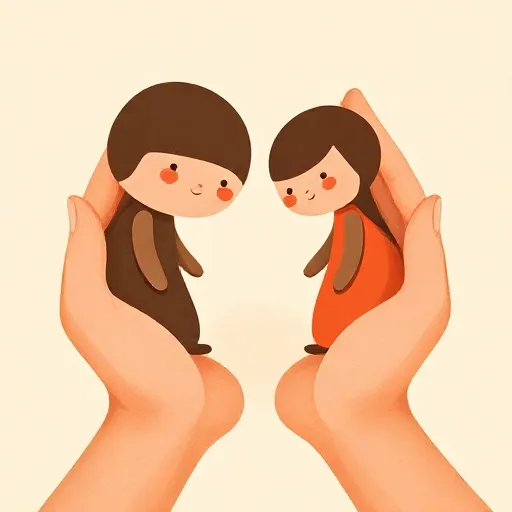
Watsuji’s idea of emptiness draws from Buddhism. The Buddhist notion of pratītya-samutpāda (dependent co-origination) says nothing exists independently—everything arises in relation to everything else. Look closely and you can’t find a solid, unchanging “self.” Your thoughts, feelings, and body are shaped by the food you eat, the air you breathe, the language you speak. Emptiness doesn’t mean nothing exists; it means things are empty of a fixed, separate essence.
For Watsuji, this wasn’t just a meditation insight—it was the basis of a selfless morality. When you realize deep down that you are not a separate bubble, your natural response is to care for others as yourself. The selfish wall crumbles, and the betweenness becomes a place of spontaneous kindness. He called this the “birth of selfless morality.” In the West, maybe only mystics talk this way, but Watsuji saw it as the core of a truly ethical life. The double negation awakens you to your original ground: an empty, boundless connectedness that holds both your individuality and your social belonging.
The Danger of Making the State Your Everything
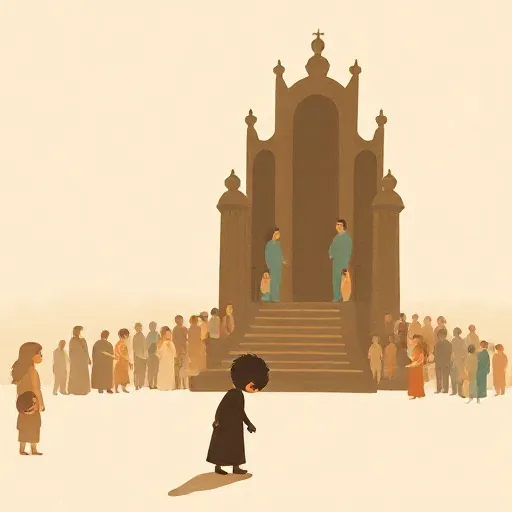
Watsuji believed the double negation culminates in an absolute whole—and in society, that whole was the state. He argued the state is the highest moral organizer, the form that gives all smaller groups their proper place and turns private life into public good. During World War II, he wrote works praising the Japanese emperor system and the samurai willingness to sacrifice for the nation. He contrasted this with what he saw as Western selfishness. Many critics later said his philosophy could easily justify a government that demands you erase your own judgment and obey without question.
Yet Watsuji’s later work added a caution. In his book Closed Country: Japan’s Tragedy (1950), he argued that Japan’s war disaster grew from centuries of isolationism. Japan had cut itself off from the world, grown ignorant of outside strengths, and overstated its own power. The real Japanese tradition, he insisted, was not closed but curious—eager to learn from other cultures. He called for balance: nations should be proud of their heritage but remain engaged in a world community, with none trying to erase the others. So even while he admired the state as a moral summit, he warned that isolation and claims of superiority always lead to tragedy. True wholeness requires diversity, not domination.
Why Being a Knot in a Net Still Matters

In your own life, you already feel the pull of both sides. You want to be your own person—choose your clothes, your hobbies, your beliefs. Yet you care deeply about what your friends think, you depend on your family, and you speak a language millions before you shaped. Watsuji’s insight is that this tug-of-war isn’t a mistake; it’s the engine of being human. A lonely “me” who feels no connection is a fiction. A mindless “we” with no voice is a puppet. Real ethical life happens in the in-between—when you push back against a rule to be more truly yourself, and when you let go of your pride to make a group stronger.
Think of a time you disagreed with your parents about something important but later found a way to stand your ground and still hug them afterward. That’s the double negation in action. Or when you stood up to a bully not to be a hero but because you felt the injustice as if it were happening to you—that’s the selfless identification emptiness opens up. Watsuji didn’t hand us a neat rulebook; he gave us a picture of the self as a crossroads, shaped by wind, earth, history, and every hand you’ve shaken. He believed knowing this could make you wiser, kinder, and better able to navigate the messy world of right and wrong. And he’d remind you: you are never, ever alone.
Think about it
- If your sense of what’s right is deeply shaped by the climate, language, and people around you, can you ever make a truly independent moral choice? Or is that idea itself a misunderstanding?
- Imagine you could live a life where you owe nothing to anyone—no family, no friends, no community. Would you want that? What, if anything, would be missing?
- Watsuji thought the highest good is to forget your own self-interest and feel at one with a larger group. Can you think of a situation where it would be wrong to give up your own judgment for the sake of the group? Where should you draw the line?