Are You a Potter or a Geologist? Japan’s Two Paths to Knowing
The Potter, the Geologist, and a Missing Word

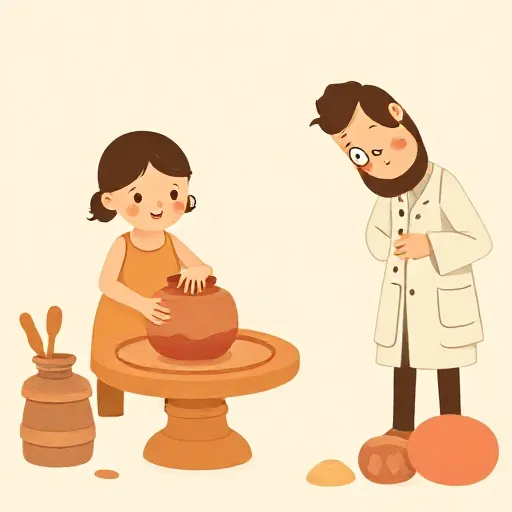
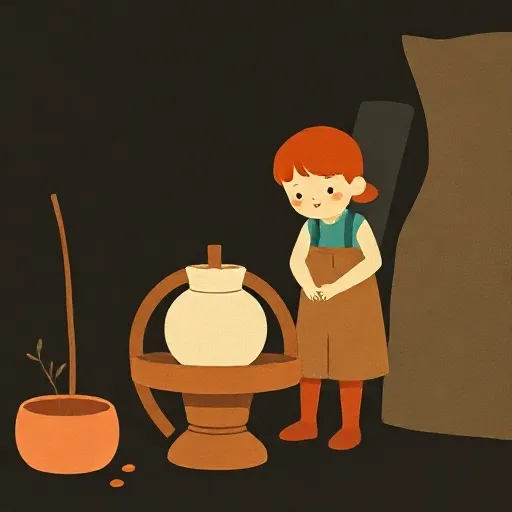
Imagine you’re looking at a lump of clay. A geologist steps up and pulls out a magnifying glass. She notes the clay’s mineral makeup, its age, the environment that formed it. She gets external facts — ones she can write down without ever touching the clay. Then a master potter arrives. He doesn’t just look; he throws the clay onto a wheel, presses his palms to it, and a bowl rises. The clay is no longer a separate object to be studied. It’s part of something he’s making — and while he shapes the clay, the clay shapes him: his muscles, his focus, his sense of beauty.
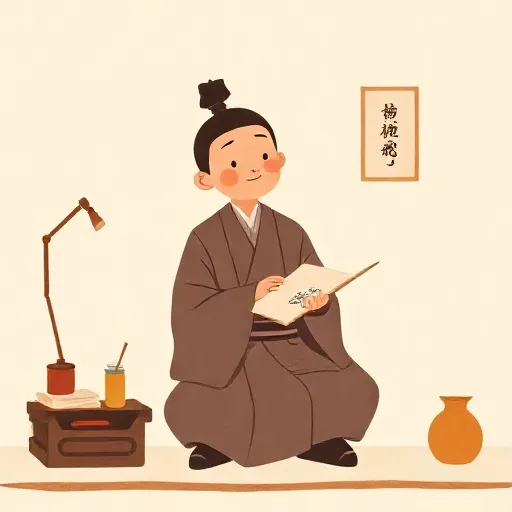
When Western philosophy first charged into Japan in the mid‑1800s, the country’s thinkers faced a puzzle: what should they call this new “philosophy” in Japanese? They could have reached for an old, familiar word — tetsujin, meaning a wise person or sage, someone who masters a Way (dō or michi): the Way of tea, calligraphy, or meditation. Instead, they invented a new compound: tetsugaku. Tetsu meant wisdom; gaku meant learning in the style of a formal Western science, like biology or geology. So “philosophy” became the science of wisdom, and its practitioners became tetsugakusha — scholars of wisdomology, not wise sages.
That choice split knowing into two kinds. The tetsugakusha stands apart from reality, like the geologist labeling clay from the outside. The tetsujin steps inside reality, like the potter, and both the knower and the known transform each other. For the next century and a half, Japanese philosophers kept this tension alive, asking: should philosophy be a detached science, or an engaged Way?
Your Mind and Your Body: More Like a Friendship Than a Chain
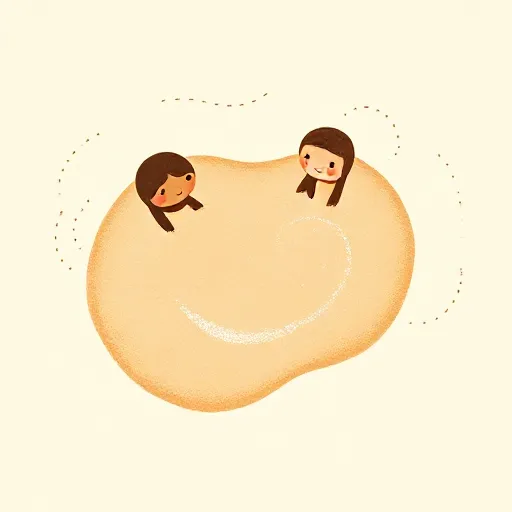
In much modern Western thought, the mind and body are treated like two separate things stuck together by something else — a chain of explanation, a brain process, a ghost in a machine. That’s an external relation: if the link snaps, each piece stays whole on its own. Japanese philosophers tend to start with internal relations, where the two overlap from the beginning. If the overlap disappears, each loses part of itself.
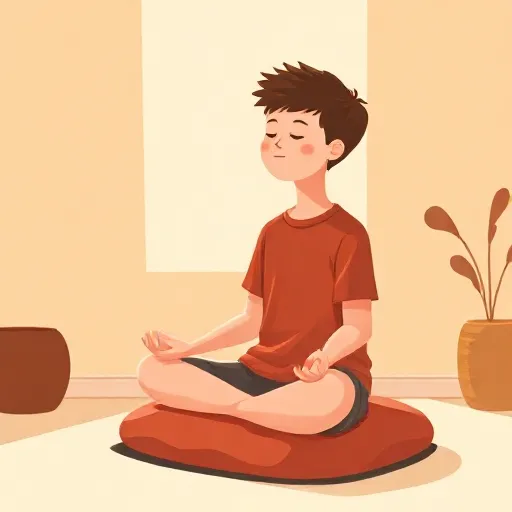
The postwar thinker Yuasa Yasuo (1925–2005) argued that the whole history of Japanese philosophy treats mind and body this way. He used the compound word shinjin, meaning bodymind — not two things yoked together, but a single system of two intersecting circles. Your mind is not fully mind without your body playing its part, and your body isn’t fully body without your mind. The real question isn’t “what connects them?” but “how can their overlap grow?”
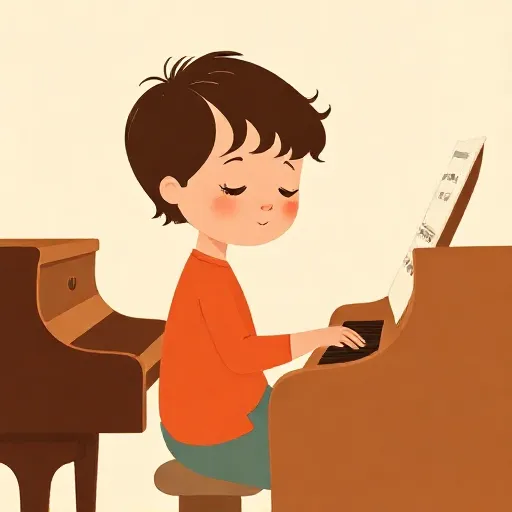
Yuasa gave a piano example. When you first learn, your mind leads your body: “place your fingers here, now here.” After practice, your body leads your mind: your fingers find the keys before you consciously decide to move them. At that stage the two circles start to merge. Eventually, the music, the mind, and the moving fingers become a single act — pure engagement. Japanese philosophy, Yuasa concluded, is often less interested in describing bodymind from the outside and more interested in how discipline and practice can enlarge the overlap until you are the activity, rather than someone directing it.
The Whole World in a Drop of Blood: Holographic Thinking

If parts are internally related to wholes, sometimes each part carries the design of the entire system. That’s holographic thinking: the whole (holo-) is inscribed (-graph) in every piece. In the West, this idea often felt like magic or poetry — a fairy tale where a witch controls you with your fingernail. But in Japanese philosophy, the holographic pattern was never kicked out as mere metaphor.
Drop a single strand of hair at a crime scene, and to a forensic scientist that hair doesn’t just belong to a person; it carries the DNA blueprint of the person’s entire body. Japanese philosophers regularly treat reality that way. A haiku of only seventeen syllables isn’t trying to be minimal by deleting things. It works like that drop of blood: the whole scene — season, emotion, sound, presence — is folded into the tiny poem. By focusing on that one particular moment, you encounter the complete field of the poet’s experience, which the Japanese often called kokoro, the interactive event that includes artist, medium, and audience.
This habit of thought explains why foreign observers so often got Japan’s imperial system wrong. Westerners heard that the emperor was called kami, a word translated as “god,” and assumed he was a distant, separate ruler over the country. But in the internal, holographic logic of the tradition, the emperor was not apart from Japan; he and the people and the land were patterns of one another. To a kamikaze pilot (the source tells us), dying for the emperor was not sacrificing yourself to a higher being. It was fulfilling the whole self, because you, the emperor, and all Japanese were internally related — each contained the configuration of the nation. Whether you accept that claim or not, recognizing the holographic logic stops you from mistaking it for a simple political trick.
Why Japanese Philosophers Prefer to Agree — Even When They Disagree
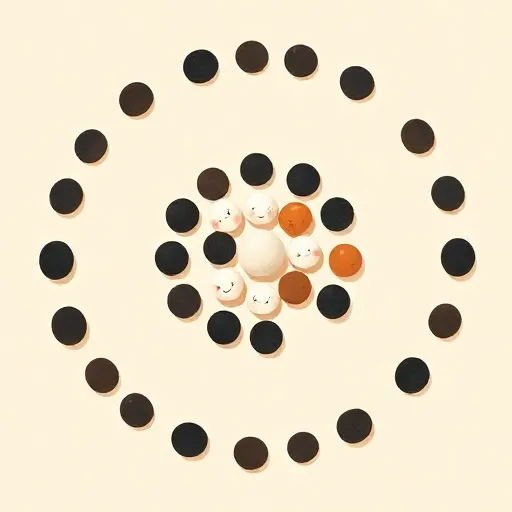
In Western debates, a sharp argument often aims to knock the opponent’s king down, like in chess. Japanese philosophers more often play Go: they try to surround and absorb an opposing view, not refute it. Three strategies appear again and again.
Allocation gives each rival its own safe territory. Prince Shōtoku’s Seventeen-article Constitution (early seventh century) used Confucian ideas for politics and social roles while turning to Buddhist ideas for understanding the inner mind — keeping both systems in separate corners so neither crashed into the other.
Relegation accepts the opponent’s truth but nests it inside a bigger, truer picture. When esoteric Buddhism met early Shintō, it didn’t deny the kami spirits. Instead, it said the kami were “surface manifestations” of deeper Buddhist realities. Shintō was preserved, but as a smaller piece of a Buddhist whole.
Hybridization creates something genuinely new. The modern warrior code bushidō (the Way of the warrior) was not pure Shintō, Buddhist, or Confucian. It blended loyalty, selflessness, and ethnic pride with European ideas of national spirit — a hybrid that couldn’t be unmixed back into its parent ingredients.
The result is that reading a Japanese philosophical text can feel odd at first. Rather than slashing into the other side, the writer keeps agreeing, then gently circling until the rival view is part of the writer’s own system. It’s still victory — just a quieter, more encompassing one.
Why the Potter’s Way Matters for You
The Japanese model of engaged knowing isn’t just a museum piece. It asks you something personal: when you learn, do you only collect facts that sit outside you, or do you let the learning change who you are?
Think of learning to cook, skate, or play an instrument. At first you struggle, and it feels like your mind is dragging your clumsy body. But later, your body seems to “know” what to do, freeing your mind to pay attention to the taste, the ice, the music itself. That’s the bodymind overlap Yuasa described — not a philosophy lecture, but your own experience of internal relation.
Friendships work the same way. If a friendship is only an external arrangement — a contract of shared interests — then when it ends you walk away as the same person you were before. But we all know friendships can be internal: a close friend shapes your sense of humor, your courage, even the way you see yourself. Lose that friend, and you lose a piece of yourself, like Emily Dickinson becoming a “crescent” of her former self. Japanese philosophy invites you to see reality more like that friendship — a field you’re part of, not a puzzle you stand outside of.
You don’t have to choose once and for all between being a geologist and being a potter. Both ways offer real knowledge. But the Japanese tradition keeps reminding us that some of the truest understandings come only when you stop standing apart and let yourself step into the clay.
Think about it
- When you learn a new skill — like riding a bike or playing a game — does your mind lead your body, or does your body eventually “teach” your mind? Can you think of a moment when the two felt like one?
- Is there a friendship in your life that has shaped who you are so deeply that, if the friendship ended, you’d lose a part of yourself? What makes that relationship different from just sharing the same hobbies?
- In an argument, do you think it’s stronger to prove the other person wrong, or to find a way their view might fit inside yours? What might you lose by always trying to win outright?