What Is the World Made Of? A Japanese War of Words
A Samurai Scholar’s Quiet War
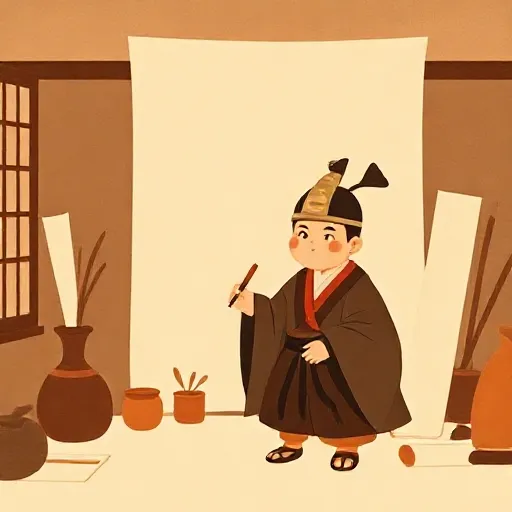
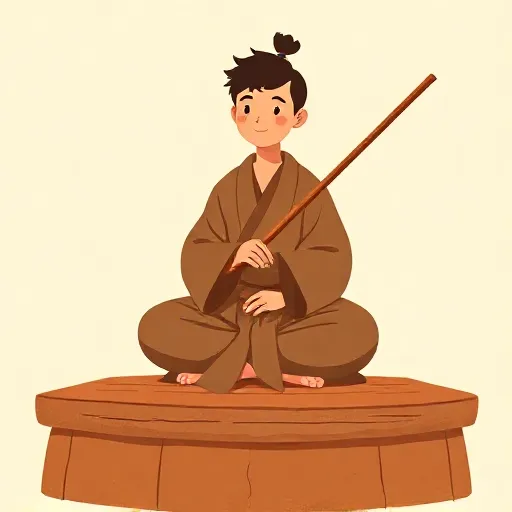
In the year 1657, an old samurai scholar named Hayashi Razan (1583–1657) put down his brush. For years he had been writing a guide to the most important ideas in his tradition: words like ri (principle) and ki (generative force). To Razan, these words held the secrets of the universe. Get them right, he thought, and you could understand how to live, how to govern, even how the stars moved.
But all around him, Buddhist monks insisted that words were just empty noise. They said that reality could never be caught in language. Real truth, they taught, passed from mind to mind without speaking. Razan shook his head. He was sure that the words of the ancient sages were packed with meaning — and that wrestling with them was the most important thing a person could do. His quiet war over the meaning of words would echo through Japanese philosophy for centuries.
What Confucius Really Taught
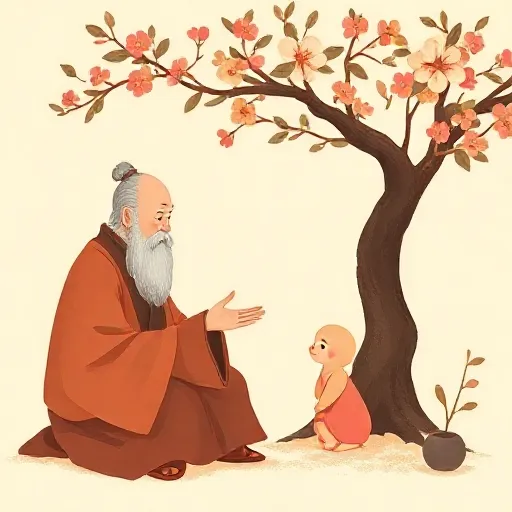
To see why Razan cared so much, you have to meet Confucius (551–479 B.C.E.). Confucius never wrote a book of his own. Instead, his students recorded his conversations in a work called the Analects. He spent his life traveling, trying to persuade rulers to govern by moral example rather than by threat of punishment.
The Analects introduced two ideas that would become the heart of East Asian philosophy. The first is humaneness (jin), often described as a golden rule: do not treat others in ways you would not want to be treated. The second is the junzi, or “true prince.” Confucius did not mean a person born into power. He meant anyone who cultivated their character until they were worthy of a prince’s respect.
Most surprisingly, Confucius insisted that everything — from a family dinner to running a kingdom — depended on using words correctly. One famous passage says that if he were put in charge of a state, his first job would be to fix the meanings of words. Without that, nothing else could work. This was a radical claim: language, used well, could make a just world.
The Two Ingredients of Everything
Centuries later, after Buddhism had spread across East Asia, Confucian thinkers faced a new challenge. Buddhists argued that the world we see is ultimately empty, a shimmer of illusions. So in China thinkers like Zhu Xi (1130–1200) built a full‑blown metaphysics to explain why the world of ordinary experience is real and good. When these ideas reached Japan, they became the shared vocabulary of a whole generation of samurai‑philosophers.
Their universe was made of two things. Ri is the rational, moral pattern that runs through everything. It is what makes a cherry tree a cherry tree, and what makes human nature good. Ki is the creative, energetic stuff that fills the cosmos — solid as rock, fluid as water, or fine as mist. Without ki, nothing exists. Without ri, nothing makes sense.
The great debate was over which came first. Hayashi Razan, following Zhu Xi, said ri and ki are inseparable — but when you push the analysis, ri has a kind of priority because it supplies the goodness and order. Itō Jinsai (1627–1705) refused to accept that. He claimed that only ki really exists; ri is just a dead pattern tucked inside it. Jinsai preferred to speak of the “way” (michi), a living, human path rather than a dry principle. Both sides agreed on one thing: you had to get these words right, because they described the actual fabric of the world.
A Good Doubt Is Better Than a Sure Answer
Surprisingly, the Japanese Neo‑Confucians did not want students to just memorize answers. They urged them to doubt. The Chinese thinker Lu Xiangshan (1139–1192) had remarked that a learner should worry if they have no doubts, because doubt leads to progress. Zhu Xi echoed him: those with big doubts make big progress; those with no doubts make none.
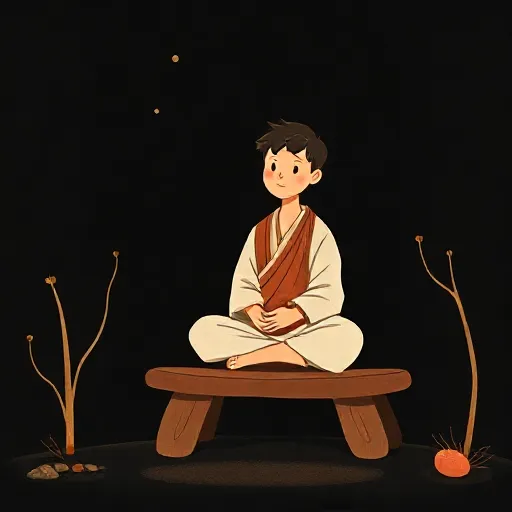
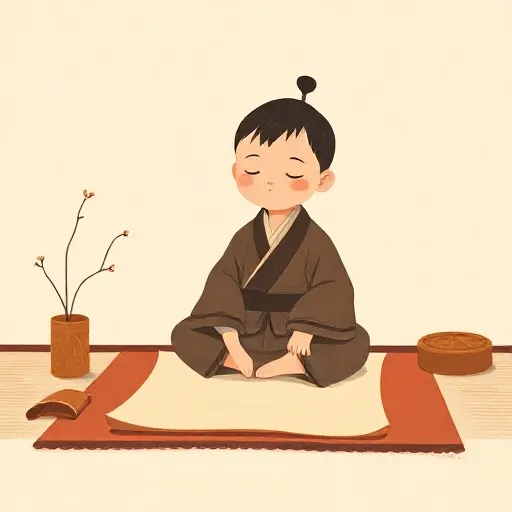
Kaibara Ekken (1630–1714) took this invitation seriously. Late in his life, he wrote a book called Taigiroku (“Record of Grave Doubts”), listing all the ways he had come to question Zhu Xi’s teachings — even though he still considered himself a Neo‑Confucian. Ekken’s willingness to challenge authority shows that this was not a frozen orthodoxy. It was a living philosophical tradition, one that sharpened itself through argument. The practice of doubt, combined with a form of meditation called quiet‑sitting (seiza), was meant to lead a person not to emptiness, but to a clear, active grasp of their own good nature.
Words to Rule a Kingdom
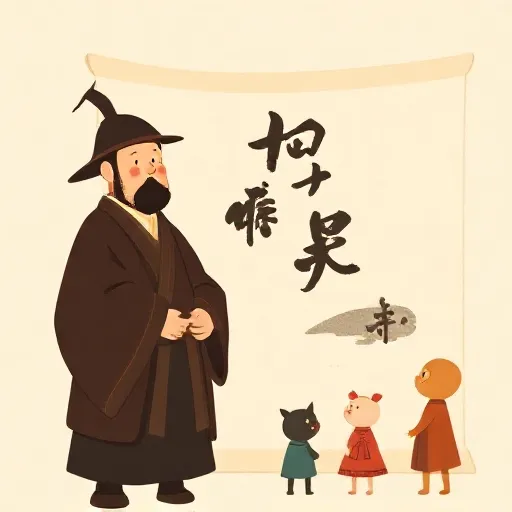
If words hold real meaning, then getting them right is not just a game — it is the foundation of a good society. This political edge drove much of Japanese Confucian philosophy. Ogyū Sorai (1666–1728) wrote a massive study called Benmei (“Distinguishing Names”), arguing that the ancient sage‑kings had established the correct names for things, and that to lose those names was to lose the way of just government.
The same impulse lay behind a staggering commitment to education. Schools for samurai, townspeople, and even women sprang up, built on the Neo‑Confucian curriculum of the Four Books and the Great Learning. The very first text of that curriculum, the Great Learning, opens by saying that if you want to bring peace to the world, you must first cultivate your own mind — and that begins with investigating things. Learning, in this view, was not just for scholars; it was the engine of a well‑ordered life for everyone.
Together, the emphasis on correct language and universal learning planted a seed. By the nineteenth century, Japan had literacy rates comparable to the most advanced Western nations, and a rich public conversation about ethics, politics, and the nature of reality.
Why an Old Scroll Still Matters
Even today, the fingerprints of those samurai philosophers are everywhere. The modern Japanese word for “university” is daigaku — taken straight from the title of the Confucian Great Learning. The year‑names on the calendar, like Reiwa, are still chosen from Confucian classics. And the environmental philosophy of thinkers like Kumazawa Banzan (1619–1691), who called mountains, rivers, and forests the foundations of the state, is being rediscovered in an age of climate crisis. Scholars now speak of “Green Confucianism” as a living resource for thinking about our relationship with the natural world.
The questions that drove Hayashi Razan, Itō Jinsai, and their rivals are startlingly modern. What gives words their power? Is the world nothing but swirling stuff, or does it have a shape we can trust? Can paying attention to language make us better people — and a better society? You don’t need a brush and scroll to wrestle with those questions. You just need to look closely at the words you use every day.
Think about it
- If a leader changed the meaning of a word like “justice,” could that change how people treat one another?
- Can you think of a real situation where paying careful attention to the words you use might solve a conflict?
- If everything in the universe is connected like one body, what responsibility do you have toward rivers and trees?