Why Juan Luis Vives Thought Certainty Was a Trap
A Life Shaped by Danger and Doubt
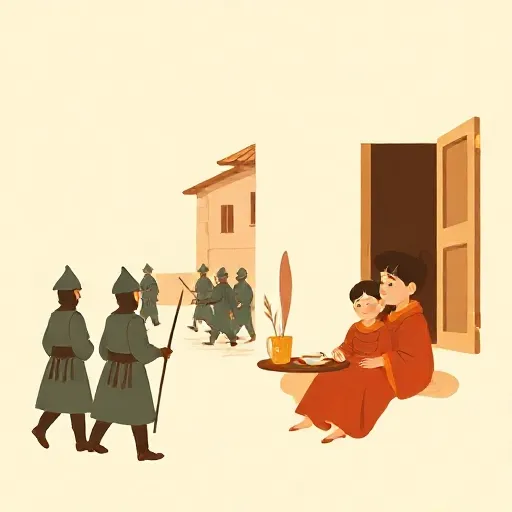
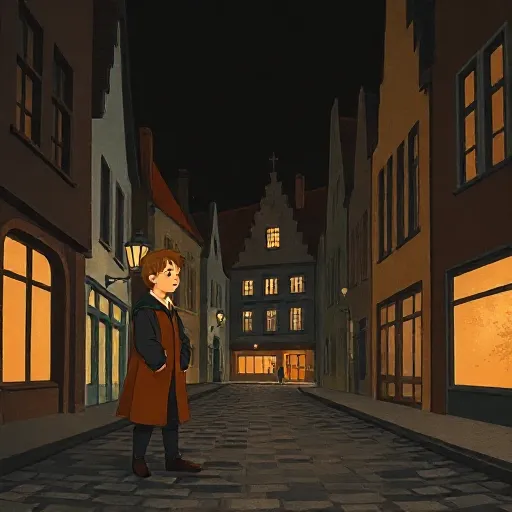
In 1490s Valencia, a boy named Juan Luis Vives (1493–1540) lived in a house with a terrifying secret. His parents were Jewish converts to Catholicism, and the Spanish Inquisition was watching. His father had already been prosecuted once for secretly practicing Judaism. Years later, when Juan Luis was a young man, his father was tried again and burned at the stake in 1524. His mother died of plague in 1508, but two decades after her death she was charged with visiting a hidden synagogue. Her bones were dug up and publicly burned. Vives never returned to Spain.
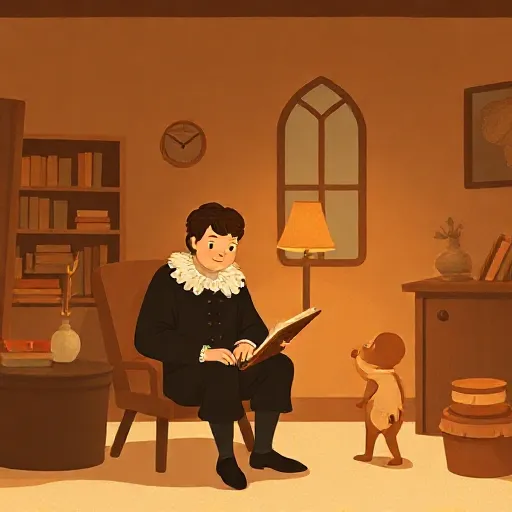
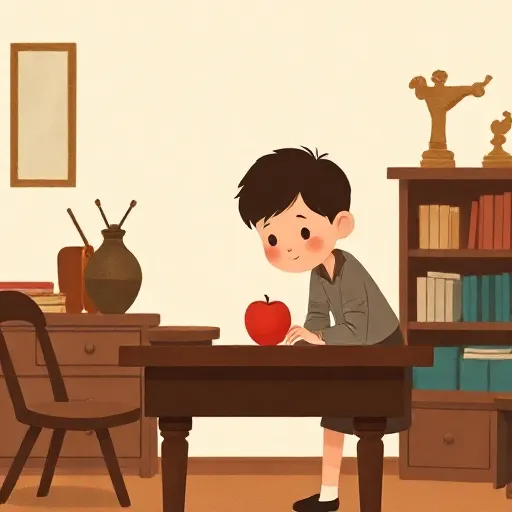
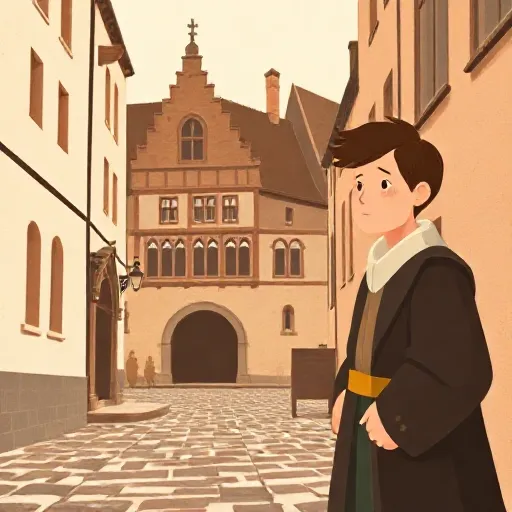
At sixteen, he moved to Paris to study at the university. He expected to find wisdom. Instead, he found himself trapped in a world of dry lectures and endless logical quibbles — what was called scholastic philosophy. Professors argued over strange word puzzles that seemed cut off from real life. Frustrated, Vives left Paris without taking a degree and settled in Bruges, in the Low Countries. There, he joined a circle of humanists led by Erasmus, and began writing the works that would make him famous.
He would go on to teach at Oxford, tutor a princess (the future Queen Mary I of England), and fire back at the logic he hated in a book so sharp it reads like a comedy routine.
Why He Called Logic a Waste of Time
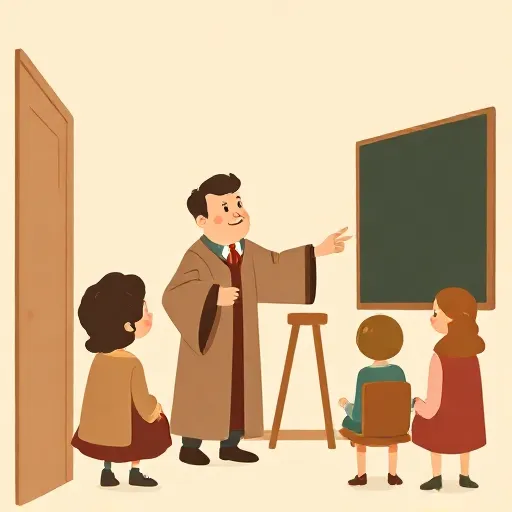
In 1519 Vives published Against the Pseudo-Dialecticians, a furious, funny attack on the logic taught in universities. He had sat through years of lectures on syllogisms and sophismata — deliberately tricky sentences like “Some animal is not man, therefore some man is not animal.” The aim was to train minds in razor-sharp reasoning, but Vives saw only clever emptiness. He mocked one example that ran: “Only any non-donkey c of any man except Socrates and another c belonging to this same man begins contingently to be black.”
To Vives, that was not thinking. It was a game with made-up rules and a private language no one outside the university could understand. He believed that philosophy should speak in sermo communis — ordinary human language — not a secret jargon. He wrote that if they simply talked like normal people, most of their puzzles would vanish.
Vives didn’t want to abolish logic; he wanted to put it to work. Dialectic (the study of reasoning and argument) should help other arts, like medicine and law, not exist for its own sake. It should make you more useful, not more clever in a debating hall. This love of practical usefulness stayed with him all his life.
The Dark Prison: Our Minds Can Never Reach the True Nature of Things
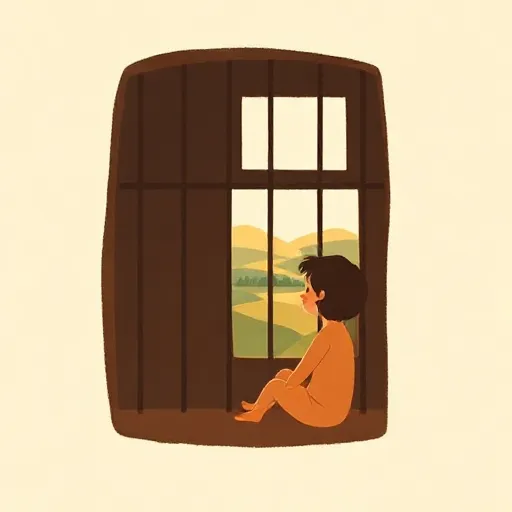
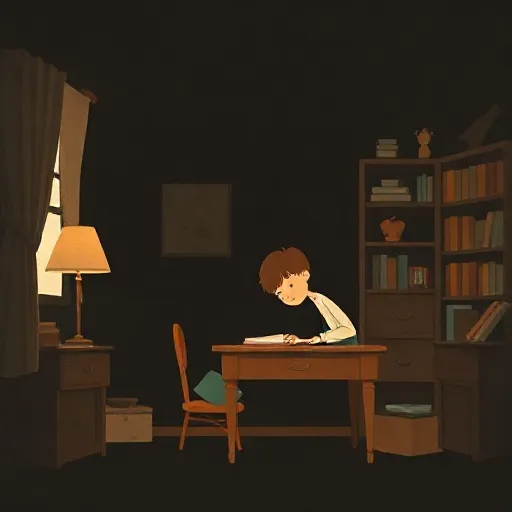
If our language can’t capture ultimate reality, can our minds? Vives had a deep doubt about that too — and he expressed it with a powerful image. The human mind, he said, is locked in a dark prison of the body, surrounded by gloom. It can’t see clearly. That means we can never know the essence — the inner nature — of anything.
Our senses give us only the outer skin of things: the accidents, like a thing’s color, shape, or smell. The true essence stays hidden, like the living machinery inside a clock that we never open. Vives accepted the Aristotelian rule that all knowledge starts with the senses, but he insisted that sense perception alone cannot reach the incorporeal or hidden heart of things. Reason can go a little further, but at best it gives us a probable judgment, not certain knowledge.
He belonged to what scholars call the maker’s knowledge tradition: we can truly know something only if we made it. Only God knows the essences of natural things because God made them. We, on the other hand, know best what we build with our own hands — a chair, a ship, a law. That’s why he often said that peasants and artisans understand nature far better than philosophers who just spin theories. Certainty, he concluded, is neither deserved nor needed in this life. What we need is a reliable way of making good guesses.
From Guesswork to Progress: Experience, History, and the Art of the Educated Guess

If you can’t have certainty, what can you do? Vives’ answer was practical and surprisingly modern: build your judgments on the widest possible base of experience. That means paying attention to history — the sum of everything humans have ever tried, observed, and recorded.
In his great work On the Disciplines (1531), he insisted that history “appears to surpass all disciplines, since it either gives birth to or nourishes, develops [and] cultivates all arts” Every new generation stands on the work of those before, and therefore can see a little farther. He rejected the old saying that we are dwarfs on the shoulders of giants. We’re not dwarfs, he said — and they weren’t giants. All humans have the same natural powers. The difference is that we inherit centuries of collective experience, and if we use that well, we can form better opinions than Aristotle or Plato could.
Vives also found that our minds have a natural tilt toward what is good and true, which he called a “light of the mind.” This natural inclination can be sharpened by teaching, much like seeds grow better when a farmer tends them. He treated the topics — a set of universal categories for organizing knowledge — as a kind of mental grid that helps us see patterns in the flood of information. None of this gives you the essence of things, but it does give you probability: a reasonable, testable belief. For Vives, that was enough to improve human life.
Souls, Emotions, and Society: Using Psychology to Build a Better World
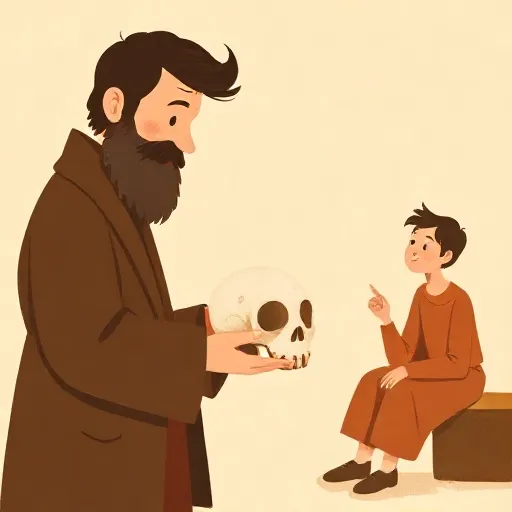
Vives didn’t just ask “What can we know?” He asked “How do we feel, act, and live together?” His book On the Soul and Life (1538) is one of the earliest detailed studies of faculty psychology — the idea that the soul has different powers (faculties) for nutrition, sensation, imagination, thinking, and emotion.
He described how the mind depends on the body’s “spirits” — fine vapors that travel from the heart to the brain’s three ventricles. Emotions, for Vives, were not disorders to be stamped out. He rejected the Stoic dream of erasing feelings. Instead, he defined emotions (or affectus) as natural acts that pursue what we judge to be good and flee what we judge to be evil. If your judgment is clear and true, your emotions will be moderate and helpful. If your judgment is confused, your emotions will storm out of control. So the key to a healthy soul — and a healthy society — is training our judgment.
He put this psychology to work everywhere. In On Assistance to the Poor, he designed one of the first public relief systems, arguing that poverty is not a private misfortune but a community problem. In On Concord and Discord in Humankind, he traced war to disordered passions and called peace the only state in which virtue can grow. War, he said, is like a sick body where no limb does its job properly. Vives believed you could reform society by understanding the soul — a conviction that later educators and psychologists would share.
Why Vives Still Matters: From Skepticism to Modern Science

Vives died in Bruges in 1540, but his ideas lived on. Later skeptics like Francisco Sanches and Pierre Gassendi said reading Vives gave them courage to question Aristotle’s dogmas. Francis Bacon and René Descartes — two giants of the scientific revolution — absorbed his emphasis on practical knowledge and maker’s knowledge. His psychology influenced the great Anatomy of Melancholy and even early philosophy of mind in Scotland. Over hundreds of editions and many languages, Vives helped shift the goal of philosophy: from locking down eternal truths to making life better through observation and experience.
Today, scientists don’t claim to unearth the secret essence of gravity or viruses. They build models that work, gather evidence, and accept that every theory may someday be revised. That’s exactly Vives’ spirit. He was one of the first to say that you don’t have to be absolutely certain to make real progress. You just need good judgment, a long memory of human experience, and the willingness to try things out.
So when you’re figuring something out — whether it’s a science project, a broken gadget, or why a friend is upset — you’re practicing the kind of thinking Vives championed. You’re not chasing a final, magical answer. You’re collecting clues, learning from what people before you discovered, and making a reasonable call. That’s not a weakness. It’s what grown-ups do every day.
Think about it
- If no one can ever be 100% sure about anything, should a doctor still treat a sick patient without absolute proof that the treatment will work? What justifies making a decision on a guess?
- Vives believed that a carpenter who builds a chair knows it better than a philosopher who only reads about chairs. Can you think of something you know better because you made it yourself, rather than just reading about it?
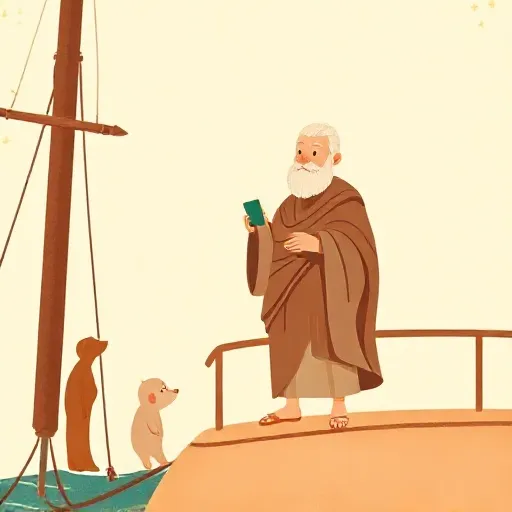
- Suppose a time traveler brought Vives a smartphone. He would see it as a human artifice — something we made, so we really know it. Does being able to build something mean you fully understand it, or can there still be hidden mysteries inside our own creations?