What If the Only Thing That Matters Is Happiness?
The Cookie Test: What Makes a Choice Right?

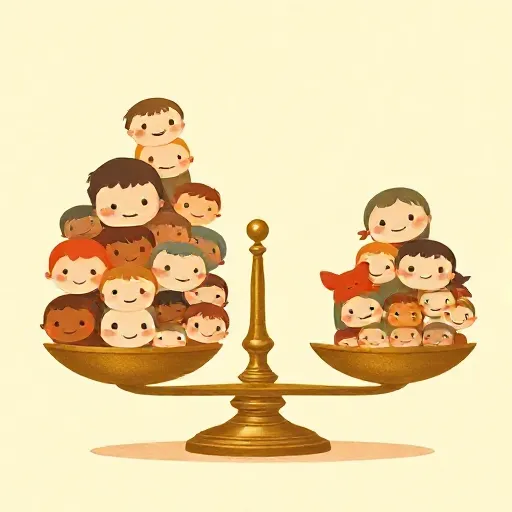
You have one extra cookie. Your friend looks miserable, but you really want it. How do you decide what to do? If your choice depends on what makes the most people happy, you are already thinking like a utilitarian.
The idea that happiness is the key to morality is older than you might guess. In 1725, the Irish philosopher Francis Hutcheson (1694–1746) wrote a sentence that would echo through centuries: the best action is the one that “procures the greatest happiness for the greatest numbers.” A few decades later, an English lawyer named Jeremy Bentham (1748–1832) turned that insight into a full-blown moral system and a radical tool for changing society.
Bentham’s big question was refreshingly simple: “What use is it?” He meant that when we judge a law, a tradition, or a private choice, we should ask how much happiness it produces. In his view, the right action is always the one that leads to the greatest total pleasure and the least total pain. This is the greatest happiness principle, the engine at the heart of utilitarianism.
Bentham’s Pleasure Calculator
Bentham believed that pleasure and pain run our lives like two absolute masters. That part is easy to see — you grab a cookie because it tastes good and you avoid touching a hot stove because it hurts. But he went further: only pleasure is good intrinsically (good in itself), and only pain is bad intrinsically. Everything else — money, freedom, friendship — is good only because it leads to pleasure or reduces pain. This view is called hedonism.
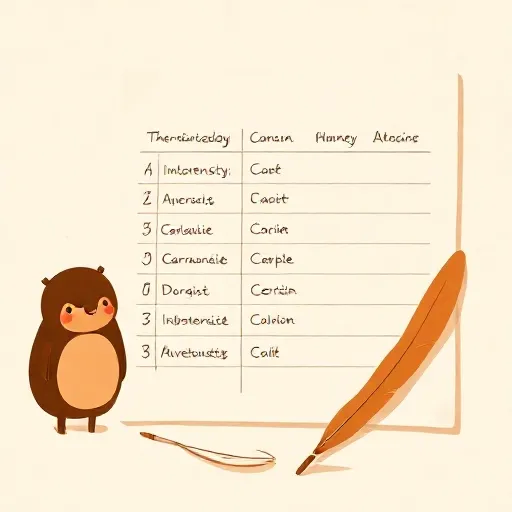
If pleasure is the only thing that matters, how do you choose between two possible actions? Bentham invented a mental scale with seven measuring rods, which he called parameters. Suppose you are trying to decide whether to give away the extra cookie. You would compare the pleasures and pains of both options:
- Intensity: How strong will the pleasure or pain be?
- Duration: How long will it last?
- Certainty: How likely is it to happen?
- Proximity: How soon will it happen?
- Fecundity: Will it lead to more good or bad sensations later?
- Purity: Will it be mixed with any opposing feeling?
- Extent: How many people will be affected?
Bentham didn’t expect you to pull out a notepad every time you face a decision. Over time, we learn shortcuts — rules of thumb — that usually produce more pleasure. But in his system, the final test is always the same: will this action, among all your options, make the greatest total happiness?
This picture had a practical, no-nonsense energy. Bentham wanted to scrub away moral rules based only on disgust, prejudice, or appeals to “nature.” He argued that punishing someone because an act feels icky to you — like certain romantic relationships he defended — is just letting your own antipathy masquerade as ethics. The only thing that counts is whether real pleasure and real pain are being created.
Mill’s Upgrade: Not All Pleasures Are Equal

Soon a younger thinker spotted a problem. John Stuart Mill (1806–1873) admired Bentham, but he was troubled by the idea that one kind of pleasure could be just as good as any other. In Bentham’s world, the happy sensation of solving a complex puzzle is, at bottom, no better than the happy sensation of chewing a piece of candy — they differ only in how intense or long-lasting they are. Critics laughed that this made Bentham’s theory a “swine morality,” treating human happiness like a pig’s.
Mill answered by building a new kind of hedonism. He insisted that there are higher pleasures and lower pleasures — differences in quality, not just quantity. Intellectual pleasures, the sort that come from reading poetry, learning science, or loving someone, are simply better kinds of pleasure than the ones we share with animals. Mill’s evidence? Ask someone who has experienced both. A person who knows the taste of learning and the taste of lounging will almost always say the learning is more valuable, even if it comes with more struggle. As Mill put it, it is better to be Socrates dissatisfied than a fool satisfied.
Mill also rethought what pushes us to do the right thing. He believed humans are not selfish pleasure-machines by nature. We have internal sanctions — feelings like guilt, sympathy, and a sense of justice — that guide us from the inside. Our conscience isn’t magic; it grows out of natural feelings for others and a deep impulse to punish those who hurt them. Still, for Mill the reason those feelings matter is that they help us produce the greatest happiness. Rights, duties, and even the love of virtue are real, but they are all underwritten by utility.
The Critics Speak Up: What About Promises?

Not everyone applauded. Even before Bentham’s time, sharp critics pushed back. Bishop Joseph Butler (1692–1752) argued that some acts are admired or condemned for their very nature, not for their consequences. If an act of treachery happened to make more people happy than unhappy, would you honestly call it good? Butler thought the answer was obvious: you would still despise it. The same goes for promise-breaking. Richard Price (1723–1791) agreed that keeping a promise matters in itself, regardless of how much pleasure it might cause to break it.
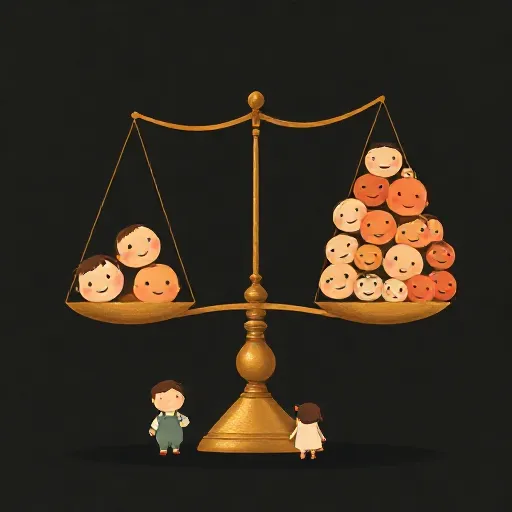
These critics pointed to a deeper worry. If the only thing that matters is the final balance of pleasure, then any action — lying, cheating, even hurting an innocent person — could become right just because the numbers worked out. Most people feel that some things are just off-limits, no matter how much happiness they might produce. That intuition doesn’t sit easily with a pure utilitarian rule.
There is also the problem of demandingness. If you must always choose the act that maximizes total happiness, your life might get eaten by sacrifice. Should you skip buying yourself a new book and donate that money to save lives far away? Should you work a job that exhausts you because it helps more people? Mill himself saw this pressure and offered a partial escape. He suggested that while justice creates duties we can enforce, some exceptionally generous actions belong to the realm of virtue — they are morally beautiful but not strictly required. Not everyone has found that answer satisfying.
Why This Argument Still Shapes Your World

Bentham’s question — “What use is it?” — never went away. It became a cornerstone of law, economics, and public policy. When your city debates a helmet law, sets the legal drinking age, or decides how to spend the school budget, the conversation almost always circles back to something like the greatest happiness principle: will this rule create more well-being than alternatives?
Cost-benefit analysis in government, the measurement of gross national happiness in some countries, and the way doctors weigh the side effects of a treatment all borrow from the utilitarian toolbox. The idea that decisions should be grounded in real effects on people’s lives, rather than habit or authority, is one of the most powerful inheritances of Bentham and Mill.
Yet the struggle the early critics identified has never ended. Sometimes fairness and utility pull in opposite directions, and it is genuinely hard to know which one to follow. The next time you face a choice — even something as small as a cookie — you can feel the tension yourself. Do you count everyone’s happiness equally, even when it costs you? Do you keep a promise when breaking it would make more people better off? Two hundred years of philosophy haven’t made those questions go quiet. They just gave you the tools to ask them clearly.
Think about it
- If you could steal a small amount from someone who has plenty in order to give it to many people who have nothing, would it be right if it made more people happy overall?
- Would you rather live in a world where everyone always does whatever produces the most happiness, even if that means some promises get broken?
- Can you think of a time when doing something made a lot of people happy but still felt wrong to you? What made it feel wrong, aside from the consequences?