
Does the Right Thing Always Make the World Happiest?
The Doctor’s Impossible Choice

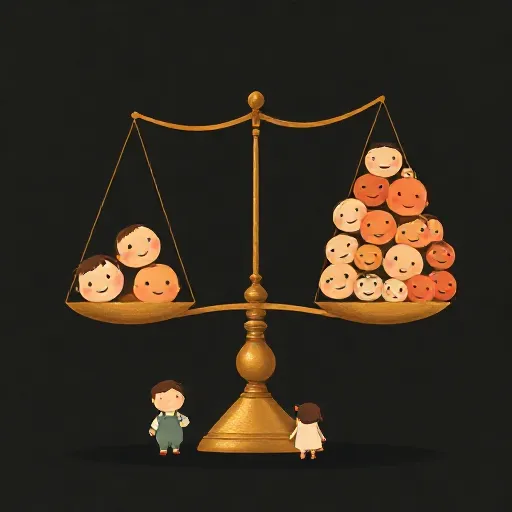
Imagine you are a doctor. Five of your patients are dying. Each needs a different organ — a heart, a kidney, a liver — or they will die within days. There are no donors available. Then you notice a sixth person in the hospital for routine tests. This person is perfectly healthy. Their organs match all five of your dying patients. You could quietly use their organs to save five lives. Only one person would die. No one would ever find out.
What do you do?
If your gut screams “absolutely not,” you are in good company. Most people feel the same way. But for a group of philosophers called consequentialists, the answer is not so simple.
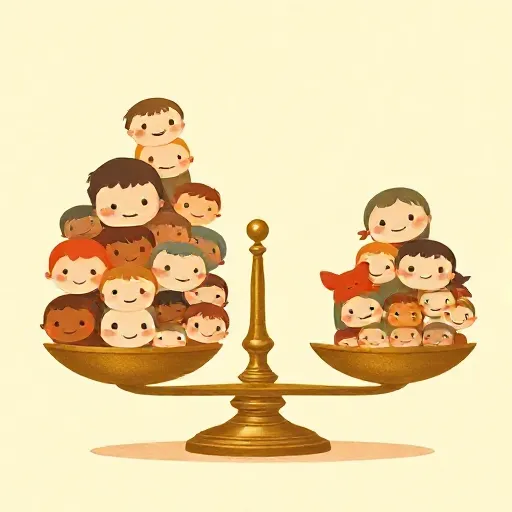
Consequentialism is the view that whether an action is right or wrong depends on one thing: its consequences. An act is right if it produces more good than any other choice you could have made. In the hospital, saving five lives seems to produce more good than saving one. So a pure consequentialist might say: do the transplant.
That conclusion makes many people squirm. But the debate over this idea has been running for more than two hundred years. No one has won it yet.
Bentham’s Happiness Calculator
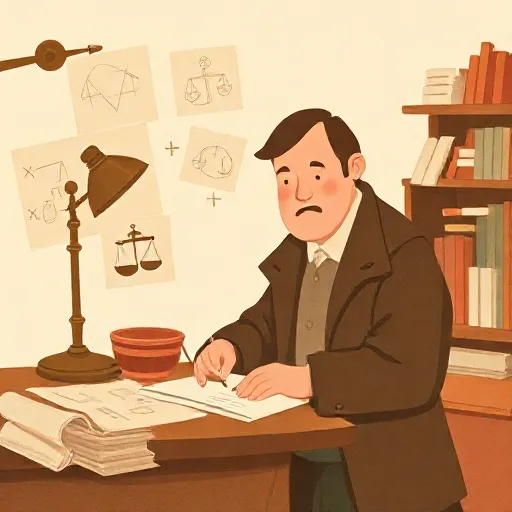
The most famous version of consequentialism was invented by the English philosopher Jeremy Bentham (1748–1832). He called it utilitarianism, from the word “utility,” which just means usefulness. Bentham boiled it down to a simple rule: the right action is the one that produces the greatest happiness for the greatest number of people.
For Bentham, happiness meant one thing: pleasure, and the absence of pain. Pleasure is the only thing that is good in itself — not good because it leads to something else, but good just because of what it feels like. Pain is the only thing that is bad in itself. This idea is called hedonism, from the Greek word for pleasure.
If Bentham were your friend and you were trying to decide whether to share your candy, he would tell you to figure out which choice creates more total pleasure. If sharing makes two people happy and hoarding makes only one person happy, sharing wins. Simple.
But Bentham knew real life was messier. He even tried to design a mental tool — he called it the hedonic calculus — to measure how much pleasure and pain an action would create. You would score each choice on things like: How intense is the pleasure? How long will it last? How likely is it to happen? How many people will feel it?
Still, Bentham never said you should run this calculation before every decision. The principle was meant to be a criterion of rightness — a way of telling what makes an action right — not a step-by-step decision procedure. Just as a golfer does not need to calculate physics before every swing, you do not need to run a happiness equation before every choice. You just need to know that, in the end, what makes your action right is whether it produced the most good.
Mill and the Experience Machine

One of Bentham’s most devoted followers was John Stuart Mill (1806–1873). Mill grew up steeped in Bentham’s ideas, but he spotted a problem. If all pleasures are equal, then a simple children’s game like push-pin is just as valuable as reading great poetry — as long as both make you equally happy. That seemed wrong to Mill.
Mill’s solution was to split pleasures into higher and lower qualities. The higher pleasures — thinking deeply, creating art, understanding ideas — are simply better than lower ones like eating or playing simple games. How can we tell which is which? Mill said: ask someone who has experienced both. If nearly everyone who knows both prefers poetry over push-pin, poetry is the higher pleasure.
Critics pushed back. If you are ranking pleasures by quality, are you still a true hedonist? Are you not sneaking in other values — like knowledge or achievement — and calling them fancier kinds of pleasure?
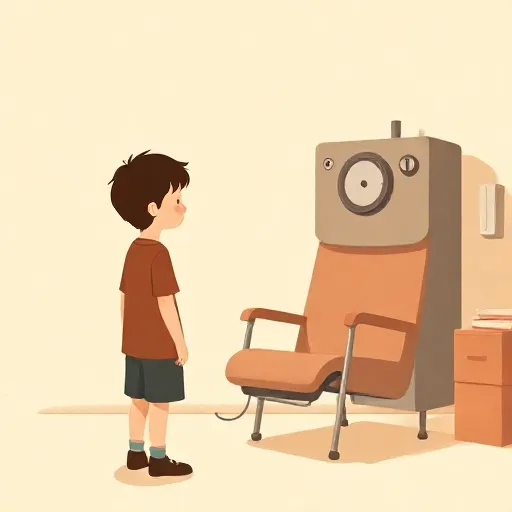
Then a thought experiment arrived that shook hedonism even harder. The American philosopher Robert Nozick (1938–2002) asked you to imagine a machine. Plug yourself in, and you will experience a perfectly realistic simulation of the happiest life you can imagine. You will believe you are winning Olympic gold medals, laughing with brilliant friends, creating masterpieces — while your real body floats in a tank. The machine guarantees maximum pleasure and zero pain.
If hedonism is right — if pleasure is the only thing good in itself — you should plug in. It would be irrational not to.
But almost nobody wants to plug in. Why? Because we care about things other than pleasure. We want real friendships, not just the feeling of having them. We want to actually achieve things, not just dream we did. We value freedom, knowledge, and truth even when they bring us pain.
Nozick’s experience machine convinced many philosophers that hedonism is too narrow. Something besides pleasure matters. But if pleasure is not the only good, what else belongs on the list? Some consequentialists became pluralists — they think many different things have value: friendship, knowledge, beauty, justice, freedom. The problem is weighing them against each other. How much beauty equals how much freedom? There is no common currency.
Other consequentialists switched to preference utilitarianism. Instead of maximizing pleasure, you maximize what people actually want. If your friend would rather know a painful truth than feel good with a lie, then telling the truth satisfies her preferences — even if it hurts. But this has problems too. What if someone’s preferences are awful, like a desire to hurt others? What if two people’s preferences clash and you cannot measure whose is stronger?
Rights, Rules, and Broken Promises

The hardest problem for classic utilitarianism might be rights. Return to our doctor and the five dying patients. The math says: five lives saved minus one life lost equals a better world. But something in us insists: you cannot use a person like that. Each person has a right not to be killed, even for a good cause.
Some philosophers tried to fix this by developing rule consequentialism. Instead of asking “does this particular act produce the best consequences?” you ask “what rule, if everyone followed it, would produce the best consequences?” If everyone followed the rule “doctors may kill healthy patients to save others,” people would be terrified to visit hospitals. Trust would collapse. More harm would result overall. So the rule “do not kill innocent people” produces the best consequences — and the doctor should not do the transplant.
But critics ask: is that fair? Why should this doctor’s safe, secret transplant be forbidden just because other doctors might make mistakes? The doctor could reply: I am willing to let everyone break the rule when they are absolutely sure it is the right thing to do. The debate continues.
Then there is the problem of your personal life. The philosopher W.D. Ross (1877–1971) pointed out that if breaking a small promise creates just slightly more total happiness than keeping it, classic utilitarianism says you should break it. But that seems to ignore something important: you made the promise. It is your word. It matters in a way that goes beyond the happiness math.
Some consequentialists now build agent-relativity into their theories. This is the idea that, from your perspective, your own actions and relationships carry special weight. A promise you made matters more to you than maximizing happiness for strangers on the other side of the world.
But critics like Bernard Williams (1929–2003) worry this gets things backwards. Imagine your wife and a stranger are both drowning, and you pause to calculate which rescue maximizes total happiness. Williams called that “one thought too many.” You should just save your wife — immediately, without doing math.
Is Morality Asking Too Much?

Imagine your shoes are old and dirty. You want a new pair that costs a hundred dollars. But you could keep wearing your old shoes and give that money to a charity that would use it to save someone’s life. If maximizing total happiness is the only rule, then buying the shoes is morally wrong.
That strikes many people as too harsh. Giving to charity seems like a nice extra — something supererogatory, meaning above and beyond what duty requires. We do not normally call someone a bad person for buying shoes.
Some utilitarians bite the bullet. They say that most of us really are doing something morally wrong when we spend money on ourselves instead of saving lives. Our motives might be innocent, and we might not deserve blame — but the action is still wrong.
Other consequentialists look for ways to soften the demand. One approach is called satisficing consequentialism. Instead of saying you must produce the absolute best possible consequences, it says you only need to produce enough good. You can spend some money on yourself as long as you also do some good in the world. Another approach says you just need to make the world better than it was — not perfect, just improved.
Friendship raises a similar worry. When you decide to visit a friend instead of volunteering at a shelter, are you making a moral mistake? Critics of consequentialism say friendship requires treating your friends as special — not weighing their happiness against every stranger’s. A good friend does not run a happiness calculation.
Consequentialists can respond that their theory is a standard for what makes actions right, not a recipe for how to live moment to moment. And they can build in agent-relativity, so your friend’s happiness counts more in your own calculations. But whether any version of consequentialism can fully capture what friendship means is still hotly debated.
Why This Still Matters

You probably do not run a hedonic calculus before breakfast. But you make moral choices every day. Should you tell your friend a harsh truth or a kind lie? Should you spend your allowance on yourself or give some away? Should you keep a secret you promised to keep, even when revealing it might help someone else?
Consequentialism gives you a powerful lens for thinking about these questions. It asks you to look beyond your gut reaction and consider the ripple effects of your actions — on everyone, not just yourself. That habit is worth building, even if you never become a full-blown utilitarian.
At the same time, consequentialism’s critics remind us that something feels off about treating people like numbers in a calculator. Relationships, promises, and rights seem to matter in ways that do not fit neatly into a happiness equation. The fact that philosophers are still arguing about this, after more than two centuries, is not a sign of failure. It is a sign that the question is genuinely hard — and genuinely important.
The best part is that you do not need to wait for the experts to settle it. Every time you weigh your own happiness against someone else’s, every time you decide whether to keep a promise or break it for a good reason, you are stepping into the debate yourself.
Think about it
- If a machine could prove that breaking a promise would increase total happiness by a tiny amount, would you still feel obligated to keep it? Why or why not?
- You can save your best friend or three strangers, but not both. What would you do? Does your answer change if you think about it purely as a math problem?
- Think of something you value deeply that has nothing to do with pleasure or happiness. What makes it valuable, if not the good feelings it gives you?