
Philosophy for Kids

What Makes Something Right or Wrong? The Radical Idea of Jeremy Bentham

Imagine you’re at a sleepover with five friends. There’s one pizza, and everyone’s hungry. You’re the one cutting it. How do you decide how big each slice should be?

Most of us would say: make them as equal as possible. But why? And is that always the right thing to do? What if one of your friends didn’t eat lunch and is starving, while another just ate a huge snack? Should you give the hungry friend a bigger slice?

Now imagine a harder question. Suppose you’re playing a game where the winner gets a prize. Someone cheats. What should happen to them? Should they lose the game, or be banned from playing for a month? How do you decide what punishment fits the crime?

These are questions about right and wrong, fairness and punishment. For most of human history, people answered them by appealing to God, or tradition, or “natural law”—the idea that the universe itself has moral rules built into it. But in the late 1700s, a peculiar Englishman named Jeremy Bentham came up with a radically different answer. His idea was so simple and so strange that it changed the world.


The Two Sovereign Masters

Bentham’s starting point was not God or nature. It was something much closer to home. He claimed that every human being is ruled by two “sovereign masters”: pain and pleasure. Everything we do, we do to seek pleasure or avoid pain. We eat because hunger hurts and food feels good. We make friends because loneliness hurts and company feels good. We study because boredom hurts and accomplishment feels good. Even when we do something that seems selfless—like helping a friend—we do it partly because their pain makes us uncomfortable, or because helping makes us feel good about ourselves.

This is called psychological hedonism: the idea that, psychologically, all human action is ultimately motivated by the pursuit of pleasure and the avoidance of pain.

But Bentham took this observation and turned it into a moral rule. He said: if pain and pleasure are what actually drive us, then they should also be what should drive us. The right thing to do is whatever produces the most pleasure and the least pain. The wrong thing to do is whatever produces more pain than pleasure. That’s it. No mysterious moral sense. No divine command. No ancient tradition. Just a simple calculation: what action will create the most happiness for the most people?

Bentham called this the principle of utility. (For him, “utility” just meant the property something has to produce benefit, advantage, good, or happiness.) And he stated it as a kind of slogan: the greatest happiness of the greatest number is the measure of right and wrong.


But Can You Really Calculate Happiness?

This is where Bentham’s idea gets really interesting—and really weird. If the right action is the one that produces the most happiness, then you need to be able to measure happiness. So Bentham invented what’s now called the felicific calculus (from the Latin word for happiness). He said that when you’re trying to decide what to do, you should consider several factors about the pleasure or pain an action might cause:

  • Intensity: How strong is the pleasure or pain?
  • Duration: How long does it last?
  • Certainty: How likely is it to happen?
  • Propinquity: How soon will it happen?
  • Fecundity: Will it lead to more pleasures?
  • Purity: Will it be followed by pains?
  • Extent: How many people are affected?

If that sounds like a lot of work for deciding whether to share your dessert, you’re right. Bentham admitted that nobody actually does this calculation in their head before every decision. But he said it’s a model of what an ideal decision would look like—and the more closely our actual thinking approaches this model, the better our decisions will be.

The practical point is this: when you’re trying to decide what’s right, you should think about the consequences of your action for everyone involved. Not just for yourself. Not just for your friends. For everyone. And you should try to pick the action that produces the best balance of happiness over unhappiness for all of them.

This idea is called utilitarianism, and it’s one of the most influential moral theories ever invented.


The Problem with Majorities

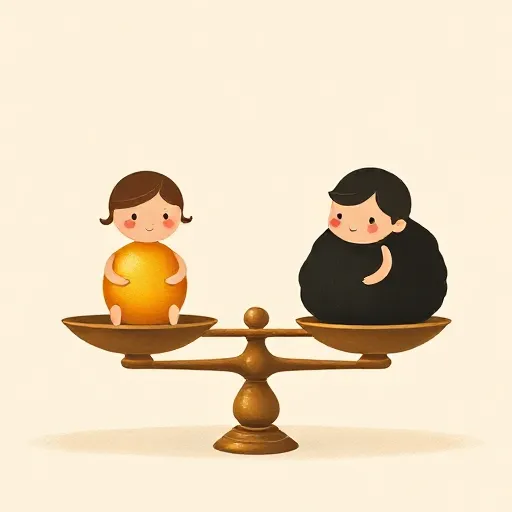
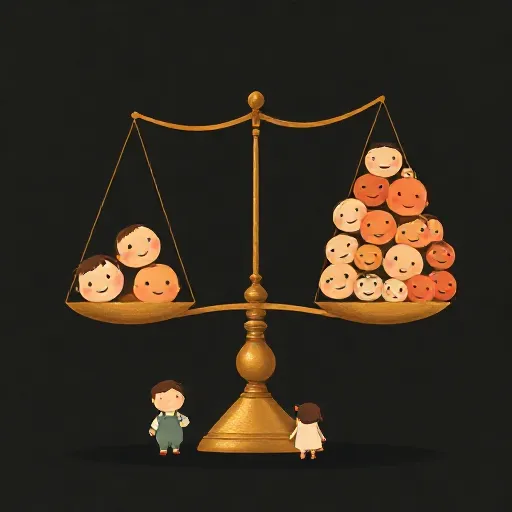
Here’s where things get tricky. Bentham originally expressed his principle as “the greatest happiness of the greatest number.” But later in life, he realized there was a serious problem with that phrase. Think about it: if you only care about the happiness of the majority, you could, in principle, justify sacrificing a minority. Suppose a town of 100 people votes to make one innocent person’s life miserable because it gives everyone else pleasure. Is that okay? The “greatest number” are happy. But something seems deeply wrong.

Bentham came to see this problem clearly. He wrote that if you “lay out of the account the feelings of the minority,” and only count the feelings of the majority, the result is actually a loss of happiness overall. The smaller the minority, the more obvious the loss. So he dropped the “greatest number” part and just said: the greatest happiness—meaning the total happiness of everyone.

But this doesn’t fully solve the problem. Critics have pointed out that even with “total happiness,” a utilitarian calculation could still justify treating people unfairly. Imagine a scenario where framing an innocent person for a crime would make so many people feel safer and more satisfied that the total happiness goes up. Would that be right? Bentham said absolutely not. He insisted that violating basic security—making people afraid that they could be punished for something they didn’t do—would actually reduce total happiness in the long run, because it would create widespread fear and distrust.

Still, philosophers argue about whether utilitarianism can really protect individuals from being sacrificed for the greater good. This is one of the most heated debates in moral philosophy today.


Punishment: What’s It For?

Bentham had very clear ideas about punishment, and they follow directly from his principle. The purpose of punishment, he said, is not revenge. It’s not about making criminals “pay” for what they did. The purpose is entirely practical: to prevent future harm.

Punishment is itself a kind of pain. So for Bentham, it can only be justified if it prevents more pain than it causes. This gives us four legitimate goals for punishment:

  1. Deterrence: Making the criminal and others think twice before committing a crime.
  2. Disablement: Making it impossible for the criminal to do it again (like putting them in prison).
  3. Reformation: Changing the criminal so they don’t want to commit crimes anymore.
  4. Compensation: Making the victim whole again.

Notice what’s not on this list: giving criminals what they “deserve.” Bentham didn’t believe in cosmic justice or moral desert. He believed in consequences.

This led him to some controversial positions. For example, he argued against the death penalty for most crimes. Why? Because life imprisonment with hard labor, he calculated, would actually be a better deterrent (it’s longer and more visible), and it’s reversible if new evidence comes to light. He also argued for the decriminalization of consensual sexual acts between adults, because if no one is being harmed, there’s no basis for punishment.


The Panopticon: A Strange Kind of Prison

One of Bentham’s most famous—and most disturbing—inventions was the panopticon, a circular prison design. The idea was simple: prisoners’ cells would be arranged in a ring around a central watchtower. From the tower, a guard could see into every cell. But the prisoners could never see if the guard was actually watching them. So they had to behave as if they were being watched all the time.

Bentham thought this was brilliant. He designed the panopticon to be efficient (one guard could monitor many prisoners), humane (prisoners would be kept clean and healthy), and productive (they would work at profitable trades). The constant possibility of being watched would, he believed, make prisoners internalize good behavior. As he put it, “the more strictly we are watched, the better we behave.”

Modern thinkers, especially the French philosopher Michel Foucault, have used the panopticon as a symbol of how power works in modern societies. We’re all watched, all the time—by cameras, by social media, by employers, by governments. And we behave accordingly, not because we’re forced to, but because we never know who might be watching.

Bentham, though, added an important detail: the public should be able to watch the guards too. Members of the public and members of parliament should have free access to the prison. This was his way of making sure the watchers were also watched. It’s the same principle that underlies things like body cameras on police: transparency and accountability for everyone in power.


Who Gets to Count?

Bentham extended his principle further than almost anyone had before. He included women, of course, at a time when many philosophers didn’t. He argued for the extension of the right to vote to women, though he held back on pushing this publicly because he thought it was more strategic to focus on getting all men the vote first.

But he went even further. Bentham famously wrote: “The question is not, Can they reason? Nor, can they talk? But, can they suffer?” He was talking about animals. If an animal can feel pain, he said, then their pain matters. It counts in the utilitarian calculation. This was a radical idea in the 1780s, and it laid the foundation for modern animal rights arguments.

For Bentham, the circle of moral concern was wide: anyone—or anything—that can feel pleasure or pain deserves consideration. The only question is how much pleasure or pain our actions cause them.


Does It All Work?

Utilitarianism has been attacked from many directions. Some critics say it’s too demanding: if you’re supposed to always maximize happiness, then you should give away all your possessions to charity, because the happiness of a starving person outweighs your pleasure in owning things. Most utilitarians accept this and say: yes, actually, you probably should.

Other critics say it’s too permissive: if you can justify hurting one person for the benefit of many, then you’ve lost something essential about morality—respect for individuals. Bentham’s defenders reply that in practice, respecting individuals usually produces the most happiness anyway.

Still others say it’s just impractical: how can you possibly calculate all the consequences of your actions? Bentham admitted this was difficult, but he thought we could use general rules based on past experience. We know, for example, that stealing generally causes more unhappiness than happiness, so we can adopt a rule against stealing without calculating from scratch every time.


Why This Matters Now

Bentham’s ideas didn’t stay in philosophy books. They spread across the world. His writings influenced law reform in France, Spain, Portugal, and the newly independent countries of South America. In England, his ideas inspired the “philosophic radicals”—a group of reformers who pushed for democracy, legal reform, and education for everyone. University College London, the first secular university in England, was founded by his followers.

Today, utilitarian thinking is everywhere. When governments do cost-benefit analysis to decide whether to build a new highway or fund a health program, they’re doing a kind of utilitarian calculation. When animal rights activists argue that factory farming causes immense suffering for minimal human benefit, they’re using utilitarian reasoning. When you decide whether to speak up about something unfair, weighing the discomfort of speaking against the harm of staying silent, you’re thinking like a utilitarian.

Bentham died in 1832, but he left instructions that his body should be publicly dissected for medical research—a final act of utility. Today, his preserved skeleton, dressed in his clothes and topped with a wax head (the real head was mummified but eventually stored away after some unfortunate incidents), sits in a glass case at University College London. Visitors sometimes call it the “auto-icon.” Bentham would probably have liked that he’s still useful, even in death.

The questions he raised, though, are very much alive. Is happiness really the only thing that matters? Can we actually measure it? And what happens when making the most people happy means making some people very unhappy indeed? Nobody has fully settled these questions. But once you start thinking like a utilitarian, you can’t un-think it. Every time you ask “what are the consequences?” or “who is affected?” or “does this create more happiness than unhappiness?”—you’re walking in Jeremy Bentham’s footsteps.


Appendices

Key Terms

TermWhat it does in the debate
Principle of utilityThe claim that the rightness of an action depends entirely on whether it produces more happiness than unhappiness for everyone affected
Pain and pleasureThe two “sovereign masters” that Bentham says rule all human action and provide the only basis for judging right and wrong
Greatest happiness principleBentham’s final version of his moral rule: aim for the greatest total happiness, not just the happiness of the majority
Felicific calculusA method for measuring the value of pleasures and pains (intensity, duration, certainty, etc.) to compare different actions
UtilitarianismThe ethical theory that says actions are right if they produce the best consequences for everyone affected
PanopticonA circular prison design where inmates can be watched at any time but never know when they’re being watched; a symbol of constant surveillance
DeterrenceOne of the justifiable purposes of punishment: preventing future crimes by making the consequences unpleasant enough that people choose not to commit them
Sinister interestsThe selfish motives that Bentham believed drove people in power to oppose reforms that would benefit everyone else

Key People

  • Jeremy Bentham (1748–1832): A brilliant, eccentric English philosopher who founded utilitarianism and spent his life trying to reform law, government, and society based on the idea that happiness is the only good. He was a terrible student, hated being forced to swear religious oaths at Oxford, and later argued for the decriminalization of gay sex, animal rights, and votes for women.
  • John Stuart Mill (1806–1873): Bentham’s most famous follower, who grew up immersed in utilitarian ideas but later modified them, arguing that some kinds of pleasure (intellectual, artistic) are qualitatively better than others—not just more intense or longer-lasting.
  • Michel Foucault (1926–1984): A French philosopher who used Bentham’s panopticon as a symbol of how modern societies control people through constant surveillance, whether by cameras, bosses, or social norms.

Things to Think About

  1. Bentham said the right action is the one that produces the most happiness overall. But whose happiness counts? Does it include people who aren’t born yet (future generations)? Does it include animals? What about people whose existence you don’t know about? How far does the circle go?

  2. Imagine you’re a doctor with five patients who need organ transplants to survive, and one healthy person who walks into your office. If you could secretly take the healthy person’s organs and save five lives, the total happiness would go up (assuming nobody finds out). But would that be right? If not, why not? And can utilitarianism explain why it’s wrong?

  3. Bentham thought punishments should be designed to prevent future harm, not to give criminals what they “deserve.” But what if punishing someone doesn’t prevent any future harm—should we let them go free? What does your gut say, and does that match what the principle of utility says?

  4. If you knew that by lying about something small, you could make everyone around you happier (and nobody would ever find out), would it be right to lie? Does utilitarianism require you to lie? And if it does, does that seem like a problem with the theory, or a problem with your instinct that lying is always wrong?

Where This Shows Up

  • Cost-benefit analysis: When governments or companies decide whether to build something, they often try to calculate whether the benefits (in money, time saved, lives saved) outweigh the costs—a direct descendant of Bentham’s felicific calculus.
  • Animal rights debates: Arguments against factory farming often rely on the utilitarian idea that causing massive suffering for minor human pleasure is unjustifiable. Peter Singer, a famous modern philosopher, uses utilitarian reasoning to argue for treating animals much better than we do.
  • Prison reform debates: Arguments about whether prisons should focus on punishment or rehabilitation are arguments about what punishment is for—exactly the question Bentham asked.
  • Surveillance and privacy: Every time you walk past a security camera, or your phone tracks your location, or a website remembers what you searched for, you’re living in a world shaped by the logic of the panopticon. Debates about whether this surveillance is good or bad are debates about whether its benefits (safety, convenience) outweigh its costs (loss of privacy, potential for abuse).